- Company Articles
- Industry articles
- Industry standards
- 2020 National Standard Profile Joining Methods: Riveting vs Welding vs Bolting

2020 National Standard Profile Joining Methods: Riveting vs Welding vs Bolting
Related Product
2020 National Standard Profile
45° external bending joint, used for 45° external connection of two aluminum pipes.
Walk into any modern manufacturing facility, and you'll likely spot rows of sleek, silver structures—workbenches, material racks, assembly lines—all built from interconnected aluminum profiles. These unassuming pieces of metal are the backbone of lean production systems, offering flexibility, strength, and adaptability. But here's the thing: even the best aluminum profiles are only as good as the way they're joined together. That's where the real craft comes in.
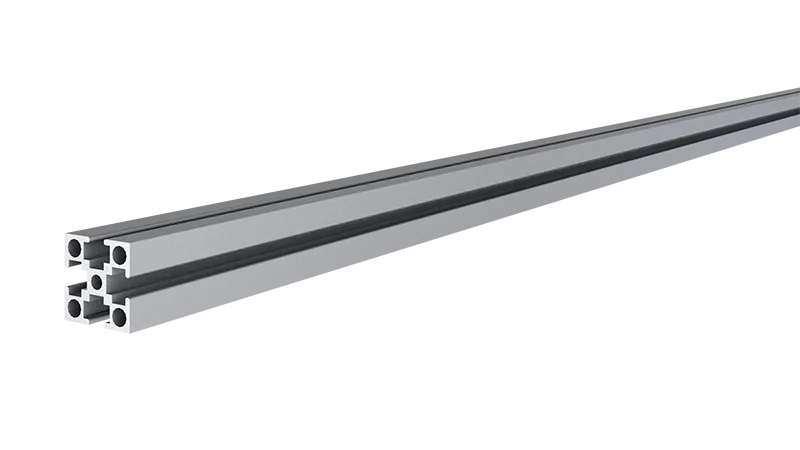
Today, we're zeroing in on a specific star of the show: the 2020 national standard profile . If you've worked with aluminum extrusions, you know the numbers tell a story—20x20mm in cross-section, to be exact. It's a workhorse, beloved for its balance of light weight and structural integrity, popping up in everything from electronics assembly stations to small-scale automation setups. But to build something reliable with it, you need to pick the right joining method. Riveting? Welding? Bolting? Each has its own personality, and choosing wrong can mean wobbly workbenches, delayed projects, or even safety hazards.
Let's dive in. We'll break down how each method works, when to use it (and when to avoid it), and why your choice matters for that 2020 profile project you're planning. Along the way, we'll touch on the unsung heroes of the process— aluminum profile accessories like connectors and fixings—that can make or break your build.
First Things First: What Makes the 2020 National Standard Profile Special?
Before we jump into joining methods, let's get to know our subject. The 2020 national standard profile isn't just a random extrusion. It's a product of careful engineering, designed to meet strict industry standards for consistency and performance. At 20mm by 20mm, it's compact enough for tight spaces but sturdy enough to support tools, materials, and even light machinery when properly assembled.
What sets it apart? For starters, the T-slot design. Those grooves running along its length aren't just for show—they're the secret to its versatility, letting you slide in nuts, bolts, or brackets wherever you need them. Then there's the material: typically 6061 or 6063 aluminum alloy, known for its corrosion resistance and moderate strength. It's lightweight, too—around 0.5kg per meter—so you won't break your back hauling pieces around the shop.
But here's the catch: that T-slot and lightweight material also mean you can't treat it like a heavy steel beam. Joining methods that work for thicker profiles might warp, crack, or weaken the 2020. That's why picking the right technique isn't just about preference—it's about respecting the profile's limits and maximizing its strengths.
Riveting: Quick, Clean, and (Mostly) Permanent
Let's start with riveting—the quiet achiever of the joining world. If you've ever put together a bookshelf with those little metal fasteners, you get the gist: a rivet is a two-part fastener that's inserted through a hole, then "set" by deforming one end to hold everything together. No heat, no fancy tools (well, mostly), just a squeeze or a whack, and you're done.
For the 2020 profile, blind rivets (also called pop rivets) are the go-to. They're perfect because you only need access to one side of the joint—handy if you're working in tight spots or building enclosures where the back is hard to reach. Here's how it works: drill a hole through both profiles (match the size to your rivet shank), insert the rivet, then use a rivet gun to pull the mandrel (the thin metal rod inside) until the rivet body expands and clamps the profiles together. The mandrel snaps off, leaving a neat, finished look.
Pros of Riveting:
- No heat, no fuss: Aluminum is sensitive to high temperatures, and the 2020 profile's thin walls can warp if exposed to too much heat. Riveting skips the torch, so you avoid distortion entirely.
-
A skilled operator can set a rivet in seconds. For small projects or high-volume builds, this adds up fast. -
You don't need to be a master craftsman. With a basic rivet gun and a little practice, most people can get consistent results.
Cons of Riveting:
-
Once that rivet's set, removing it means drilling it out, which can damage the profile's holes. Not ideal if you think you'll need to reconfigure your setup later. -
Rivets create a mechanical bond, not a metallurgical one. They're great for low to medium loads, but if you're building something that takes heavy impacts or constant vibration, they might loosen over time. -
Drill a hole too big, and the rivet won't grip. Too small, and you'll struggle to insert it. Measure twice, drill once—literally.
Real-World Example: The Electronics Bench Build
Jake, a small-scale electronics manufacturer, needed to build 10 workbenches for his assembly line. He chose 2020 profiles for their lightweight design, and riveting for speed. "We were on a tight deadline," he told me. "Riveting let two people knock out a bench in under an hour. No waiting for welds to cool, no cleanup. The benches are sturdy enough for circuit boards and soldering tools, and since they're not moving, we don't worry about rivets loosening." Would he use rivets for a heavy-duty material rack? "Nope," he laughed. "But for this? Perfect."
When to use riveting with 2020 profiles: Small, static structures (think shelves, enclosures, or fixed workstations) where speed and low heat are priorities. Skip it for load-bearing frames or setups that need frequent tweaks.

Welding: For When You Need a Bond That Feels Like One Piece
Now, let's talk about welding—the heavyweight champion of joining methods. When done right, welding fuses two pieces of aluminum into a single, seamless unit. It's the method you choose when "good enough" won't cut it, and you need strength that lasts.
For 2020 profiles, the most common techniques are MIG (Metal Inert Gas) and TIG (Tungsten Inert Gas) welding. MIG is faster, using a wire feed to deposit filler metal, while TIG is slower but more precise, ideal for thin materials like our 20mm profile. Both require shielding gas (usually argon) to protect the molten aluminum from oxygen, which would cause porosity and weak joints.
But here's the rub: aluminum is a diva when it comes to heat. It conducts heat 5x faster than steel, so if you're not careful, that 2020 profile can warp or lose its shape during welding. That's why experienced welders use tricks like clamping the profiles to a heat sink (a big block of metal) or welding in short, controlled bursts. It's also why you'll often see gusset alp 2020 brackets added after welding—small, triangular plates that reinforce the joint and counteract any distortion.
Pros of Welding:
-
A well-welded joint is as strong as the profile itself. It can handle tension, compression, and shear forces better than rivets or bolts in many cases. -
No visible fasteners, which is great if aesthetics matter (think display stands or customer-facing equipment). -
You can weld anywhere on the profile, not just along the T-slots. Handy for custom angles or unique designs.
Cons of Welding:
-
This isn't a DIY weekend project. You need a welder, shielding gas, and training to avoid burn-through or weak welds. Hiring a pro adds cost. -
Even with care, 2020 profiles can warp. Fixing that means extra time straightening or adding gusset alp 2020 brackets, which eats into efficiency. -
Welding leaves behind spatter (tiny metal droplets) and oxidation (that white, powdery stuff). You'll need to grind, sand, or chemical-clean the joints afterward.
Real-World Example: The Custom Automation Frame
Maya runs a robotics startup and needed a frame to support a small conveyor belt for part feeding. "We needed something rock-solid—vibrations from the conveyor could throw off alignment," she explained. She went with welded 2020 profiles. "The welder used TIG for precision, clamped the profiles to a steel table to prevent warping, and added gusset alp 2020 brackets at the corners. It's been running for a year, and the frame hasn't budged. Worth every penny for the peace of mind."
When to use welding with 2020 profiles: High-strength, permanent structures (like machine frames, conveyor supports, or load-bearing columns) where appearance and durability are non-negotiable. Avoid if you're on a tight budget, short on time, or need to reconfigure later.
Bolting: The Flexible Contender
Last but never least: bolting. If riveting is the quick fix and welding is the lifelong commitment, bolting is the flexible friend who's always up for a change. It's the method that made aluminum profiles famous for lean manufacturing—no wonder it's the most popular choice for 2020 profiles.
Here's how it works: You slide a nut into the T-slot of the 2020 profile, align your second profile or bracket, insert a bolt through the hole, and tighten. That's it. No heat, no special skills, just good old-fashioned mechanical fastening. But the magic is in the aluminum profile accessories that make it possible: aluminum profile connector brackets for 90° angles, T-joints, or cross-connections; aluminum profile fixings like flange nuts or square nuts that lock into the T-slot; and even angle brackets (hello, gusset alp 2020 again!) to add extra rigidity.
There are different bolts to choose from, too. Hex bolts are the workhorses, easy to tighten with a wrench. Socket head cap screws are sleeker, sitting flush with the profile for a cleaner look. For extra security, you can add washers, lock washers, or even thread locker (that blue or red glue that keeps bolts from vibrating loose).
Pros of Bolting:
-
-
No warping, no spatter, no cleanup. Just assemble and go. -
With the right aluminum profile connector and enough bolts, you can build surprisingly strong structures. Add a gusset alp 2020 bracket, and you've got a joint that rivals welding for stability. -
Cons of Bolting:
-
Those bolts and nuts stick out (unless you use countersunk screws), which might bug you if looks are critical. -
Vibration is the enemy. Over time, bolts can back out, especially in moving parts like conveyor frames. Thread locker helps, but it's an extra step. -
Bolts, nuts, washers, connectors—keep a tidy bin, or you'll spend half your time hunting for the right aluminum profile accessory .
Real-World Example: The Lean Lab Setup
Dr. Lee runs a university research lab where experiments change weekly. Her team uses 2020 profiles to build test rigs, and bolting is non-negotiable. "One week we're testing sensors, the next we're mounting cameras—we need to reconfigure constantly," she said. "Bolting lets us take apart a rig in 20 minutes and rebuild it the next day. We use those little gusset alp 2020 brackets on the corners for stability, and thread locker on the bolts since some rigs vibrate. It's perfect for our chaos."
When to use bolting with 2020 profiles: Just about everywhere else! Modular workstations, adjustable shelving, production lines that need tweaks, or projects where you're not sure about the final design. It's the most versatile option by far.
The Big Comparison: Riveting vs Welding vs Bolting for 2020 Profiles
Still on the fence? Let's put it all side by side. This table breaks down the key factors to consider when choosing between the three methods for your 2020 national standard profile project.
| Factor | Riveting | Welding | Bolting |
|---|---|---|---|
| Strength | Medium (good for static loads) | High (best for heavy loads) | Medium-High (scalable with accessories) |
| Permanence | Permanent (hard to reverse) | Permanent (nearly impossible to reverse without damage) | Temporary (easily disassembled) |
| Installation Time | Fast (seconds per joint) | Slow (minutes per joint + cooling time) | Moderate (minutes per joint, depending on accessories) |
| Skill Required | Low (basic training) | High (certified welder needed) | Low (anyone with a wrench) |
| Heat Distortion Risk | Low (no heat) | High (requires careful technique) | Low (no heat) |
| Cost | Low (cheap tools, affordable rivets) | High (welder, gas, labor) | Moderate (bolts and accessories add up) |
| Best For | Small, static structures; tight deadlines | Heavy-duty, permanent frames; seamless appearance | Modular setups; reconfigurable projects; most general use |
The Bottom Line: Which Method Should You Choose?
At the end of the day, there's no "best" method—only the best method for your project. Let's simplify:
- Choose riveting if: You need speed, have a static project, and won't need to take it apart. Think: small shelves, enclosures, or one-off builds.
- Choose welding if: Strength and permanence are non-negotiable, and you're willing to invest in skill and equipment. Think: machine frames, load-bearing columns, or projects where looks matter most.
- Choose bolting if: You want flexibility, plan to reconfigure later, or are new to aluminum profiles. This is your default for 2020 profiles 90% of the time, especially with the right aluminum profile accessories like connectors and gussets.
And remember: the 2020 national standard profile is a team player. It works best when paired with quality aluminum profile accessories —whether that's a pack of rivets, a set of aluminum profile connector brackets, or a handful of gusset alp 2020 angle supports. Skimp on the accessories, and even the best joining method will fall short.
So, what's your project? A workbench? A conveyor? A custom shelf? Grab your 2020 profiles, pick your method, and start building. And if you hit a snag? Just remember: the best joins are the ones that fit the job—and the ones you feel confident making.