- Company Articles
- Industry articles
- Industry standards
- 2020 National Standard Profile Lead Time Analysis: Planning for Mass Production

2020 National Standard Profile Lead Time Analysis: Planning for Mass Production
Related Product
2020 National Standard Profile
45° external bending joint, used for 45° external connection of two aluminum pipes.
It's 8:30 AM on a Tuesday, and Maria, the production manager at a mid-sized electronics assembly plant, is staring at her computer screen with a frown. The spreadsheet in front of her shows a critical red flag: the 2020 National Standard Profile shipment she ordered three weeks ago is now five days late. Down on the factory floor, the line for assembling workbenches—each requiring lengths of this specific aluminum profile—is idling. Workers are cleaning tools, chatting, or worse, standing around, while the clock ticks toward a client deadline. "We can't keep doing this," she mutters, picking up the phone to call her supplier. On the other end, a harried voice apologizes, citing "unexpected delays in extrusion." Maria hangs up, wondering if there's a better way to plan for these inevitable hiccups when scaling up production.
For manufacturers across industries—from automotive to aerospace, from small workshops to global enterprises—lead time isn't just a number on a purchase order. It's the heartbeat of production schedules, the backbone of customer trust, and often the difference between profit and loss. And when it comes to aluminum extrusion profile s like the 2020 National Standard Profile, a delay of even a few days can send ripples through an entire supply chain. In this article, we'll dive into the world of lead time management for this critical component, exploring the factors that shape it, the challenges suppliers and manufacturers face, and how to plan effectively for mass production. Because at the end of the day, it's not just about metal and machines—it's about people like Maria, trying to keep their teams productive and their businesses thriving.
Understanding the 2020 National Standard Profile: More Than Just Metal
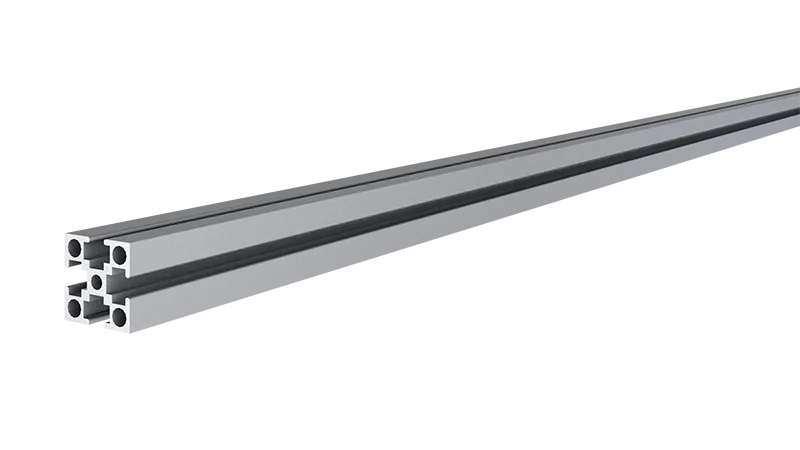
Before we unpack lead times, let's first get to know the star of the show: the 2020 National Standard Profile. If you've ever walked through a factory, a warehouse, or even a modern office, you've probably seen its handiwork. This aluminum extrusion is a workhorse of modular design, named for its dimensions—20mm in width and 20mm in height—with a cross-section featuring T-slots that make it easy to attach aluminum profile accessories like brackets, panels, and hinges. It's lightweight yet surprisingly strong, resistant to corrosion, and infinitely customizable, which is why it's a staple in building everything from workbenches and material racks to machine guards and lean manufacturing systems.
"The 2020 profile is like the Lego brick of industrial design," says James, an engineer with 15 years of experience in factory layout. "You can snap together a basic workbench in an hour, then reconfigure it next month by adding shelves or wheels—no welding, no heavy tools. That flexibility is gold for manufacturers who need to adapt quickly." But that flexibility comes with a catch: demand for the 2020 National Standard Profile is consistently high, and its production involves a complex, multi-step process that leaves little room for shortcuts. To understand why lead times can be unpredictable, we need to peel back the curtain on how this profile goes from raw aluminum to a finished component ready for the factory floor.
From Billet to Profile: The Extrusion Journey
The process starts with raw aluminum, typically in the form of cylindrical billets. These billets are heated to around 500°C—hot enough to become malleable but not molten—before being loaded into an extrusion press. There, a hydraulic ram pushes the billet through a steel die, which shapes it into the 2020 profile's signature cross-section. As the profile exits the die, it's cooled with water sprays to set its shape, then cut to standard lengths (usually 3 or 6 meters) and heat-treated to enhance strength. Finally, it may undergo surface finishing—like anodizing for corrosion resistance or powder coating for color—before being packaged and shipped.
Each step in this journey is a potential bottleneck. If the extrusion die for the 2020 profile is being used for another order, the billet has to wait. If the heat-treating oven is full, the cooled profiles stack up. If a batch fails quality control—say, a T-slot is misaligned, making it impossible to attach accessories—the entire run has to be scrapped and restarted. "Extrusion is part art, part science," explains Raj, a production supervisor at a large aluminum supplier. "We can run the same die 100 times, but tiny variations in billet temperature or press speed can change the outcome. That's why we test every 10th profile—better to catch a problem early than ship defective parts."
Why Lead Time Matters: The Cost of Waiting
For manufacturers, lead time delays aren't just inconvenient—they're expensive. Let's crunch the numbers: Suppose a factory produces 50 workbenches per day, each using 4 meters of 2020 National Standard Profile and generating $200 in profit. A 5-day delay in profile delivery means 250 workbenches undelivered, costing $50,000 in lost profit. But the damage doesn't stop there. There's the labor cost of idle workers (at $25/hour, 20 workers for 8 hours a day for 5 days adds up to $20,000). There's the potential penalty for missing client deadlines—often 1-5% of the order value. And perhaps most costly: the erosion of trust. "A client who waits two weeks for a late order might think twice before reordering," says Maria, recalling a conversation with her biggest customer after a similar delay last quarter. "They didn't cancel, but they asked for a 10% discount on the next shipment. That's profit we'll never get back."
But lead time isn't just about avoiding losses—it's about seizing opportunities. When a manufacturer can reliably promise shorter lead times than competitors, they gain a competitive edge. A furniture company that can deliver custom workbenches in 2 weeks instead of 4 can win more contracts. A car parts supplier that can adjust production runs quickly, thanks to predictable profile lead times, can respond faster to sudden spikes in demand. In short, lead time is a strategic asset.
"Lead time is the bridge between a customer's need and your ability to meet it. If that bridge is rickety, customers will find another way to cross." — Sarah Chen, Supply Chain Consultant with 20+ Years in Manufacturing

The Variables: What Shapes 2020 National Standard Profile Lead Times?
So, why do lead times for the 2020 National Standard Profile vary so much? Let's break down the key factors, from raw materials to logistics, that suppliers and manufacturers must navigate.
1. Raw Material Availability
Aluminum is a global commodity, and its price and availability fluctuate with market demand, geopolitical events, and even weather. For example, a drought in Brazil—a major aluminum producer—can disrupt hydroelectric power, which is critical for smelting aluminum, leading to reduced output. When aluminum prices spike, some suppliers may delay purchases, hoping for a price drop, which can extend lead times. Conversely, if a supplier maintains a stockpile of billets, they can buffer against short-term shortages. "We keep 4 weeks of billet inventory on hand," says Raj. "It ties up capital, but it means we don't have to stop production when the market gets jittery."
2. Die Availability and Maintenance
The extrusion die is the most critical tool in making the 2020 profile. Each die can produce thousands of profiles before needing reconditioning, but over time, wear and tear cause the T-slots to widen or the corners to round. When that happens, the die is sent to a tooling shop for grinding and polishing, which can take 3-5 days. If a supplier only has one die for the 2020 profile, that reconditioning period becomes a production gap. Larger suppliers may invest in backup dies, but that's a significant expense—each die costs $5,000-$10,000. "Smaller suppliers often can't afford spares," explains Sarah Chen. "So when their die fails, their customers wait."
3. Production Scheduling and Capacity
Most aluminum extrusion plants run 24/7, but they're not just making 2020 profiles. They're juggling orders for dozens of other profiles—3030, 4040, 2040, and custom designs—each with its own die and production requirements. A sudden rush for a large order of 4040 profiles might push the 2020 run to the back of the queue. "We prioritize orders by volume and deadline," Raj admits. "If a customer needs 10,000 meters of 2020 in a week, and another needs 100 meters in two weeks, the big order gets the press first. It's not ideal, but we have to keep the lights on." This is where lean system s come into play: suppliers that adopt lean principles—like just-in-time scheduling and waste reduction—can better balance small and large orders, minimizing delays.
4. Quality Control and Rework
No manufacturer wants to ship defective parts, but quality control can slow things down. For 2020 National Standard Profile, key checks include dimensional accuracy (Is the cross-section exactly 20x20mm?), T-slot alignment (Will aluminum profile accessories like brackets fit snugly?), and surface finish (Are there scratches or dents?). If a batch fails, it's either reworked—for example, sanding down a rough spot—or scrapped. "Last month, we had a run where 15% of the profiles had hairline cracks from uneven cooling," Raj recalls. "We had to melt them down and start over. That added three days to the lead time for all 2020 orders that week."
5. Logistics and Shipping
Even if production goes smoothly, getting the 2020 profiles to the customer can hit snags. If the supplier is in a different region, trucking delays due to weather, traffic, or driver shortages are common. International shipments face customs clearance, which can take days or weeks if paperwork is incomplete. "We once had a shipment stuck in port for a week because the customs broker mislabeled the 'aluminum extrusion profile' as 'aluminum scrap,'" Maria says, shaking her head. "By the time it arrived, the workbench line was two weeks behind."
Inside the Supplier's Playbook: How Lead Times Are Managed
To understand how suppliers keep lead times in check, we spoke with three different 2020 National Standard Profile suppliers: a small regional supplier, a mid-sized national player, and a large international manufacturer. While their approaches varied, they shared common strategies for taming the lead time beast.
Case Study 1: Small Supplier (Regional, 50 Employees)
GreenTech Extrusions, based in the Midwest, serves customers within a 500-mile radius. With one extrusion press and a limited die library, they specialize in standard profiles like 2020 and 3030. "Our lead times are typically 7-10 days," says Lisa, GreenTech's owner. "We can't compete with the big guys on price, so we compete on service. We keep 2020 profiles in stock—usually 5,000 meters—so rush orders get shipped the same day. For larger orders, we ask customers to forecast 4-6 weeks out, so we can schedule the press around their needs." GreenTech also partners with a local logistics company for same-day delivery within the city, cutting shipping time to hours instead of days.
Case Study 2: Mid-Sized Supplier (National, 300 Employees)
AlumWorks, with plants in Texas and Pennsylvania, uses a lean system to manage its 20+ extrusion presses. "We mapped our production and cut out 15% of waste—like waiting for dies to be changed or profiles to be moved between workstations," explains Mike, AlumWorks' operations director. They also invested in digital tools: a cloud-based system that lets customers track their order in real time, from billet heating to shipping. "If a customer sees their 2020 profiles are in heat treatment, they know exactly when to expect delivery," Mike says. This transparency reduces panic calls and gives manufacturers like Maria the ability to adjust their schedules proactively.
Case Study 3: Large International Supplier (Global, 2,000+ Employees)
GlobalAlum, with plants in China, Germany, and the U.S., leverages scale to keep lead times low—typically 5-7 days for standard profiles. "We have dedicated dies for 2020 in every plant, so we never have to wait for a die to be transferred," says Elena, GlobalAlum's supply chain director. They also use AI-driven demand forecasting to predict spikes in 2020 orders—for example, surges in August as manufacturers stock up for Q4 production. "Last year, our AI flagged an 80% increase in 2020 orders for September, so we ramped up billet purchases in July. We had 20,000 meters in stock when the rush hit, and lead times stayed steady at 5 days."
| Supplier Type | Average Lead Time (Standard Order) | Key Strategy | Best For |
|---|---|---|---|
| Small Regional | 7-10 days | Local stock, personalized service | Small businesses, rush orders |
| Mid-Sized National | 5-7 days | Lean systems, digital tracking | Mid-sized manufacturers, consistent demand |
| Large International | 3-5 days | Global scale, AI forecasting | Large enterprises, mass production |
Planning for Mass Production: 5 Steps to Tame Lead Times
For manufacturers gearing up for mass production—whether scaling from 100 to 1,000 workbenches per month or launching a new product line—lead time planning isn't optional. It's a make-or-break part of the process. Here's how to do it right:
Step 1: Forecast Demand (and Then Some)
The first rule of lead time management is: know your numbers. How many meters of 2020 National Standard Profile do you need per week? Per month? What's your peak season? "We use historical data and customer orders to forecast 6 months out," says Maria, who, after her earlier delay, now works with her sales team to map demand. "If we're launching a new workbench model in Q3, we add 20% to our profile order to account for unexpected interest." Overestimating by a small margin is better than underestimating—excess profiles can be stored, but a shortage halts production.
Step 2: Choose the Right Supplier (or Two)
Don't put all your eggs in one supplier's basket. Maria now splits her 2020 profile orders between GreenTech (for small, urgent orders) and AlumWorks (for large, scheduled orders). "If one has a delay, the other can pick up the slack," she explains. When vetting suppliers, ask about their contingency plans: What happens if their press breaks? Do they have backup dies? Can they source billets from multiple suppliers? A supplier with a robust contingency plan is worth paying a premium for.
Step 3: Invest in Buffer Stock
Buffer stock—extra 2020 profiles stored in your warehouse—acts as insurance against delays. The size of your buffer depends on lead time variability: if your supplier's lead time ranges from 5-10 days, you might keep 10 days' worth of stock. "We keep 2 weeks of 2020 profiles on hand," Maria says. "It costs money to store them, but it's cheaper than idling the line for 5 days." For mass production, where even a day of downtime is costly, a larger buffer (3-4 weeks) may be necessary.
Step 4: Integrate with Your Supplier's Systems
Many suppliers now offer API access to their production systems, letting you see when your 2020 order is scheduled, in production, or shipped. Maria's team integrated AlumWorks' system with their ERP software, so every time the profile shipment is scanned onto a truck, her production schedule updates automatically. "No more guessing—we know exactly when to start prepping the workbench assembly line," she says. This integration also helps with forecasting: by sharing your production plans with the supplier, they can schedule their press to meet your needs.
Step 5: Continuously Improve (and Communicate)
Lead time management isn't a one-and-done task. Every quarter, Maria meets with her suppliers to review performance: What was the average lead time? How many orders were delayed, and why? "Last quarter, AlumWorks had two delays due to die issues," she says. "We worked together to identify the problem—their die maintenance schedule was too infrequent. They've since increased inspections, and we haven't had a delay since." Regular communication turns suppliers into partners, not just vendors.
Challenges on the Horizon: What Keeps Suppliers Up at Night?
Even with the best planning, lead time management faces headwinds. One of the biggest is the growing demand for sustainable materials. "Customers are asking for recycled aluminum billets, which can be harder to source and more expensive," Lisa from GreenTech says. Recycled aluminum has the same quality as virgin aluminum but requires 95% less energy to produce—making it popular with eco-conscious manufacturers. However, recycled billet suppliers are still scaling up, leading to occasional shortages and longer lead times.
Another challenge is geopolitical instability. Tariffs, trade wars, and sanctions can disrupt the flow of aluminum and aluminum profile accessories across borders. "Two years ago, a tariff on Chinese aluminum caused our costs to spike 15% overnight," Mike from AlumWorks recalls. "We had to pass some of that on to customers, which strained relationships." To mitigate this, many suppliers are nearshoring—building plants closer to their customer base—to reduce reliance on international shipping.
Finally, there's the skills gap. Extrusion operators, die makers, and quality control technicians are in short supply, especially in developed countries. "We're training new hires, but it takes 6 months to become proficient on the extrusion press," Raj says. This shortage can lead to slower production and more errors, both of which extend lead times.
The Future of Lead Times: Automation, AI, and the Human Touch
Despite these challenges, the future of 2020 National Standard Profile lead times looks bright, thanks to advances in technology. Automation is already transforming extrusion plants: robots now load and unload billets, reducing human error and increasing press uptime. AI-powered quality control systems—using cameras and sensors—can detect defects in milliseconds, cutting rework time from hours to minutes. "Our AI system checks 100% of profiles, not just 10%," Elena from GlobalAlum says. "It's caught issues we never would have spotted with the human eye."
3D printing may also play a role, though not in extrusion itself. "We're 3D printing extrusion dies now," Mike notes. "A custom die that used to take 2 weeks to machine can now be printed in 2 days. For small-batch, custom profiles, this is a game-changer—but for high-volume 2020 profiles, traditional steel dies are still more durable."
But even with all this technology, the human element remains critical. "At the end of the day, lead time is about trust," Lisa says. "A customer doesn't care if your AI is great—they care if their workbench production line is running. So we still pick up the phone, we still visit their factories, and we still apologize when things go wrong. Technology helps, but relationships keep us in business."
Conclusion: Lead Time as a Competitive Advantage
Back at Maria's factory, the 2020 National Standard Profile shipment finally arrives—two days late, but with a bonus: a handwritten note from Lisa at GreenTech apologizing and offering a 5% discount on the next order. Maria smiles, knowing she and Lisa have built the kind of partnership that makes lead time delays manageable. Down on the floor, the workbench line roars back to life, and the team makes up for lost time. By the end of the week, the client deadline is met, and Maria's spreadsheet is green again.
Lead time management for 2020 National Standard Profile isn't just about avoiding delays—it's about turning a potential weakness into a strength. By understanding the extrusion process, choosing the right suppliers, planning for mass production, and embracing technology while nurturing relationships, manufacturers can transform lead time from a source of stress into a competitive advantage. Because in the end, it's not just about metal profiles—it's about the people who build with them, the businesses that rely on them, and the customers who trust them to deliver.
So, whether you're a small workshop owner ordering your first batch of 2020 profiles or a production manager scaling up to mass production, remember: lead time is more than a number. It's the promise you make to your team, your clients, and yourself. And with the right planning, that promise is one you can keep.