- Company Articles
- Industry articles
- Industry standards
- 2020 National Standard Profile Recycling Process: Closing the Loop in Lean Manufacturing

2020 National Standard Profile Recycling Process: Closing the Loop in Lean Manufacturing
Related Product
2020 National Standard Profile
45° external bending joint, used for 45° external connection of two aluminum pipes.
Walk into any modern manufacturing facility, and you'll likely spot rows of sleek aluminum structures—workbenches where assemblers piece together electronics, material racks holding components, or conveyor systems moving products along the line. Many of these structures rely on aluminum profiles, and among the most common is the 2020 National Standard Profile. But what happens when these profiles reach the end of their life? In a world where "reduce, reuse, recycle" has moved from a buzzword to a business imperative, the answer matters more than ever. For lean manufacturers, it's not just about cutting costs or meeting deadlines—it's about closing the loop, turning waste into wealth, and building a system that respects both the planet and the bottom line.
Lean manufacturing has long been defined by its focus on eliminating waste—whether that's excess inventory, unnecessary movement, or defects. But in recent years, a new layer has been added: circularity . The goal? To create systems where resources are reused and recycled, minimizing the need for virgin materials and keeping waste out of landfills. For the 2020 National Standard Profile, a workhorse of factory floors everywhere, this shift isn't just possible—it's already transforming how suppliers, manufacturers, and even end-users operate. Let's dive into how this unassuming aluminum profile is becoming a poster child for sustainable lean manufacturing.
What Is the 2020 National Standard Profile, Anyway?
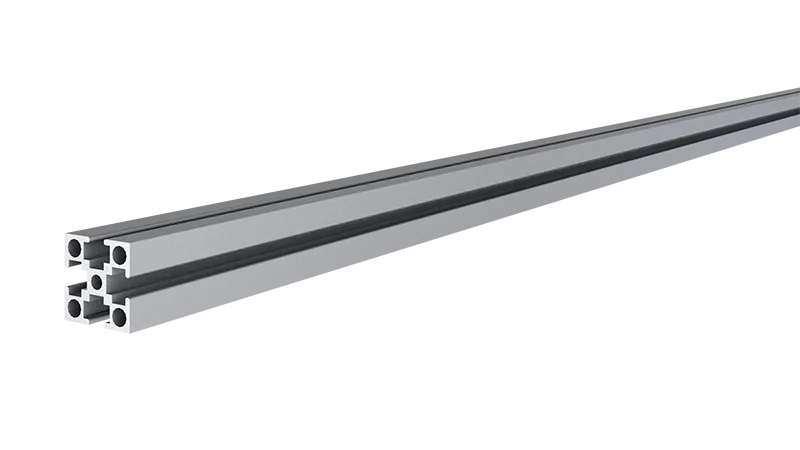
Before we talk about recycling, let's get clear on what we're dealing with. The 2020 National Standard Profile is a type of aluminum extrusion profile—a long, rigid structure with a specific cross-sectional shape, designed to be lightweight, strong, and easy to assemble. The "2020" refers to its dimensions: roughly 20mm in width and 20mm in height, with a T-slot running along its length. This T-slot is what makes it so versatile; it lets you slide in bolts, brackets, or accessories (think aluminum profile accessories like end caps, connectors, or panel mounts) to build just about anything from a simple shelf to a complex production line workstation.
You'll find these profiles in industries from automotive to electronics, medical devices to logistics. A lean system might use them to build flow racks that keep components moving smoothly, or workbenches tailored to a specific assembly task. Their popularity comes down to three things: strength (aluminum's high strength-to-weight ratio means they can support heavy loads without being bulky), flexibility (they're easy to cut, drill, and reconfigure), and cost-effectiveness (aluminum extrusion profile production is efficient, making them affordable for small and large factories alike).
Why Lean Manufacturing Can't Ignore Profile Waste
Lean manufacturing's "7 Wastes" include "defects," "overproduction," and "unnecessary inventory"—but one that's often overlooked is "waste of materials." When a factory cuts a 2020 National Standard Profile to length for a workbench, there are inevitably offcuts. When a production line is reconfigured, old racks or workbenches might be disassembled, leaving behind profiles that no longer fit the new layout. Traditionally, these scraps and outdated components would end up in dumpsters, contributing to the 11 million tons of aluminum waste generated globally each year, according to the International Aluminium Institute.
But here's the thing: aluminum is 100% recyclable. Unlike plastic, which degrades with each cycle, aluminum can be melted down and remade into new profiles (or aluminum profile accessories) indefinitely without losing quality. For lean systems, this isn't just an environmental win—it's a chance to practice what they preach: eliminating waste. If a factory can recycle its 2020 National Standard Profile scraps instead of buying new virgin material, it's not just reducing its carbon footprint; it's cutting costs, streamlining supply chains, and aligning with the lean principle of "continuous improvement."

The Recycling Process: From Scrap Pile to Factory Floor
Recycling 2020 National Standard Profiles isn't as simple as tossing them in a recycling bin. It's a carefully orchestrated process that requires coordination between manufacturers, waste handlers, and recyclers. Let's break it down step by step, as if we're following a single scrap of aluminum from the factory floor to its second life.
Step 1: Collection—Gathering the "Unwanted"
It starts with collection . In a well-run lean facility, workers don't just toss profile scraps in the trash. Instead, there are designated bins labeled "Aluminum Profile Waste" near cutting stations or disassembly areas. These bins might even have separate sections for clean scraps (like offcuts from new profiles) and "dirty" scraps (profiles with adhesives, paint, or attached hardware like screws or aluminum profile accessories). Why separate them? Contamination is the enemy of recycling, and the cleaner the scrap, the easier (and cheaper) it is to process.
Some manufacturers take this a step further by partnering with suppliers who offer "take-back" programs. A lean pipe supplier, for example, might not only sell new 2020 National Standard Profiles but also arrange to pick up old or unused ones from their clients. This closes the loop: the supplier collects the scrap, sends it to a recycler, and then uses the recycled aluminum to make new profiles—creating a circular supply chain.
Step 2: Sorting—Making Sense of the Mess
Once collected, the scrap heads to a recycling facility, where the first order of business is sorting . Aluminum profiles come in different alloys, and mixing them can cause problems during melting (different alloys have different melting points and properties). The 2020 National Standard Profile is typically made from 6063 aluminum alloy—a common choice for extrusions because it's easy to shape and has good corrosion resistance. Recyclers use magnets to separate any steel hardware (like bolts or brackets) and visual inspections (or even X-ray technology for large batches) to sort 6063 scraps from other alloys.
This step is critical. Imagine trying to bake a cake and accidentally mixing sugar with salt—the result would be inedible. Similarly, mixing aluminum alloys can lead to recycled profiles that are too brittle, too soft, or don't meet the 2020 National Standard's strict dimensional tolerances. A single contaminated batch could cost a recycler thousands of dollars in wasted material.
Step 3: Cleaning—Removing the "Extras"
Next up: cleaning . Even sorted scraps might have residues—grease from factory floors, paint from custom-colored profiles, or plastic T-slot covers (a type of aluminum profile accessory used to protect slots from dust). These contaminants can release harmful fumes when melted or leave impurities in the recycled aluminum.
The cleaning process varies by facility. Some use high-pressure water jets to blast off dirt and grease. Others use chemical baths to dissolve paints or adhesives. For stubborn contaminants like welded brackets, workers might manually grind or cut them off. It's tedious work, but necessary—think of it like washing vegetables before cooking: you wouldn't want grit or pesticides in your meal, and recyclers don't want in their aluminum.
Step 4: Shredding and Melting—Breaking It Down to Basics
Once clean and sorted, the 2020 National Standard Profile scraps are shredded into small pieces (about the size of a fist) to speed up melting. These shreds are then loaded into a furnace, where they're heated to around 700°C—hot enough to turn solid aluminum into liquid. This is where recycling truly shines: melting recycled aluminum uses just 5% of the energy required to produce aluminum from bauxite ore, according to the Aluminum Association. That's a massive savings—enough to power a home for 10 years for every ton of recycled aluminum.
As the aluminum melts, impurities (like dirt or leftover plastic) rise to the surface, forming a layer called "dross." Recyclers skim this off, then add chemicals to further purify the molten metal. The result is a batch of high-quality aluminum that's indistinguishable from virgin material.
Step 5: Remanufacturing—From Scrap to New Profile
The purified aluminum is now ready to be remade into new products. For the 2020 National Standard Profile, this means casting the molten aluminum into billets (large cylindrical blocks), which are then heated and pushed through a die—a steel mold with the 2020 profile's cross-sectional shape. As the billet is (extruded), it takes on the die's shape, emerging as a long, continuous profile that's cut to length, cooled, and treated (e.g., anodized for corrosion resistance).
Some recycled aluminum might also become aluminum profile accessories—end caps, connectors, or brackets—that attach to the 2020 profiles. This versatility is key: by turning scrap into both profiles and their accessories, manufacturers can keep more of their supply chain circular, reducing reliance on external suppliers.
The Challenges: It's Not All Smooth Sailing
If recycling 2020 National Standard Profiles is so great, why isn't every factory doing it? Like any process, it has its hurdles. One of the biggest is contamination . Even with careful sorting, a single steel bolt or piece of copper wiring mixed in with aluminum scraps can ruin a batch. Small manufacturers, in particular, may struggle with consistent sorting—without dedicated staff or bins, workers might toss all metal scraps together, making recycling more expensive.
Logistics is another challenge. For factories in remote areas, transporting scrap to a recycling facility can cost more than the scrap is worth. This is where partnerships with local lean pipe suppliers can help: a supplier with a network of collection points can aggregate scrap from multiple factories, making transportation more efficient.
Finally, there's the perception of quality. Some manufacturers worry that recycled aluminum isn't as strong or reliable as virgin material. But this is a myth: modern recycling processes produce aluminum that meets the same standards as virgin, and many lean pipe suppliers now offer recycled 2020 National Standard Profiles with the same warranties as their virgin counterparts.
The Payoff: Why Recycling Profiles Makes Lean Sense
Despite the challenges, the benefits of recycling 2020 National Standard Profiles are hard to ignore—for both the planet and the bottom line. Let's break them down:
Environmental Wins
The most obvious benefit is reduced environmental impact. Recycling one ton of aluminum saves 9 tons of CO₂ emissions compared to producing virgin aluminum, according to the European Aluminium Association. It also cuts down on mining: bauxite mining disrupts ecosystems, and refining bauxite into alumina (a precursor to aluminum) uses vast amounts of water. By recycling, we reduce the need for these destructive practices.
Cost Savings
Lean manufacturing is all about efficiency, and recycling is efficient. Recycled aluminum costs 20-30% less than virgin aluminum, according to industry reports. For a factory that uses hundreds of tons of 2020 National Standard Profiles annually, this adds up to significant savings. Some manufacturers even sell their clean scrap to recyclers, turning waste into a revenue stream.
Alignment with Lean Principles
At its core, lean manufacturing is about creating value and eliminating waste. Recycling 2020 National Standard Profiles does both: it turns "waste" (scraps) into "value" (new profiles), and it eliminates the waste of raw materials, energy, and landfill space. For companies that pride themselves on their lean systems, recycling isn't just a sustainability add-on—it's a natural extension of their philosophy.
| Aspect | Virgin 2020 National Standard Profile | Recycled 2020 National Standard Profile |
|---|---|---|
| Energy Required (per ton) | 14,000 kWh | 700 kWh (5% of virgin) |
| CO₂ Emissions (per ton) | 12 tons | 0.6 tons (5% of virgin) |
| Water Usage (per ton) | 1,000 m³ | 50 m³ (5% of virgin) |
| Material Cost (relative) | 100% | 70-80% |
| Quality Consistency | High | Equal to virgin (with proper processing) |
A Real-World Example: How One Factory Closed the Loop
Let's take a look at a hypothetical but realistic case: a mid-sized electronics manufacturer in Guangdong, China, that assembles smartphones. The factory uses 2020 National Standard Profiles for its assembly workbenches, material racks, and testing stations. Each year, it generates about 5 tons of profile scrap from offcuts and old equipment.
In 2022, the factory's lean manager, Li Wei, attended a sustainability workshop and learned about aluminum recycling. He reached out to a local lean pipe supplier that offered recycling services. Together, they set up a system: workers sorted scrap into dedicated bins (clean vs. contaminated), the supplier picked up the scrap monthly, and in return, the factory received a discount on new 2020 profiles made from recycled aluminum.
The results were striking. Within a year, the factory reduced its material costs by 18%, cut its carbon footprint by 23 tons, and even turned its scrap into a small profit (the supplier paid for clean scraps). "We used to see those offcuts as trash," Li Wei told his team. "Now, we see them as raw materials. It's changed how we think about waste—every piece of aluminum on the floor has value."
The Role of Suppliers: Partners in Closing the Loop
None of this happens in a vacuum. Lean pipe suppliers, in particular, play a pivotal role in making 2020 National Standard Profile recycling scalable. By offering collection services, educating clients on proper sorting, and guaranteeing the quality of recycled profiles, suppliers turn recycling from a "nice-to-have" into a "must-have" for manufacturers.
Forward-thinking suppliers are even integrating recycling into their branding. Instead of just selling "aluminum profiles," they market "circular aluminum solutions," highlighting their ability to take back old profiles and turn them into new ones. This not only attracts eco-conscious clients but also builds loyalty—manufacturers are more likely to stick with a supplier who helps them meet both lean and sustainability goals.
Looking Ahead: The Future of Circular Lean Manufacturing
As technology advances, recycling 2020 National Standard Profiles will only get easier. Innovations like AI-powered sorting machines (which use cameras and sensors to identify alloys and contaminants) are reducing human error. Blockchain systems are making it easier to track recycled materials, giving manufacturers confidence in their origin. And new extrusion techniques are allowing recycled aluminum to be used in more demanding applications, from aerospace components to medical devices.
Perhaps most exciting is the potential for "closed-loop factories"—facilities where waste is recycled on-site, turning scrap into new profiles or aluminum profile accessories without ever leaving the premises. Imagine a factory where a workbench is disassembled, its 2020 profiles shredded, melted, and extruded into a new material rack—all in the same day. That's the future lean manufacturing is moving toward: a system where waste isn't just reduced, but eliminated.
Conclusion: Every Profile Counts
The 2020 National Standard Profile might seem like a small part of the manufacturing puzzle, but its recycling process tells a bigger story: lean manufacturing and sustainability aren't competing goals—they're two sides of the same coin. By closing the loop on profile waste, factories reduce costs, cut emissions, and honor the lean principle of respecting people and the planet.
So the next time you walk past a workbench or material rack, take a closer look. That 2020 National Standard Profile might have had a past life—as part of an old conveyor system, a discarded offcut, or even a workbench from a factory across town. And thanks to recycling, it has a future: supporting the next generation of products, powering the circular economy, and proving that in lean manufacturing, the best way to move forward is to look back—and reuse.