- Company Articles
- Industry articles
- Industry standards
- 2020 National Standard Profile Thermal Conductivity: Impact on Industrial Cooling Systems

2020 National Standard Profile Thermal Conductivity: Impact on Industrial Cooling Systems
Related Product
2020 National Standard Profile
45° external bending joint, used for 45° external connection of two aluminum pipes.
Walk into any busy manufacturing plant, and you'll likely hear the hum of machinery, the clink of tools, and the steady whir of cooling fans. Behind that chaos, there's a silent hero working overtime: heat management. Industrial equipment—whether it's a precision assembly robot, a high-speed conveyor, or a workbench loaded with electronics—generates heat. Too much heat, and production slows, components fail, and deadlines slip. That's where cooling systems come in, but their efficiency depends heavily on the materials they're built with. Enter aluminum extrusion profiles, and more specifically, the 2020 national standard profile. Its thermal conductivity isn't just a technical spec; it's a game-changer for keeping industrial operations cool, consistent, and cost-effective.
Why Thermal Conductivity Matters in Industrial Cooling
Thermal conductivity sounds like jargon, but it's simple: it's how well a material transfers heat. Measured in watts per meter-kelvin (W/m·K), it tells you how quickly heat moves through a substance. In industrial settings, this matters because heat is the enemy of precision and reliability. A soldering station on a workbench that overheats might damage circuit boards. A conveyor motor running too hot could seize, halting an entire production line. Cooling systems—fans, heat sinks, liquid loops—rely on materials that can efficiently pull heat away from these hotspots and dissipate it into the air or a cooling medium.
Aluminum has long been a favorite for this job. It's lightweight, durable, and conducts heat better than most metals (though not as well as copper, which is heavier and pricier). But not all aluminum profiles are created equal. The 2020 national standard profile, a specific type of aluminum extrusion, stands out here. Its design, alloy composition, and manufacturing standards make its thermal conductivity uniquely suited to modern industrial cooling challenges.
The 2020 National Standard Profile: What Makes It Special?
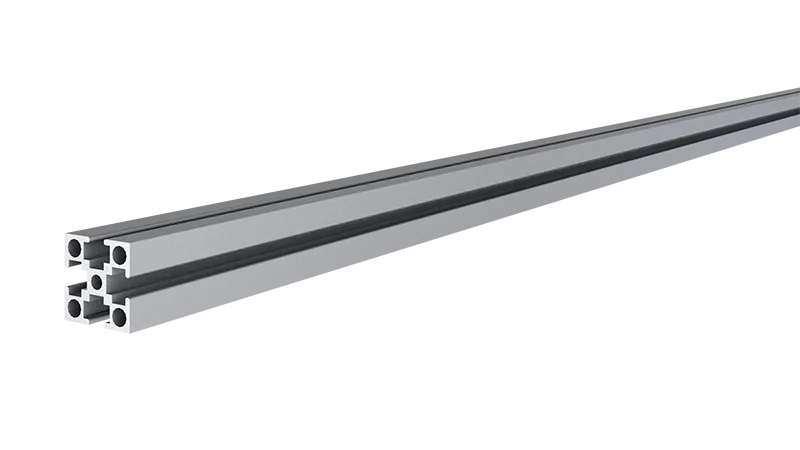
First, let's clarify: the "2020" in its name refers to its cross-sectional dimensions—typically 20mm by 20mm. That compact size makes it ideal for tight spaces, like the frames of workbenches or the supports of small conveyor systems. But its real power lies in what's under the surface. Most 2020 national standard profiles are made from 6063 aluminum alloy, a material prized for its balance of strength, ductility, and yes, thermal conductivity. Unlike cheaper alloys that cut corners on heat transfer, 6063 is engineered to move heat efficiently, with a thermal conductivity rating around 201 W/m·K (depending on temper and surface treatment). For context, that's nearly twice as conductive as stainless steel and far more efficient than many plastics or composites.
But it's not just the alloy. The national standard designation ensures consistency. Every 2020 profile off the production line meets strict specs for wall thickness (usually 1.2mm to 1.5mm), straightness, and surface finish. A smooth, uniform surface means better contact with heat sources—no gaps or rough spots to trap heat. And because it's an aluminum extrusion profile, it's shaped in one continuous process, eliminating weak points or seams that could hinder heat flow. This attention to detail turns a simple piece of metal into a heat-dissipating workhorse.

How 2020 Profile Thermal Conductivity Boosts Cooling Systems
Imagine a typical scenario: a workbench in an electronics factory, where operators assemble circuit boards. The workbench has a built-in power strip, a soldering iron, and a small fan to keep components cool. If the workbench frame is made from a low-conductivity material—say, steel or plastic—heat from the soldering iron builds up in the tabletop, radiating back onto the sensitive boards. The fan has to work harder, using more energy, and still might not keep temperatures stable.
Swap that frame for a 2020 national standard profile, and everything changes. The aluminum pulls heat away from the tabletop, spreading it along the profile's length. From there, the heat dissipates into the surrounding air or transfers to a dedicated heat sink attached to the frame. The fan can run slower, or in some cases, be eliminated entirely. That's the magic of high thermal conductivity: it turns the structure itself into part of the cooling system.
This isn't just about workbenches. Conveyor systems, for example, use aluminum profiles to support roller tracks. Motors and bearings generate friction heat; a 2020 profile frame conducts that heat away, preventing the track from warping or the bearings from seizing. Even material racks, which hold heavy loads for hours, benefit—heat from stored components (like warm circuit boards fresh off the line) is drawn into the rack's 2020 profile structure, keeping the stored items at a safe temperature.
Comparing Profiles: 2020 vs. Other Industrial Aluminum Extrusions
To truly appreciate the 2020 national standard profile, it helps to see how it stacks up against other common aluminum extrusion profiles. Let's break down the numbers:
| Profile Type | Thermal Conductivity (W/m·K) | Typical Applications | Cooling System Impact |
|---|---|---|---|
| 2020 National Standard Profile | 190–201 | Workbenches, small conveyors, electronics racks | High heat dissipation; reduces need for active cooling (fans/pumps) |
| 3030 National Standard Profile | 180–190 | Heavy-duty racks, machine frames | Good conductivity but bulkier; better for large heat sources |
| 4040 EU Standard Profile | 170–185 | Industrial machinery, automated systems | Balanced strength/conductivity but higher weight; requires more cooling support |
The 2020 profile's edge is clear: it offers near-top-tier thermal conductivity in a compact, lightweight package. For applications where space and weight matter—like a mobile workbench or a conveyor in a tight assembly line—this is critical. It doesn't just conduct heat well; it does so without adding bulk, making cooling systems simpler, lighter, and cheaper to run.
Aluminum Profile Accessories: The Unsung Partners in Heat Management
A profile is only as good as its accessories. Aluminum profile accessories might seem minor—end caps, brackets, heat sinks—but they amplify the 2020 profile's thermal performance. Take heat sink brackets, for example. Attached to the profile, they add surface area, giving heat more space to escape into the air. Or thermal conductive pads, which fill tiny gaps between the profile and heat-generating components (like a motor or power supply), ensuring no heat gets trapped.
Even something as simple as anodized surface treatment, a common finish for 2020 profiles, plays a role. Anodizing creates a thin, porous oxide layer that improves heat dissipation by enhancing radiation—heat isn't just conducted through the profile; it's radiated off the surface. Pair that with aluminum profile accessories like finned covers, and suddenly the profile becomes a passive cooling system all on its own.
Real-World Results: Cooling Efficiency in Action
Let's look at a case study: a small electronics manufacturer in Guangdong, China. They were struggling with their assembly workbenches—components were overheating during soldering, leading to a 5% defect rate. Their old workbenches used steel frames, which trapped heat. After switching to 2020 national standard profile frames with aluminum profile accessories (heat sink brackets and anodized finishes), they saw immediate results. Surface temperatures on the workbench dropped by 12°C, defect rates fell to 1.2%, and they were able to reduce fan usage by 30%, cutting energy costs by $2,000 annually per workbench.
Another example: a food packaging plant using small conveyors to move products through a sealing process. The conveyor motors were overheating, causing frequent shutdowns. By replacing the steel support rails with 2020 profiles, heat from the motors was conducted away into the frame, which then dissipated it into the cooler plant air. Motor temperatures stabilized, and downtime decreased by 40%.
Tips for Maximizing Thermal Conductivity in 2020 Profile Installations
To get the most out of your 2020 national standard profile, installation matters. Here are a few pro tips:
1. Ensure tight contact: Use thermal paste or conductive pads between heat sources (like motors or power supplies) and the profile. Even a tiny gap can reduce heat transfer by 20%.
2. Optimize airflow: Mount the profile in a way that exposes as much surface area as possible to moving air. Avoid enclosing it in tight spaces where heat can build up.
3. Choose the right accessories: Heat sinks, finned covers, and anodized finishes all boost cooling. Skip cheap plastic brackets—aluminum profile accessories are worth the investment for better conductivity.
4. Keep it clean: Dust and grease act as insulators. Regularly wipe down the profile to maintain its heat-dissipating surface.
The Bottom Line: Cooler Operations, Better Results
In industrial cooling, every watt of heat moved efficiently is a win. The 2020 national standard profile isn't just a piece of aluminum—it's a strategic tool for reducing costs, improving reliability, and keeping production lines running smoothly. Its thermal conductivity, paired with the right aluminum profile accessories, turns passive structures into active heat managers. Whether you're building a new workbench, upgrading a conveyor, or redesigning a cooling system, don't overlook the power of this unassuming profile. After all, in the race to beat the heat, the right material can make all the difference.