- Company Articles
- Industry articles
- Industry standards
- 2020 National Standard Profile Tolerance Ranges: Ensuring Precision in Conveyors

2020 National Standard Profile Tolerance Ranges: Ensuring Precision in Conveyors
Related Product
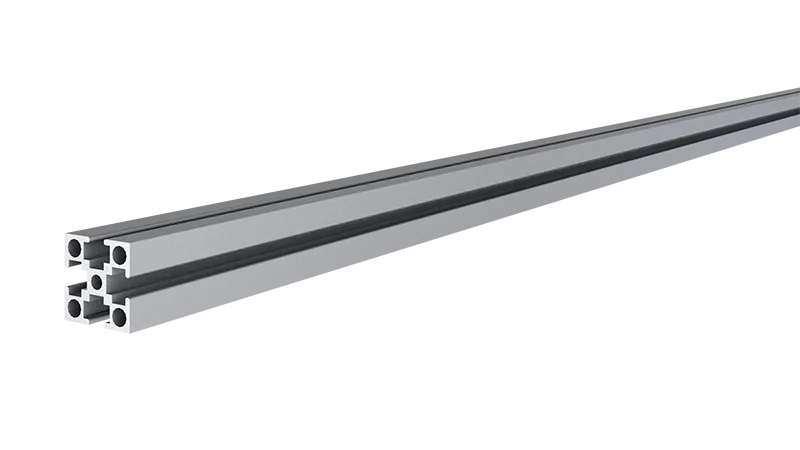
2020 National Standard Profile
45° external bending joint, used for 45° external connection of two aluminum pipes.
Walk into any modern manufacturing facility, and you'll likely hear the steady hum of conveyors moving products—from small electronic components to heavy machinery parts—across the production floor. These systems are the backbone of efficiency, but their reliability hinges on a often-overlooked detail: precision. Every gear, roller, and bracket must align perfectly to keep things flowing. At the heart of this precision lies a humble yet critical component: the aluminum profile. Specifically, the 2020 national standard profile has become a cornerstone in conveyor design, thanks to its strict tolerance ranges that ensure compatibility, durability, and seamless operation. In this article, we'll dive into what makes these profiles so essential, unpack the tolerance specifications that matter most, and explore how they keep conveyors—and entire production lines—running like clockwork.
What Is the 2020 National Standard Profile?
Before we get into tolerances, let's clarify what the 2020 national standard profile actually is. In manufacturing, "profiles" refer to extruded aluminum shapes with consistent cross-sections, designed to be lightweight yet strong. The "2020" designation comes from its dimensions: roughly 20mm in width and 20mm in height (though exact measurements vary slightly by standard). These profiles are part of a modular system, meaning they're designed to work with a range of aluminum profile accessories —connectors, brackets, end caps, and more—to build structures like conveyors, workbenches, and material racks.
What sets the 2020 national standard apart is its adherence to strict manufacturing guidelines. Unlike generic aluminum extrusions, these profiles are produced to uniform specifications, ensuring that a 2020 profile from one supplier will fit seamlessly with accessories or other profiles from another. This standardization is a game-changer for conveyor systems, where even a tiny misalignment can lead to jams, product damage, or downtime.
Understanding Tolerance Ranges: Why "Good Enough" Isn't Enough
Tolerance is the allowable variation in a dimension. Think of it as the "wiggle room" in manufacturing—how much a measurement (like width, length, or straightness) can deviate from the ideal without causing problems. In the case of the 2020 national standard profile, tight tolerances are non-negotiable. Why? Because conveyors rely on moving parts that must interact with minimal friction. A profile that's slightly too wide, for example, might prevent a roller track from sitting flush, causing rollers to bind. One that's too narrow could lead to loose connections, making the entire conveyor frame wobbly over time.
To put this in perspective: Imagine building a bookshelf where the shelves are cut 1mm too short. They might still fit, but over time, the weight of books would cause them to sag. Now scale that up to a conveyor moving thousands of products daily—suddenly, that 1mm tolerance becomes a critical factor in preventing breakdowns.

Key Tolerance Specifications for 2020 National Standard Profiles
The 2020 national standard profile's tolerance ranges cover several critical dimensions. Let's break down the most important ones and why they matter for conveyor systems:
| Tolerance Type | Specification | Impact on Conveyors |
|---|---|---|
| Cross-Sectional Width | ±0.2mm | Ensures aluminum profile accessories (e.g., 90° connectors) fit snugly, preventing loose joints in conveyor frames. |
| Straightness | ≤0.3mm per meter | Keeps roller track aligned, so products glide smoothly without tilting or jamming. |
| Wall Thickness | ±0.1mm | Maintains consistent strength; thin spots could bend under conveyor load, while thick spots add unnecessary weight. |
| Surface Flatness | ≤0.15mm over 500mm | Ensures even contact with brackets and mounts, reducing vibration that can loosen components over time. |
These numbers might seem small, but they're the result of years of engineering refinement. For example, the straightness tolerance of ≤0.3mm per meter means that a 3-meter-long profile will deviate by no more than 0.9mm from a perfect straight line. That's about the thickness of a few sheets of paper—hardly noticeable to the eye, but critical for a roller track that needs to guide products in a straight path.
How Tolerance Impacts Conveyor Performance: A Closer Look
Let's zoom in on a real-world scenario: a conveyor system in an electronics factory, moving circuit boards between assembly stations. The conveyor uses a roller track mounted on 2020 national standard profiles. If the profiles are out of tolerance, here's what could happen:
1. Roller Track Misalignment
Roller tracks rely on a consistent, level surface to function. If the 2020 profile has a bow (exceeding the straightness tolerance), the roller track will follow that curve. As circuit boards move along, they might catch on the raised sections, causing scratches or even bending delicate components. In extreme cases, a misaligned roller track could bring the entire conveyor to a halt as products pile up.
2. Loose or Stuck Accessories
Aluminum profile accessories like T-slot nuts and brackets are designed to fit the 2020 profile's grooves precisely. If the profile's width is too large, the nut might not slide into place, making assembly frustrating and time-consuming. If it's too small, the nut could wiggle loose during operation, causing brackets to shift. Imagine a bracket holding the roller track coming loose mid-shift—suddenly, the track dips, and products start falling off the conveyor. Not only does this disrupt production, but it also risks damaging expensive electronics.
3. Increased Wear and Tear
Profiles with inconsistent wall thickness are like a chain with weak links. Thinner sections will flex more under the weight of the conveyor and products, leading to metal fatigue over time. This can cause cracks, which start small but grow until the profile fails. On the flip side, overly thick walls add unnecessary weight, putting extra strain on motors and increasing energy costs. Either way, poor tolerance shortens the conveyor's lifespan, leading to more frequent replacements and downtime.
Case Study: Roller Track Performance with Precise Profiles
To see the impact of tight tolerances in action, let's look at a case from a automotive parts manufacturer. The company was struggling with a conveyor system that transported plastic trim pieces. Products were frequently getting stuck, and the roller track required weekly maintenance to realign. After investigating, engineers the conveyor was using generic aluminum profiles with no standardized tolerances—some sections were 20.5mm wide, others 19.8mm, and straightness varied by up to 1mm per meter.
The solution? Replacing the generic profiles with 2020 national standard profile and matching aluminum profile accessories . Within a month, the results were striking: jams decreased by 92%, maintenance time dropped by 75%, and the conveyor's throughput increased by 15% as products moved more smoothly. The plant manager noted, "We used to have two technicians fixing jams every shift. Now, they're free to focus on other tasks, and we haven't had a single production delay related to the conveyor."
This case highlights a key point: tolerance isn't just about meeting specs—it's about creating systems that work smarter, not harder. When every component fits perfectly, the entire production line becomes more efficient and reliable.
Ensuring Compliance: How Suppliers Maintain Tolerance Standards
Not all aluminum profiles are created equal. To ensure you're getting 2020 national standard profiles with the right tolerances, it's crucial to work with reputable suppliers. Here's how they maintain precision:
Advanced Extrusion Processes
High-quality suppliers use computer-controlled extrusion dies to shape the aluminum. These dies are precision-machined to the 2020 standard, ensuring each profile has consistent dimensions. After extrusion, profiles are cooled slowly to prevent warping, which helps maintain straightness and flatness tolerances.
Rigorous Quality Control
Every batch of profiles undergoes inspection. Coordinate measuring machines (CMMs) check cross-sectional dimensions, straightness, and wall thickness to ensure they fall within tolerance ranges. Samples are also tested for surface finish and strength, ensuring they can withstand the demands of conveyor use.
Material Consistency
The aluminum alloy used in 2020 national standard profiles is carefully selected for its extrusion properties. Suppliers source high-purity aluminum to avoid impurities that can cause inconsistencies in the final product. This ensures that even long lengths of profile maintain uniform tolerances from end to end.
Beyond Conveyors: Other Applications of 2020 National Standard Profiles
While we've focused on conveyors, the 2020 national standard profile's precision makes it valuable in other areas too. For example, workbench frames built with these profiles are incredibly stable, ensuring tools and equipment stay in place during assembly work. Material racks, used to store parts, benefit from the profiles' uniform dimensions, allowing for adjustable shelving that fits perfectly every time. Even automated guided vehicle (AGV) tracks rely on 2020 profiles to keep robots moving along precise paths.
In each case, the same tolerance principles apply: precision leads to reliability, which leads to better performance and lower costs over time.
Conclusion: Tolerance as a Foundation for Efficiency
The next time you walk past a conveyor, take a moment to appreciate the invisible precision that keeps it running. Behind the hum of motors and the clatter of rollers lies the 2020 national standard profile , with its tight tolerance ranges ensuring every component works in harmony. From cross-sectional width to straightness, these specifications might seem minor, but they're the difference between a system that stalls and one that powers through shift after shift.
For manufacturers, investing in precise profiles and compatible aluminum profile accessories isn't just about meeting standards—it's about building a production line that's resilient, efficient, and ready to scale. After all, in manufacturing, precision isn't a luxury; it's the foundation of success.