- Company Articles
- Industry articles
- Industry standards
- 2020 National Standard Profile vs Custom Profiles: When to Choose Which?

2020 National Standard Profile vs Custom Profiles: When to Choose Which?
Related Product
2020 National Standard Profile
45° external bending joint, used for 45° external connection of two aluminum pipes.
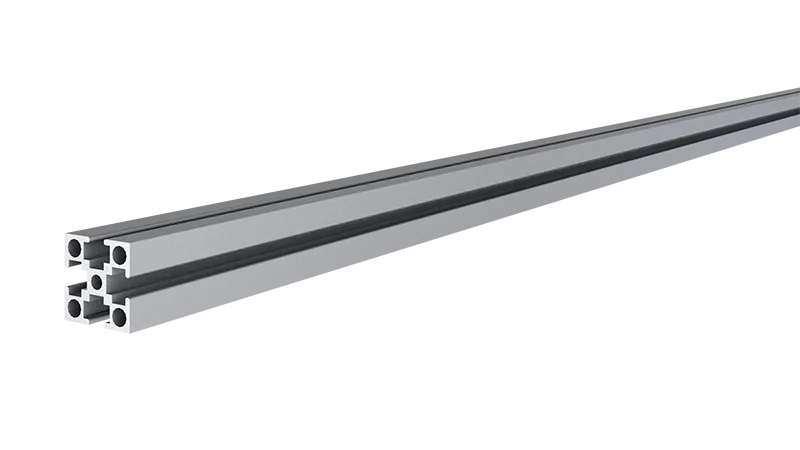
In the world of manufacturing, construction, and product design, aluminum extrusion profiles have become indispensable. These versatile building blocks are used to create everything from simple shelving units to complex aerospace components. But when it comes to selecting the right aluminum extrusion profile for your project, one question often arises: should you opt for a standardized solution like the 2020 National Standard Profile, or invest in a custom-designed alternative? This article dives deep into the differences between these two options, exploring their benefits, limitations, and ideal use cases to help you make an informed decision for your next project.
Understanding Aluminum Extrusion Profiles: The Backbone of Modern Design
Before we compare standard and custom profiles, let's first clarify what an aluminum extrusion profile is. Aluminum extrusion is a manufacturing process where aluminum alloy is heated and forced through a die—a specialized tool with a specific cross-sectional shape—to create long, uniform pieces. These pieces, known as profiles, can be cut, machined, and assembled into a wide range of structures and products. The beauty of aluminum extrusion lies in its versatility: the same basic process can produce everything from simple rods to intricate, multi-featured shapes tailored to unique needs.
Aluminum extrusion profiles are prized for their strength-to-weight ratio, corrosion resistance, and recyclability, making them a popular choice across industries. From automotive frames to office furniture, from medical devices to solar panel supports, these profiles form the backbone of countless applications. But not all profiles are created equal. The choice between standardized, off-the-shelf profiles and custom-designed ones can significantly impact your project's cost, timeline, and performance.
In this article, we'll focus on two key options: the 2020 National Standard Profile—a widely used standardized option—and custom aluminum extrusion profiles. By the end, you'll have a clear understanding of when to choose each, ensuring your project is efficient, cost-effective, and successful.
What Are 2020 National Standard Profiles?
National standard profiles, as the name suggests, are aluminum extrusion profiles manufactured to meet specific dimensions, tolerances, and performance criteria defined by national regulatory bodies. These standards ensure consistency, quality, and compatibility across products from different manufacturers. The 2020 National Standard Profile is one such standardized option, with the "2020" designation referring to its specific cross-sectional dimensions—typically 20mm x 20mm, though exact measurements may vary slightly by region.
These profiles are mass-produced in large quantities by numerous suppliers, making them readily available and affordable. They are designed for (versatility), meaning they can be used in a wide range of standard applications without the need for specialized tooling or design work. Common features of 2020 National Standard Profiles include T-slots—longitudinal grooves along the profile's length—that allow for easy attachment of accessories like brackets, connectors, and panels using bolts or screws. This design simplifies assembly and makes them a favorite for modular projects.
Because they adhere to national standards, 2020 National Standard Profiles are compatible with a vast array of pre-made aluminum profile accessories. From corner brackets and end caps to hinges and handles, these accessories are mass-produced and widely available, further reducing project complexity and cost. Whether you're building a workbench, a storage rack, or a machine frame, chances are there's a combination of 2020 National Standard Profiles and accessories that can get the job done.

The Benefits of Choosing 2020 National Standard Profiles
Opting for 2020 National Standard Profiles offers a host of advantages, especially for projects with standard requirements or tight constraints. Let's explore the key benefits:
Cost-Effectiveness
One of the most significant advantages of 2020 National Standard Profiles is their low cost. Because they are mass-produced, manufacturers can spread the cost of tooling and production across thousands of units, driving down the per-unit price. For small to medium-volume projects, this makes them far more affordable than custom profiles, which require expensive, one-off die manufacturing.
Additionally, the availability of cheap, standardized aluminum profile accessories further reduces costs. You won't need to pay for custom brackets or connectors; instead, you can pick up what you need from local suppliers or online retailers at a fraction of the cost of custom parts.
Short Lead Times
Time is often a critical factor in project success, and 2020 National Standard Profiles deliver here as well. Since they are produced in bulk and stocked by suppliers worldwide, you can typically get your hands on them within days of placing an order. There's no waiting for die design, prototyping, or manufacturing—simply select the length and quantity you need, and they'll be shipped directly to you.
This is particularly valuable for urgent projects, last-minute repairs, or prototyping, where delays can derail timelines and increase costs. For example, if a manufacturing facility needs to replace a damaged workbench frame quickly, using 2020 National Standard Profiles allows them to source materials locally and have the bench back in operation within a day or two.
Proven Reliability
2020 National Standard Profiles have been tested and used in countless applications over the years, so their performance characteristics are well-documented. Engineers and designers can trust that these profiles will meet standard load, strength, and durability requirements without the need for extensive testing. This reduces the risk of project delays due to unforeseen performance issues and gives teams confidence in their designs.
For example, if you're building a storage rack to hold boxes weighing up to 50kg per shelf, you can easily find load ratings for 2020 National Standard Profiles and select the appropriate thickness and configuration to ensure safety. This level of predictability is hard to match with custom profiles, which often require rigorous testing to validate their performance.
Easy Assembly and Modification
The T-slot design of 2020 National Standard Profiles, combined with standardized aluminum profile accessories, makes assembly incredibly straightforward. Even those with limited technical expertise can put together structures using basic hand tools like hex keys and screwdrivers. This ease of assembly reduces labor costs and makes it possible for small teams or even individuals to complete projects independently.
Furthermore, these profiles are highly modular, meaning structures can be easily modified or expanded as needs change. Need to add a shelf to your workbench? Simply slide a new bracket into the T-slot and secure it. Want to extend a storage rack? Cut additional profiles to length and connect them with standard joints. This flexibility is ideal for projects that may evolve over time, such as startup workspaces or growing retail displays.
The Limitations of 2020 National Standard Profiles
While 2020 National Standard Profiles are versatile and cost-effective, they are not without limitations. Understanding these drawbacks is crucial to determining whether they're the right fit for your project:
Limited Design Flexibility
The biggest downside of standardized profiles is their lack of design flexibility. They are designed to meet general needs, not specific or unique requirements. If your project calls for a non-standard cross-sectional shape, unusual dimensions, or integrated features like custom grooves, holes, or curves, 2020 National Standard Profiles will likely fall short.
For example, imagine you're designing a lightweight frame for a drone. The standard 20mm x 20mm profile may be too bulky, adding unnecessary weight that reduces flight time. Or perhaps you need a profile with a curved edge for a consumer product to improve ergonomics—standard profiles are typically straight and angular, so this would require modification or additional parts, increasing complexity and cost.
Potential Over-Engineering
Because 2020 National Standard Profiles are designed for, they often include features or thicknesses that may be unnecessary for your specific application. This can lead to over-engineering, where you're paying for strength, weight, or features you don't need. For example, if you're building a small display shelf for lightweight items, a heavy-duty 2020 profile with thick walls would be overkill, adding unnecessary cost and weight to the project.
Limited Aesthetic Options
Standard profiles have a generic, industrial look that may not align with the aesthetic goals of consumer-facing products or high-end designs. While they can be powder-coated or anodized in different colors, their basic shape remains the same. If your project requires a unique or visually striking design—such as a custom architectural feature or a premium consumer product—2020 National Standard Profiles may not provide the visual appeal you need.
Dependency on Standard Accessories
While compatibility with standard aluminum profile accessories is a benefit, it can also be a limitation. If your project requires a specialized accessory that isn't available off-the-shelf, you may need to modify existing accessories or have custom ones made, which can negate the cost and time savings of using standard profiles. For example, if you need a bracket at a 135-degree angle and can't find a standard one, you'd have to either bend a standard bracket (risking damage) or order a custom one, adding expense and delay.
What Are Custom Aluminum Extrusion Profiles?
Custom aluminum extrusion profiles are designed and manufactured to meet the unique requirements of a specific project or product. Unlike standard profiles, which follow pre-defined national standards, custom profiles are tailored to precise dimensions, shapes, features, and performance criteria set by the client. This level of customization makes them ideal for applications where standard profiles can't meet design, performance, or aesthetic needs.
The process of creating a custom aluminum extrusion profile begins with a detailed design brief from the client. This brief includes specifications like cross-sectional shape, dimensions, tolerances, material type, and performance requirements (e.g., load capacity, thermal conductivity). Engineers then translate this brief into a 3D model and design a custom die—a steel tool with the inverse of the desired profile shape. The die is then manufactured, tested, and refined to ensure it produces the correct profile.
Once the die is approved, aluminum alloy is heated to a malleable state and forced through the die using a hydraulic press, creating the custom profile. The profile is then cooled, cut to length, and finished (e.g., anodized, powder-coated) as needed. While this process is more complex and time-consuming than producing standard profiles, it allows for virtually unlimited design possibilities, making custom profiles the go-to choice for innovative or specialized applications.
The Benefits of Choosing Custom Aluminum Extrusion Profiles
Custom aluminum extrusion profiles offer a range of advantages for projects with unique requirements. Let's explore the key benefits:
Design Freedom
The most obvious benefit of custom profiles is the ability to create exactly the shape and features you need. Whether you require a complex cross-section with integrated channels for wiring, a lightweight design with strategic reinforcements, or a curved profile for aerodynamics, custom extrusion can deliver. This design freedom allows engineers and designers to optimize products for performance, functionality, and aesthetics in ways that standard profiles cannot match.
For example, the automotive industry frequently uses custom aluminum extrusion profiles to create lightweight, strong frames for electric vehicles. These profiles are designed to fit the vehicle's unique shape, reduce weight (improving battery range), and integrate mounting points for components like motors and batteries. This level of integration would be impossible with standard profiles, which would require additional brackets and fasteners, adding weight and complexity.
Performance Optimization
Custom profiles can be engineered to meet specific performance requirements, such as strength, weight, thermal management, or corrosion resistance. By tailoring the cross-sectional shape, wall thickness, and material alloy, designers can optimize the profile for its intended use, often resulting in better performance than standard alternatives.
Consider the aerospace industry, where every gram of weight matters. Custom aluminum extrusion profiles used in aircraft components are designed to be as lightweight as possible while maintaining the structural integrity needed to withstand extreme forces. By removing unnecessary material and adding reinforcements only where needed, these profiles contribute to fuel efficiency and overall aircraft performance.
Reduced Assembly Time and Costs
Custom profiles can integrate multiple features into a single piece, eliminating the need for separate components and reducing assembly steps. For example, a custom profile might include built-in hinges, cable channels, or mounting flanges that would otherwise require additional parts when using standard profiles. This integration reduces the number of parts to order, store, and assemble, saving time and labor costs.
A medical device manufacturer, for instance, might design a custom profile with integrated rails and clips to hold diagnostic tools. Using a standard profile would require attaching these rails and clips separately, increasing assembly time and the risk of parts coming loose. With a custom profile, the rails and clips are part of the extrusion, streamlining production and improving reliability.
Product Differentiation
In competitive markets, unique design can be a key differentiator. Custom aluminum extrusion profiles allow companies to create products with distinct aesthetics that stand out from competitors using generic standard profiles. This uniqueness can enhance brand recognition and appeal to consumers who value innovation and design.
For example, a furniture designer might use custom curved aluminum extrusion profiles to create a modern, eye-catching chair frame that can't be replicated with standard straight profiles. This unique design could become a signature feature of the brand, attracting customers willing to pay a premium for distinctive products.
Long-Term Cost Savings for High-Volume Projects
While custom profiles have higher upfront costs (due to die manufacturing), they can offer significant long-term savings for high-volume projects. The cost of the die is spread out over thousands or millions of units, reducing the per-unit cost. Additionally, the performance and assembly optimizations of custom profiles can lower material, labor, and maintenance costs over the product's lifecycle.
A manufacturer producing 100,000 units of a consumer appliance each year, for example, might find that the initial $10,000 die cost for a custom profile is offset by a $0.50 reduction in per-unit assembly costs. Over 100,000 units, that's $50,000 in savings—far exceeding the die cost. When combined with improved product performance and reduced material waste, custom profiles can be a cost-effective choice for large-scale production.
The Limitations of Custom Aluminum Extrusion Profiles
Despite their benefits, custom aluminum extrusion profiles are not the right choice for every project. Here are their key limitations:
High Upfront Costs
The biggest barrier to choosing custom profiles is the high upfront cost of die manufacturing. Creating a custom die involves designing, machining, heat-treating, and testing a steel tool, which can cost anywhere from $5,000 to $50,000 or more, depending on the complexity of the profile. This cost is prohibitive for small projects or startups with limited budgets, making custom profiles impractical for low-volume applications.
Long Lead Times
Developing a custom profile is a time-consuming process. From initial design and die manufacturing to prototyping, testing, and full production, the timeline can range from several weeks to several months. This is a significant drawback for projects with tight deadlines or those needing to respond quickly to market changes. For example, a company launching a seasonal product might not have the luxury of waiting three months for a custom die to be produced.
Minimum Order Quantities (MOQs)
Aluminum extrusion manufacturers typically require large minimum order quantities (MOQs) for custom profiles to justify the cost of die manufacturing. MOQs can range from 1,000 to 10,000 units or more, depending on the manufacturer and profile complexity. This makes custom profiles impractical for small-batch production, such as prototyping or limited-edition products.
Limited Flexibility for Revisions
Once a custom die is manufactured, making changes to the profile design is difficult and expensive. Even minor modifications may require reworking the die or creating a new one entirely, adding cost and extending lead times. This lack of flexibility is a problem for projects where design iterations are likely, such as early-stage product development.
Accessory Compatibility Challenges
Custom profiles often require custom aluminum profile accessories, as standard accessories may not fit non-standard shapes or sizes. These custom accessories are more expensive to produce and harder to source than standard ones, increasing overall project costs and complexity. For example, a custom profile with a unique T-slot size would need custom brackets and fasteners, which would have to be designed and manufactured separately.
2020 National Standard vs. Custom Profiles: A Detailed Comparison
To help you visualize the differences between 2020 National Standard Profiles and custom aluminum extrusion profiles, let's compare them across key factors:
| Factor | 2020 National Standard Profile | Custom Aluminum Extrusion Profile |
|---|---|---|
| Initial Cost | Low (no die cost) | High (die manufacturing cost: $5,000–$50,000+) |
| Per-Unit Cost | Low to moderate (mass-produced) | High at low volumes; lower than standard at high volumes (die cost spread across units) |
| Lead Time | Short (1–5 days, in-stock) | Long (4–12 weeks for die design, manufacturing, and production) |
| Design Flexibility | Limited (fixed cross-section and features) | High (fully customizable shape, features, and dimensions) |
| Availability | Readily available (stocked by most suppliers) | Made-to-order (no stock; produced on demand) |
| Minimum Order Quantity (MOQ) | Low or none (can order single units) | High (typically 1,000+ units) |
| Compatibility with Accessories | High (wide range of standard aluminum profile accessories available) | Low (may require custom accessories) |
| Performance Optimization | Limited (designed for general use) | High (tailored to specific performance requirements) |
| Ideal Applications | Standard structures (shelving, workbenches, frames), low-volume projects, tight deadlines | Unique designs, high-volume production, performance-critical applications, product differentiation |
When to Choose 2020 National Standard Profiles
2020 National Standard Profiles are the ideal choice in the following scenarios:
Small to Medium-Volume Projects
If you're producing a small number of units (e.g., 10–100), the high upfront cost of a custom die makes custom profiles impractical. 2020 National Standard Profiles allow you to keep costs low by avoiding die fees and taking advantage of mass-produced pricing.
Example: A local maker space needs to build 15 workbenches for its members. With a tight budget and no need for unique features, they opt for 2020 National Standard Profiles and standard aluminum profile accessories. They source materials locally, assemble the workbenches in a weekend, and stay within budget.
Tight Deadlines
When time is of the essence, 2020 National Standard Profiles are the way to go. Their short lead times mean you can get materials quickly and start production or assembly immediately, avoiding delays caused by die manufacturing and custom production.
Example: A retail store needs to set up new product displays for a weekend sale. They order 2020 National Standard Profiles and accessories on Monday, assemble the displays by Friday, and are ready for the sale on Saturday.
Standard Applications
For applications with generic requirements—such as shelving, frames, workbenches, or simple machine guards—2020 National Standard Profiles are more than sufficient. Their proven performance and compatibility with standard accessories make them a reliable, cost-effective choice.
Example: A warehouse needs to add 50 new storage racks to hold inventory. Using 2020 National Standard Profiles, they can quickly design and assemble the racks using standard brackets and shelves, ensuring they meet load requirements without overcomplicating the project.
Prototyping and Testing
When developing a new product, it's often wise to prototype with standard profiles first to test functionality and design before investing in custom tooling. 2020 National Standard Profiles allow you to quickly iterate on designs, make modifications, and validate concepts without the cost and time of custom dies.
Example: A startup is developing a new portable 3D printer. They use 2020 National Standard Profiles to build several prototypes, testing different frame configurations and component layouts. Once the design is finalized, they consider whether to invest in a custom profile for mass production.
Projects Requiring Easy Repairs or Replacements
Standard profiles and accessories are widely available, making repairs and replacements quick and easy. If a component breaks or needs to be replaced, you can simply order a new standard profile or accessory and install it without delay.
Example: A manufacturing plant uses 2020 National Standard Profiles for its assembly line workstations. When a workstation bracket breaks, the maintenance team can pick up a replacement from a local supplier and have the line back up and running within an hour.
When to Choose Custom Aluminum Extrusion Profiles
Custom aluminum extrusion profiles are the better choice in these scenarios:
High-Volume Production
For large-scale production runs (e.g., 10,000+ units), the cost of a custom die can be spread across thousands of units, making the per-unit cost lower than standard profiles. Additionally, the performance and assembly optimizations of custom profiles can lead to long-term savings in labor and materials.
Example: An electronics manufacturer produces 50,000 laptop stands per year. By switching from standard profiles to a custom aluminum extrusion profile with integrated cable management and mounting points, they reduce assembly time by 30% and eliminate the need for 10 additional parts per unit. Over 50,000 units, the savings far exceed the $15,000 die cost.
Unique Design Requirements
If your project requires a non-standard shape, size, or feature that can't be achieved with standard profiles, custom extrusion is the only option. This includes integrated channels, curves, custom T-slots, or specialized mounting points.
Example: An architectural firm is designing a modern facade for a commercial building. The design calls for curved, lightweight aluminum panels with integrated drainage channels. Standard profiles can't achieve the curved shape or integrated drainage, so they commission a custom aluminum extrusion profile that meets the design's aesthetic and functional requirements.
Performance Optimization
When performance is critical—such as in aerospace, automotive, or medical applications—custom profiles allow you to tailor strength, weight, thermal conductivity, or other properties to your specific needs. This optimization can lead to better product performance, reliability, and efficiency.
Example: A medical device company needs a lightweight, sterile frame for a new surgical tool. Standard profiles are too heavy and have crevices that trap bacteria. They design a custom aluminum extrusion profile with a smooth, seamless surface and optimized wall thickness to reduce weight while maintaining strength, ensuring the tool is both functional and easy to sterilize.
Product Differentiation
In competitive markets, a unique design can help your product stand out. Custom profiles allow you to create distinctive aesthetics that set your product apart from competitors using generic standard profiles.
Example: A consumer goods company launches a new line of premium kitchen appliances. To differentiate from competitors, they use custom curved aluminum extrusion profiles for the appliance handles, creating a sleek, modern look that appeals to design-conscious consumers. The unique handles become a key selling point for the product line.
Long-Term Projects with Stable Designs
For long-term projects with stable, unchanging designs, the upfront cost of a custom die is justified by long-term savings and performance benefits. This includes infrastructure projects, specialized machinery, or products with multi-year production runs.
Example: A solar panel manufacturer designs a new mounting system for its panels that will be produced for the next 5 years. They invest in a custom aluminum extrusion profile that optimizes strength, weight, and ease of installation. Over the 5-year production run, the die cost is spread across millions of units, and the optimized design reduces material and labor costs, resulting in significant savings.
Key Factors to Consider When Making Your Decision
Choosing between 2020 National Standard Profiles and custom aluminum extrusion profiles requires careful consideration of several factors. Here's a checklist to help you decide:
Project Volume
How many units do you plan to produce? If it's less than 1,000, standard profiles are likely the better choice. If it's 10,000 or more, custom profiles may offer long-term savings.
Timeline
Do you need materials quickly? Standard profiles have short lead times, while custom profiles can take months. Factor in deadlines and whether delays are acceptable.
Budget
What's your upfront budget? Custom profiles require significant initial investment for dies, while standard profiles have low upfront costs but higher per-unit costs at high volumes.
Design Uniqueness
Does your project require a unique shape, size, or feature? If yes, custom profiles are necessary. If not, standard profiles will suffice.
Performance Requirements
Do you need specialized performance (e.g., lightweight, high strength, thermal management)? Custom profiles can be optimized for these needs, while standard profiles offer generic performance.
Future Modifications
Are you likely to modify the design in the future? Standard profiles allow for easy modifications, while custom profiles require expensive die changes.
Accessory Availability
Will you need specialized accessories? Standard profiles have abundant, affordable accessories, while custom profiles may require costly custom accessories.
Case Study 1: Small Business Workbench Project (2020 National Standard Profile)
The Challenge
A small electronics repair shop with 5 employees needed to build 5 new workbenches to accommodate growing demand. The shop had a budget of $2,000 and needed the workbenches completed within 2 weeks to avoid disrupting repairs.
The Solution
The shop chose 2020 National Standard Profiles for the project. Here's why:
- Budget Constraints: With a limited budget, the high upfront cost of custom dies was impractical. 2020 National Standard Profiles allowed them to source materials affordably.
- Short Timeline: The shop needed the workbenches quickly. Standard profiles were available locally, with delivery in 2 days, and assembly took just 3 days.
- Standard Requirements: The workbenches needed to be sturdy, have shelves for tools, and include a surface for repairs—all standard features achievable with 2020 National Standard Profiles and aluminum profile accessories like brackets, shelves, and worktop panels.
The Outcome
The shop spent $1,800 on materials (profiles, accessories, and worktop panels), came in under budget, and had the workbenches ready in 5 days. The T-slot design allowed for easy assembly, and the modular nature of the profiles means the shop can add shelves or modify the workbenches as needed in the future. The workbenches have been in use for over a year with no issues, proving the reliability of 2020 National Standard Profiles for standard applications.
Case Study 2: Automotive Component Manufacturer (Custom Aluminum Extrusion Profile)
The Challenge
An automotive component manufacturer needed to design a lightweight frame for a new electric vehicle (EV) battery pack. The frame needed to be strong enough to protect the battery, lightweight to maximize EV range, and include integrated mounting points for wiring and sensors. The manufacturer planned to produce 50,000 units per year for the next 5 years.
The Solution
The manufacturer chose a custom aluminum extrusion profile for the frame. Here's why:
- Performance Optimization: Standard profiles were too heavy and didn't offer the integrated mounting points needed. A custom profile allowed engineers to design a lightweight, strong frame with strategic reinforcements and built-in channels for wiring.
- High Volume: With 50,000 units per year for 5 years, the die cost ($25,000) was spread across 250,000 units, resulting in a per-unit die cost of just $0.10. This made the custom profile cost-effective in the long run.
- Design Integration: The custom profile integrated multiple features (mounting points, wiring channels, reinforcement ribs) into a single piece, reducing assembly time by 40% compared to using standard profiles with additional brackets.
The Outcome
The custom aluminum extrusion profile reduced the frame weight by 15% compared to the standard profile design, increasing the EV's range by approximately 5 miles per charge. The integrated features reduced assembly time from 20 minutes per frame to 12 minutes, saving the manufacturer 8 minutes per unit—equivalent to over 6,600 labor hours per year. Over 5 years, the manufacturer estimates the custom profile will save over $500,000 in labor and material costs, far exceeding the initial die investment.
Conclusion: Making the Right Choice for Your Project
Choosing between 2020 National Standard Profiles and custom aluminum extrusion profiles ultimately comes down to your project's specific needs. Both options have their place in the world of manufacturing and design, and understanding their strengths and limitations is key to making an informed decision.
2020 National Standard Profiles are the workhorses of standard applications, offering low cost, short lead times, and easy assembly for small to medium-volume projects with generic requirements. They're ideal for tight budgets, quick timelines, and prototyping, and their compatibility with standard aluminum profile accessories makes them a versatile, reliable choice.
Custom aluminum extrusion profiles, on the other hand, are the champions of innovation and performance. They offer unparalleled design freedom, performance optimization, and product differentiation for high-volume projects, unique applications, and long-term initiatives where upfront costs can be justified by long-term savings and benefits.
By considering factors like project volume, timeline, budget, design uniqueness, and performance requirements, you can confidently choose between these two options. And remember—for many projects, a hybrid approach may be the solution: start with standard profiles for prototyping and low-volume production, then transition to custom profiles once the design is validated and volumes increase.
Whichever path you choose, aluminum extrusion profiles—whether standard or custom—will continue to play a vital role in shaping the products and structures of tomorrow. With their versatility, strength, and sustainability, they're sure to remain a cornerstone of modern manufacturing for years to come.