- Company Articles
- Industry articles
- Industry standards
- 2020 National Standard Profile vs International Standards: A Comparative Study

2020 National Standard Profile vs International Standards: A Comparative Study
Related Product
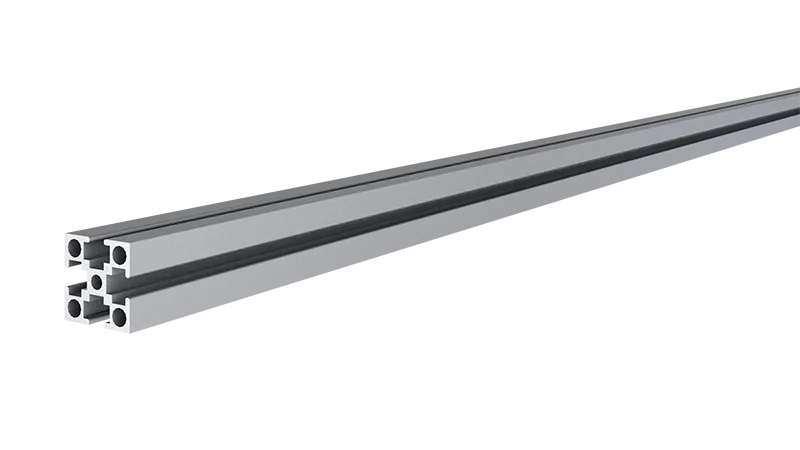
2020 National Standard Profile
45° external bending joint, used for 45° external connection of two aluminum pipes.
Introduction: The Invisible Backbone of Modern Factories
Step into any buzzing manufacturing plant, and you'll notice the quiet contributors to its efficiency: the sturdy frames supporting assembly lines, the sleek rails guiding product flow, the modular workbenches adapting to changing tasks. These are aluminum profiles—unassuming yet indispensable. They're the reason a factory can reconfigure a production line overnight or a warehouse can optimize storage in days. But behind these profiles lies a critical choice: national or international standards? In recent years, the 2020 National Standard Profile has emerged as a strong contender in regional markets, prompting manufacturers and aluminum profile suppliers to weigh its merits against globally recognized benchmarks. This article unpacks that choice, exploring how the 2020 National Standard stacks up against international norms and what it means for your operations.
Understanding the 2020 National Standard Profile
The 2020 National Standard Profile isn't just a specification—it's a response to local manufacturing needs. Developed to balance quality, cost, and accessibility, it's tailored for businesses that prioritize agility and regional supply chains. Let's break down its core characteristics:
1. Dimension Consistency: At its heart is a 20mm x 20mm cross-section (with larger variants like 3030 or 4040 for heavier loads), ensuring parts from different local suppliers fit together like puzzle pieces. For small workshops building custom workbenches or startups scaling production, this uniformity eliminates the headache of mismatched components.
2. Material Smartness: Typically crafted from 6063-T5 aluminum alloy, it hits the sweet spot between strength and weight. With wall thicknesses ranging from 1.2mm to 2.0mm, it's robust enough to support lean pipe workbench setups yet light enough for easy reconfiguration. This alloy also resists corrosion, a boon for factories in humid climates.
3. T-Slot Practicality: The T-slots—those grooves along the profile—are designed for local aluminum profile accessories : brackets, connectors, even cable clips. Unlike some niche international designs, these slots prioritize everyday usability, making it simple for workers to add or remove components without specialized tools.
4. Cost-Effective Production: By aligning with local manufacturing capabilities, the 2020 Standard avoids the markup of imported materials. Suppliers can produce it at scale, passing savings to businesses. For a mid-sized electronics plant needing 50 workbenches, this could mean cutting material costs by 15-20% compared to imported profiles.

International Standards: The Global Benchmark
International standards—think EU-derived profiles like 2020, 3030, or 4080 series—are the veterans of the industry. For decades, they've been the go-to for multinationals and export-focused businesses, built on principles of precision and interoperability. Here's what sets them apart:
1. Precision Engineering: Tighter tolerances (often ±0.1mm for dimensions) ensure components align perfectly, critical for high-precision setups like robotic assembly stations. A German automaker, for example, relies on this precision to keep conveyor systems moving car parts with millimetric accuracy.
2. Heavy-Duty Alloys: Many international profiles use 6061-T6 alloy, offering higher tensile strength than 6063-T5. This makes them ideal for flow rack systems carrying heavy automotive components or industrial workbenches supporting 200kg+ loads.
3. Vast Accessory Ecosystem: From specialized hinges for cleanrooms to vibration-dampening mounts for lab equipment, the global market for international accessories is unparalleled. Need a waterproof connector for a food-processing line? Chances are an international supplier has it in stock.
4. Sustainability Focus: Stricter regulations often mean higher recycled aluminum content and eco-friendly finishes. For companies aiming for LEED certification or carbon-neutral goals, this compliance is non-negotiable.
Side-by-Side: Key Differences That Matter
To see how these standards measure up, let's compare their most critical features. This isn't about declaring a winner—it's about finding the right fit for your needs.
| Feature | 2020 National Standard Profile | International (EU) Profile | What This Means for You |
|---|---|---|---|
| Cross-Section Tolerance | ±0.2mm | ±0.1mm | International profiles suit tight-fit applications (e.g., robotic arms). National standards work well for general manufacturing where minor gaps won't affect performance. |
| Typical Load Capacity | 100-150kg/m (2.0mm wall) | 150-200kg/m (2.5mm wall) | Choose national for light assembly workbenches; international for heavy-duty conveyor systems or multi-level material racks. |
| Accessory Availability | Basic to mid-range (brackets, casters, panels) | Extensive (specialized hinges, sensors, custom brackets) | National standards cover 90% of everyday needs. International standards are better for unique projects (e.g., aerospace tooling). |
| Lead Time | 2-5 days (local suppliers) | 7-14 days (imported) | National standards shine for urgent repairs or quick production line overhauls. |
| Cost Per Meter | Lower (10-25% savings vs. imported) | Higher, but with premium alloy options | National standards are budget-friendly for SMEs; international may justify cost for high-stakes applications. |
Choosing Wisely: When to Go National vs. International
The decision hinges on your day-to-day reality. Let's break down scenarios where each standard excels:
Opt for 2020 National Standard If…
- You're local and proud: If your supply chain, customers, and operations are regionally focused, national standards eliminate import delays and customs headaches. A furniture manufacturer serving domestic retailers, for example, can source profiles and accessories in days, not weeks.
- Budget matters (but quality can't slip): Startups or SMEs balancing growth with costs will appreciate the lower price point. For a small electronics plant building 10 workbenches, choosing national standards could free up funds for tools or training.
- You need to pivot fast: Factories producing seasonal goods or testing new products need to reconfigure lines quickly. The 2020 Standard's lightweight design and easy-access accessories make rearranging a flow rack or workbench a one-person job.
Opt for International Standards If…
- You're global: Multinationals with plants in Europe, Asia, or the Americas need consistency. Using international profiles ensures a Tokyo factory's conveyor design works in Berlin, cutting training and engineering costs.
- Heavy loads or precision rules: Automotive plants moving engine blocks, pharmaceutical labs with microscale assembly, or aerospace facilities building satellite components need the extra strength and accuracy of international alloys and tolerances.
- Specialized gear is non-negotiable: If your project requires, say, a chemical-resistant bracket for a fertilizer plant or a low-voltage cable management system for medical devices, international suppliers likely have off-the-shelf solutions.
Real Stories: How Companies Are Choosing
Let's look at two businesses that navigated this choice—their challenges and wins offer valuable lessons.
Case 1: A Local Electronics Startup Scales Up
GreenTech, a 50-person firm making smart home sensors, needed to expand from 2 to 5 assembly lines. With tight funds and a 3-month deadline, they chose 2020 National Standard profiles. Local suppliers delivered profiles and accessories (casters, workbench tops, small
flow rack
units) in 3 days. The result? They saved 18% on materials, hit their deadline, and later reconfigured two lines in a weekend when a new sensor model launched. "We didn't need aerospace-grade precision—just reliable, affordable infrastructure," said their operations manager.
Case 2: A Multinational Automotive Supplier Expands Locally
AutoParts Inc., with factories in Germany and Mexico, opened a plant in Southeast Asia. They standardized on international profiles for critical conveyor systems (carrying 180kg engine parts) but used 2020 National Standard profiles for auxiliary racks and employee workbenches. This hybrid approach let them maintain global safety standards for heavy equipment while cutting costs on less critical structures. "We worked with a local
aluminum profile supplier
who understood both standards—they even provided adapters to connect the two systems," noted their regional engineer.
Conclusion: Standards That Serve Your Goals
The 2020 National Standard Profile and international standards aren't rivals—they're tools for different jobs. National standards thrive in local, cost-sensitive, or fast-paced environments, where accessibility and affordability matter most. International standards excel in global, high-precision, or heavy-duty settings, where consistency and specialized components are non-negotiable.
For aluminum profile suppliers and manufacturers alike, the future lies in flexibility. Many suppliers now stock both, ensuring they can meet diverse needs. As for you? Start by mapping your priorities: Are you building a prototype or a 20-year production line? Sourcing locally or globally? Answering these will guide you to the standard that doesn't just fit your specs—but fits your story.
At the end of the day, the best standard is the one that helps you build better, faster, and smarter. Whether it's national or international, that's the measure of success.