- Company Articles
- Industry articles
- Industry standards
- 2020 National Standard Profile Weight-to-Strength Ratio: Advantages for Mobile Workstations

2020 National Standard Profile Weight-to-Strength Ratio: Advantages for Mobile Workstations
Related Product
2020 National Standard Profile
45° external bending joint, used for 45° external connection of two aluminum pipes.
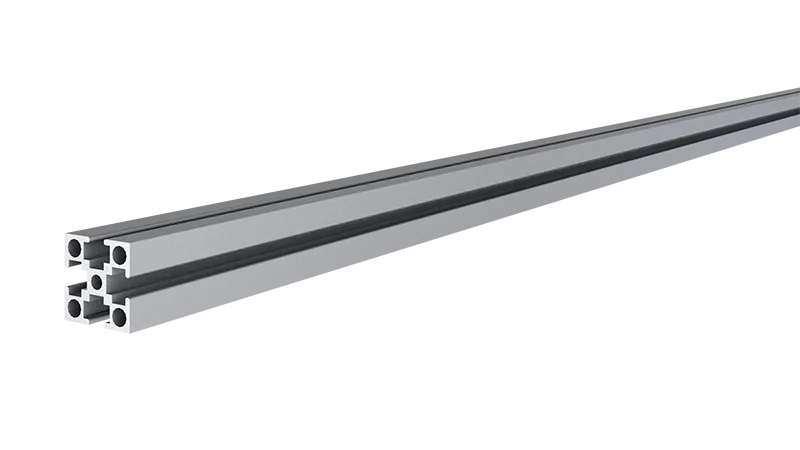
Walk into any modern factory, warehouse, or assembly line today, and you'll notice a quiet revolution happening right under workers' feet: mobile workstations are everywhere. These rolling hubs of productivity—whether holding tools, parts, or entire workbenches—have become the backbone of agile manufacturing. But here's the thing: not all mobile workstations are created equal. Ask any worker who's pushed a clunky, overloaded cart across a shop floor, and they'll tell you the same thing: mobility shouldn't mean sacrificing strength . That's where the 2020 national standard profile comes in. This unassuming aluminum extrusion has quietly become a game-changer for anyone who relies on mobile workstations, and it all boils down to one critical factor: its exceptional weight-to-strength ratio. Let's dive into why this matters, how it works, and why it might just be the upgrade your workflow has been waiting for.
What Even Is a 2020 National Standard Profile, Anyway?
Before we get into the nitty-gritty of weight and strength, let's make sure we're all on the same page about what a 2020 national standard profile actually is. If you've ever glanced at the metal frames holding up shelves, workbenches, or machine guards in a factory, you've probably seen aluminum profiles—long, hollow beams with T-slots running along their length. These slots are like built-in puzzle pieces, letting you attach brackets, panels, or accessories without drilling holes. The "2020" part? That refers to its dimensions: roughly 20mm by 20mm (hence the name). And "national standard"? That means it's manufactured to strict, consistent specifications set by industry regulators, so you know you're getting the same quality whether you buy it from one aluminum profile supplier or another.
But why 20mm by 20mm? It's a sweet spot. Small enough to keep structures lightweight, but beefy enough to handle real-world industrial demands. Think of it as the Goldilocks of aluminum profiles: not too big, not too small, just right for applications where mobility and strength need to coexist. And because it's part of a national standard, it plays well with a whole ecosystem of aluminum profile accessories —connectors, end caps, hinges, and more—making it easy to build (and rebuild) just about anything you can imagine.
Weight-to-Strength Ratio: The Unsung Hero of Mobile Workstations
Okay, let's talk about the star of the show: weight-to-strength ratio. In plain English, this is a measure of how much weight a material can support relative to how much it weighs itself. For example, a material with a high weight-to-strength ratio can hold a lot of weight without being heavy. For mobile workstations, this is make-or-break. Why? Because if your workstation is too heavy, even the best caster wheel won't save you—it'll be tough to push, hard on floors, and liable to wear out casters (and workers) faster. But if it's too light? It might wobble under a load, flex when you lean on it, or even collapse if you stack too many parts. The 2020 national standard profile nails this balance, and here's why:
Aluminum, by nature, is lighter than steel—about a third the weight. But the 2020 profile takes it a step further. Its hollow design and precision extrusion process mean it's engineered to be strong where it counts (the walls) and light where it doesn't (the hollow center). Add in the T-slots, which reinforce the structure without adding unnecessary bulk, and you've got a material that punches way above its weight class. To put it in perspective: a 1-meter length of 2020 aluminum profile weighs roughly 0.45kg, but it can support over 200kg of downward force before bending. That's like a soda can holding a small refrigerator—impressive, right?
But numbers alone don't tell the story. Let's say you're using a steel frame for your mobile workstation. Steel is strong, sure, but a 20mm steel square tube might weigh 2-3kg per meter—five times heavier than the aluminum profile. That extra weight adds up fast. A simple workbench frame might use 10 meters of tubing; with steel, that's 20-30kg just in the frame, before you even add a worktop, tools, or parts. Now try rolling that across a concrete floor with caster wheels. It's doable, but it's not fun. With the 2020 aluminum profile, that same frame might weigh 4.5kg—light enough that one person can move it with ease, even fully loaded. That's the weight-to-strength ratio in action: strength without the sweat.

How Does It Stack Up Against the Competition?
To really appreciate the 2020 profile's magic, let's compare it to the other materials you might use for a mobile workstation. We'll keep it simple: steel, plastic, and "generic" aluminum (non-standard profiles).
| Material | Weight (kg/m) | Approx. Tensile Strength (MPa) | Weight-to-Strength Ratio (MPa/(kg/m)) | Best For |
|---|---|---|---|---|
| 2020 National Standard Aluminum Profile | 0.45 | 120 | 267 | Mobile workstations, light-to-medium loads, frequent reconfiguration |
| 20mm Steel Square Tube (Mild Steel) | 2.5 | 370 | 148 | Heavy-duty, stationary structures (e.g., machine bases) |
| Plastic Extrusion (PVC/ABS) | 0.3 | 40 | 133 | Light loads, non-industrial use (e.g., retail displays) |
| Non-Standard Aluminum Profile (20x20mm) | 0.5-0.7 | 80-100 | 114-200 | Budget projects, one-off builds (inconsistent quality) |
The key takeaway? The 2020 national standard profile has a weight-to-strength ratio nearly twice that of steel and plastic, and significantly higher than non-standard aluminum. That means for the same strength, it's lighter; for the same weight, it's stronger. And in mobile workstations, where every kilogram affects how easy (or hard) something is to move, that difference is day and night.
Plastic is lighter, sure, but it flexes under heavy loads and can crack in cold or hot environments—hardly ideal for a workstation that needs to last. Non-standard aluminum might save you a few bucks upfront, but inconsistent wall thicknesses and weaker alloys mean you're gambling with strength. Steel? It's the old reliable, but reliability shouldn't mean breaking your back every time you need to shift a workbench. The 2020 profile? It's the sweet spot between all three.
So, What Does This Mean for Your Mobile Workstation?
Okay, so the 2020 profile is strong and light. Cool. But how does that actually improve your day-to-day? Let's break it down into real-world benefits, starting with the most obvious: mobility .
1. Caster Wheels That Actually Work (Instead of Fighting You)
You can't have a mobile workstation without caster wheel s, and caster wheels hate heavy loads. The heavier the workstation, the more friction there is between the wheels and the floor. That means more effort to push, more wear on the wheels (and your floors), and a higher chance of casters locking up or breaking. With the 2020 profile's light weight, your caster wheels finally get to do their job properly. A typical set of 4-inch industrial casters can handle 150kg per wheel, but with a lighter frame, you're not maxing them out—they'll roll smoother, last longer, and even handle uneven floors better. I've seen workers go from dreading moving their workstation to volunteering to reposition it, just because it's suddenly so easy. That's not just convenience—that's morale.
2. Strength That Keeps Up With Your Workload
Lightweight doesn't mean flimsy. Let's say you're using a mobile workbench in an electronics assembly line. You've got a soldering iron, a bin of components, a laptop, and maybe a small microscope on top. That's easily 50-70kg of gear. With a plastic frame, you'd see the worktop sagging by lunch. With a steel frame, you'd need help moving it. With the 2020 aluminum profile? The frame stays rigid, the worktop stays level, and you don't have to second-guess whether it can handle the load. I visited a PCB assembly shop last year where they'd switched to 2020 profile workstations, and the foreman told me, "We used to have to bolt workbenches to the floor because the steel ones would walk around when we pushed them. Now these aluminum ones stay put when we need them to, but glide when we don't. It's like they read our minds."
3. Flexibility to Adapt (Because Workflows Change)
Here's where the aluminum profile accessories come into play. The 2020 profile's T-slots mean you can add, remove, or rearrange parts without drilling, welding, or special tools. Need a shelf for extra bins? Slide a bracket into the T-slot and tighten a screw. Want to mount a monitor arm? There's an accessory for that. This flexibility is a cornerstone of lean system principles—eliminating waste by making your workspace adapt to your needs, not the other way around. A manufacturer I worked with once had to reconfigure their entire assembly line in a day to accommodate a rush order. With their old steel workstations, that would've meant hours with wrenches and a team of four. With the 2020 aluminum profiles? Two people did it in 90 minutes, using nothing but hex keys and a rubber mallet. That's the power of a system built for change.
4. Durability That Lasts (Even When Life Gets Messy)
Aluminum is naturally resistant to rust and corrosion, which is a big plus if your workstation lives in a damp warehouse or near chemicals. Unlike steel, you don't have to paint or coat it to keep it looking (and working) good. The national standard also ensures consistent wall thickness and alloy quality, so you don't get weak spots that fail unexpectedly. I've seen 2020 profile workstations in food processing plants (where they're hosed down daily) and auto shops (where oil and grease are everywhere) that still look brand-new after five years. Steel would be rusted, plastic would be cracked, but aluminum? It just keeps going.
Real-World Stories: When the 2020 Profile Changed the Game
Numbers and specs are great, but let's hear from people who actually use this stuff every day. Take Maria, a production supervisor at a small electronics manufacturer in Ohio. Her team builds custom circuit boards, and their workstations need to move between soldering, testing, and packaging stations. "Before we switched to the 2020 aluminum profiles, our workstations were steel," she told me. "They weighed a ton—even empty. We had two people assigned just to move them around, and the casters kept breaking because of the weight. Now? Our new workbenches are half the weight, and we can add a shelf or a tool holder in five minutes with those T-slot brackets. Last month, we had a new hire ask, 'Is that all it takes to move this?' She couldn't believe how easy it was. Now we're using those two extra people to actually build stuff, not push carts. Productivity's up 15%—all because of a lighter frame."
Then there's Raj, who runs a warehouse for a third-party logistics company. His team uses mobile workstations to sort small packages, and they're on the move 12 hours a day. "We tried plastic first—cheap, but they flexed so bad that packages would fall off. Then steel—strong, but our workers were complaining about back pain from pushing them. The 2020 aluminum profiles? It's like night and day. The workstations weigh maybe 15kg empty, so even when loaded with 30kg of packages, one person can zip them around. And the caster wheels? We used to replace them every month; now they last six. The ROI on the aluminum profiles paid for itself in three months, just in caster replacements and fewer worker comp claims."
Is It Right for Everyone? A Few Considerations
Before you rush out to buy a truckload of 2020 profiles, let's be real: it's not a one-size-fits-all solution. If you're building a workstation that never moves (like a heavy-duty machining center) or needs to support literal tons of weight (think: engine blocks), steel might still be the way to go. The 2020 profile is optimized for mobile workstations—where mobility, flexibility, and medium-to-heavy loads are the priority. It's also worth noting that aluminum profiles can be pricier upfront than steel or plastic. But as Raj and Maria found, the long-term savings (in labor, caster wheels, and reconfiguration time) usually make up for it. Plus, because they're modular, you can reuse parts when you redesign your workstation—no more throwing away entire frames when you need a change.
Another thing to keep in mind: not all aluminum profiles are created equal. The "national standard" part matters. There are cheap knockoffs out there—thinner walls, weaker alloys, misaligned T-slots—that won't give you the same weight-to-strength ratio. Stick with reputable suppliers who specifically mention "2020 national standard" or "GB/T [relevant standard number]" in their specs. It's worth the extra few dollars to avoid a wobbly workstation that lets you down.
Wrapping Up: Why the 2020 Profile Deserves a Spot in Your Workflow
At the end of the day, a mobile workstation is more than just a cart with a tabletop. It's the literal foundation of how your team works—how they move, how they adapt, how they stay productive. A workstation that's heavy, rigid, or flimsy doesn't just slow down tasks; it drains energy, kills morale, and limits what your team can achieve. The 2020 national standard profile changes that by offering something rare: strength without the weight, flexibility without the fuss, and durability without the maintenance. It's not just a material—it's a tool for making work easier, smarter, and more adaptable. And in a world where manufacturing and warehousing are faster and more dynamic than ever, that's not just an advantage. It's a necessity.
So, the next time you're staring at a workstation that's too heavy to move or too flimsy to trust, remember: there's a better way. The 2020 aluminum profile might not be the flashiest innovation in your factory, but it just might be the one that makes the biggest difference in how your team works—one lightweight, strong, and surprisingly versatile frame at a time.