- Company Articles
- Industry articles
- Industry standards
- 2020 National Standard Profile: What Is It & Key Specifications for Manufacturers

2020 National Standard Profile: What Is It & Key Specifications for Manufacturers
Related Product
2020 National Standard Profile
45° external bending joint, used for 45° external connection of two aluminum pipes.
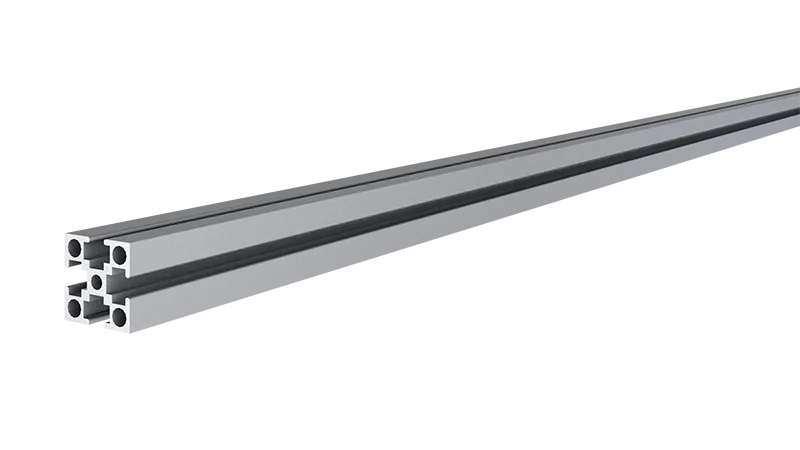
In the bustling world of manufacturing, where efficiency and adaptability reign supreme, there's a quiet champion that often goes unnoticed: the aluminum profile. These unassuming pieces of extruded metal form the backbone of countless workspaces, production lines, and industrial systems, offering a blend of strength, flexibility, and cost-effectiveness that's hard to match. Among the many aluminum profiles available, one stands out for its versatility and reliability: the 2020 National Standard Profile. In this article, we'll dive into what makes this profile a staple for manufacturers, explore its key specifications, and uncover why it's become a go-to choice for building everything from lean workbenches to intricate material handling systems.
What Is the 2020 National Standard Profile?
First things first: let's demystify the name. The "2020" in 2020 National Standard Profile refers to its cross-sectional dimensions: 20 millimeters in width and 20 millimeters in height. This square (or near-square) shape is intentionally designed to balance structural stability with compactness, making it ideal for both light-duty and medium-duty applications. The term "national standard" indicates that this profile adheres to strict regulatory guidelines set by national authorities—think of it as a quality stamp that ensures consistency in dimensions, material composition, and performance across manufacturers. This standardization is critical for manufacturers, as it means they can source 2020 profiles from different suppliers and still expect them to fit together seamlessly with compatible accessories.
At its core, the 2020 National Standard Profile is an aluminum extrusion profile . Aluminum extrusion is a manufacturing process where raw aluminum alloy is heated to a malleable state and then forced through a custom die, shaping it into a continuous length with a specific cross-sectional profile. This process allows for incredible precision—so much so that the 2020 profile's dimensions can be controlled to within fractions of a millimeter. The result is a lightweight yet sturdy product that can be easily cut, drilled, and assembled into almost any configuration, thanks to its integrated T-slots (longitudinal grooves along the profile's length) that accept bolts, nuts, and specialized connectors.
Key Specifications: What Makes the 2020 Profile Stand Out?
To truly understand why manufacturers rely on the 2020 National Standard Profile, we need to dig into its technical specifications. These details aren't just numbers on a page—they determine how the profile performs in real-world scenarios, from supporting heavy equipment on a workbench to withstanding the vibrations of a conveyor system. Let's break down the most critical specs:
1. Dimensions and Tolerances
As mentioned, the 2020 profile's defining feature is its 20mm x 20mm cross-section. But within that, there are subtle variations that matter. The "nominal" dimensions (20mm x 20mm) are the target, but national standards dictate tight tolerances to ensure compatibility. For example, the actual width and height might range from 19.8mm to 20.2mm—small enough that (accessories) like brackets and end caps still fit snugly. The T-slot dimensions are equally precise: the slot width (typically 6mm or 8mm, depending on the standard) and depth (usually 3-4mm) must align with industry-standard fasteners, allowing for secure connections without the need for welding.
Wall thickness is another key dimension. 2020 profiles are available with wall thicknesses ranging from 1.0mm to 2.0mm, with 1.2mm and 1.5mm being the most common. Thinner walls (1.0mm-1.2mm) are lighter and cheaper, making them suitable for non-load-bearing applications like shelving or machine guards. Thicker walls (1.5mm-2.0mm) offer higher rigidity and weight capacity, ideal for workbenches, material racks, or structural frames.
2. Material Composition and Temper
The 2020 National Standard Profile is almost always made from 6063 aluminum alloy—a popular choice for extrusions due to its excellent combination of formability, strength, and corrosion resistance. 6063 aluminum contains magnesium and silicon as its primary alloying elements, which react to form Mg₂Si precipitates during heat treatment, enhancing its mechanical properties. This alloy is often referred to as "architectural aluminum" because of its smooth surface finish and workability, but it's equally at home in industrial settings.
The "temper" of the aluminum—its heat treatment state—is another critical factor. Most 2020 profiles are supplied in T5 temper, which means they're solution heat-treated (heated to dissolve Mg₂Si particles) and then artificially aged (held at a lower temperature to allow the particles to re-precipitate, strengthening the metal). T5 temper balances strength and ductility, making the profile rigid enough to support loads but still flexible enough to absorb minor impacts without cracking. For applications requiring higher strength, some manufacturers offer T6 temper profiles, which undergo a more aggressive aging process for increased hardness.
3. Mechanical Properties
Mechanical properties like tensile strength, yield strength, and elongation determine how the 2020 profile performs under stress. Let's break these down:
- Tensile Strength: The maximum stress the profile can withstand before breaking. For 6063-T5 2020 profiles with 1.5mm wall thickness, this typically ranges from 180 to 200 MPa (megapascals). To put that in perspective, this is strong enough to support a 50kg load over a 1-meter span without permanent deformation.
- Yield Strength: The stress at which the profile starts to bend permanently. For the same 1.5mm T5 profile, yield strength is around 110-130 MPa. This ensures that under normal operating loads, the profile remains rigid and returns to its original shape when the load is removed.
- Elongation: The percentage the profile stretches before breaking. For 6063-T5, elongation is typically 8-10%. This ductility is important for applications where the profile might experience sudden impacts, as it reduces the risk of brittle failure.
| Wall Thickness (mm) | Tensile Strength (MPa) | Yield Strength (MPa) | Elongation (%) | Typical Application |
|---|---|---|---|---|
| 1.0mm | 160-180 | 90-110 | 10-12 | Light shelving, display racks |
| 1.2mm | 170-190 | 100-120 | 9-11 | Machine guards, small workbenches |
| 1.5mm | 180-200 | 110-130 | 8-10 | Medium-duty workbenches, material racks |
| 2.0mm | 190-210 | 120-140 | 7-9 | Heavy-duty frames, conveyor supports |
4. Surface Treatment
Aluminum naturally forms a thin oxide layer that protects it from corrosion, but manufacturers often enhance this with surface treatments to improve durability, aesthetics, or functionality. The 2020 National Standard Profile is commonly available with two main treatments:
- Anodizing: This electrochemical process thickens the natural oxide layer, creating a hard, porous surface that can be dyed. Anodized 2020 profiles are scratch-resistant and come in colors like clear (natural silver), black, gold, or blue. The anodizing thickness is typically 8-12 μm (microns) for general use, though heavy-duty applications may use 15-20 μm coatings.
- Powder Coating: A dry powder is electrostatically applied to the profile and then baked, forming a tough, uniform layer. Powder coating offers a wider range of colors and textures (matte, gloss, textured) and is more resistant to chipping than anodizing. It's popular for applications where aesthetics matter, like retail displays or office furniture.
5. Aluminum Profile Accessories
A profile is only as useful as the accessories that bring it to life. The 2020 National Standard Profile's popularity stems in part from the vast ecosystem of compatible aluminum profile accessories available. These include:
- End Caps: Plastic or aluminum caps that snap into the profile's ends, covering sharp edges and preventing dust or debris from entering the T-slots. A 2020 aluminum profile end cap is designed to fit the 20mm x 20mm cross-section perfectly, with tabs that grip the inner walls for a secure hold.
- Connectors: Corner brackets (90° angles), T-joints, and L-joints that join profiles without welding. Many connectors use T-slot nuts and bolts, allowing for tool-free assembly and disassembly.
- Brackets and Supports: Gussets (triangular brackets) for reinforcing joints, flat brackets for mounting panels, and floor supports for elevating structures off the ground.
- Panels and Covers: Aluminum honeycomb panels, plywood, or acrylic sheets that attach to the profile using specialized clips, turning a frame into a workbench top or machine enclosure.
- Castors: Wheel assemblies that bolt into the profile's base, transforming static structures into mobile trolleys or carts—essential for lean manufacturing systems where materials need to move efficiently.

Applications: Where the 2020 Profile Shines
The 2020 National Standard Profile's versatility makes it a favorite across industries. Here are just a few places you'll find it hard at work:
1. Lean Manufacturing Systems
In lean manufacturing, minimizing waste and maximizing flexibility are key. The 2020 profile excels here, forming the basis of lean system components like workbenches, flow racks, and turnover trolleys. For example, a lean workbench built with 2020 profiles can be customized with tool holders, shelves, and ESD (electrostatic discharge) mats to suit specific assembly tasks. If production needs change, the bench can be disassembled and reconfigured in hours—no need to buy new equipment.
2. Electronics and Automotive Production
Electronics manufacturers rely on clean, static-safe workspaces, and the 2020 profile delivers. Anodized or powder-coated profiles resist corrosion, while ESD-compliant accessories (like conductive end caps or grounding brackets) prevent static electricity from damaging sensitive components. In automotive plants, 2020 profiles are used for component racks, tool storage, and even temporary assembly line structures—their lightweight nature reduces operator fatigue when moving materials.
3. Retail and Display
Retailers love the 2020 profile for its sleek look and modularity. Pop-up shops, trade show booths, and in-store displays can be built quickly using 2020 frames and custom panels. The ability to swap out graphics or rearrange shelves makes it easy to refresh displays for new products or promotions.
4. Construction and Architecture
While larger aluminum profiles dominate structural construction, 2020 profiles find their niche in interior design. They're used for partitions, railings, and custom furniture—their lightweight nature makes installation easier, and their clean lines complement modern aesthetics. Architects also use them for mockups and prototypes, testing designs before scaling up to larger materials.
Why Manufacturers Choose the 2020 National Standard Profile
With so many aluminum profiles on the market, what makes the 2020 National Standard Profile a top pick? Here are the key benefits:
- Modularity: The T-slot design and wide range of accessories mean manufacturers can build almost anything and reconfigure it later. A workbench today can become a shelving unit tomorrow—saving time and money.
- Cost-Effectiveness: Aluminum extrusion is efficient, and the 2020 profile's small size keeps material costs low. Its durability also reduces long-term maintenance expenses, as it won't rust or require painting.
- Lightweight Yet Strong: Aluminum is about one-third the weight of steel, making 2020 profiles easy to handle and transport. Despite their lightness, they're strong enough for most industrial applications, reducing the need for heavy lifting equipment.
- Sustainability: Aluminum is 100% recyclable, and the 2020 profile's long lifespan (often 10+ years) minimizes waste. Many manufacturers also use recycled aluminum in their extrusions, further reducing environmental impact.
- Standardization: As a national standard profile, it's easy to source and replace. Manufacturers don't have to worry about custom tooling or hard-to-find parts—accessories are widely available from suppliers worldwide.
Tips for Choosing a 2020 Profile Supplier
Not all 2020 National Standard Profiles are created equal. To ensure you get a quality product, keep these tips in mind when choosing a supplier:
- Check Compliance: Ask for certification that the profile meets national standards (e.g., GB/T 6892-2015 in China or ASTM B221 in the U.S.). This ensures dimensional accuracy and material quality.
- Inspect Surface Finish: Look for uniform color (no streaks or discoloration) and smooth edges (no burrs or dents). Anodized finishes should be scratch-resistant, and powder coating should have no pinholes.
- Test Dimensional Accuracy: Use a caliper to measure the profile's width, height, and wall thickness. Even small deviations can affect accessory compatibility.
- Ask About Material Sourcing: Reputable suppliers will use high-quality 6063 aluminum alloy and can provide material certificates (mill test reports) verifying composition and temper.
- Evaluate Accessory Range: Choose a supplier that offers a full line of compatible accessories, from end caps to connectors. This ensures a seamless assembly process and reduces the need to source parts from multiple vendors.
Conclusion: The 2020 Profile—A Foundation for Modern Manufacturing
The 2020 National Standard Profile may not grab headlines, but it's an unsung hero in factories, workshops, and workspaces worldwide. Its precise dimensions, durable material, and endless accessory options make it a versatile solution for manufacturers looking to build efficient, adaptable systems. Whether you're constructing a lean workbench, a flow rack, or a custom display, the 2020 profile offers the perfect balance of strength, flexibility, and cost-effectiveness.
As manufacturing continues to evolve toward leaner, more agile processes, the 2020 National Standard Profile will undoubtedly remain a cornerstone of this transformation. Its ability to grow and change with your needs ensures that today's investment in 2020 profiles will pay off for years to come—one T-slot connection at a time.