- Company Articles
- Industry articles
- Industry standards
- 2020r EU Standard Aluminum Profile Cost-Benefit: Long-Term Savings for Manufacturers

2020r EU Standard Aluminum Profile Cost-Benefit: Long-Term Savings for Manufacturers
Related Product
2020R EU Standard Aluminum Profile
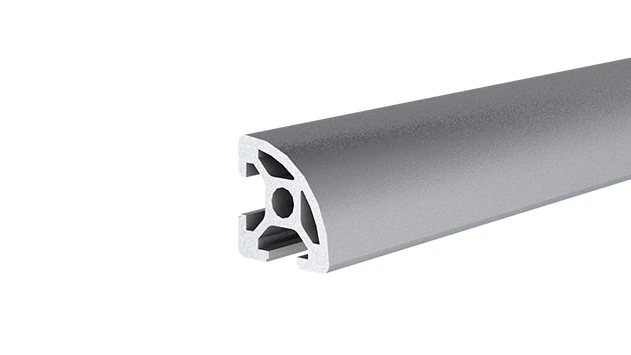
2020R is a 2.00 x 2.00CM fractional 20 series square extrusion T-slot profile with four open T-slots, two side with 2.00cm face, the other side with round face. The profile has align-a-grooves to assist in aligning connecting profiles.
In the fast-paced world of manufacturing, every decision boils down to one question: Will this make us more efficient, or will it drain our resources? From production lines to warehouse setups, the tools and materials you choose shape your bottom line—often in ways that aren't obvious at first glance. Today, we're diving into a material that's quietly revolutionizing how manufacturers balance upfront costs with long-term savings: the 2020r EU Standard Aluminum Profile. This isn't just another piece of metal; it's a building block for smarter, more sustainable operations. Let's unpack why it might be the best investment your facility never knew it needed.
The Hidden Cost of "Cheap" Infrastructure
We've all been there: faced with a tight budget, you opt for the lowest-priced materials to build workbenches, flow racks, or assembly lines. Plywood workbenches, generic steel pipes, or flimsy plastic racks seem like a good deal—until six months later, when a leg buckles under weight, a rust patch spreads, or a shelf warps under heat. Suddenly, you're not just replacing a part; you're halting production to fix it, paying overtime for repairs, and losing valuable time that could've been spent making products. That "cheap" choice? It just got expensive.
Here's the hard truth: manufacturing infrastructure isn't a one-and-done purchase. It's a long-term asset that should grow with your needs, stand up to daily wear, and minimize maintenance headaches. And that's where the 2020r EU Standard Aluminum Profile comes in. Designed to meet rigorous European standards for quality and durability, it's built to outlast, adapt, and save you money over time—even if the initial price tag makes you pause.
What Makes 2020r EU Standard Aluminum Profile Stand Out?
First, let's clarify what "2020r EU Standard" means. The "2020" refers to the profile's dimensions: roughly 20mm x 20mm, a compact size that's surprisingly versatile. The "r" denotes its rounded edges, a small detail that reduces workplace injuries (no more sharp corners!) and makes assembly smoother. Most importantly, "EU Standard" guarantees compliance with strict regulations for material strength, corrosion resistance, and environmental safety. This isn't just aluminum; it's aluminum you can trust.
But why aluminum? Unlike steel, aluminum resists rust and corrosion, even in humid or chemical-heavy environments—think automotive plants or electronics assembly lines where spills happen. It's also lightweight, making it easier to transport, install, and reconfigure without heavy machinery. And because it's recyclable, it aligns with the growing push for sustainable manufacturing practices, which can boost your brand's reputation and even qualify you for green incentives.
But the real magic is in how it works with aluminum profile accessories . From brackets and connectors to hinges and end caps, these small components turn basic 2020r profiles into custom workbenches, flow racks, or material carts. No welding, no drilling, no specialized tools—just simple, snap-together assembly. That flexibility? It's a game-changer for manufacturers who need to adapt quickly to new product lines or shifting demand.

The Cost-Benefit Breakdown: Short-Term Investment, Long-Term Gains
Let's get to the numbers. Yes, 2020r aluminum profiles cost more upfront than, say, plywood or generic steel. But when you factor in lifespan, maintenance, and adaptability, the math flips. Let's break it down.
Initial Costs vs. Lifespan: A Numbers Game
A typical plywood workbench might cost $100–$200, but how long does it last? Maybe 2–3 years before the wood warps, the surface chips, or the legs loosen. A steel workbench could run $300–$500 and last 5–7 years, but it's heavy, prone to rust, and hard to modify. Now, a workbench built with 2020r aluminum profiles and accessories? The initial cost might be $400–$600, but with proper care, it could last 15–20 years. Let's do the math:
| Material | Initial Cost | Expected Lifespan | Annual Cost (Avg.) | Maintenance Needs |
|---|---|---|---|---|
| Plywood Workbench | $150 | 2–3 years | $50–$75 | High (sanding, repainting, replacing legs) |
| Generic Steel Workbench | $400 | 5–7 years | $57–$80 | Medium (rust treatment, tightening bolts) |
| 2020r Aluminum Profile Workbench | $500 | 15–20 years | $25–$33 | Low (occasional cleaning, tightening connectors) |
Over 20 years, that plywood workbench would cost you $1,000–$1,500 in replacements. The steel option? $1,140–$1,600. The aluminum profile workbench? Just $500–$660. That's a savings of 40–60% over two decades. And that's just for one workbench—imagine scaling that across your entire facility.
Maintenance: The "Set It and Forget It" Advantage
Time is money, and maintenance eats up time. Plywood workbenches need regular sanding and repainting to prevent splintering. Steel racks rust, requiring chemical treatments or replacement parts. Aluminum profiles? Wipe them down with a damp cloth, and they're good to go. No rust, no rot, no warping. Even the aluminum profile accessories—like connectors and hinges—are designed to withstand repeated use without wearing out. This means fewer maintenance hours, less downtime, and more focus on what you do best: making products.
Flexibility: Adapting Without Overhauling
Manufacturing isn't static. A year from now, you might need to add a new assembly line, shrink a workbench to fit a new machine, or repurpose a flow rack for a seasonal product. With traditional materials, that often means buying new equipment. With 2020r profiles, you just reconfigure. Need a longer workbench? Add more profiles. Want to turn a static rack into a mobile cart? Swap out feet for casters (another handy aluminum profile accessory). It's like building with Legos for adults—no waste, no extra cost, just quick adjustments.
Take flow racks, for example. A well-designed flow rack keeps materials moving smoothly to the production line, reducing pick times and errors. With 2020r profiles and roller track accessories, you can build a flow rack that's exactly the right height, width, and angle for your needs. If your product size changes next quarter? Disassemble and rebuild it in an afternoon. No need to buy a whole new rack—just reorder a few extra profiles and accessories.
Real-World Impact: How Manufacturers Are Saving with 2020r
Don't just take our word for it. Let's look at two real-world examples of manufacturers who switched to 2020r EU Standard Aluminum Profiles and never looked back.
Case Study 1: Small Electronics Workshop Upgrades Workbenches
A family-owned electronics manufacturer in Germany was struggling with flimsy plywood workbenches. They were replacing them every 2–3 years, and the uneven surfaces were causing small electronics components to roll off, leading to wasted parts and delays. In 2022, they invested in 2020r aluminum profile workbenches with ESD (electrostatic discharge) tops—a critical feature for electronics assembly. The initial cost was €3,000 for 5 workbenches, compared to €1,500 for plywood replacements. But two years later, the aluminum workbenches still look new. They've saved €1,500 on replacements alone, and the ESD tops reduced component waste by 30%, saving an additional €2,000 annually. Total ROI so far? 150%.
Case Study 2: Automotive Parts Plant Optimizes Flow Racks
A mid-sized automotive parts plant in Poland was using steel flow racks that were heavy, hard to adjust, and prone to rust from oil spills. They switched to 2020r aluminum profile flow racks with plastic roller track guide rails (another aluminum profile accessory) in 2021. The new racks were 40% lighter, so workers could reposition them without forklifts, cutting setup time for new production runs by 50%. The rust-resistant aluminum meant no more replacing corroded rails, saving €5,000 annually on maintenance. And because the racks were modular, they could add or remove shelves as needed, avoiding the €10,000 cost of new steel racks for a product line expansion. Within three years, the plant estimates savings of over €30,000.
Beyond the Profile: Aluminum Profile Accessories as Cost Multipliers
We've mentioned aluminum profile accessories a few times, but they deserve their own spotlight. These small, affordable components turn 2020r profiles into almost anything you need. Need a workbench with a shelf? Add brackets and a panel. Want a mobile cart? Attach casters. Building a flow rack? Snap on roller tracks. The best part? These accessories are standardized, so you can mix and match from different suppliers without compatibility issues.
For example, end caps protect the ends of profiles from dust and debris, extending their lifespan. Hinges let you add fold-down shelves, saving space when not in use. T-slot rubber seal covers fill in the profile's grooves, preventing small parts from getting stuck and reducing noise. Even something as simple as a leveling foot ensures your workbench stays stable on uneven floors, preventing product damage and worker fatigue.
These accessories cost just a few dollars each, but they multiply the value of your 2020r profiles. Instead of buying a pre-made workbench that's "close enough," you build exactly what you need—no paying for features you don't use. And when your needs change, you just swap out the accessories, not the entire structure.
Why EU Standards Matter for Your Bottom Line
You might be thinking, "Why not just buy cheap aluminum profiles from overseas?" Here's the risk: non-standard aluminum is often thinner, weaker, or mixed with impurities that compromise durability. A rack that bends under weight, a connector that snaps, or a profile that corrodes in a year—these aren't just annoyances; they're safety hazards and financial drains. EU standards eliminate that risk by ensuring every 2020r profile meets strict criteria for tensile strength, wall thickness, and finish quality.
For example, EU-standard aluminum must have a minimum yield strength (the point at which it bends permanently) of 100 MPa (megapascals). Non-standard aluminum might only hit 50 MPa, meaning it can't support as much weight and will wear out faster. When you're building a flow rack that holds hundreds of pounds of materials, that difference could lead to collapses, injuries, or product damage—costs that far outweigh the savings of buying cheap.
Sustainability: The Bonus Savings
Sustainability isn't just a buzzword; it's a business strategy. More and more customers and investors are prioritizing eco-friendly practices, and governments are offering tax breaks or grants for sustainable manufacturing. Aluminum profiles check this box: they're 100% recyclable, and recycling aluminum uses 95% less energy than producing new aluminum. That reduces your carbon footprint and can lower your energy costs if you participate in recycling programs.
Plus, because 2020r profiles are durable and adaptable, they reduce waste. Instead of throwing away a plywood workbench that's warped, you reconfigure your aluminum one. Instead of scrapping a steel rack that's rusted, you replace a few accessories. Less waste means lower disposal costs and a cleaner, greener operation.
Getting Started: How to Switch to 2020r Profiles
Ready to make the switch? Start small. replace one workbench or flow rack and track the results. Measure downtime, maintenance hours, and durability over six months, then compare it to your old setup. Chances are, you'll see the difference quickly.
When choosing a supplier, look for one that specializes in EU-standard aluminum profiles and offers a wide range of aluminum profile accessories. Ask for samples to test strength and finish. And don't hesitate to ask for help designing your first project—many suppliers have experts who can help you create a custom solution that fits your space and budget.
Conclusion: Invest in What Lasts
At the end of the day, manufacturing is about efficiency, reliability, and adaptability. 2020r EU Standard Aluminum Profiles deliver on all three. They cost more upfront, but their long lifespan, low maintenance, and flexibility make them a smarter investment than cheaper, shorter-lived alternatives. When paired with aluminum profile accessories, they become a modular, customizable system that grows with your business.
So, the next time you're tempted to buy the cheapest workbench or rack, ask yourself: How much will this cost me in 5 years? With 2020r profiles, the answer is clear: less than you think. It's not just about saving money—it's about building a manufacturing operation that's strong, sustainable, and ready for whatever comes next.
Your future self (and your bottom line) will thank you.