- Company Articles
- Industry articles
- Industry standards
- 2020r EU Standard Aluminum Profile Environmental Certifications: CE Marking & Beyond

2020r EU Standard Aluminum Profile Environmental Certifications: CE Marking & Beyond
Related Product
2020R EU Standard Aluminum Profile
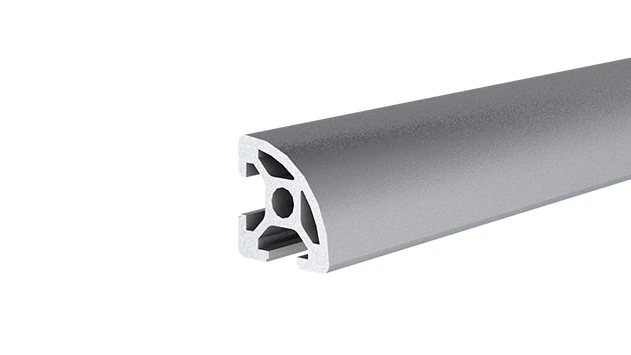
2020R is a 2.00 x 2.00CM fractional 20 series square extrusion T-slot profile with four open T-slots, two side with 2.00cm face, the other side with round face. The profile has align-a-grooves to assist in aligning connecting profiles.
Walk into any modern factory, warehouse, or manufacturing plant today, and you'll likely spot sleek, silver structures holding up workbenches, guiding conveyor belts, or organizing tools. Chances are, those structures are made of aluminum profiles—lightweight, durable, and endlessly versatile. But in an era where "sustainability" isn't just a buzzword but a business imperative, not all aluminum profiles are created equal. For European businesses, one designation stands out: the 2020r EU standard aluminum profile. More than just a set of dimensions, this standard represents a commitment to quality, safety, and environmental responsibility—backed by certifications that matter. Let's dive into why these certifications, starting with the familiar CE marking, are game-changers for manufacturers, suppliers, and anyone who relies on aluminum extrusion profiles and their accessories in their daily operations.
Understanding the 2020r EU Standard Aluminum Profile
First things first: What exactly is the 2020r EU standard aluminum profile? If you're new to the world of aluminum extrusion, "2020r" refers to a specific profile size—typically 20mm x 20mm in cross-section—with rounded edges (the "r" stands for "rounded"). This might sound like just another technical detail, but in manufacturing, precision matters. The 2020r profile is a workhorse, used in everything from lightweight workbenches and material racks to lean system setups, where modularity and adaptability are key. Its popularity stems from its balance of strength and flexibility: strong enough to support tools and materials, yet lightweight enough to reconfigure when production needs change.
But the "EU standard" part is what elevates it. Unlike generic aluminum profiles, the 2020r EU standard is designed to meet strict European regulations for safety, performance, and environmental impact. This includes not just the profile itself but also its aluminum profile accessories—think end caps, connectors, and even small components like aluminum profile rubber strips, which seal gaps and reduce noise. Together, these elements form a system that's not only functional but also aligned with the EU's vision for a greener, more sustainable industrial sector.
CE Marking: The Gateway to the EU Market
If you've ever imported or sold products in the European union, you've seen the CE mark—a simple logo that carries enormous weight. For 2020r EU standard aluminum profiles, the CE marking isn't optional; it's a legal requirement. But what does it actually mean, and why does it matter for environmental responsibility?
The CE mark, short for "Conformité Européenne" (European Conformity), indicates that a product meets the essential requirements of EU directives and regulations, ensuring it's safe for users and the environment. For aluminum profiles, the relevant framework is the Construction Products Regulation (CPR), which sets standards for products used in construction and industrial applications. Under the CPR, aluminum extrusion profiles must undergo rigorous testing to prove they meet criteria like mechanical strength, chemical resistance, and yes—environmental impact.
So, what does this look like in practice? A supplier of 2020r EU standard aluminum profiles can't just slap a CE mark on their products. They must first document their manufacturing processes, from raw material sourcing (recycled aluminum is strongly encouraged) to extrusion and finishing. Then, they undergo a conformity assessment—often conducted by an independent third party—to verify that their profiles don't contain harmful substances, that their production facilities minimize energy use and waste, and that the end product can be recycled at the end of its life.
Take, for example, the aluminum profile rubber strip, a small but critical accessory. To earn CE marking, this strip must be tested for toxicity: Are its materials free from heavy metals or phthalates that could leach into the environment? Is it durable enough to avoid frequent replacement (and thus reduce waste)? These details matter because even the smallest components contribute to a product's overall environmental footprint.

Beyond CE: Complementary Certifications for Environmental Excellence
While CE marking is the baseline, leading suppliers of 2020r EU standard aluminum profiles often go further, pursuing additional certifications to demonstrate their commitment to sustainability. Let's break down three key ones and how they enhance the environmental credentials of aluminum profiles and their accessories.
| Certification | Key Criteria | Purpose | Relevance to 2020r Aluminum Profiles |
|---|---|---|---|
| ISO 14001 | Environmental management system (EMS) implementation, waste reduction, energy efficiency, regulatory compliance | To ensure a company has a structured approach to minimizing environmental impact | Suppliers with ISO 14001 certification follow strict processes to reduce emissions, recycle production waste, and source sustainable raw materials—directly benefiting the eco-profile of 2020r profiles. |
| RoHS | Restriction of hazardous substances (lead, mercury, cadmium, etc.) in electrical and electronic equipment | To protect human health and the environment by limiting toxic materials | While aluminum profiles themselves are low-risk, RoHS applies to accessories like connectors with metal plating or rubber strips with adhesives, ensuring they don't contain harmful chemicals. |
| EPD (Environmental Product Declaration) | Transparent reporting of a product's environmental impact throughout its lifecycle (cradle-to-grave) | To provide buyers with data on carbon footprint, energy use, and recyclability | An EPD for 2020r profiles might reveal that 95% of the aluminum used is recycled, or that production emits 30% less CO2 than industry averages—empowering buyers to make sustainable choices. |
These certifications work hand-in-hand with CE marking. CE ensures legal compliance; ISO 14001 ensures the supplier's operations are eco-friendly; RoHS targets specific harmful substances; and EPD provides transparency. Together, they paint a full picture of a product's sustainability—something that's increasingly important to buyers, whether they're a small workshop building a lean system or a multinational manufacturer aiming for net-zero emissions.
Sustainability in Action: From Raw Material to Lean System
Let's step back and look at the bigger picture: How do certified 2020r EU standard aluminum profiles contribute to sustainability in real-world applications? Consider a manufacturer setting up a new lean system—a production line designed to minimize waste, improve efficiency, and keep operations agile. Lean systems rely heavily on modular structures: workbenches, flow racks, and material trolleys, all often built with aluminum profiles.
If this manufacturer chooses 2020r EU standard aluminum profiles with CE, ISO 14001, and EPD certifications, they're not just getting a functional system—they're building sustainability into their operations. Here's how:
- Reduced carbon footprint: Recycled aluminum uses 95% less energy to produce than primary aluminum. A certified profile supplier will prioritize recycled materials, meaning the workbench or flow rack in the lean system has a much lower "embodied carbon" (the emissions associated with its production).
- Longevity and reusability: CE-marked profiles are tested for durability, so they'll last longer—reducing the need for replacements. And because aluminum profiles are modular (thanks to accessories like connectors and end caps), they can be disassembled and reconfigured when production needs change, rather than being thrown away.
- Waste reduction: ISO 14001-certified suppliers minimize waste in production, from precise cutting to recycling scrap aluminum. Even the packaging—often made from recycled cardboard or reusable plastic—reflects this commitment.
- End-of-life recycling: When the lean system eventually reaches the end of its life, the aluminum profiles can be melted down and reused to make new products, closing the loop on the material's lifecycle.
Take a concrete example: A small electronics manufacturer needs a workbench for assembling circuit boards. They opt for a workbench built with 2020r profiles and aluminum profile accessories, all CE and RoHS certified. The workbench is sturdy, lightweight, and easy to adjust. But beyond that, the RoHS certification ensures that none of the profile's components (like the rubber strip edging) will release harmful substances into the air or workspace, protecting both employees and the environment. The EPD tells them that the aluminum used is 90% recycled, aligning with their company's sustainability goals. And because the profiles are modular, if they later need to expand the workbench or repurpose it for a new task, they can do so without buying entirely new equipment—saving money and reducing waste.
Why Certifications Matter for Suppliers and Buyers Alike
For suppliers of 2020r EU standard aluminum profiles, earning these certifications isn't just about following rules—it's a competitive advantage. In a market where buyers are increasingly prioritizing sustainability, a supplier with CE, ISO 14001, and EPD certifications stands out. They can market themselves as a partner in their clients' sustainability journeys, not just a vendor. This builds trust, fosters long-term relationships, and opens doors to new markets, especially in the EU where environmental regulations are only getting stricter.
For buyers, the benefits are equally clear. Choosing certified profiles reduces risk: They can be confident the products meet legal and environmental standards, avoiding fines or reputational damage from non-compliant materials. It also future-proofs their operations: As regulations tighten (think upcoming EU laws on circular economy or carbon labeling), certified products will require less retrofitting or replacement. And let's not forget the brand value: Consumers and stakeholders increasingly reward companies that prioritize sustainability, making certified aluminum profiles a small but impactful part of a larger ESG (Environmental, Social, Governance) strategy.
Looking Ahead: The Future of Aluminum Profile Certifications
What does the future hold for environmental certifications in the aluminum profile industry? One trend is the rise of digital tools to enhance transparency. Imagine scanning a QR code on a 2020r profile and instantly accessing its EPD, including real-time data on its carbon footprint or recycled content. Blockchain technology could also play a role, tracking a profile's journey from raw material to finished product, ensuring every step of the process is verifiable.
Another trend is the growing focus on "circular economy" certifications—standards that go beyond just recyclability to measure how easily a product can be repaired, reused, or repurposed. For aluminum profiles, this might mean designing accessories (like connectors or end caps) that are even more durable or easier to separate from the profile for recycling. It could also involve take-back programs, where suppliers help customers recycle old profiles at the end of their life.
Finally, as the EU pushes for net-zero emissions by 2050, we'll likely see stricter criteria for certifications like ISO 14001, with more emphasis on renewable energy use in production and carbon offsetting. Suppliers of 2020r EU standard aluminum profiles will need to stay ahead of these changes, investing in green energy (solar, wind) for their extrusion plants and exploring innovative materials (like bio-based rubber strips) to further reduce their environmental impact.
Conclusion: Certifications as a Commitment to a Greener Future
At the end of the day, environmental certifications for 2020r EU standard aluminum profiles are about more than compliance—they're about commitment. A commitment from suppliers to prioritize sustainability in every step of production, from sourcing recycled aluminum to designing long-lasting accessories like aluminum profile rubber strips. A commitment from buyers to choose products that align with their values and long-term goals. And a commitment from the industry as a whole to build a future where manufacturing and environmental responsibility go hand in hand.
So, the next time you see a CE mark on an aluminum profile, or read an EPD report, remember: It's not just a label. It's proof that even the most utilitarian products—workbenches, flow racks, lean system components—can play a role in creating a more sustainable world. And in a market where every choice matters, that's a powerful thing.