- Company Articles
- Industry articles
- Industry standards
- 2020r EU Standard Aluminum Profile Extrusion Process: Quality Control Measures

2020r EU Standard Aluminum Profile Extrusion Process: Quality Control Measures
Related Product
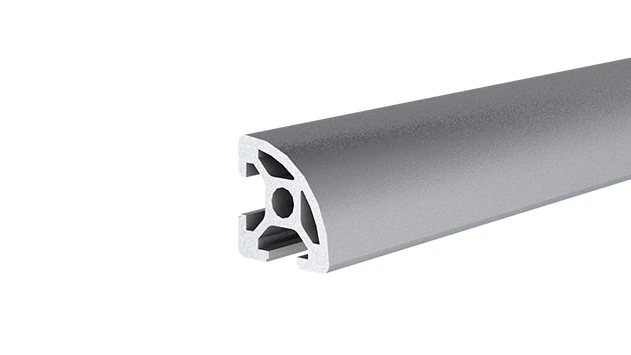
2020R EU Standard Aluminum Profile
2020R is a 2.00 x 2.00CM fractional 20 series square extrusion T-slot profile with four open T-slots, two side with 2.00cm face, the other side with round face. The profile has align-a-grooves to assist in aligning connecting profiles.
In the bustling world of manufacturing, where precision and reliability are the backbone of every operation, aluminum profiles stand out as unsung heroes. These versatile structures form the skeleton of factory workbenches, the tracks of conveyor systems, and the frames of assembly lines—quietly supporting the rhythm of production. But not all aluminum profiles are created equal. For industries that demand consistency, durability, and compliance with strict safety standards, the 2020r EU Standard Aluminum Profile has become a gold standard. What makes this profile so trusted? It starts with a meticulous extrusion process and a relentless focus on quality control. Let's dive into how these profiles are crafted, the measures that ensure their excellence, and why they've become indispensable for businesses aiming to build lean, efficient systems.
Understanding the 2020r EU Standard Aluminum Profile
Before we explore the extrusion process, let's clarify what the "2020r EU Standard" actually means. The "2020" refers to the profile's cross-sectional dimensions—typically 20mm x 20mm, a compact size that balances strength and versatility. The "r" denotes rounded edges, a design choice that enhances safety (reducing sharp corners) and simplifies integration with other components. As for the "EU Standard" label, it's a seal of approval: these profiles meet rigorous European union regulations for material purity, mechanical performance, and environmental sustainability. This isn't just about ticking boxes; it's about ensuring that every profile that leaves the factory can withstand the demands of real-world use—whether it's supporting heavy equipment on a workbench or guiding delicate components along a conveyor.
At its core, the 2020r profile is an aluminum extrusion profile, meaning it's formed by forcing heated aluminum through a shaped die to create a consistent cross-section. But what sets EU Standard profiles apart is the precision of this process. From the alloy composition to the final surface finish, every detail is controlled to deliver profiles that are not only strong and lightweight but also uniform—critical for businesses that rely on interchangeable parts and modular systems.
The Extrusion Process: From Raw Aluminum to Finished Profile
Extruding aluminum is a bit like sculpting with molten metal, but with the precision of a Swiss watch. It's a multi-step dance between heat, pressure, and timing, where even a small misstep can compromise the final product. Let's walk through the journey of a 2020r EU Standard profile, from raw material to ready-to-use component.
1. Billet Preparation: The Foundation of Quality
Every great profile starts with great raw material. Aluminum billets—cylindrical logs of aluminum alloy—are the starting point. For 2020r EU Standard profiles, these billets are typically made from 6000-series aluminum alloys (like 6063), known for their excellent extrudability and strength-to-weight ratio. But before they're heated, the billets undergo rigorous inspection. Technicians check for impurities, cracks, or inconsistencies using ultrasonic testing and visual scans. Why? Even a tiny inclusion of dirt or a hairline fracture can weaken the billet, leading to defects during extrusion. This is where the first quality control checkpoint comes in: only billets with 99.7% pure aluminum and strict alloy composition (e.g., controlled amounts of magnesium and silicon) make the cut.
2. Heating: Softening Without Weakening
Next, the billets are loaded into a furnace and heated to around 480–520°C (896–968°F). This temperature is critical: too cold, and the aluminum will be too rigid to extrude; too hot, and it may become brittle or develop surface defects. To ensure uniformity, modern furnaces use computer-controlled heating systems and thermal sensors that monitor temperature every few seconds. Some facilities even use infrared cameras to detect hot spots, ensuring the billet heats evenly from core to surface. Imagine trying to bake a cake with one side burning and the other undercooked—heating the billet is no different. Consistency here is key to a smooth extrusion process.
3. Extrusion: Forcing Aluminum Into Shape
Once the billet is properly heated, it's transferred to the extrusion press. Here, a hydraulic ram pushes the billet into a steel die—a custom tool with a 2020r-shaped opening. The pressure is immense, often exceeding 10,000 psi, but it's applied gradually to avoid tearing the aluminum. As the billet flows through the die, it takes on the die's shape, emerging as a long, continuous profile. The speed of extrusion is another variable to watch: too fast, and the profile may warp; too slow, and it may cool prematurely, leading to a rough surface.
During extrusion, operators keep a close eye on the emerging profile. They check for surface blemishes, dimensional accuracy, and any signs of die wear. Speaking of dies, these are precision tools themselves. Made from high-grade steel, they're polished to a mirror finish to ensure the profile's surface is smooth. After every few hundred extrusions, dies are removed, inspected for wear, and re-polished or repaired. A worn die can leave grooves or uneven edges on the profile—small flaws that might seem minor but can cause big problems when assembling the profile with aluminum profile accessories like brackets or guides.
4. Cooling and Stretching: Setting the Profile Straight
Freshly extruded profiles are hot and malleable, so they're immediately cooled using air or water quenching. This rapid cooling "freezes" the aluminum's microstructure, locking in strength. But cooling can also introduce slight bends or twists, which is why the next step is stretching. Profiles are clamped at both ends and gently pulled to straighten them—think of it as ironing out wrinkles in a shirt, but with mechanical force. The goal is to ensure the profile's straightness tolerance is within ±0.5mm per meter, a standard that's non-negotiable for EU compliance. After stretching, the profiles are cut to length using precision saws, ensuring each piece meets the customer's specifications (whether it's 1 meter or 6 meters long).
5. Aging: Strengthening the Profile
While the profile now looks finished, it's not yet strong enough for heavy use. To boost its mechanical properties, it undergoes artificial aging—a heat treatment process where the profile is heated to around 120–180°C (248–356°F) for several hours. This encourages the formation of tiny alloy particles within the aluminum, which act like microscopic reinforcements, increasing strength and hardness. After aging, the profile's tensile strength can reach up to 200 MPa (megapascals)—strong enough to support 20 kilograms per linear meter without bending. For 2020r EU Standard profiles, this aging process is strictly controlled: temperature is monitored to within ±2°C, and timing is tracked to the minute. Even a 10-minute over-aging can reduce strength by 10%—a risk no manufacturer wants to take.

Quality Control Measures: Catching Defects Before They Leave the Factory
Extrusion is a complex process, but quality control is what turns a good profile into a great one. For 2020r EU Standard profiles, quality checks aren't just done at the end—they're woven into every step. To illustrate this, let's look at the critical checkpoints throughout the process:
| Process Stage | Key Quality Check | Method | Acceptance Criteria |
|---|---|---|---|
| Billet Preparation | Alloy Composition | Spectrometric Analysis | 99.7% Aluminum Purity; Magnesium (0.4–0.8%), Silicon (0.2–0.6%) |
| Heating | Temperature Uniformity | Pyrometry + Thermal Imaging | ±5°C of Target Temperature (480–520°C) |
| Extrusion | Surface Finish & Dimensions | Visual Inspection + Laser Scanning | No Scratches/Inclusions; Cross-Section Within ±0.1mm of 20mm x 20mm |
| Stretching | Straightness | Laser Alignment Tool | ≤0.5mm Bow per Meter Length |
| Aging | Hardness | Rockwell Hardness Test (HRB Scale) | ≥80 HRB (Equivalent to ~200 MPa Tensile Strength) |
| Final Inspection | Surface Coating (If Applicable) | Adhesion Test + Thickness Gauge | Coating Thickness 15–25μm; No Peeling or Bubbles |
One of the most critical checks is dimensional accuracy. Even a 0.1mm deviation from the 20mm x 20mm cross-section can make it impossible to fit the profile with standard accessories. To ensure precision, manufacturers use coordinate measuring machines (CMMs), which scan the profile and compare it to a 3D model of the ideal 2020r shape. Any profile that falls outside the tolerance range is rejected—no exceptions. This level of strictness is why EU Standard profiles are trusted by industries where precision matters, from automotive manufacturing to electronics assembly.
Surface finish is another area of focus. EU Standard profiles must have a smooth, consistent surface free of scratches, dents, or oxidation. For some applications, like cleanrooms or medical equipment, profiles may also undergo anodizing—a process that adds a protective oxide layer, enhancing corrosion resistance and giving the profile a sleek, uniform color. Anodized surfaces are inspected for evenness and adhesion, as a weak oxide layer can chip or flake over time, exposing the aluminum to damage.
The Role of Aluminum Profile Accessories: Complementing the Profile
A profile is only as useful as the accessories that bring it to life. Aluminum profile accessories—things like brackets, connectors, and guides—turn a simple extrusion into a functional system. Take aluminum guide rail a, for example. This accessory is designed to snap into the T-slots of 2020r profiles, creating a smooth track for rollers or sliding components. But for the guide rail to work properly, it must fit the profile perfectly. A guide rail that's too loose will wobble; one that's too tight will bind. That's why accessory quality control is just as important as profile quality control.
Accessories are typically made from the same high-grade aluminum or durable plastics, and they undergo their own set of tests. For metal accessories, like brackets, manufacturers check for strength using load tests—ensuring they can support the intended weight without bending or breaking. Plastic accessories, such as end caps or gaskets, are tested for flexibility and resistance to heat and chemicals. Even something as small as a connector pin is inspected for dimensional accuracy, as a misaligned pin can prevent the accessory from locking into the profile's T-slot.
When profiles and accessories are both EU Standard, they work together seamlessly. This modularity is a big part of why 2020r profiles are so popular. Businesses can mix and match components—adding a workbench here, a conveyor there—without worrying about compatibility issues. It's a lean system approach to manufacturing: reducing waste, simplifying assembly, and allowing for quick reconfiguration as needs change.
Lean System Integration: Optimizing Extrusion for Quality and Efficiency
Speaking of lean systems, modern aluminum extrusion facilities don't just focus on quality—they also embrace lean principles to minimize waste and maximize efficiency. Lean manufacturing is all about identifying and eliminating non-value-added steps, and in extrusion, this translates to everything from reducing billet waste to streamlining inspection processes.
For example, by using data analytics to track extrusion parameters (temperature, speed, die wear), manufacturers can predict when a die might fail and replace it proactively—avoiding costly downtime and defect batches. Similarly, automated inspection systems, like machine vision cameras, can scan profiles for surface defects faster and more accurately than the human eye, freeing up operators to focus on more complex tasks. These technologies not only improve quality but also reduce the time it takes to produce each profile, making EU Standard products more accessible to businesses of all sizes.
Lean systems also extend to sustainability. EU Standard profiles are often made from recycled aluminum, which requires 95% less energy to produce than primary aluminum. By optimizing furnace efficiency and recycling scrap from the extrusion process, manufacturers minimize their environmental footprint—another key aspect of the EU's sustainability standards. It's a win-win: businesses get high-quality profiles, and the planet benefits from reduced energy use and waste.
Testing and Compliance: Beyond the Factory Floor
Even after a profile passes in-house quality checks, it's not ready for market until it's verified by third-party testing agencies. These independent labs conduct rigorous tests to ensure the profile meets EU standards for mechanical strength, corrosion resistance, and fire safety. For example, a corrosion test might involve exposing the profile to salt spray for 500 hours to simulate years of outdoor use; if the surface shows more than 5% corrosion, the profile fails. Similarly, fire resistance tests measure how long the profile can withstand high temperatures without melting or releasing toxic fumes—critical for applications in public buildings or transportation.
Compliance also means documentation. Every batch of 2020r profiles comes with a certificate of conformity (CoC), which includes details like alloy composition, mechanical test results, and traceability information (e.g., which billet lot the profile came from). This documentation gives customers peace of mind, knowing they're getting a product that's been independently verified—not just self-certified by the manufacturer.
Conclusion: Quality as a Mindset, Not Just a Process
Extruding 2020r EU Standard Aluminum Profiles is more than a manufacturing process—it's a commitment to quality. From the moment raw aluminum is selected to the final inspection of the finished profile, every step is guided by the goal of delivering a product that's strong, precise, and reliable. This commitment matters because these profiles are the building blocks of the systems that keep industries running: the workbenches where products are assembled, the conveyors that move materials, and the frames that support critical equipment.
For businesses, choosing EU Standard profiles isn't just about compliance; it's about investing in systems that will stand the test of time. When you pair a high-quality aluminum extrusion profile with well-made aluminum profile accessories like aluminum guide rail a, you're not just buying parts—you're building a foundation for efficiency, safety, and productivity. And in today's fast-paced manufacturing world, that foundation is more important than ever.
So the next time you see a 2020r profile in action, take a moment to appreciate the craftsmanship behind it. It's a product of heat, pressure, and precision—but more than that, it's a testament to the idea that quality isn't something you add at the end. It's something you build into every step, from start to finish.