- Company Articles
- Industry articles
- Industry standards
- 2020r EU Standard Aluminum Profile: Fire Resistance & Safety Ratings

2020r EU Standard Aluminum Profile: Fire Resistance & Safety Ratings
Related Product
2020R EU Standard Aluminum Profile
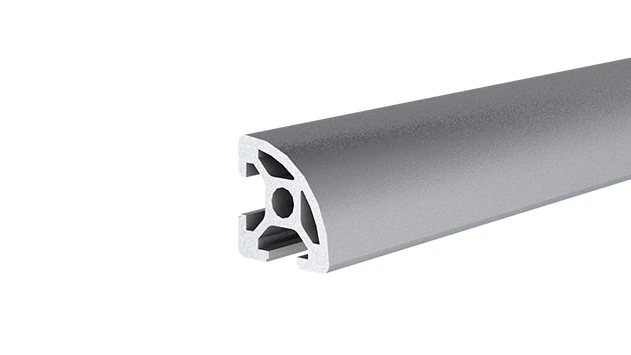
2020R is a 2.00 x 2.00CM fractional 20 series square extrusion T-slot profile with four open T-slots, two side with 2.00cm face, the other side with round face. The profile has align-a-grooves to assist in aligning connecting profiles.
Walk into any modern factory, warehouse, or even a high-tech lab, and you'll notice a silent workhorse holding everything together: aluminum profiles. These unassuming metal structures are the backbone of workbenches, material racks, conveyor systems, and countless other setups. But not all aluminum profiles are created equal. When safety is on the line—especially fire safety—one standard stands out: the 2020r EU Standard Aluminum Profile. In this article, we'll dive deep into what makes this profile a game-changer, exploring its fire resistance properties, safety ratings, and why it's become a go-to choice for industries that refuse to compromise on protection.
Understanding the 2020r EU Standard Aluminum Profile
First things first: What exactly is the 2020r EU Standard Aluminum Profile? Let's break it down. The "2020" refers to its dimensions—typically 20mm by 20mm, making it a compact yet sturdy option for a wide range of applications. The "r" might denote a specific revision or design feature, such as rounded edges (a small detail that makes a big difference in safety, preventing cuts and scrapes in busy work environments). But the real star here is the "EU Standard" label. This means the profile has undergone rigorous testing to meet the European union's strict guidelines for quality, durability, and, crucially, safety.
At its core, this profile is a product of aluminum extrusion—a process where raw aluminum is heated and pushed through a die to form consistent, precise shapes. This method, known as aluminum extrusion profile manufacturing, ensures uniformity in every piece. No two 2020r profiles are drastically different; each one maintains the same thickness, strength, and structural integrity. That consistency is key when building systems that need to perform reliably, especially in high-stakes settings like manufacturing plants or data centers.
But why aluminum? For starters, it's lightweight. A 20mm x 20mm aluminum profile weighs significantly less than steel, making installation easier and reducing strain on supporting structures. Yet, it's surprisingly strong. Aluminum has a high strength-to-weight ratio, meaning it can support heavy loads without bending or warping. Add to that its resistance to corrosion (thanks to a natural oxide layer that forms on its surface) and you've got a material built to last in tough environments—from humid warehouses to dusty factories.
Fire Resistance: Why Aluminum Stands Apart
When it comes to workplace safety, few threats are as feared as fire. A single spark can escalate into a disaster, putting lives at risk and causing millions in damage. That's why the fire resistance of building materials is non-negotiable. Here's where aluminum—specifically the 2020r EU Standard Aluminum Profile—shines.
Aluminum has a melting point of approximately 660°C (1220°F). To put that in perspective, wood ignites around 233°C (451°F), and many plastics start to melt or burn at even lower temperatures. This high melting point means aluminum profiles can withstand intense heat for longer, giving workers valuable time to evacuate and firefighters a chance to contain the blaze before structural collapse becomes a risk. Unlike materials that burn or release toxic fumes when heated, aluminum simply melts—no harmful gases, no spreading flames. That's a critical advantage in enclosed spaces where smoke inhalation is often the leading cause of fire-related injuries.
But fire resistance isn't just about melting points. It's also about how the material behaves under heat. When aluminum is exposed to fire, it forms a thick, stable oxide layer on its surface. This layer acts as a barrier, slowing down further heat absorption and preventing the metal from weakening too quickly. In contrast, steel, another common industrial material, loses strength at around 550°C (1022°F)—meaning it can start to bend or collapse before aluminum even begins to melt. For structures like workbenches or material racks that hold heavy equipment or flammable materials, this delay can be lifesaving.
To visualize this, let's consider a real-world scenario: a small electrical fire breaks out near a workbench made with 2020r aluminum profiles. The fire spreads, heating the surrounding area. Wood or plastic components might catch fire immediately, fueling the flames. Steel supports might start to warp, causing the bench to sag and potentially spill its contents, spreading the fire further. But the aluminum profile? It holds steady. Its high melting point and oxide layer buy time—time for the fire alarm to sound, time for workers to grab fire extinguishers, time to prevent a small incident from becoming a catastrophe.
A Closer Look: Fire Resistance Testing
The EU doesn't hand out safety certifications lightly. The 2020r profile's fire resistance is backed by rigorous testing, most notably under the EN 13501-1 standard. This European norm classifies building materials based on their reaction to fire, considering factors like ignitability, heat release, smoke production, and flaming droplets. Let's see where the 2020r aluminum profile falls:
| Material | Melting Point (°C) | EN 13501-1 Reaction to Fire Class | Key Fire Safety Feature |
|---|---|---|---|
| 2020r EU Standard Aluminum Profile | ~660°C | A1 (Non-combustible) | Forms protective oxide layer; no toxic fume release |
| Standard Steel | ~1370°C (but weakens at 550°C) | A1 (Non-combustible) | High melting point but loses structural integrity at lower temps |
| Wood | Ignites at ~233°C | D-s3, d2 (Combustible, high smoke, flaming droplets) | Burns rapidly, releases smoke and fuel |
| Plastic (PVC) | Melts at ~100-260°C, burns at ~427°C | E (Combustible, low heat release) | Melts and drips, releases toxic chlorine gas when burned |
As the table shows, the 2020r aluminum profile earns an A1 classification under EN 13501-1—meaning it's non-combustible. It doesn't contribute to fire growth, doesn't release significant heat, and produces minimal smoke. Compare that to wood or plastic, which are classified as combustible and can accelerate fires. Even steel, while also A1, weakens at much lower temperatures than aluminum, making the 2020r profile a more reliable choice for maintaining structural stability during a fire.

Safety Ratings and Certifications: Beyond Fire Resistance
Fire resistance is just one piece of the safety puzzle. The 2020r EU Standard Aluminum Profile boasts a suite of safety ratings that make it a trusted option across industries. Let's explore some of the key certifications and what they mean for end-users.
Mechanical Strength and Load-Bearing Capacity
A profile is only as good as its ability to hold up under pressure. The 2020r profile undergoes testing to ensure it can support specified loads without deforming. For example, when used in workbenches or material racks, it must withstand the weight of tools, parts, or products—often for years on end. EU standards dictate minimum load-bearing requirements, and the 2020r profile exceeds these, thanks to its uniform extrusion and high-quality aluminum alloy (typically 6063, known for its strength and weldability).
Electrical Conductivity and ESD Safety
In industries like electronics manufacturing, static electricity is a hidden danger. A sudden electrostatic discharge (ESD) can damage sensitive components, costing companies thousands in lost products. Aluminum is a conductor, which means it can help dissipate static charges, reducing the risk of ESD events. While the 2020r profile isn't inherently "ESD-safe" on its own (that often requires additional coatings), its conductive properties make it a solid foundation for ESD-protected workstations when paired with the right accessories—like grounding straps or anti-static mats.
Corrosion Resistance
Safety isn't just about fires or structural collapse; it's also about long-term reliability. A profile that rusts or degrades over time becomes a hazard, as weakened structures are prone to failure. Aluminum's natural oxide layer protects it from corrosion, but EU standards take this further. The 2020r profile may undergo additional treatments, like anodization, to enhance this resistance. Anodizing creates a thicker oxide layer, making the profile even more durable in humid, chemical-exposed, or outdoor environments. This means fewer replacements, less maintenance, and a lower risk of unexpected failures.
Compliance with REACH and RoHS
The EU is also strict about chemical safety. The 2020r profile complies with REACH (Registration, Evaluation, Authorization, and Restriction of Chemicals) and RoHS (Restriction of Hazardous Substances) directives. REACH ensures that no harmful chemicals are used in the profile's production, while RoHS restricts substances like lead, mercury, and cadmium. This is good news for workers, as it means the profile won't leach toxic chemicals into the air or soil, even over time. It also aligns with global efforts to create safer, more sustainable workplaces.
Applications: Where the 2020r Profile Shines
Now that we understand its safety credentials, let's talk about where the 2020r EU Standard Aluminum Profile is actually used. Its versatility is one of its greatest strengths, making it a staple in industries ranging from automotive manufacturing to food processing.
Workbenches and Assembly Lines
Walk into any car factory or electronics plant, and you'll find workbenches built with aluminum profiles. The 2020r, with its compact size, is perfect for creating custom workstations. Whether it's a single-deck workbench (like the "Workbench E (single deck-without caster)" mentioned in our keyword list) or a multi-level setup, the profile provides a stable, fire-resistant surface for workers to operate. Its lightweight nature also makes it easy to reconfigure workstations as production needs change—no need for heavy machinery or lengthy downtime.
Material Racks and Storage Systems
Material racks, like "Material Rack B (3 row and 3 floor)," rely on strong, durable materials to hold inventory. The 2020r profile's load-bearing capacity and fire resistance make it ideal here. In warehouses storing flammable materials (like paints or solvents), using non-combustible racks can slow the spread of fire, giving firefighters more time to respond. Even in non-flammable storage, the profile's corrosion resistance ensures racks stay sturdy for years, reducing the risk of collapse.
Conveyor Systems and Roller Tracks
Conveyors are the arteries of manufacturing, moving parts from one station to the next. The 2020r profile often serves as a frame for these systems, supporting roller tracks (like "Plastic Roller Track Guide Rail Yellow" or "Aluminum Guide Rail A") and their accessories. Its smooth, consistent surface ensures rollers glide evenly, preventing jams that could disrupt production or cause accidents. And in the event of a fire, the profile's non-combustible nature helps contain the spread, protecting the entire conveyor line and the products on it.
The Role of Aluminum Profile Accessories
A profile is just the starting point. To build fully functional, safe systems, you need aluminum profile accessories. These small but mighty components—like connectors, end caps, brackets, and casters—turn basic profiles into workbenches, racks, or trolleys. And when paired with the 2020r profile, they enhance both functionality and safety.
Connectors: Ensuring Secure Joints
Connectors are what hold profiles together, and weak joints are a major safety risk. The 2020r profile works with a range of connectors, from "90° Aluminum Profile Connector" to "3-Way Aluminum Profile Connector." These accessories are designed to fit the profile's T-slots (grooves along the length of the profile) perfectly, creating tight, wobble-free joints. Many are made from the same high-quality aluminum or steel, ensuring they match the profile's strength and fire resistance. For example, a "135° Aluminum Profile Connector" might be used to build a corner in a material rack, distributing weight evenly and preventing the structure from leaning or collapsing.
End Caps: A Small Detail with Big Safety Benefits
Ever run your hand along the end of a metal bar and gotten a cut from a sharp edge? That's where end caps come in. Accessories like "2020 Aluminum Profile End Cap" snap onto the ends of the 2020r profile, covering rough edges and preventing injuries. They're a simple addition, but in busy workplaces where workers are moving quickly, they reduce the risk of lacerations—a small change that can lower accident rates and keep insurance costs down.
Casters and Mobility
Trolleys and mobile workstations need to move smoothly and safely. Casters (like "Flat Adjustable Swivel Caster Wheel" or "360° Swivel Expanding Stem Casters Wheel with Brake") attach to the 2020r profile, allowing for easy mobility. But safety is key here: casters must lock securely to prevent unintended movement, and they must support the total weight of the trolley and its contents. The 2020r profile's strength ensures that the connection points for casters remain stable, even when the trolley is loaded and in motion.
Guides and Rails: Keeping Things on Track
In conveyor systems or material handling setups, guides and rails (like "Aluminum Guide Rail B" or "Plastic Roller Track Guide Rail Grey") keep products moving in the right direction. These accessories attach to the 2020r profile, creating a barrier that prevents items from falling off or jamming. Their compatibility with the profile ensures a precise fit, reducing friction and wear—meaning less maintenance and a lower risk of system failures.
Choosing the Right Lean System Supplier
You could have the best profile in the world, but if it's sourced from an unreliable supplier, you're putting safety at risk. That's why choosing a reputable lean system supplier is just as important as selecting the right profile. A good supplier doesn't just sell products—they provide expertise, quality assurance, and support to ensure your systems are safe, efficient, and compliant.
Certifications and Quality Control
A trustworthy supplier will have documentation proving their 2020r profiles meet EU standards. Ask for test reports, certificates of compliance, and proof of EN 13501-1 classification. They should also have strict quality control processes in place, inspecting each batch of profiles for defects like cracks, uneven thickness, or poor finishes. A supplier that cuts corners on quality is a supplier that puts your workers at risk.
Range of Accessories
As we've seen, accessories are critical to building safe, functional systems. A good lean system supplier will offer a wide range of aluminum profile accessories, ensuring you can find everything you need in one place. This not only saves time but also guarantees compatibility—you won't have to worry about a connector not fitting your 2020r profile because it's from a different brand.
Technical Support and Custom Solutions
Every workplace is unique, and off-the-shelf systems don't always work. A great supplier will work with you to design custom solutions, using the 2020r profile and accessories to meet your specific needs. Whether you need a specialized workbench for a clean room or a fire-resistant material rack for hazardous materials, they should have the expertise to guide you—recommending the right accessories, calculating load capacities, and ensuring compliance with all safety standards.
Sustainability Practices
Safety and sustainability go hand in hand. A responsible supplier will prioritize eco-friendly practices, like using recycled aluminum or reducing waste in production. Aluminum is 100% recyclable, and suppliers that embrace this not only reduce their environmental impact but also often produce higher-quality profiles (recycled aluminum can be just as strong as virgin aluminum when processed correctly). Choosing a sustainable supplier is a choice to protect both your workers and the planet.
Conclusion: Investing in Safety with the 2020r EU Standard Aluminum Profile
At the end of the day, safety is an investment—not an expense. The 2020r EU Standard Aluminum Profile represents that investment. Its fire resistance, strict safety ratings, and compatibility with high-quality aluminum profile accessories make it a cornerstone of modern, safe workplaces. Whether you're building a small workshop or a large-scale manufacturing plant, choosing this profile means choosing peace of mind—knowing that the structures holding your operations together are built to protect what matters most: your workers, your products, and your business.
So, the next time you walk through your facility, take a closer look at the aluminum profiles around you. Are they up to the 2020r EU standard? If not, it might be time to talk to a lean system supplier about upgrading. After all, when it comes to safety, there's no room for compromise.
In a world where industries are constantly evolving, the 2020r profile remains a constant—a reliable, safe, and versatile solution that keeps pace with the demands of modern work. It's more than just metal; it's a commitment to protection, quality, and the future of work. And that's a standard worth standing behind.