- Company Articles
- Industry articles
- Industry standards
- 2020r EU Standard Aluminum Profile for Automotive Assembly Jigs: Precision & Stability

2020r EU Standard Aluminum Profile for Automotive Assembly Jigs: Precision & Stability
Related Product
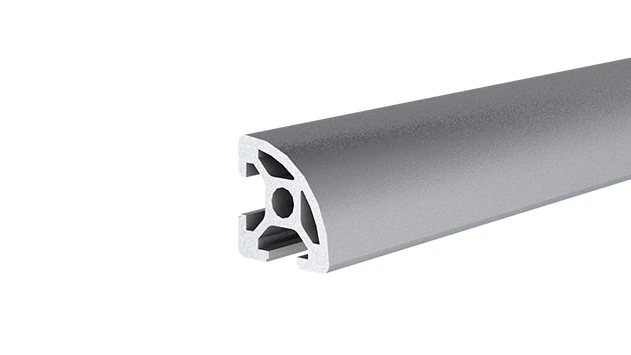
2020R EU Standard Aluminum Profile
2020R is a 2.00 x 2.00CM fractional 20 series square extrusion T-slot profile with four open T-slots, two side with 2.00cm face, the other side with round face. The profile has align-a-grooves to assist in aligning connecting profiles.
Step into any modern automotive assembly plant, and you'll notice rows of sleek, metallic structures holding car parts in place—these are assembly jigs, the unsung heroes ensuring every bolt, panel, and wire ends up exactly where it should. In an industry where a fraction of a millimeter can mean the difference between a flawless vehicle and a costly recall, the tools that build cars matter as much as the cars themselves. That's where the 2020r EU Standard Aluminum Profile comes in. More than just a piece of metal, it's the backbone of jigs that demand uncompromising precision and rock-solid stability. Let's dive into why this specific aluminum extrusion profile has become a go-to choice for automotive manufacturers worldwide, and how it transforms the way assembly lines operate.
Why Precision & Stability Are Non-Negotiable in Automotive Assembly Jigs
Automotive assembly is a symphony of tiny, precise movements. A car door must align with the frame so seamlessly that it closes with a soft thud, not a rattle. A dashboard must sit flush against the windshield, leaving no gaps for wind noise. To achieve this, assembly jigs—those custom-built frames that hold parts during welding, painting, or final assembly—need two critical traits: precision and stability.
Precision here means the jig itself must hold parts to tolerances as tight as ±0.1mm. If a jig flexes or shifts even slightly, a welded joint might be off, or a bolt hole might misalign with the chassis. Stability, on the other hand, ensures the jig doesn't vibrate during high-speed assembly or warp under the weight of heavy components like engine blocks or transmission housings. Over time, even minor instability can compound errors, leading to rework, delays, and unhappy customers.
Traditional materials like steel have long been used for jigs, but they come with tradeoffs: they're heavy, making them hard to reconfigure for new car models, and prone to rust if not properly treated. Enter aluminum extrusion profile—a material that's lightweight, corrosion-resistant, and, when engineered to EU standards like the 2020r, surprisingly rigid. But what makes the 2020r stand out in a sea of aluminum profiles?
The 2020r EU Standard Aluminum Profile: Engineered for the Automotive Floor
The 2020r isn't just a random code—it's a promise of consistency. EU standards for aluminum profiles are strict, dictating everything from wall thickness to dimensional accuracy, and the 2020r takes this a step further. Let's break down what "2020r" actually means: the "2020" refers to its cross-section dimensions (20mm x 20mm), while the "r" denotes a reinforced design, with thicker walls and optimized internal ribbing to boost load-bearing capacity without adding unnecessary weight.
What sets this aluminum extrusion profile apart is how it's made. Using a process called hot extrusion, aluminum alloy (typically 6063-T5, known for its strength and machinability) is forced through a die to create the profile's signature T-slot design. This isn't just about shape—it's about uniformity. Every meter of 2020r profile comes out of the extrusion press with near-identical dimensions, ensuring that jigs built from it have consistent spacing, alignment, and strength. For automotive manufacturers, this means jigs that perform the same way, day in and day out, across multiple production lines.
How It Compares: 2020r vs. Other Profiles
Not all aluminum profiles are created equal. Let's put the 2020r side by side with similar options to see why it's a standout for assembly jigs:
| Feature | 2020r EU Standard Aluminum Profile | Standard 2020 Aluminum Profile | 3030 EU Standard Aluminum Profile |
|---|---|---|---|
| Cross-Section Dimensions | 20mm x 20mm (reinforced walls) | 20mm x 20mm (standard walls) | 30mm x 30mm |
| Wall Thickness | 1.8mm (avg.) | 1.2mm (avg.) | 1.5mm (avg.) |
| Max Load Capacity (per meter) | 120kg (static) | 80kg (static) | 150kg (static) |
| Precision Tolerance | ±0.1mm on key dimensions | ±0.3mm on key dimensions | ±0.2mm on key dimensions |
| Weight (per meter) | 0.65kg | 0.52kg | 1.05kg |
The 2020r strikes a sweet spot: it's lighter than the 3030 (making jigs easier to move and reconfigure) but stiffer than the standard 2020, thanks to its reinforced walls. Its tight tolerance (±0.1mm) is a game-changer for jigs holding small, intricate parts like sensor brackets or wiring harnesses—no more guessing if a hole will line up. And because it's EU-standard, manufacturers can trust that every batch meets the same rigorous quality benchmarks, whether they're sourcing from a local supplier or an international partner.

Building Better Jigs: Aluminum Profile Accessories That Enhance Performance
A profile is only as good as the parts that connect it. The 2020r's T-slot design is intentionally versatile, allowing it to work with a wide range of aluminum profile accessories that turn basic extrusion into a fully functional jig. Let's look at the unsung stars that make this possible:
90° Aluminum Profile Connectors: The Glue of Stability
When building a jig, you rarely need straight lines alone—you need corners that don't budge. 90° aluminum profile connectors are designed to lock two 2020r profiles at right angles, using set screws that bite into the T-slot for a secure fit. Unlike welded joints, which can weaken the aluminum over time, these connectors create a rigid bond without heat damage. What's more, they're reusable—if a new car model requires a jig redesign, you can disassemble and reconfigure the connectors instead of scrapping the entire structure. It's a small detail that aligns perfectly with lean system principles, reducing waste and cutting down on tooling costs.
End Caps and Gaskets: Protecting Precision
At first glance, end caps might seem like an afterthought—just plastic covers for the ends of profiles. But in automotive assembly, they play a quiet role in maintaining precision. Without end caps, dust, oil, and metal shavings can collect inside the 2020r's hollow core, slowly wearing down internal surfaces or jamming accessories. High-quality end caps (often made of durable nylon) seal the profile, keeping contaminants out and ensuring that moving parts like sliding brackets glide smoothly. Some even come with rubber gaskets to dampen vibrations—a must when jigs are near high-speed machinery.
Adjustable Feet: Leveling the Playing Field
Assembly floors aren't always perfectly flat. Over time, concrete can settle, or heavy equipment can create small indentations. Adjustable feet, which screw into the base of 2020r jigs, let operators fine-tune the height of each corner by fractions of a millimeter. This might sound trivial, but for a jig holding a 50kg car door panel, even a tiny tilt can cause the panel to shift during welding, leading to misalignment. With adjustable feet, the jig stays level, and the parts stay put—no more last-minute shimming with washers or shards of metal.
From Profile to Workbench: Real-World Applications in Automotive Assembly
Theory is one thing, but seeing the 2020r in action is where its value truly shines. Let's walk through a typical application: building a workbench for assembling dashboard modules. A dashboard isn't just a plastic panel—it's a complex assembly of airbags, infotainment screens, wiring looms, and climate controls, all of which need to align perfectly when installed in the car. The workbench holding this module must be stable enough to prevent movement during assembly and precise enough to ensure each component is positioned to within 0.2mm of its design specs.
Here's how the 2020r profile makes this possible: The frame of the workbench is built using 2020r profiles connected with 90° connectors and reinforced with cross-braces (also 2020r) for lateral stability. The tabletop, often an aluminum honeycomb panel (lightweight but rigid), is mounted to the frame using T-slot bolts that slide into the profile's grooves, allowing for easy height adjustments. Along the edges, aluminum guide rails keep the dashboard module from sliding, while swivel roller balls (1 inch, from the keyword list) let operators gently reposition the module without lifting—reducing fatigue and the risk of accidental drops.
What makes this setup lean system-friendly? If the automaker launches a new dashboard design with slightly different dimensions, the workbench doesn't need to be replaced. Instead, operators can swap out the guide rails, adjust the roller ball positions, and even extend the frame by adding more 2020r sections—all in under an hour. Compare that to traditional steel jigs, which often require cutting, welding, and repainting to modify—wasting hours (or days) of production time. The 2020r turns "wait time" into "work time," keeping assembly lines moving and deadlines on track.
Stability That Stands the Test of Time: Material Science Behind the 2020r
Stability isn't just about how a jig feels on day one—it's about how it performs after months of use, through temperature fluctuations, vibrations, and the occasional bump from a forklift. The 2020r's aluminum alloy (6063-T5) is key here. T5 tempering involves cooling the profile quickly after extrusion, then aging it at room temperature to strengthen the metal's internal structure. The result? A material with a yield strength of 110 MPa (megapascals)—strong enough to resist bending under heavy loads, even over long spans.
Another factor is the profile's geometry. The T-slot design isn't just for accessories; it adds rigidity by distributing stress evenly across the profile's walls. When a jig is loaded with a heavy part, the force travels through the slots and into the connectors, which are anchored into the profile's thickest sections. This prevents stress concentrations that could lead to cracking or warping. In contrast, profiles with simpler, open designs often flex under similar loads, causing parts to shift out of alignment over time.
Corrosion resistance is another unsung benefit. Automotive plants are full of oils, coolants, and cleaning agents that can eat away at steel jigs, leading to rust that gums up moving parts or weakens joints. Aluminum, by nature, forms a thin oxide layer that protects against corrosion, and the 2020r's smooth surface makes it easy to wipe clean. Even in humid environments or plants near the coast, the profile holds up—meaning jigs last longer, and replacement costs stay low.
Choosing the Right Supplier: Why Quality Matters for 2020r Profiles
Not all 2020r EU Standard Aluminum Profiles are created equal. To get the precision and stability your jigs demand, you need a supplier who understands the nuances of aluminum extrusion and automotive standards. Look for suppliers who:
- Certify to EU standards (EN 755-9, specifically for aluminum extrusions) and can provide material test reports (MTRs) for each batch.
- Use high-purity aluminum alloys (avoiding recycled scrap that can introduce impurities and weaken the profile).
- Offer tight tolerance control—ask about their process for measuring key dimensions like slot width and wall thickness.
- Stock a full range of aluminum profile accessories, from connectors to end caps, to ensure compatibility and reduce lead times.
A reliable supplier isn't just a vendor—they're a partner in your production process. They'll work with you to optimize jig designs, recommend the right accessories for your needs, and even help troubleshoot if something isn't performing as expected. For example, if your jigs need to withstand higher temperatures (like near a paint oven), they might suggest a heat-treated version of the 2020r or a specialized coating to prevent warping.
The Future of Automotive Jigs: Why 2020r Is Here to Stay
As cars become more complex—with electric vehicles (EVs) adding battery packs, autonomous driving systems requiring precise sensor alignment, and lightweight materials like carbon fiber demanding gentle handling—assembly jigs will only need to get more precise and adaptable. The 2020r EU Standard Aluminum Profile is well-positioned to meet these challenges. Its modular design aligns with the industry's shift toward "flexible factories," where production lines can quickly switch between models. Its lightweight nature reduces energy use (less fuel to move jigs around) and worker fatigue. And its compatibility with advanced accessories, like 3D-printed brackets or IoT sensors that monitor jig stability in real time, makes it a future-proof choice.
In the end, automotive manufacturing is about trust—trust that the parts will fit, the cars will perform, and the assembly line will keep running. The 2020r profile doesn't just build jigs; it builds confidence. It's the quiet assurance that when a worker tightens a bolt or aligns a panel, the jig holding that part is as precise and stable as the vehicle it's helping to create. And in an industry where excellence is the only acceptable standard, that's invaluable.
So, the next time you see a car roll off the line, take a moment to appreciate the unseen heroes: the jigs, and the 2020r EU Standard Aluminum Profile that makes them possible. Precision, stability, and adaptability—these aren't just buzzwords. They're the foundation of the cars we drive, and the reason the 2020r will remain a cornerstone of automotive assembly for years to come.