- Company Articles
- Industry articles
- Industry standards
- 2020r EU Standard Aluminum Profile for Home Appliance Manufacturing: Applications & Benefits

2020r EU Standard Aluminum Profile for Home Appliance Manufacturing: Applications & Benefits
Related Product
2020R EU Standard Aluminum Profile
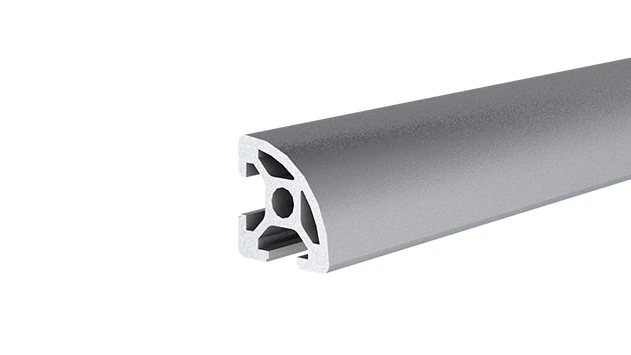
2020R is a 2.00 x 2.00CM fractional 20 series square extrusion T-slot profile with four open T-slots, two side with 2.00cm face, the other side with round face. The profile has align-a-grooves to assist in aligning connecting profiles.
In the fast-paced world of home appliance manufacturing, every second counts. From the assembly line worker piecing together a refrigerator door to the logistics team moving components across the factory floor, efficiency isn't just a buzzword—it's the backbone of keeping production on track, costs in check, and customers satisfied. But here's the thing: efficiency doesn't happen by accident. It's built into the very tools and systems manufacturers rely on daily. That's where the 2020r EU Standard Aluminum Profile comes in—a quiet workhorse that's transforming how factories design, build, and adapt their production setups. Let's dive into why this unassuming aluminum profile has become a go-to choice for home appliance manufacturers, exploring its applications, benefits, and how it pairs with essential accessories to create lean, agile workspaces.
Understanding the 2020r EU Standard Aluminum Profile: More Than Just Metal
Before we jump into its uses, let's get to know the 2020r EU Standard Aluminum Profile. At first glance, it might look like any other aluminum extrusion—long, sleek, and with a signature T-slot design running along its length. But what sets it apart is its adherence to EU standards, which means strict tolerances, consistent quality, and compatibility with a wide range of accessories. The "2020" in its name refers to its cross-section dimensions: 20mm by 20mm. The "r" denotes a rounded edge, a small detail that makes a big difference in factory settings—smoothing out sharp corners to reduce the risk of scratches on components (or workers' hands) and adding a polished look to workstations.
Unlike generic aluminum profiles, the 2020r is engineered for precision. Its T-slots are evenly spaced and precisely cut, ensuring that brackets, connectors, and other aluminum profile accessories fit snugly every time. This might sound trivial, but in a factory where a loose connection could lead to a wobbly workbench or a misaligned conveyor, that precision is non-negotiable. And because it's made from high-grade aluminum, it's lightweight enough to be easily reconfigured but strong enough to support heavy loads—think stacks of metal sheets for oven doors or crates of plastic parts for blender bases.
Applications in Home Appliance Manufacturing: Where the 2020r Shines
The 2020r isn't a one-trick pony. Its versatility makes it indispensable across various stages of home appliance production. Let's break down the key areas where it's making an impact.
1. Custom Aluminum Workbenches: The Heart of Assembly Lines
Walk into any home appliance factory, and you'll notice the assembly line is lined with workbenches—each tailored to a specific task. One worker might be attaching control panels to washing machines, another installing gaskets on dishwasher doors. These workbenches need to be sturdy, adjustable, and adaptable to different tasks. Enter the 2020r EU profile.
Manufacturers use 2020r to build modular aluminum workbenches that can be customized in minutes. Want a shelf above the workspace to hold tools? Screw a bracket into the T-slot. Need a lower shelf for storing spare parts? Add another. Even the height can be adjusted by swapping out leg brackets—critical for ergonomics, as workers of different heights need benches that keep their hands at a comfortable level to avoid strain. For example, a workbench used for assembling small parts like microwave buttons might sit lower, while one for heavier tasks like mounting compressor units in refrigerators could be raised to reduce bending.
What's more, these workbenches aren't permanent fixtures. When a factory switches from producing toasters to coffee makers, the 2020r frames can be disassembled and reconfigured in hours, not days. No more waiting for custom-built workstations or wasting money on one-off furniture that becomes obsolete when product lines change. It's this flexibility that makes the 2020r a favorite among manufacturers aiming for lean system principles—minimizing waste and maximizing adaptability.
2. Material Handling: Smooth Sailing with Roller Tracks
Home appliance manufacturing involves moving a lot of stuff. From raw materials like aluminum coils and plastic pellets to partially assembled components and finished products, efficient material flow is key to avoiding bottlenecks. This is where roller tracks, paired with the 2020r profile, shine.
Roller tracks are exactly what they sound like: lines of small rollers mounted on a frame, designed to let items glide from one point to another with minimal effort. When built with 2020r profiles, these tracks become lightweight yet durable, perfect for moving bins of parts along the assembly line or feeding components into automated machines. For example, a roller track made with 2020r frames might carry plastic moldings for dryer lint traps from the injection molding machine to the assembly station, where workers can easily grab them without bending or lifting.
The 2020r's T-slots make it easy to mount roller track brackets and adjust the angle of the track—tilting it slightly to use gravity for movement or keeping it level for controlled feeding. And because the profile is compatible with roller track connectors, manufacturers can extend tracks, add curves, or split them into branches without needing custom tools or welding. It's a simple solution that eliminates the need for manual cart-pushing, reducing worker fatigue and cutting down on time lost to material transport.
3. Assembly Line Stations: Building the Perfect Workflow
Home appliances are complex products, often requiring dozens of components to be assembled in a specific order. The assembly line is the choreography of this process, and the 2020r profile is the stage manager, ensuring every station is set up for success. Take, for instance, the "pick-and-place" stations where workers retrieve parts from bins and attach them to the appliance frame. With 2020r, these stations can be outfitted with tilted shelves (using angle brackets) to bring bins closer to eye level, reducing the need to reach or stoop. Small tool holders can be mounted directly to the profile, keeping screwdrivers, pliers, and adhesives within arm's reach—no more wasted time searching for a misplaced wrench.
Even testing stations benefit from the 2020r. After an appliance is assembled, it needs to be tested for functionality—think plugging in a toaster to check heating elements or running a dishwasher through a cycle. Test fixtures built with 2020r profiles can be customized to hold the appliance securely, with mounting points for sensors, cables, and control panels. And if the test requirements change (say, a new model with a different plug configuration), the fixture can be quickly modified by swapping out brackets or adding new accessories—no need to build a brand-new setup from scratch.

Key Benefits: Why Home Appliance Manufacturers Swear by the 2020r
So, what makes the 2020r EU Standard Aluminum Profile a standout choice in a market flooded with industrial materials? Let's break down the benefits that matter most to manufacturers.
1. Flexibility: Adapt or Get Left Behind
Home appliance trends shift faster than ever. One year, consumers want stainless steel refrigerators; the next, it's matte black. Production lines need to pivot just as quickly, and rigid, fixed infrastructure can't keep up. The 2020r's modular design lets factories reconfigure workspaces on the fly. Need to add a new station for a smart oven feature? Disassemble a section of an old workbench, add new 2020r rails, and mount the necessary tools—all in a morning. This agility reduces downtime between product launches and lets manufacturers test new assembly processes without investing in permanent structures.
2. Cost-Effectiveness: Save Now, Save Later
At first glance, EU-standard aluminum might seem pricier than generic alternatives. But factor in longevity, reusability, and reduced maintenance, and the 2020r becomes a budget-friendly choice. Unlike wood or steel, aluminum doesn't rust or warp, so workbenches and racks built with 2020r last for years. When a production line is retired, the profiles can be stripped down, cleaned, and reused elsewhere in the factory. And because aluminum profile accessories are widely available and affordable, replacing a worn-out bracket or connector costs a fraction of what it would to repair a custom steel frame.
3. Safety: Protecting What Matters Most
Factory safety is non-negotiable, and the 2020r checks multiple boxes here. Its rounded edges reduce the risk of cuts and scrapes, while its lightweight nature means fewer injuries from lifting heavy materials during reconfigurations. The T-slot design also allows for easy installation of safety features like guardrails on roller tracks (to prevent parts from sliding off) or anti-slip mats on workbenches. Plus, because the profile is non-conductive, it's safe to use near electrical testing equipment—critical for appliances that run on electricity.
4. Compliance: Meeting the Mark
Home appliance manufacturers operate in a heavily regulated industry, with standards for everything from product safety to factory working conditions. Using EU-standard components like the 2020r helps ensure compliance with international quality and safety norms. This is especially important for manufacturers exporting to European markets, where strict regulations on materials and workplace ergonomics can make or break a business deal. With the 2020r, there's no guesswork—you know it meets the standards, so you can focus on building great appliances.
Aluminum Profile Accessories: The Perfect Partners to 2020r
A profile is only as good as the accessories that bring it to life, and the 2020r pairs seamlessly with a wide range of aluminum profile accessories to expand its functionality. Let's take a look at some of the most popular ones in home appliance factories:
- Connectors and Brackets: These are the glue that holds 2020r setups together. From 90° angle brackets for building workbench frames to 45° connectors for sloped shelves, these accessories let manufacturers create custom angles and structures without welding. Many are made from the same high-grade aluminum as the profile, ensuring a match in strength and durability.
- End Caps: Simple but essential, end caps snap onto the ends of 2020r profiles to cover sharp edges (even the rounded "r" profiles have open ends) and prevent dust or debris from getting stuck in the T-slots. They come in various colors, so factories can color-code workstations by appliance type (e.g., blue for washing machines, green for ovens).
- Panel Holders: These attach to the T-slots to hold everything from instruction manuals and assembly diagrams to small parts bins. In assembly stations, a panel holder might secure a checklist of steps for installing a dishwasher's water inlet valve, keeping workers on track and reducing errors.
- Casters: Add mobility to workbenches or material racks by mounting casters to 2020r frames. Lockable casters keep stations in place during use, then unlock for easy repositioning when layouts change. This is a game-changer for small factories where floor space is limited—roll a workbench out of the way during maintenance, then roll it back when production resumes.
These accessories aren't just add-ons; they're integral to making the 2020r a versatile solution. And because they're standardized, manufacturers don't have to worry about compatibility issues—buy a bracket from one supplier and a connector from another, and they'll still fit the 2020r's T-slots perfectly.
Comparing 2020r to Other Profiles: Why Size and Standard Matter
You might be wondering: with so many aluminum profiles on the market, why choose 2020r? Let's put it head-to-head with two common alternatives to see how it stacks up.
| Feature | 2020r EU Standard Aluminum Profile | 2020 National Standard Profile | 3030 EU Standard Aluminum Profile |
|---|---|---|---|
| Cross-Section Dimensions | 20mm x 20mm (rounded edges) | 20mm x 20mm (sharp edges) | 30mm x 30mm (square edges) |
| Weight (per meter) | ~0.4kg | ~0.4kg | ~0.9kg |
| Max Load Capacity (per meter, horizontal) | Up to 50kg | Up to 40kg (inconsistent due to looser tolerances) | Up to 120kg |
| EU Standard Compliance | Yes | No (adheres to national standards only) | Yes |
| Accessory Compatibility | Wide (EU-standard accessories) | Limited (may require custom accessories) | Wide (EU-standard, but larger accessories) |
| Best For | Light to medium-duty workstations, roller tracks, small material racks | Budget projects with low precision needs | Heavy-duty applications (e.g., large assembly tables, industrial shelving) |
As the table shows, the 2020r hits a sweet spot for home appliance manufacturing. It's lighter and more maneuverable than the 3030, making it ideal for workstations that need to be reconfigured often, but more reliable and versatile than the 2020 national standard profile, thanks to its EU compliance and tight tolerances. For most home appliance tasks—assembling small to medium components, building lightweight conveyor systems, or creating mobile workbenches—the 2020r is the Goldilocks choice: not too big, not too basic, but just right.
Why Choose 2020r for Home Appliance Production: A Real-World Example
To bring this all to life, let's imagine a mid-sized home appliance manufacturer that recently switched to 2020r profiles. Before, their assembly line for blenders was a hodgepodge of wooden workbenches (prone to warping), steel racks (heavy and hard to move), and generic plastic bins (which cracked under the weight of metal blades). Production was slow, errors were common, and reconfiguring the line for a new blender model took days.
After transitioning to 2020r, they built modular workstations with aluminum frames, adding roller tracks between stations to glide blender bases from one worker to the next. They mounted tool holders and parts bins directly to the profiles, cutting down on time spent searching for tools. When a new compact blender model launched, they disassembled two old workstations, added shorter 2020r rails, and had the new line up and running in a single day. Workers reported less fatigue (thanks to ergonomically adjusted bench heights), and error rates dropped by 15%—all because the 2020r created a more intuitive, efficient workspace.
This isn't a hypothetical scenario; it's a common story in factories that embrace modular, standardized solutions. The 2020r doesn't just improve production—it empowers teams to work smarter, adapt faster, and focus on what they do best: building appliances that households love.
Conclusion: The 2020r EU Standard Aluminum Profile—Small Profile, Big Impact
In the world of home appliance manufacturing, success hinges on the details. A smoother assembly line, a more durable workbench, a faster reconfiguration—these small improvements add up to big results: lower costs, higher quality, and happier customers. The 2020r EU Standard Aluminum Profile might not be the most glamorous piece of equipment in the factory, but it's one of the most impactful. Its combination of precision, flexibility, and compatibility with aluminum profile accessories makes it a cornerstone of lean, agile production.
Whether you're building a new assembly line from scratch or upgrading an existing workspace, the 2020r offers a simple truth: great manufacturing starts with great tools. And in a industry where every detail matters, the 2020r is a detail that delivers—proving that sometimes, the most powerful solutions come in small, 20mm x 20mm packages.