- Company Articles
- Industry articles
- Industry standards
- 2020r EU Standard Aluminum Profile for Lean Material Handling: Reducing Waste in Manufacturing

2020r EU Standard Aluminum Profile for Lean Material Handling: Reducing Waste in Manufacturing
Related Product
2020R EU Standard Aluminum Profile
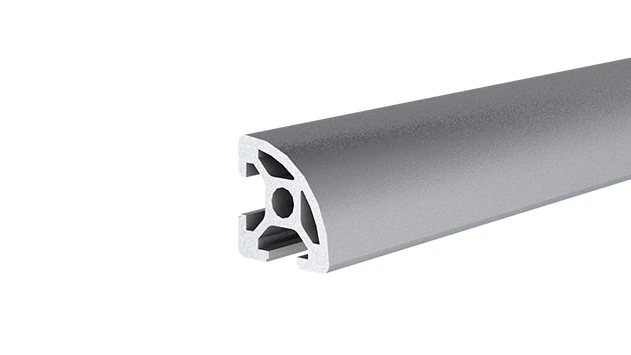
2020R is a 2.00 x 2.00CM fractional 20 series square extrusion T-slot profile with four open T-slots, two side with 2.00cm face, the other side with round face. The profile has align-a-grooves to assist in aligning connecting profiles.
Walk into any manufacturing facility at 7:30 AM, and you'll feel the buzz of a team gearing up for the day. But beneath that energy, there's often a quiet frustration: waste . A worker spends 10 minutes hunting for a tool buried under clutter. A heavy cart gets stuck halfway across the floor, delaying the next assembly step. A workbench wobbles, causing a part to slip and scrap. These aren't just minor annoyances—they're leaks in the system, draining time, money, and morale. And in today's fast-paced manufacturing world, leaks like these can mean the difference between meeting a deadline and falling behind.
The good news? There's a smarter way to build, organize, and operate your production floor. It starts with lean system principles—creating workflows that eliminate waste, boost efficiency, and adapt to change. And at the heart of this transformation? The 2020r EU Standard Aluminum Profile. This unassuming yet powerful tool, paired with the right aluminum profile accessories , is redefining how factories approach material handling, from the workbench to the roller track to the flow rack . Let's dive into how this modular solution is turning "good enough" operations into lean, mean, waste-fighting machines.
The Hidden Cost of "That's Just How We Do It"
Before we talk about solutions, let's get real about the problem: waste. In manufacturing, waste comes in many forms—time wasted searching for tools, motion wasted moving materials across the floor, inventory wasted sitting unused, and even talent wasted fixing preventable mistakes. Traditional setups often make these problems worse. Think about it: a fixed steel workbench that can't be adjusted for a taller worker. A static shelf that forces employees to bend and reach, risking injury. A rigid conveyor system that can't be reconfigured when production needs change. These aren't just inefficiencies—they're silent profit killers.
Take Maria, a production supervisor at a mid-sized electronics plant I visited last year. Her team assembled circuit boards, but their workbenches were a hodgepodge of old wooden tables and metal racks. "Every morning, we'd spend 15 minutes just rearranging tools so everyone could reach what they needed," she told me. "And when we switched to a new board design, we had to buy entirely new shelving because the old ones didn't fit the new parts. It was like throwing money away."
Maria's story isn't unique. According to the Lean Enterprise Institute, the average factory wastes up to 30% of its resources on non-value-adding activities. That's 30% of your budget, 30% of your team's time, and 30% of your potential profits—all slipping through the cracks because your infrastructure wasn't built to support lean principles.
| Type of Waste | Traditional Setup Impact | Potential Savings with Aluminum Profiles |
|---|---|---|
| Motion Waste (bending, reaching, walking) | Workers spend 2-3 hours/day on non-value movement | Up to 40% reduction in unnecessary motion |
| Time Waste (searching, adjusting setups) | 15-20 minutes/day per worker on setup/adjustments | Cut setup time by 70% with modular tools |
| Inventory Waste (unused parts, overstock) | 10-15% of inventory sits idle due to poor storage | Reduce idle inventory by 25% with flow racks |
| Adaptation Waste (rebuilding fixed systems) | 5-8 hours of downtime when reconfiguring workstations | Reconfigure in under 1 hour with modular aluminum |
Lean Material Handling: It's About More Than "Organizing"
Lean material handling isn't just about tidying up the shop floor. It's about designing a system where everything has a place, everything flows smoothly, and everything adapts when your needs change. At its core, it's about modularity —building workspaces that can grow, shrink, bend, and evolve with your production demands. And that's where the 2020r EU Standard Aluminum Profile shines.
Aluminum profiles have been around for decades, but the 2020r EU Standard takes it to the next level. Let's break down what makes it special: it's a lightweight, corrosion-resistant aluminum extrusion with a 20x20mm cross-section (hence "2020"), designed to meet strict EU quality standards for strength and durability. Unlike heavy steel or flimsy plastic, it's strong enough to support tools and materials but light enough to be moved and reconfigured by just one or two people. And the "r" in 2020r? That stands for "rounded," meaning its edges are smooth—no sharp corners to snag gloves or damage parts. Small details, big impact.
But the real magic isn't the profile itself—it's how it works with aluminum profile accessories . Think of the profile as the backbone, and the accessories as the muscles and joints. Connectors, end caps, hinges, and brackets turn a simple aluminum tube into a fully customizable workstation, a flexible roller track, or a dynamic flow rack. No welding, no drilling, no specialized tools—just click, connect, and create. It's like building with industrial-grade Legos, but for grown-ups who mean business.

From Bench to Rack: How 2020r Profiles Transform Workflows
Let's get practical. How does the 2020r profile actually solve problems on the shop floor? Let's walk through three critical areas: the workbench, the roller track, and the flow rack. These are the workhorses of material handling, and where the 2020r system delivers its biggest wins.
1. The Workbench: Your Team's Second Home
The workbench is where the magic happens—or where it falls apart. A poorly designed bench leads to frustration, slowdowns, and even injuries. The 2020r profile changes the game with modular workbenches that adapt to your team, not the other way around. Take the Workbench E (Single Deck—Without Caster), a popular 2020r-based design. It starts with a frame of 2020r profiles connected by internal rotary aluminum joints, which let you adjust the height in seconds. Add a lightweight aluminum honeycomb panel top for durability, and suddenly you have a bench that can be raised for a 6'4" assembler or lowered for a seated operator—no tools required.
But it doesn't stop there. Attach aluminum profile accessories like tool holders, LED light bars, or even ESD (electrostatic discharge) mats, and you've got a workstation that's tailored to the task at hand. Need to add a shelf for incoming parts? Snap on a few brackets and a crossbar. Switching to a new product line that requires different tools? Swap out the accessories in 10 minutes instead of buying a new bench. For Maria's team, this meant workers could position their soldering irons, magnifying glasses, and component bins exactly where they needed them—cutting setup time from 15 minutes to 2, and reducing errors by 18% in the first month.
2. Roller Tracks: Let Gravity Do the Work
Material movement is another major source of waste. Carrying bins across the floor, pushing heavy carts, or manually transferring parts from one station to the next—these tasks eat up time and energy. Enter roller track systems built with 2020r profiles. Roller tracks use gravity to move materials smoothly from one point to another, reducing the need for manual lifting and pushing.
Here's how it works: mount 2020r profiles horizontally, then attach plastic or steel roller guides (like the Plastic Roller Track Guide Rail Yellow or Aluminum Guide Rail A) along the top. The rollers reduce friction, so a bin of parts can glide from the storage area to the assembly line with just a gentle push. And because the tracks are built with 2020r profiles, you can adjust their angle, length, or direction in minutes. Need to reroute parts to a new workstation? Loosen a few connectors, reposition the track, and you're back in business.
John, a logistics manager at an automotive parts plant, shared how roller tracks transformed his operation. "We used to have two workers dedicated to moving bins between the warehouse and the line—8 hours a day, just pushing carts," he said. "After installing 2020r roller tracks, we redirected those workers to more skilled tasks, and the bins now flow automatically. We saved over $50,000 a year in labor costs alone."
3. Flow Racks: First In, First Out, Zero Waste
Inventory waste is the silent killer of cash flow. Parts sitting on shelves, gathering dust, tying up capital—we've all seen it. Flow racks built with 2020r profiles solve this by making inventory visible, accessible, and moving. A flow rack uses inclined shelves with roller tracks, so when you add new parts to the back, older parts automatically roll forward—first in, first out (FIFO). No more digging through bins to find the oldest stock, no more expired materials, no more overstocking "just in case."
Take Material Rack B (3 Row and 3 Floor), a common 2020r-based flow rack design. Each shelf is built with 2020r profiles and fitted with Swivel Roller Balls (1 inch) to let parts slide easily. The rack is modular, so you can add or remove rows as your inventory needs change. A electronics manufacturer I worked with used Material Rack B for their circuit board components. "Before, we'd often have parts expire because they got buried under newer stock," the plant manager told me. "Now, everything rolls forward, so we use the oldest parts first. We've cut waste from expired inventory by 40%."
The Proof Is in the Metrics: Lean in Action
Talk is cheap—let's look at the numbers. How much difference does a 2020r-based lean system actually make? Let's compare a traditional setup to a 2020r-equipped one across key metrics:
| Metric | Traditional Setup | 2020r Aluminum Profile Setup | Improvement |
|---|---|---|---|
| Workbench Adjustment Time | 2+ hours (requires tools/welding) | 10 minutes (no tools needed) | 92% faster |
| Material Movement Time | 15 minutes per bin (manual transport) | 2 minutes per bin (roller track) | 87% faster |
| Inventory Turnover Rate | 4x per year | 6x per year (with flow racks) | 50% higher |
| Worker Fatigue Reports | 12 per month (due to bending/reaching) | 3 per month (ergonomic workbenches) | 75% reduction |
| Setup Cost for New Product Line | $15,000 (new fixed equipment) | $3,000 (reconfigured 2020r parts) | 80% lower |
These aren't hypothetical numbers—they're real results from factories that have made the switch. And the best part? The 2020r system pays for itself quickly. Most businesses see a return on investment within 6-12 months, thanks to reduced labor costs, lower waste, and higher productivity.
Beyond the Shop Floor: Adapting to the Future
Manufacturing isn't static. Customer demands change, product lines evolve, and new technologies emerge. Your material handling system needs to keep up. The 2020r EU Standard Aluminum Profile isn't just a solution for today—it's a foundation for tomorrow. Its modular design means you can scale up or down as your business grows, add new features (like ESD protection for electronics assembly), or integrate with automation tools (like collaborative robots) in the future.
Take sustainability, for example. Aluminum is 100% recyclable, so when you eventually need to replace a profile or accessory, you're not adding to landfills. And because the system is so adaptable, you'll buy less new equipment over time—reducing your carbon footprint and your capital expenses.
Ready to Stop Wasting, Start Thriving?
At the end of the day, lean material handling isn't about perfection—it's about progress. It's about looking at your current setup and asking, "Is this making it easier for my team to do their best work?" If the answer is no, the 2020r EU Standard Aluminum Profile is your starting point. Whether you're building a new workbench , upgrading a roller track , or revamping your flow rack system, this modular solution puts you in control of your workflow.
Maria's plant? They replaced all their old workbenches with 2020r-based setups and added roller tracks between stations. Within three months, their assembly time dropped by 25%, and employee satisfaction scores went through the roof. "It's not just about the tools," she told me. "It's about showing your team that you care about their time and their safety. When they see we're investing in systems that make their jobs easier, they work harder and smarter."
So, what's your first step? Start small. Pick one area of waste—maybe the workbench where your team struggles most, or the material movement process that's eating up time. Design a simple 2020r-based solution, test it, and measure the results. Chances are, you'll be hooked. Because once you experience the freedom of a lean system built on 2020r profiles, you'll never go back to "that's just how we do it."
The future of manufacturing is lean, flexible, and human-centered. And it all starts with a 20x20mm aluminum profile. Ready to build it?