- Company Articles
- Industry articles
- Industry standards
- 2020r EU Standard Aluminum Profile for Lean Pipe Material Racks: Assembly & Customization

2020r EU Standard Aluminum Profile for Lean Pipe Material Racks: Assembly & Customization
Related Product
2020R EU Standard Aluminum Profile
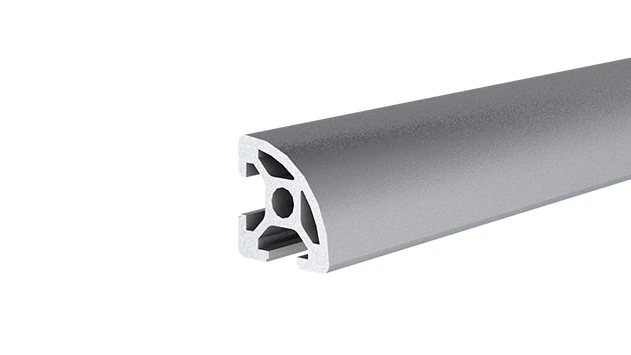
2020R is a 2.00 x 2.00CM fractional 20 series square extrusion T-slot profile with four open T-slots, two side with 2.00cm face, the other side with round face. The profile has align-a-grooves to assist in aligning connecting profiles.
In the world of manufacturing and warehouse management, the phrase "time is money" isn't just a cliché—it's a daily reality. Every second wasted searching for tools, every inefficiently placed material rack, or every wobbly workbench can throw off production schedules, frustrate teams, and eat into profits. That's where lean manufacturing comes in, and at the heart of any effective lean system is the right equipment. Today, we're diving deep into one unsung hero of lean setups: the 2020r EU Standard Aluminum Profile. This unassuming piece of metal might not look like much at first glance, but it's the backbone of countless efficient workspaces, from small workshops to large-scale production lines. Let's explore why this aluminum extrusion profile has become a go-to for teams aiming to build flexible, durable, and customizable material racks, workbenches, and more.
What Makes the 2020r EU Standard Aluminum Profile Special?
Before we get into assembly and customization, let's talk about why this profile stands out. First, it's an aluminum extrusion profile, which means it's created by pushing heated aluminum through a die to form its unique shape. This process results in a lightweight yet surprisingly strong structure—perfect for balancing portability with durability. The "2020r" in its name refers to its dimensions: 20mm in width and 20mm in height, with a rounded edge (the "r") that adds a sleek, modern touch while reducing the risk of scratches or snags on materials or clothing.
But what really sets the 2020r apart is its compatibility with a vast range of aluminum profile accessories. From T-slot nuts and bolts to end caps, hinges, and brackets, these accessories turn a simple length of aluminum into a building block for almost any workspace need. Whether you're constructing a material rack, a workbench, or a mobile trolley, the 2020r's T-slot design makes it easy to attach, adjust, and reconfigure components—no welding or specialized tools required. This flexibility is a cornerstone of lean manufacturing, where adaptability and waste reduction are key.
| Profile Type | Dimensions (WxH, mm) | Wall Thickness (mm) | Max Load Capacity (kg/m) | Best For |
|---|---|---|---|---|
| 2020r EU Standard | 20x20 (rounded edge) | 1.2–1.5 | 80–120 | Light-duty racks, workbenches, small trolleys |
| 3030 EU Standard | 30x30 (square edge) | 1.5–2.0 | 150–200 | Medium-duty workstations, shelving units |
| 4040 EU Standard | 40x40 (square edge) | 2.0–3.0 | 250–350 | Heavy-duty storage racks, industrial workbenches |
Step-by-Step Assembly: Building a Material Rack with 2020r Profiles
Let's put theory into practice by walking through the assembly of a simple yet versatile material rack—something you might use in a warehouse, workshop, or production line to organize tools, parts, or finished goods. For this example, we'll use the 2020r profile along with common aluminum profile accessories. Don't worry if you're new to this—assembly is designed to be intuitive, even for beginners.
What You'll Need
- 4 lengths of 2020r aluminum profile (1200mm each, for vertical posts)
- 8 lengths of 2020r aluminum profile (800mm each, for horizontal shelves)
- 16 corner brackets (compatible with 2020 profiles)
- 32 T-slot nuts (M5 or M6, depending on bracket size)
- 32 hex bolts (M5 or M6, 16–20mm length)
- 8 end caps (to cover sharp edges on vertical posts)
- A hex key (Allen wrench) matching bolt size
- A rubber mallet (optional, for gentle adjustments)
- A level (to ensure shelves are straight)
Assembly Steps
- Prepare the vertical posts: Start by cutting your 1200mm profiles to length if needed (most suppliers can pre-cut to your specifications). Slide an end cap onto the bottom of each vertical post to protect floors and add stability.
- Attach corner brackets to horizontal shelves: Take one 800mm horizontal profile and a corner bracket. insert a T-slot nut into the T-slot of the horizontal profile, aligning it with the hole in the bracket. Thread a hex bolt through the bracket and into the nut, tightening just enough to hold the bracket in place (you'll fully tighten later). Repeat for all four corners of each horizontal shelf—you'll have 8 shelves total (2 per level for a 4-level rack).
- Build the first (bottom) shelf frame: Connect two horizontal profiles (front and back) with two shorter horizontal profiles (sides) using the corner brackets. Tighten bolts firmly but not excessively—you want to leave room for adjustments. Use the level to ensure the frame is square (all corners 90 degrees).
- Attach vertical posts to the bottom frame: Stand the bottom frame upright. Slide the vertical posts into the open ends of the corner brackets (the ones not attached to the horizontal frame). Align the posts so they're flush with the bottom of the frame, then tighten the bracket bolts to secure them. Double-check with the level to ensure posts are vertical (plumb).
- Add upper shelves: Measure up from the bottom shelf (e.g., 300mm for the first upper shelf) and mark the vertical posts. Attach the next set of horizontal profiles to the posts using corner brackets, repeating the process for each level. Use the level to ensure each shelf is horizontal and evenly spaced.
- Final tightening and inspection: Once all shelves are in place, go back and fully tighten all bolts with the hex key. Give the rack a gentle shake to check for wobbles—if it moves, adjust the brackets or add extra bolts for stability. Finally, snap end caps onto the top of the vertical posts to finish the look.
Pro tip: If you need to adjust shelf height later (a common need in lean environments), simply loosen the bolts, slide the brackets up or down, and retighten. No disassembly required! This is the beauty of the T-slot system—it grows and changes with your workflow.

Customization: Making It Your Own
One of the 2020r profile's greatest strengths is its customizability. Whether you need a taller rack, a mobile unit, or specialized features like tool hooks or label holders, aluminum profile accessories make it easy to tailor the design to your needs. Here are a few popular customization ideas:
Add Mobility with Casters
For a material rack that can move with your team, replace the fixed end caps on the vertical posts with caster mounting plates and attach swivel casters (locking ones for stability when stationary). This is especially useful in dynamic workspaces where materials need to be transported from storage to assembly lines quickly.
Incorporate Tool Storage
Attach pegboards or tool hooks to the side of the rack using T-slot brackets. This keeps frequently used tools within arm's reach, reducing time spent searching for equipment—a classic lean win. You can even add small shelves or bins for screws, washers, or other small parts.
Adjust Shelf Depth or Load Capacity
If you need to store larger items, swap the 800mm horizontal profiles for longer ones (e.g., 1000mm). For heavier loads, reinforce shelves with cross-braces using additional 2020r profiles and brackets. Remember, the 2020r can handle 80–120kg per meter, so distributing weight evenly across the shelf is key to avoiding overloading.
Real-World Applications: From Workbench to Material Rack B
The 2020r profile isn't just for generic racks—it's a versatile solution that adapts to specific needs. Take the workbench, for example. A basic workbench built with 2020r profiles can include a solid wood or aluminum top, adjustable height legs (using telescoping profile sections), and built-in storage shelves or drawers. Add a vice, a lamp, or ESD (electrostatic discharge) mats, and you've got a dedicated workspace that's tailored to your team's tasks—whether it's assembly, packaging, or quality control.
Then there's the material rack b (3 row and 3 floor)—a common setup in warehouses and production facilities. This rack, with three rows and three levels, maximizes vertical space while keeping materials organized and accessible. Using 2020r profiles, you can build a material rack b that's not only sturdy but also easy to reconfigure if your storage needs change. For example, if you start stocking taller boxes, you can remove a shelf to create more vertical clearance. If you need to separate different materials, add dividers using smaller 2020r sections and brackets.
In a lean system, this kind of adaptability is crucial. Traditional fixed racks lock you into one layout, leading to wasted space or inefficient material flow. The 2020r, by contrast, lets you evolve your workspace alongside your business—no need to buy new equipment every time your processes change. It's a long-term investment that pays off in flexibility and reduced waste.
Why Choose 2020r for Your Lean System?
At the end of the day, the 2020r EU Standard Aluminum Profile stands out for three key reasons: affordability, flexibility, and durability. Compared to heavier steel racks or custom-built furniture, 2020r setups are surprisingly budget-friendly—especially when you factor in their reusability. If you no longer need a material rack, you can disassemble it and reuse the profiles to build a workbench or a trolley. This "build, use, reconfigure" cycle aligns perfectly with lean principles of reducing waste and maximizing resource value.
Durability is another win. Aluminum is resistant to rust and corrosion, making it suitable for both indoor and covered outdoor use. The anodized finish (common on EU standard profiles) adds an extra layer of protection, ensuring your rack or workbench stays looking new for years. And because there's no welding or drilling required, assembly is quick and low-stress—even for teams without specialized technical skills.
Finally, there's the peace of mind that comes with using EU standard components. EU standards ensure consistent quality, safety, and compatibility across manufacturers. That means you can mix and match accessories from different suppliers without worrying about fit issues—a huge plus if you need to source parts quickly or want to compare prices.
Conclusion: Building a Leaner, Smarter Workspace
The 2020r EU Standard Aluminum Profile isn't just a piece of metal—it's a tool for transforming how you work. Whether you're assembling a material rack, a workbench, or a custom storage solution, its lightweight strength, compatibility with aluminum profile accessories, and endless customization options make it an ideal choice for lean systems. By choosing 2020r, you're not just buying equipment—you're investing in a workspace that can grow, adapt, and evolve with your team's needs.
So, the next time you're looking to optimize your workflow, reduce waste, or create a more efficient workspace, consider the 2020r. It's proof that sometimes, the simplest solutions are the most powerful. After all, lean manufacturing isn't about overcomplicating things—it's about finding better, smarter ways to get the job done. And with 2020r, you've got a partner in that mission.