- Company Articles
- Industry articles
- Industry standards
- 2020r EU Standard Aluminum Profile for Material Handling Carts: Design Tips & Safety

2020r EU Standard Aluminum Profile for Material Handling Carts: Design Tips & Safety
Related Product
2020R EU Standard Aluminum Profile
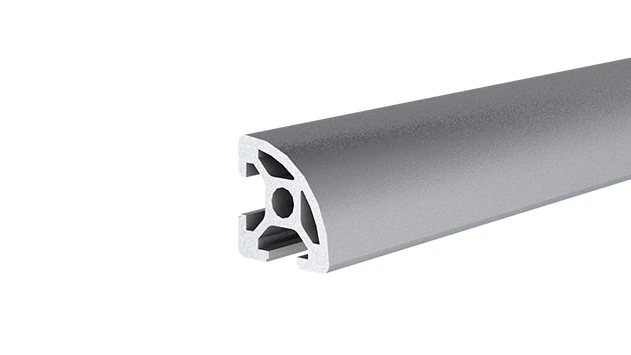
2020R is a 2.00 x 2.00CM fractional 20 series square extrusion T-slot profile with four open T-slots, two side with 2.00cm face, the other side with round face. The profile has align-a-grooves to assist in aligning connecting profiles.
Walk into any busy warehouse, manufacturing plant, or distribution center, and you'll notice something that rarely gets the spotlight but keeps operations running like clockwork: material handling carts. These unassuming workhorses ferry everything from raw materials to finished products, tools to components, and their design can make or break a team's efficiency, safety, and even morale. Over the years, the materials used to build these carts have evolved—from heavy steel frames that strained workers' backs to lighter, more versatile options that prioritize both durability and ergonomics. One material that's been turning heads lately? The 2020r EU Standard Aluminum Profile. It's not just a metal bar; it's a game-changer for anyone looking to build carts that are strong, customizable, and kind to both workers and the bottom line. In this article, we'll dive deep into what makes the 2020r profile stand out, share practical design tips to create carts that fit your unique needs, and explore how to keep safety front and center every step of the way.
Meet the 2020r EU Standard Aluminum Profile: Your Cart's Silent Superhero
Before we start sketching designs or picking out parts, let's get to know the star of the show: the 2020r EU Standard Aluminum Profile. If you're new to aluminum profiles, you might be wondering, "What's with the '2020r' name?" Let's break it down. The "2020" refers to its cross-sectional dimensions—20 millimeters by 20 millimeters. That might sound small, but don't let the size fool you. This profile packs a punch when it comes to strength, especially considering how lightweight it is. The "r" stands for "rounded," which is a subtle but crucial detail we'll talk about later when we cover safety. And "EU Standard"? That means it meets strict European union guidelines for quality, consistency, and safety—so you can trust it's built to last, no corners cut.
Now, why aluminum? Steel has been the go-to for industrial carts for decades, and for good reason—it's tough. But steel comes with a downside: weight. A steel cart loaded with parts can feel like pushing a boulder, leading to tired workers, slower workflows, and even repetitive strain injuries. Aluminum, on the other hand, is about a third the weight of steel but still boasts impressive strength. Imagine pushing a cart loaded with 200 pounds of components—with steel, you might need two people; with aluminum, one person could handle it easily. That's a big difference in a busy facility where every minute counts.
Corrosion resistance is another win for aluminum. If your workspace deals with moisture, chemicals, or even just high humidity (looking at you, food processing plants and outdoor loading docks), steel carts can rust over time, weakening the frame and leaving unsightly stains on products. Aluminum? It forms a natural oxide layer that protects it from rust, so your cart will stay looking and performing like new for years. Plus, aluminum is recyclable, which is a nice bonus for companies aiming to reduce their environmental footprint.
How Does 2020r Compare to Other Profiles?
You might be thinking, "There are other aluminum profiles out there—why 2020r?" Let's put it in perspective. Larger profiles like 4040 (40mm x 40mm) are great for heavy-duty racks or workbenches, but they're overkill for most material handling carts. They add unnecessary weight and cost, making the cart harder to maneuver. Smaller profiles, like 1515, might be too flimsy for anything beyond light tools. The 2020r hits that sweet spot: compact enough to keep the cart lightweight, strong enough to handle typical warehouse loads (we're talking 200–300 pounds, depending on the design), and versatile enough to adapt to different needs.
| Profile Type | Dimensions (mm) | Weight (kg/m) | Best For | Key Advantage |
|---|---|---|---|---|
| 2020r EU Standard | 20x20 | 0.7–0.9 | Material handling carts, lightweight racks | Balances strength, weight, and maneuverability |
| 3030 EU Standard | 30x30 | 1.3–1.5 | Heavy-duty carts, workbenches | Higher load capacity, bulkier design |
| 4040 EU Standard | 40x40 | 2.2–2.5 | Industrial racks, machine frames | Maximum strength, minimal mobility |
The rounded edges (the "r" in 2020r) are another standout feature. Sharp-edged profiles might save a few cents in manufacturing, but in a busy workspace, they're accidents waiting to happen. A worker rushing to meet a deadline could bump into a sharp corner and get a nasty cut—or worse, knock over the cart if they catch their sleeve. The 2020r's smooth, rounded edges reduce that risk, making the cart safer for everyone around it. It's a small detail, but anyone who's spent a day in a warehouse knows: small details add up to big improvements in safety.
Designing Your Cart: Tips to Make It Work For Your Team
Now that we've covered why the 2020r profile is a top pick, let's talk about how to design a cart that doesn't just look good on paper but actually makes your team's day easier. The best material handling carts aren't just "built"—they're crafted with the people who use them in mind. Here's how to get started.
Step 1: Start with the End in Mind—Define What You're Moving
Before you pick up a single piece of aluminum, ask: What will this cart carry? Is it small electronic components, heavy metal parts, or fragile items like glassware? The answer will shape everything from the cart's size to its load capacity to the accessories you choose. For example, if you're moving small parts, you might want dividers to keep them organized. If it's heavy tools, you'll need a sturdier base and stronger casters. And if it's fragile goods? A non-slip surface (like a rubber mat) and side rails to prevent tipping are a must.
Let's say you're designing a cart for a electronics assembly line. The team needs to move circuit boards, screws, and small tools between stations. A 2020r frame with a flat top (maybe a plywood or aluminum panel) would work, but adding dividers made from smaller 2020r pieces (connected with aluminum profile accessories like T-slot nuts and brackets) would keep parts from rolling around. That way, workers don't waste time hunting for the right screw—everything has its place.
Step 2: Build a Strong Base—It's All About the Frame
The frame is the cart's skeleton, and with 2020r, you've got a solid starting point. But how you put it together matters. Most carts use a simple rectangular frame: two long pieces (the length of the cart) connected by two short pieces (the width) at each end. For extra stability, add cross-braces—these are diagonal pieces that connect the corners, preventing the frame from wobbling when the cart is moving. Think of it like how a truss supports a bridge: the cross-braces distribute weight evenly and keep the structure rigid.
When assembling the frame, don't skimp on aluminum profile accessories. Cheap connectors might save a few dollars upfront, but they'll loosen over time, leading to a wobbly cart. Look for high-quality brackets, corner connectors, and T-slot bolts. These accessories are designed to lock the 2020r profiles together tightly, so the frame stays solid even after months of daily use. Pro tip: Use a torque wrench to tighten the bolts—over-tightening can strip the threads, and under-tightening leaves them loose. Most manufacturers recommend 3–4 Nm of torque for aluminum profile connections.
Step 3: Mobility Matters—Choosing the Right Caster Wheels
You could have the strongest frame in the world, but if the caster wheels are subpar, your cart will be more of a hassle than a help. Caster wheels are the cart's "feet," and they need to handle two things: the cart's total weight (frame + load) and the floor surface (concrete, tile, carpet, etc.). Let's break this down.
First, load capacity. Each caster has a weight rating (e.g., 75 pounds per wheel). A typical cart has four casters, so total capacity is 4 x caster rating. But here's the catch: don't just multiply by four and call it a day. If the cart is loaded unevenly (which it often is), one or two casters might bear more weight. Aim for a caster rating that's 50% higher than your expected max load. For example, if you need to carry 200 pounds, get casters rated for 75 pounds each (4 x 75 = 300 pounds total)—that extra buffer prevents premature wear and ensures smooth rolling.
Next, wheel type. Rubber wheels are great for concrete floors—they absorb shocks, reduce noise, and won't mark the floor. Polyurethane wheels are more durable and work well on rough surfaces, but they're noisier. If you're moving the cart over carpet, larger wheels (5–6 inches) roll more easily than small ones (3–4 inches). And don't forget brakes! At least two of the casters should have locking brakes—this keeps the cart from rolling away when it's parked, which is crucial for safety (more on that later).
Step 4: Add Roller Tracks for Easy Loading (If You Need Them)
For carts that move items on and off frequently—like bins of parts or boxes—roller tracks can be a game-changer. Roller tracks are essentially rows of small wheels that let items slide onto the cart with minimal effort. Instead of lifting a heavy bin, a worker can just push it along the rollers. The 2020r profile works well here because its T-slot design makes it easy to mount roller tracks using aluminum profile accessories like brackets or clips.
When adding roller tracks, pay attention to the angle. A slight downward slope (1–2 degrees) from the back to the front of the cart makes unloading even easier—gravity does the work for you. Just make sure the front has a lip or stop to prevent items from sliding off accidentally. For example, a cart with roller tracks in a warehouse might have a 2-inch high rail at the front, so when you push a bin onto the tracks, it slides forward but stops at the rail, safe and secure.
Step 5: Don't Forget Ergonomics—Make It Easy to Push and Pull
Here's a truth about material handling: if a cart is hard to push, workers will avoid using it—or worse, strain themselves trying. Ergonomics isn't just a buzzword; it's about designing tools that fit the human body, reducing fatigue and injury risk. For carts, that means focusing on handle height and push/pull force.
The handle should be at waist height for the average worker (around 32–36 inches from the floor). If it's too low, workers have to bend over, straining their backs. If it's too high, they'll hunch their shoulders, leading to neck and shoulder pain. With 2020r, you can easily adjust the handle height by cutting the vertical supports to the right length and attaching them to the frame with aluminum profile accessories like corner brackets.
Push/pull force is another key factor. A well-designed cart should require no more than 50 pounds of force to start moving (that's about the weight of a small child). If it's harder than that, check the casters—maybe they're underrated for the load, or the wheels are too small for the floor surface. Also, keep the cart's total weight (empty + loaded) in mind. A 2020r cart with a 300-pound load should glide smoothly with good casters; if it feels like pushing a car, something's wrong.

Safety First: Keeping Workers and Products Protected
A well-designed cart is a safe cart. But even the best design can fail if safety isn't prioritized from the start. Material handling accidents—like carts tipping over, workers tripping, or items falling—are all too common, and they're almost always preventable. Here's how to build safety into your 2020r cart.
Stability: Avoid the Tipping Point
The number one safety risk with material handling carts is tipping. A cart tips when its center of gravity (the point where all its weight is concentrated) moves outside the base of support (the area covered by the casters). To prevent this, keep the base wide and the load low. For example, a cart that's 30 inches long and 24 inches wide has a stable base, but if you stack items 4 feet high, the center of gravity rises, making it easy to tip when turning. Aim for a load height that's no more than twice the cart's width—so a 24-inch wide cart should have items stacked no higher than 48 inches.
Also, distribute weight evenly. Heavier items should go on the bottom, closer to the floor, and centered over the casters. Light items can go on top. If you're using shelves, put the heaviest bins on the lowest shelf. It seems simple, but in a hurry, workers might toss a heavy box on the top shelf—and that's when accidents happen.
Load Limits: Know What Your Cart Can Handle
Every cart has a maximum load capacity, and exceeding it is a recipe for disaster. The 2020r profile itself can handle a lot—aluminum has a tensile strength of around 200 MPa (that's technical speak for "strong"), but the cart's capacity depends on the frame design, casters, and accessories. As a general rule, a basic 2020r cart (rectangular frame, 4 casters, no shelves) can safely carry 200–300 pounds. Add shelves or a second level, and that number drops—each shelf adds weight to the frame, and the casters have to support more.
To avoid overloading, label the cart with its maximum capacity (e.g., "MAX LOAD: 250 LBS") in a visible spot. Train your team to check the label before loading—most people underestimate how heavy a stack of boxes or tools can be. And if you're unsure about your cart's capacity, do a test: load it with weights (sandbags work well) up to what you think it can handle, then push it around. If the frame bends, the casters squeak, or the cart feels unstable, reduce the load.
Maintenance: Keep It Rolling Smoothly
Even the best cart will wear out over time—but regular maintenance can extend its life and keep it safe. Here's a quick checklist to follow monthly:
- Check the frame: Tighten any loose bolts or connectors (aluminum profile accessories can loosen with vibration). Look for cracks or bends in the 2020r profile—if you see any, replace that piece immediately.
- Inspect the casters: Clean debris from the wheels (hair, dirt, or small rocks can get stuck and make rolling rough). Lubricate the caster axles with a few drops of oil if they're squeaking. Check the brakes to make sure they engage fully—if a brake slips, replace the caster.
- Test the surface: If the cart has a wooden top, check for splinters. If it's metal, look for sharp edges (sand them down if needed). replace non-slip mats if they're worn or peeling.
Think of it like maintaining a car: a little care goes a long way. A cart with loose bolts might start to wobble, increasing the risk of tipping. A caster with a stuck wheel could cause a worker to strain their back pushing it. Regular checks take 10 minutes and can prevent costly accidents.
The "r" in 2020r—Rounded Edges Save Fingers (and More)
Earlier, we mentioned the "r" in 2020r stands for rounded edges, and this is a safety feature you'll appreciate every day. Sharp edges on steel carts are notorious for causing cuts—imagine a worker rushing to move a cart and brushing against a sharp corner. With 2020r, the edges are gently curved (usually a 2–3mm radius), so even a bump won't leave a mark. It's a small detail, but in a busy workplace, where people are moving fast, it adds up to fewer injuries and happier workers.
Case Study: How One Factory Improved Safety with 2020r Carts
Let's hear from a real-world example. A small automotive parts manufacturer in Germany was struggling with their old steel material handling carts. Workers complained they were too heavy to push, and there had been two minor injuries in six months—one from a cut on a sharp steel edge, another from a cart tipping over when overloaded. The plant manager, Anna, decided to switch to 2020r aluminum carts after seeing them at a trade show.
Anna's team worked with a local supplier to design three types of carts: one for small parts (with dividers), one for heavy tools (with a reinforced base and large casters), and one for bins (with roller tracks). Within a month of rolling out the new carts, Anna noticed a difference. "Workers were moving faster—no one was struggling to push the carts anymore," she said. "And the rounded edges? We haven't had a single cut since we switched. The tipping incidents stopped too, because we labeled the load limits clearly and trained everyone to distribute weight properly."
Best of all, the 2020r carts cost less than the steel ones they replaced—aluminum is pricier per pound, but the lighter weight meant using less material overall. "We saved money upfront and reduced injury-related downtime," Anna added. "It was a no-brainer."
Conclusion: Invest in Carts That Work With Your Team
Material handling carts might not be the most glamorous part of your operation, but they're the backbone of efficiency and safety. The 2020r EU Standard Aluminum Profile offers a winning combination of strength, lightweight design, and versatility that makes it ideal for building carts that fit your team's needs. By starting with a clear purpose, focusing on a strong frame, choosing the right accessories (like aluminum profile accessories and caster wheels), and prioritizing safety, you can create carts that reduce fatigue, prevent injuries, and keep your operation running smoothly.
Remember, the best carts aren't just built—they're designed with the people who use them in mind. Take the time to talk to your team, understand their pain points, and build a cart that solves their problems. With 2020r, you've got a material that can keep up with whatever your workplace throws at it. So go ahead—start sketching, start building, and watch your team's productivity (and morale) soar.