- Company Articles
- Industry articles
- Industry standards
- 2020r EU Standard Aluminum Profile for Modular Conveyors: Enhancing Warehouse Efficiency

2020r EU Standard Aluminum Profile for Modular Conveyors: Enhancing Warehouse Efficiency
Related Product
2020R EU Standard Aluminum Profile
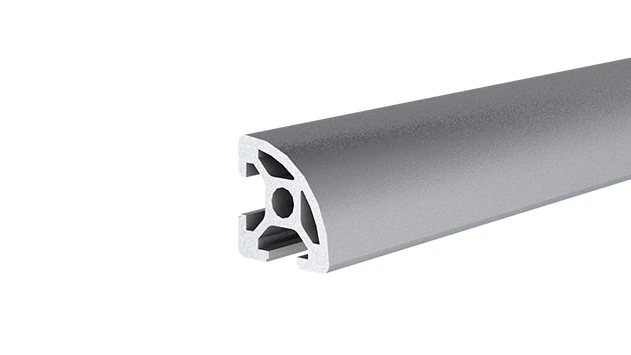
2020R is a 2.00 x 2.00CM fractional 20 series square extrusion T-slot profile with four open T-slots, two side with 2.00cm face, the other side with round face. The profile has align-a-grooves to assist in aligning connecting profiles.
Walk into any modern warehouse, and you'll quickly realize that efficiency isn't just a buzzword—it's the lifeblood of operations. Every second wasted on clunky material movement, every dollar spent on rigid, unchangeable equipment, and every frustrated team member struggling with outdated systems chips away at productivity. In today's fast-paced logistics landscape, where customer expectations for quick deliveries and flexible operations are higher than ever, warehouses need solutions that can keep up. That's where modular conveyors come in—and at the heart of these game-changing systems lies a component that's quietly transforming how warehouses operate: the 2020r EU Standard Aluminum Profile.
Modular conveyors have long been celebrated for their ability to adapt to shifting needs, but their true potential is unlocked when paired with the right building blocks. The 2020r profile, a staple in EU-standard aluminum extrusion, isn't just another piece of metal. It's a versatile, durable, and surprisingly lightweight foundation that turns static warehouses into dynamic, responsive hubs. In this article, we'll dive into how this unassuming profile, combined with components like aluminum profile accessories, roller track, and caster wheels, is redefining warehouse efficiency—one seamless workflow at a time.
The Hidden Costs of Rigid Warehouse Systems
Before we explore the benefits of the 2020r profile, let's take a moment to understand the challenges warehouses face without it. Traditional conveyor systems, often built with heavy steel or one-size-fits-all plastic, come with a long list of drawbacks. For starters, they're heavy . Installing or reconfiguring a steel conveyor line can take days, requiring specialized labor and significant downtime—time that could be spent moving products. Then there's the issue of rigidity: a steel system built for a specific product size or workflow becomes obsolete the moment your inventory mix changes. Need to accommodate larger boxes during peak seasons? You're looking at costly modifications or even a full replacement.
Corrosion is another silent enemy. In warehouses dealing with temperature fluctuations, humidity, or even occasional spills, steel conveyors rust over time, leading to jams, broken parts, and frequent maintenance. And let's not forget about labor. Workers stuck manually moving goods between fixed conveyors and workbenches waste energy and time—energy better spent on higher-value tasks like quality control or order fulfillment. These inefficiencies add up: studies show that poor material flow can increase operational costs by up to 30%, a hit no business can afford in today's competitive market.
Meet the 2020r EU Standard Aluminum Profile: A Closer Look
So, what makes the 2020r EU Standard Aluminum Profile different? Let's start with the basics. The "2020r" refers to its dimensions—20mm in width and 20mm in height—with "r" indicating a rounded edge design, a subtle detail that reduces wear on both the profile and the materials moving across it. As an EU-standard extrusion, it's engineered to strict quality benchmarks, ensuring consistency in size, strength, and finish across every piece. But numbers and standards only tell part of the story; it's the material itself that makes this profile a standout.
Aluminum, by nature, is a material that balances strength and lightness in a way few others can. Unlike steel, which weighs down systems and complicates installation, the 2020r profile is lightweight enough to be handled by a small team, cutting down on labor time and installation costs. Yet don't let its lightness fool you—thanks to advanced alloy formulations and precision extrusion processes, it boasts impressive load-bearing capabilities, easily supporting the demands of most warehouse conveyor applications, from small parts to medium-sized cartons.
Another key feature is its corrosion resistance. Unlike steel, which requires constant painting or coating to avoid rust, aluminum forms a natural oxide layer that protects it from moisture and chemicals. This means less time spent on maintenance, fewer unexpected breakdowns, and a longer lifespan for your conveyor system. For warehouses in humid climates or those handling food, pharmaceuticals, or other sensitive products, this resistance is a game-changer, ensuring compliance with hygiene standards without sacrificing durability.

Building Blocks of Modularity: Aluminum Profile Accessories
A profile is only as good as the accessories that bring it to life, and the 2020r system shines here. Aluminum profile accessories—think brackets, connectors, end caps, and mounting plates—are designed to work seamlessly with the 2020r profile, turning it from a simple extrusion into a fully customizable building system. What makes these accessories special is their modularity : no welding, no drilling, no specialized tools required. Most connect via T-slot grooves running along the profile's length, allowing for quick adjustments and reconfigurations.
Take, for example, the 90° aluminum profile connector. This small but mighty accessory lets you join two 2020r profiles at a right angle in seconds, creating corners for conveyor turns or workbench frames. Need to add a shelf above a conveyor line? Slide a bracket into the T-slot, tighten a bolt, and you're done. Even end caps, which seal the profile's ends to prevent dust buildup and protect workers from sharp edges, snap into place effortlessly. This level of flexibility means that if your warehouse needs change—say, you're adding a new product line or shifting to a different order-fulfillment strategy—you can reconfigure your conveyor system in hours, not days.
For modular conveyors specifically, accessories like roller track placon mounts are indispensable. These mounts act as the bridge between the 2020r profile and roller track systems, ensuring a secure, stable connection that can handle the constant motion of materials. Whether you're using plastic roller track guide rails (yellow or grey, depending on your warehouse's color-coding needs) or aluminum guide rails, these mounts keep everything aligned, reducing friction and preventing jams. It's this attention to detail in accessory design that makes the 2020r system so effective at streamlining material flow.
Roller Track: The Backbone of Smooth Material Flow
If the 2020r profile is the skeleton of a modular conveyor system, then roller track is the muscle that drives material movement. Roller track systems, made up of wheels or balls that glide along a rail, reduce friction, allowing even heavy packages to move with minimal effort—either manually, via gravity, or with motorized assistance. And when paired with the 2020r profile, roller track becomes more than just a conveyor component; it becomes a flexible, adaptable tool that can be tailored to almost any workflow.
One of the biggest advantages of using 2020r with roller track is precision. The profile's consistent dimensions ensure that roller track guide rails align perfectly, eliminating gaps or misalignments that could cause products to get stuck. For example, plastic roller track guide rails in yellow are often used in high-visibility areas, making it easy for workers to identify conveyor paths, while grey rails blend into more neutral warehouse environments. Both fit snugly into the 2020r's T-slots, held in place by roller track placon mounts for aluminum profile flat—accessories designed to distribute weight evenly and prevent sagging over time.
Swivel roller balls, another common roller track component, are a testament to the system's versatility. Available in 0.5 inch and 1 inch sizes, these small, rotating balls can be embedded into workbench surfaces or conveyor sections to allow materials to move in any direction—perfect for packing stations where workers need to pivot boxes quickly. When mounted on a 2020r frame, these roller balls become part of a cohesive system, integrating seamlessly with straight roller tracks to create a workflow that adapts to how your team works, not the other way around.
Beyond Conveyors: Workbenches and Trolleys with 2020r
The 2020r profile isn't limited to conveyors—it's also a star player in building workbenches and turnover trolleys, two essential tools for warehouse efficiency. Workbenches, where much of the hands-on work happens, need to be sturdy, ergonomic, and adaptable. With 2020r, you can build workbenches that align perfectly with your conveyor lines, ensuring materials glide directly from the track to the workspace without workers having to reach or bend awkwardly.
Take the "aluminum workbench a" design, a simple yet effective single-deck setup often used in assembly lines. Built with 2020r profiles and aluminum honeycomb panels for a lightweight but stable surface, this workbench can be customized with shelves, tool holders, or even integrated LED lighting—all attached via aluminum profile accessories. And because it's modular, you can adjust the height to match your team's needs, reducing fatigue and boosting productivity. Best of all, if your workflow changes, you can reconfigure the workbench by adding or removing components, no new tools required.
Then there are turnover trolleys, the unsung heroes of warehouse mobility. These trolleys, used to transport materials between conveyors, workbenches, and storage areas, need to be durable, easy to maneuver, and space-efficient. With 2020r profiles and caster wheels, you get all three. The lightweight aluminum frame makes the trolley easy to push, even when fully loaded, while caster wheels with locking brakes ensure stability when loading or unloading. Accessories like caster accessories—such as swivel stems or brake mechanisms—let you customize the trolley's mobility to your space, whether you need 360° rotation for tight corners or fixed wheels for straight-line movement.
Imagine a scenario where a delivery arrives, and your team needs to move a batch of products from the receiving dock to the conveyor line. With a 2020r-based turnover trolley, they can load the products, wheel them directly to the conveyor, and unload with minimal effort—no lifting, no straining, no wasted time. It's these small, cumulative improvements that add up to big efficiency gains over time.
Why 2020r Stands Out: Comparing Aluminum Profiles
With so many aluminum profiles on the market—3030, 4040, 4080, to name a few—you might wonder: why choose 2020r? The answer lies in its balance of size, strength, and versatility. Let's break it down with a closer look at how it compares to other common profiles:
| Feature | 2020r EU Standard Aluminum Profile | 3030 EU Standard Aluminum Profile | 4040 EU Standard Aluminum Profile |
|---|---|---|---|
| Dimensions (WxH) | 20mm x 20mm | 30mm x 30mm | 40mm x 40mm |
| Weight (per meter) | 0.45kg | 0.8kg | 1.2kg |
| Max Load Capacity (uniformly distributed) | 150kg/m | 300kg/m | 500kg/m |
| Ideal Application | Light to medium-duty conveyors, workbenches, small trolleys | Medium-duty racks, assembly lines, larger workbenches | Heavy-duty material handling, industrial machinery frames |
| Key Advantage | Lightweight, highly customizable, cost-effective for small to medium loads | Balanced strength and size for mid-range applications | Maximum strength for heavy loads and industrial use |
For most warehouses, especially those focused on e-commerce, retail, or light manufacturing, the 2020r profile hits the sweet spot. Its 20x20mm size is compact enough to fit in tight spaces—think narrow aisles or mezzanine levels—while still supporting the majority of daily material loads. And because it's lighter than larger profiles, it's easier to install, reconfigure, and transport, reducing labor costs and downtime. In short, 2020r isn't the biggest or strongest profile, but it's the most practical for the workflows that keep most warehouses running smoothly.
Real-World Impact: How One E-Commerce Warehouse Boosted Efficiency by 40%
To truly understand the impact of 2020r modular conveyors, let's look at a real example: a mid-sized e-commerce warehouse in Germany that was struggling with seasonal demand spikes. Every holiday season, order volumes would double, but their old steel conveyor system couldn't keep up. Reconfiguring it to handle more packages took weeks, and breakdowns due to rusted parts were common, leading to missed delivery deadlines and unhappy customers.
In 2023, the warehouse switched to a modular conveyor system built with 2020r EU Standard Aluminum Profiles, paired with roller track and aluminum profile accessories. The results were staggering. First, installation took just 3 days instead of the 2 weeks the old steel system required—thanks to the lightweight profiles and tool-free accessories. Then, when the holiday rush hit, the team reconfigured the conveyor lines in hours by adding extra roller track sections and adjusting workbench positions, allowing them to handle 30% more packages per day.
Maintenance costs dropped, too. The aluminum profiles resisted corrosion, even in the warehouse's humid conditions, and when a roller track connector wore out, it was replaced in minutes with a spare part from the shelf. Workers reported less fatigue, thanks to ergonomic workbenches aligned with the conveyors, and the warehouse manager noted a 40% reduction in time spent on material handling tasks. "We used to spend so much time fighting our equipment," he said. "Now, the system works with us, not against us."
Maintenance and Sustainability: Long-Term Value Beyond Efficiency
Efficiency isn't just about speed—it's also about long-term value. The 2020r profile excels here, too, thanks to its low maintenance needs and sustainability credentials. Aluminum is 100% recyclable, and unlike steel, it doesn't lose quality when recycled. This means that if your warehouse eventually outgrows its 2020r system, the profiles can be melted down and repurposed, reducing waste and environmental impact.
Maintenance is similarly hassle-free. Unlike steel, which requires regular painting or coating to prevent rust, aluminum profiles only need occasional cleaning with soap and water to stay in top shape. And because the system is modular, replacing a worn part—like a caster wheel or roller track connector—is as simple as sliding out the old component and snapping in a new one. No need for specialized technicians or expensive tools; your in-house team can handle most repairs, keeping downtime to a minimum.
Over time, these factors add up to significant cost savings. A study by the Material Handling Industry (MHI) found that modular aluminum systems like those built with 2020r have a 25% lower total cost of ownership over 10 years compared to traditional steel systems, thanks to reduced installation, maintenance, and replacement costs. For warehouses looking to invest in their future, that's a compelling reason to choose 2020r.
The Future of Warehouse Efficiency Starts with the Right Foundation
In a world where warehouse efficiency can make or break a business, the 2020r EU Standard Aluminum Profile is more than just a component—it's a catalyst for change. By combining lightweight durability, modular flexibility, and seamless integration with accessories like roller track and caster wheels, it empowers warehouses to build systems that adapt to their needs, not the other way around. Whether you're a small distribution center looking to streamline workflows or a large e-commerce hub preparing for seasonal spikes, 2020r offers a path to greater efficiency, lower costs, and happier, more productive teams.
As warehouses continue to evolve, one thing is clear: rigid, one-size-fits-all solutions are a thing of the past. The future belongs to systems that are as dynamic and adaptable as the businesses they serve. And with the 2020r profile leading the way, that future is already here.