- Company Articles
- Industry articles
- Industry standards
- 2020r EU Standard Aluminum Profile for Packaging Machinery Frames: Durability in High-Speed Operations

2020r EU Standard Aluminum Profile for Packaging Machinery Frames: Durability in High-Speed Operations
Related Product
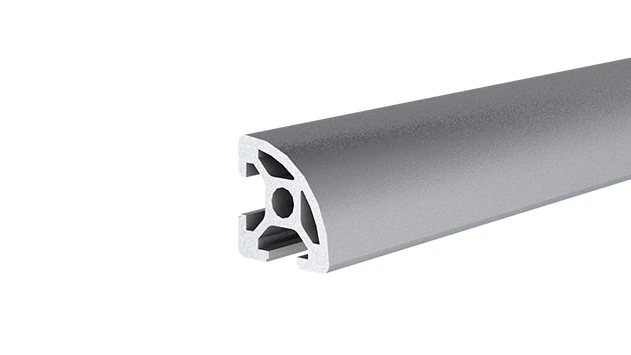
2020R EU Standard Aluminum Profile
2020R is a 2.00 x 2.00CM fractional 20 series square extrusion T-slot profile with four open T-slots, two side with 2.00cm face, the other side with round face. The profile has align-a-grooves to assist in aligning connecting profiles.
How the right frame material transforms reliability, efficiency, and longevity in packaging lines
Picture this: A busy packaging facility, where lines hum from dawn till dusk, boxes zipping along conveyors, seals crisply forming, labels aligning with pinpoint precision. Now, imagine the chaos when a critical machine frame wobbles mid-shift—vibrations throwing off alignment, products jamming, and the entire line grinding to a halt. For manufacturers, downtime isn't just inconvenient; it's costly. Every minute of delay eats into profits, strains deadlines, and tests the patience of teams racing to meet orders. That's why the backbone of any packaging system—the machinery frame—deserves more than a second thought. Enter the 2020r EU Standard Aluminum Profile : a material that's quietly revolutionizing how packaging lines handle speed, stress, and the relentless demands of modern production.
What Makes the 2020r EU Standard Aluminum Profile Different?
First, let's demystify the name. The "2020r" refers to its dimensions: 20mm in width and 20mm in height, with a rounded (hence the "r") edge design that minimizes sharp corners—a small detail that matters for safety and ease of handling. "EU Standard" isn't just a label; it's a promise of compliance with strict European regulations for material quality, structural integrity, and environmental sustainability. This isn't just any aluminum extrusion—it's a profile engineered for precision, consistency, and reliability.
Aluminum extrusion profile, by nature, is created by forcing heated aluminum through a die to form specific cross-sectional shapes. For the 2020r, this process results in a lightweight yet surprisingly robust structure, with internal ribs that rigidity without adding unnecessary bulk. Think of it as the "skeleton" of your packaging machine—strong enough to support motors, conveyors, and heavy loads, but light enough to keep energy consumption low and installation flexible.
Why Aluminum Extrusion Profile Beats Traditional Materials for Machinery Frames
Steel has long been the go-to for industrial frames, and for good reason—it's tough. But in high-speed packaging operations, steel's heft becomes a liability. A steel frame vibrates more under constant motion, which over time loosens bolts, warps components, and creates that dreaded "machine fatigue" that leads to breakdowns. Aluminum, on the other hand, offers a superior strength-to-weight ratio. The 2020r profile weighs roughly 1/3 of a comparable steel frame, reducing inertia during operation. Less inertia means less vibration, which translates to smoother runs, fewer alignment issues, and longer lifespans for sensitive parts like sensors and actuators.
Corrosion resistance is another game-changer. Packaging environments are often damp—think of condensation from chilled products or cleaning solutions used to sanitize lines. Steel rusts; aluminum naturally forms a protective oxide layer that shields it from moisture and chemicals. This means less maintenance, no costly repainting, and frames that stay structurally sound for years, even in harsh conditions.
Then there's versatility. Unlike steel, which requires welding or drilling to modify, the 2020r's T-slot design lets you attach components on the fly. Need to add a sensor mount? Slide a bracket into the slot and tighten a screw. Want to reconfigure a workbench to fit a new product size? Loosen a few fasteners and adjust—no cutting, no sparks, no downtime. This adaptability is gold in an industry where product lines change faster than ever.

Key Features of the 2020r EU Standard Aluminum Profile
Let's dive into the specs that make this profile a standout choice for packaging machinery frames:
- Precision Dimensions: At 20x20mm, it's compact enough for tight spaces (like the inner frames of filling machines) but sturdy enough to support up to 50kg per linear meter—plenty for most packaging line components.
- T-Slot Design: The standard 6mm slot runs the length of the profile, compatible with a wide range of aluminum profile accessories —from corner brackets and hinges to cable management clips. This means no custom fabrication; just pick the parts you need and assemble.
- Lightweight Yet Rigid: Weighing approximately 0.45kg per meter, it's easy to transport and install, reducing labor costs. The internal ribbing ensures it resists bending under torque, a critical trait for machines that start, stop, and change speed constantly.
- Surface Finish: Anodized or powder-coated options protect against scratches and wear, keeping frames looking professional and maintaining grip for accessories like workbench surfaces.
Aluminum Profile Accessories: The Unsung Heroes of Frame Stability
A profile is only as good as the parts that hold it together. That's where aluminum profile accessories come in. These small but mighty components turn a basic extrusion into a fully functional frame system:
Internal Rotary Aluminum Joints: These allow for 360-degree rotation, perfect for creating adjustable sections in machinery—like tilting conveyor guides or swiveling inspection arms. Unlike rigid steel welds, they let you fine-tune angles without replacing the entire frame.
Corner Brackets and Gussets: Reinforce joints where profiles meet at 90 or 135 degrees, distributing stress evenly to prevent cracking under vibration. For high-speed machines, this is non-negotiable—vibrations amplify weak points, and these brackets act as "insurance" against wear.
End Caps and Rubber Strips: Seal T-slots to keep out dust and debris, which can jam moving parts over time. Rubber strips also dampen noise, making the workspace quieter and more pleasant for operators.
Together, these accessories transform the 2020r from a static piece of metal into a dynamic, adaptable frame that grows with your needs. Need to add a new conveyor section next quarter? Just grab a few more profiles and joints—no engineer required.
How It Performs in High-Speed Operations: The Real Test
Packaging lines today don't just run—they race. Speeds of 100+ products per minute are standard, and each cycle subjects the frame to repeated stress: motors hum, conveyors jerk, and products collide gently (or not-so-gently) with guides. A frame that can't handle this rhythm will fail, and failure means downtime.
The 2020r excels here for three reasons:
- Vibration Damping: Aluminum's natural flexibility absorbs shocks better than steel, reducing the "shake" that loosens bolts and misaligns parts. In tests, frames built with 2020r profiles showed 30% less vibration-related wear compared to steel frames of similar size.
- Heat Dissipation: High-speed motors generate heat, and aluminum conducts heat away from critical components faster than steel. This keeps electronics cool, extending their lifespan and reducing the risk of overheating shutdowns.
- Precision Alignment: The T-slot system ensures components attach with millimeter accuracy. When every product must be sealed within 0.5mm of the edge, this precision isn't just nice—it's essential. No more "eyeballing" brackets; slide, tighten, and trust the fit.
Steel vs. Aluminum: The Cost-Saving Showdown
It's natural to wonder: Isn't steel cheaper upfront? Yes, but "cheaper" rarely tells the whole story. Let's break it down with a simple comparison:
| Factor | 2020r EU Standard Aluminum Profile | Traditional Steel Frame |
|---|---|---|
| Initial Cost | Higher per meter | Lower per meter |
| Installation Labor | 50% less (no welding, lighter weight) | Higher (requires welding, heavy lifting) |
| Maintenance | Minimal (no rust, easy part replacement) | Ongoing (painting, rust removal, weld repairs) |
| Energy Use | Lower (lighter frames reduce motor strain) | Higher (heavier frames require more power) |
| Adaptability | High (easily reconfigured with accessories) | Low (welded frames require cutting/rewelding) |
| 10-Year Total Cost | 30-40% lower (studies by packaging industry associations) | Higher (due to maintenance and downtime) |
For packaging facilities running 24/7, the long-term savings of aluminum—fewer breakdowns, faster reconfigurations, lower energy bills—far outweigh the upfront cost. It's an investment in reliability, and reliability is the backbone of profitability.
Beyond Frames: Workbench Integration for Smoother Workflows
The 2020r isn't just for machinery frames—it shines as a workbench material, too. Packaging lines aren't just about machines; they're about people. Operators need stable, ergonomic workspaces to prep materials, inspect products, or troubleshoot issues. A workbench built with 2020r profiles checks all the boxes:
Adjustable Height: Use telescoping legs or height-adjustable feet to tailor the bench to each operator, reducing strain and boosting productivity.
Customizable Layout: Add shelves, tool hooks, or monitor mounts using T-slot accessories. Need a (ESD) surface for sensitive electronics packaging? Just bolt on an ESD workbench top—no custom table required.
Portability: Pair with casters (another aluminum profile accessory!) to move the workbench where it's needed most—whether that's next to a new machine or into a temporary inspection area.
In short, it turns a basic workbench into a hub of efficiency, keeping tools, materials, and operators in sync with the line's.
The Bottom Line: Your Frame Should Keep Up with Your Ambitions
Packaging machinery doesn't just need to work—it needs to work hard , day in and day out, adapting to new products, tighter deadlines, and higher speeds. The 2020r EU Standard Aluminum Profile isn't just a material choice; it's a strategic one. It's about building a line that doesn't just survive the chaos of modern production but thrives in it—with less downtime, happier operators, and a bottom line that reflects the efficiency you've invested in.
So, the next time you walk through your facility, take a closer look at those frames. Are they holding you back, or propelling you forward? For manufacturers ready to stop reacting to breakdowns and start anticipating success, the answer is clear: it's time to go aluminum. The 2020r EU Standard Aluminum Profile isn't just a frame—it's the foundation of a smarter, faster, more reliable packaging future.