- Company Articles
- Industry articles
- Industry standards
- 2020r EU Standard Aluminum Profile for Sustainable Logistics: Reusable Turnover Solutions

2020r EU Standard Aluminum Profile for Sustainable Logistics: Reusable Turnover Solutions
Related Product
2020R EU Standard Aluminum Profile
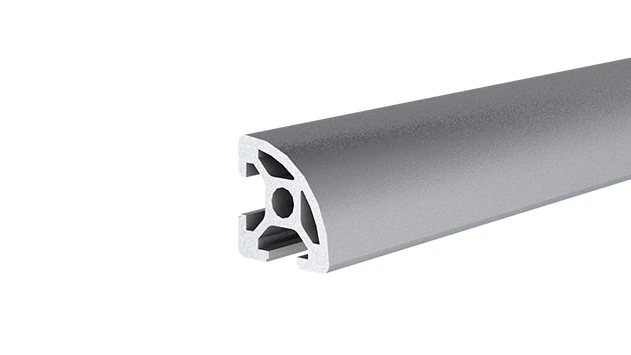
2020R is a 2.00 x 2.00CM fractional 20 series square extrusion T-slot profile with four open T-slots, two side with 2.00cm face, the other side with round face. The profile has align-a-grooves to assist in aligning connecting profiles.
In the fast-paced world of modern logistics, where efficiency and sustainability are no longer optional but essential, businesses are constantly searching for solutions that reduce waste, cut costs, and align with global environmental goals. Enter the 2020r EU Standard Aluminum Profile —a game-changer in the realm of reusable turnover systems. More than just a material, this aluminum extrusion profile represents a shift toward circular logistics, where "use once and discard" is replaced with "design, reuse, and recycle." From manufacturing floors to warehouse shelves, from workbenches to turnover trolleys, the 2020r aluminum profile is redefining how we think about durability, flexibility, and environmental responsibility. Let's dive into how this innovative material, paired with smart aluminum profile accessories and lean principles, is building the future of sustainable logistics.
What Makes 2020r EU Standard Aluminum Profile Unique?
First, let's clarify: the "2020r" in its name refers to its dimensions—20mm in width and 20mm in height—with "r" indicating compliance with EU standards for material safety, durability, and environmental impact. This isn't just any aluminum extrusion profile; it's engineered to meet rigorous European regulations, ensuring it's free from harmful substances, corrosion-resistant, and built to last. But what truly sets it apart is its dual focus on strength and sustainability .
Aluminum, by nature, is a wonder material for eco-conscious industries. It's 100% recyclable, with no loss in quality during the recycling process. In fact, recycling aluminum uses just 5% of the energy required to produce new aluminum from raw bauxite ore. For logistics, this means that even at the end of a product's lifecycle, the 2020r profile can be melted down and transformed into new components—closing the loop on waste. But its sustainability doesn't stop at recyclability. The profile's lightweight yet robust structure (thanks to precise aluminum extrusion techniques) also reduces transportation emissions, as lighter turnover systems mean less fuel consumption during shipping.
Compliance with EU standards adds another layer of trust. Businesses operating in Europe or exporting to EU markets can rest easy knowing the 2020r profile meets strict guidelines for workplace safety, chemical exposure, and load-bearing capacity. This isn't just about ticking boxes; it's about building systems that protect workers, products, and the planet.
Sustainable Logistics: The Case for Reusable Turnover Solutions
Traditional logistics systems often rely on single-use or short-lived materials: cardboard boxes that tear, plastic bins that crack, wooden pallets that splinter. These not only create mountains of waste but also drive up long-term costs—after all, constantly replacing damaged or worn-out equipment isn't cheap. Reusable turnover solutions, by contrast, are designed to be used repeatedly, reducing the need for frequent replacements and cutting down on landfill waste.
Here's where the 2020r aluminum profile shines. Unlike plastic, which degrades under UV light or heavy use, or wood, which warps with moisture, aluminum extrusion profiles are built to withstand the rigors of daily logistics. A well-maintained 2020r-based turnover trolley or material rack can last for decades, even in high-traffic environments. And when it does finally reach the end of its life, it's not trash—it's a valuable resource ready to be recycled.
This aligns perfectly with lean system principles, which prioritize eliminating waste (or "muda," in lean terminology). Lean logistics isn't just about speed; it's about creating systems that use resources efficiently, adapt to changing needs, and minimize unnecessary costs. The 2020r aluminum profile, with its modular design, is a lean dream: it allows businesses to build exactly what they need, reconfigure it when requirements change, and avoid over-investing in one-size-fits-all solutions.

From Profile to System: The Role of Aluminum Profile Accessories
A profile is only as good as the accessories that bring it to life. Aluminum profile accessories are the unsung heroes of modular logistics, turning simple aluminum extrusion profiles into fully functional, reusable systems. Let's break down some key accessories and how they enable reusability:
- Connectors: Items like the 90° aluminum profile connector or 135° aluminum profile connector allow for quick, tool-free assembly. No welding, no glue—just snap or bolt the connector into place, and you've got a sturdy joint. When you need to reconfigure your setup (say, turning a small workbench into a longer one), simply disconnect and rearrange.
- End Caps & Rubber Strips: Aluminum profile end caps (like the 2020 aluminum profile end cap) protect the profile's edges from damage and prevent dust or debris from entering, extending its lifespan. Aluminum profile rubber strips add grip, reduce noise during transport, and cushion delicate items—making turnover trolleys safer for both products and workers.
- Hinges & Handles: Aluminum hinges and nylon handles add mobility and flexibility. A turnover trolley with a hinged shelf can fold flat for storage when not in use, saving space. A handle with a soft-grip rubber strip makes pushing heavy loads easier, reducing strain on workers and increasing efficiency.
These accessories don't just make assembly easier—they make reuse possible. A system built with modular accessories isn't fixed; it's a kit of parts that can be repurposed. Today's material rack can become tomorrow's workbench; today's small trolley can be extended into a larger one next month. This adaptability is why 2020r aluminum profile systems have a lower total cost of ownership than traditional fixed systems: they grow with your business, rather than becoming obsolete.
Real-World Solutions: Workbenches, Trolleys, and Racks
Let's get concrete. How do 2020r aluminum profiles translate into everyday logistics tools? Here are three key applications that highlight their reusability:
1. The Reconfigurable Workbench
A workbench is the heart of any production or packing area—but needs change. One day, you might need a small bench for assembling electronics; the next, a longer one for packing bulk orders. A workbench built with 2020r aluminum profiles and accessories can adapt. Add a few extra profile sections, connect them with 90° aluminum profile connectors, and suddenly your 1m bench is 2m. Need storage? Attach a shelf using parallel aluminum joint a. The bench top, made from durable aluminum honeycomb panel (another sustainable, lightweight option), resists scratches and can be replaced individually if damaged—no need to buy a whole new bench.
2. Turnover Trolley and Rack Systems
Turnover trolley and rack systems are the backbone of warehouse logistics, moving products from storage to shipping or between production stations. Traditional plastic trolleys crack under heavy loads; wooden racks warp in humid environments. But a 2020r aluminum trolley? It's lightweight enough for easy maneuvering (thanks to aluminum's low density) but strong enough to carry heavy goods. Add caster wheels with brakes for stability, and you've got a trolley that can be used daily for years. When your product lineup changes, reconfigure the rack: add dividers with aluminum side guards, or adjust shelf heights using sliding connectors. Even better, if you no longer need the trolley, disassemble it and use the profiles to build a material rack—like material rack b (3 row and 3 floor) —for storing inventory.
3. Lean Material Racks
Warehouse space is precious, and static racks waste it. A lean material rack built with 2020r aluminum profiles can be customized to fit your exact storage needs. Use aluminum guide rails to create sliding shelves, or add roller tracks for easy access to goods. The rack's modular design means you can add more levels, widen shelves, or even move the entire rack to a new location—no need to tear down and rebuild. And because aluminum is corrosion-resistant, it's ideal for environments with temperature or humidity fluctuations, ensuring your rack stays functional for the long haul.
Sustainability by the Numbers: A Comparison
Still not convinced? Let's put it in black and white. The table below compares traditional turnover materials with 2020r EU Standard Aluminum Profile in key sustainability and cost metrics:
| Metric | Traditional Materials (Wood/Plastic) | 2020r EU Standard Aluminum Profile |
|---|---|---|
| Expected Lifespan | 1–3 years (wood warps, plastic cracks) | 10–15+ years (corrosion-resistant, durable) |
| Recyclability | Low (wood may be compostable but often treated with chemicals; plastic recycling rates are <50% globally) | High (100% recyclable, with 95% energy savings vs. producing new aluminum) |
| Reusability/Reconfigurability | Low (fixed design; difficult to modify without damage) | High (modular with accessories; can be disassembled and repurposed repeatedly) |
| Total Cost Over 10 Years* | Higher (needs replacement 3–5 times) | Lower (one initial investment; minimal maintenance) |
| Environmental Impact | High (deforestation for wood; plastic pollution; frequent replacement = more emissions) | Low (recyclable, energy-efficient production, long lifespan reduces waste) |
*Estimate based on average usage in a mid-sized warehouse.
The Future of Logistics: Circular, Lean, and Aluminum-Driven
As businesses face increasing pressure to reduce their carbon footprints and meet sustainability targets, the demand for reusable turnover solutions will only grow. The 2020r EU Standard Aluminum Profile isn't just a trend—it's a foundation for this future. Its ability to combine durability, flexibility, and recyclability makes it a cornerstone of circular logistics, where products and materials are kept in use for as long as possible.
Imagine a warehouse where every workbench, every trolley, every rack is built to adapt. A manufacturer that, instead of buying new equipment when launching a product line, simply reconfigures existing aluminum profile systems. A supply chain where waste is the exception, not the rule. This isn't a distant dream—it's possible today, with the 2020r aluminum extrusion profile and the right accessories.
For businesses ready to make the switch, the benefits are clear: lower costs over time, reduced environmental impact, and a more agile, lean operation. It's not just about choosing a material; it's about choosing a mindset—one that values reuse over replacement, flexibility over rigidity, and sustainability over short-term convenience.
Conclusion: Building a Greener Tomorrow, One Profile at a Time
The 2020r EU Standard Aluminum Profile is more than a component in a logistics system. It's a statement: that sustainability and efficiency can go hand in hand, that "reusable" doesn't mean "low quality," and that businesses have the power to shape a more circular future. Paired with innovative aluminum profile accessories, lean system thinking, and a commitment to reusability, this aluminum extrusion profile is helping logistics professionals build solutions that work with the planet, not against it.
So, whether you're designing a new workbench, upgrading your turnover trolleys, or revamping your warehouse racks, consider the 2020r aluminum profile. It's not just an investment in your business—it's an investment in a future where logistics is about more than moving goods. It's about moving forward, sustainably.