- Company Articles
- Industry articles
- Industry standards
- 2020r EU Standard Aluminum Profile for Turnover Carts: Durability in Heavy-Duty Logistics

2020r EU Standard Aluminum Profile for Turnover Carts: Durability in Heavy-Duty Logistics
Related Product
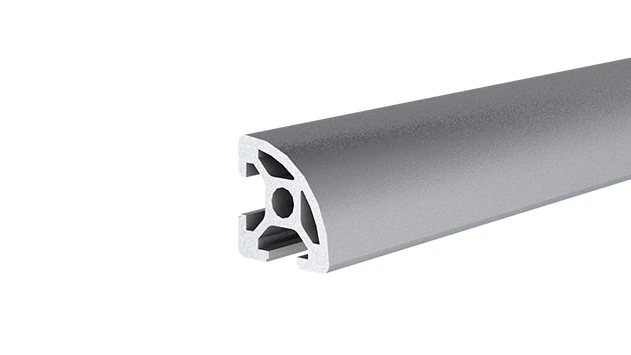
2020R EU Standard Aluminum Profile
2020R is a 2.00 x 2.00CM fractional 20 series square extrusion T-slot profile with four open T-slots, two side with 2.00cm face, the other side with round face. The profile has align-a-grooves to assist in aligning connecting profiles.
Heavy-duty logistics isn't just about moving boxes from point A to point B—it's about keeping the heartbeat of your operation steady, day in and day out. Whether you're running a bustling warehouse, a busy manufacturing plant, or a high-volume distribution center, the tools you rely on can make or break your efficiency. And if there's one tool that takes the brunt of the action, it's the turnover cart. These workhorses carry everything from raw materials to finished products, navigating tight aisles, uneven floors, and constant loading/unloading. But here's the thing: not all turnover carts are built to last. Bent frames, rusted joints, stuck wheels—these are the silent productivity killers that turn a smooth workflow into a frustrating slog.
That's where the 2020r EU Standard Aluminum Profile comes in. You might not have heard of it before, but in the world of industrial design, it's quickly becoming the unsung hero of durable, flexible logistics solutions. Designed to meet strict European standards for strength and reliability, this aluminum profile isn't just another piece of metal—it's a foundation for carts that can handle the chaos of heavy-duty environments without breaking a sweat. In this article, we'll dive into why the 2020r profile is redefining what turnover carts can do, how its unique design and material science set it apart, and why more teams are making the switch to aluminum extrusion profiles for their most critical logistics tools.
The Science Behind the Strength: Why Aluminum Extrusion Profile Matters
Let's start with the basics: what makes aluminum extrusion profile so special? Unlike steel, which is often welded or bent into shape (and prone to weak points at those joints), aluminum extrusion is a process where molten aluminum is pushed through a die to create a consistent, uniform shape. Think of it like squeezing toothpaste through a tube—only instead of paste, you get a strong, lightweight profile with built-in structural integrity. For the 2020r EU Standard, that shape is optimized for both strength and versatility: a 20mm x 20mm cross-section with T-slots running along its length, ready to accept aluminum profile accessories like brackets, connectors, and shelves with minimal effort.
But why does this matter for turnover carts? In heavy-duty logistics, you need a material that can handle two conflicting demands: it has to be strong enough to carry heavy loads (we're talking 300kg+ per cart, in some cases) and light enough to be pushed or pulled by a single worker without straining. Steel is strong, sure, but it's heavy—so heavy that maneuvering a fully loaded steel cart down a narrow aisle can feel like pushing a boulder. Plastic is light, but it flexes under pressure and warps over time, especially in hot or cold environments. Aluminum? It hits that sweet spot. The 2020r profile, in particular, is made from high-grade aluminum alloy (typically 6063-T5, for those who love specs), which offers a tensile strength of around 210 MPa—more than enough to handle daily impacts, bumps, and heavy loads without permanent deformation.
Another hidden advantage? Corrosion resistance. Warehouses and logistics centers are rarely pristine environments. Spills, humidity, even outdoor exposure (for loading docks) can turn steel carts into rust magnets within months. Rust doesn't just look bad—it weakens the metal, turning solid joints into brittle liabilities. Aluminum, on the other hand, forms a natural oxide layer when exposed to air, acting like a built-in shield against rust and corrosion. That means a turnover cart built with 2020r aluminum profiles can stand up to damp floors, chemical spills, and even occasional rain without losing strength. One warehouse manager we spoke to in Houston put it best: "We used to replace steel carts every 2-3 years because of rust. Our 2020r aluminum carts? They're going strong after 5 years, and they still look new."
Built for Flexibility: Aluminum Profile Accessories and the Power of T-Slots
Strength is important, but in logistics, adaptability matters just as much. Your operation today might need carts for small parts; next month, you might be shipping bulkier items. A one-size-fits-all cart simply won't cut it. That's where the 2020r profile's design shines—specifically, its T-slots. These grooves running along the length of the profile aren't just for show; they're the key to customizing your cart on the fly, using aluminum profile accessories that snap into place without welding, drilling, or special tools.
Let's say you need to add a shelf to your turnover cart to separate fragile components from heavier items. With traditional steel carts, that would mean measuring, drilling holes, and bolting on a shelf—assuming the frame can even support the extra weight. With 2020r profiles, you just slide a T-slot nut into the groove, attach a bracket, and secure the shelf with a screw. Done. Need to lower the shelf next week? Loosen the screw, reposition, and tighten. It's that easy. This flexibility isn't just about saving time (though it does—we've seen teams reconfigure carts in 10 minutes instead of 2 hours); it's about future-proofing your investment. As your needs change, your cart can change with you, without needing to be replaced.
The range of accessories is staggering, too. From simple angle brackets and end caps to more specialized parts like roller tracks (for sliding bins) or tool hooks, there's an accessory for almost every need. One of the most popular add-ons? Casters. A turnover cart is only as good as its wheels, and the 2020r profile's T-slots make it easy to attach heavy-duty caster wheels that can handle rough floors and frequent turns. We've seen carts outfitted with lockable casters for stability when loading, or swivel casters for tight maneuvering in crowded warehouses. And because the casters attach directly to the aluminum profile (not just bolted to a flimsy base), they stay secure even under heavy loads—no more wobbly wheels or sudden breakdowns.
But don't just take our word for it. A electronics manufacturer in California recently shared their experience: "We used to have a closet full of different carts—one for circuit boards, one for cables, one for finished products. It was a mess. Now, we have a few 2020r aluminum base carts, and we swap out shelves, dividers, and bins as needed. We've cut our cart inventory by 60%, and our team spends less time hunting for the right cart and more time getting work done." That's the power of flexibility—turning a simple cart into a multi-tool for your logistics team.

How 2020r Aluminum Stacks Up: A Head-to-Head Comparison
Still not convinced that 2020r EU Standard Aluminum Profile is the right choice for your turnover carts? Let's put it head-to-head with the two most common alternatives: steel and plastic. The table below breaks down key factors like weight, load capacity, durability, and cost over time. Spoiler: aluminum holds its own—and then some.
| Feature | 2020r EU Aluminum Profile | Steel (Mild Steel) | Plastic (HDPE) |
|---|---|---|---|
| Weight (per meter of profile) | 0.5 kg | 1.5 kg | 0.3 kg |
| Max Load Capacity (per cart) | 300-500 kg | 500-800 kg | 100-200 kg |
| Corrosion Resistance | Excellent (natural oxide layer) | Poor (prone to rust without coating) | Good (resistant to chemicals, but UV degradation) |
| Maintenance Required | Minimal (occasional cleaning, tighten screws) | High (repaint, treat rust, replace corroded parts) | Moderate (repair cracks, replace warped sections) |
| Customization | High (T-slots, compatible with 100+ accessories) | Low (requires welding/drilling for changes) | Low (molded shape, hard to modify) |
| Lifespan (in heavy use) | 5-8 years | 2-3 years (without rust protection) | 1-2 years (prone to wear, warping) |
| Initial Cost | Moderate ($150-250 per cart) | Low ($100-180 per cart) | Low ($80-150 per cart) |
| Cost Over Lifespan | Low (no replacement for 5+ years) | High (replace every 2-3 years) | High (replace every 1-2 years) |
As you can see, aluminum might have a slightly higher initial cost than steel or plastic, but its lifespan and low maintenance make it the most cost-effective choice over time. And when you factor in the flexibility of customization—no more buying new carts every time your needs change—the savings add up even faster. One distribution center in Atlanta calculated that switching to 2020r aluminum carts saved them $4,500 in the first year alone, just by reducing cart replacements and labor hours spent on reconfiguration.
Beyond Turnover Carts: The Versatility of 2020r Profiles in Logistics
While turnover carts are where the 2020r profile really shines, its uses in logistics don't stop there. Many teams are discovering that this versatile profile can be used to build everything from workbenches to material racks, creating a cohesive, standardized system across their operation. Imagine a warehouse where your turnover carts, assembly workbench , and picking racks all use the same 2020r profiles and accessories. Suddenly, parts are interchangeable, training is easier, and maintenance becomes a breeze—no more hunting for specialized replacement parts for different systems.
Take workbenches, for example. A sturdy workbench is essential for packing, sorting, or assembling products, and the 2020r profile's strength makes it ideal for the job. By combining profiles with a plywood or aluminum top, you can build a workbench that's height-adjustable (thanks to T-slots and adjustable legs), sturdy enough to support tools and materials, and easy to customize with shelves, tool hooks, or even LED lights. And because it uses the same accessories as your turnover carts, you can swap parts between the two—say, moving a roller track from a cart to a workbench to slide boxes more easily.
Material racks are another popular application. Whether you need to store bins, pallets, or bulky items, 2020r profiles can be configured into racks of almost any size. The T-slots make it easy to add dividers or adjust shelf heights, so you can store everything from small components to large boxes without wasted space. And because aluminum is lightweight, even tall racks are easy to move or reposition if your layout changes—no need for heavy machinery or a team of workers.
Real-World Results: How Teams Are Winning with 2020r Aluminum Carts
Numbers and specs are great, but nothing beats hearing from teams who've actually used 2020r aluminum turnover carts in their daily operations. Let's take a look at a few real-world examples:
Case Study 1: Automotive Parts Manufacturer, Detroit
This manufacturer produces heavy engine components, and their old steel carts were struggling. "We were replacing wheels every month—steel frames were rusting, and the carts were so heavy, our workers were complaining about back pain," says the plant manager. They switched to 2020r aluminum carts with heavy-duty caster wheels and adjustable shelves. The result? Wheel replacements dropped to once every 6 months, rust is non-existent, and workers report less fatigue. "We even increased our cart load capacity by 15% because the aluminum frames are stronger than we thought," the manager adds. "Productivity is up, and our injury rate has gone down—win-win."
Case Study 2: E-Commerce Fulfillment Center, Phoenix
With seasonal spikes in orders, this fulfillment center needed carts that could adapt quickly. "During the holidays, we're shipping 3x more packages, and we need carts that can handle different box sizes," explains the operations director. Their plastic carts were warping in the Arizona heat, and reconfiguring them took hours. After switching to 2020r aluminum carts, they can now add/remove shelves in minutes, and the carts don't warp—even in summer temperatures over 100°F. "We used to have 50 different cart types; now we have 10, and we reconfigure them as needed. It's saved us so much space and time," the director says.
Case Study 3: Food Distribution Warehouse, Seattle
Humidity and occasional spills made steel carts a rust nightmare for this warehouse, which handles perishable goods. "We tried painting the steel carts, but the paint chipped, and rust came back," says the logistics coordinator. They switched to 2020r aluminum carts with stainless steel accessories. "Now, even if a cart gets wet, it doesn't rust. We clean them with a hose at the end of the day, and they look brand new. Maintenance time is down 70%, and we haven't replaced a cart in 4 years."
Caring for Your 2020r Aluminum Cart: Simple Tips for Longevity
While 2020r aluminum carts are low-maintenance, a little care goes a long way in ensuring they last for years. Here are some easy tips:
1. Keep them clean. Wipe down the frames with a damp cloth occasionally to remove dirt and grime. For stubborn spills (like oil or chemicals), use a mild detergent—avoid abrasive cleaners, which can scratch the aluminum. A quick wipe-down once a week is usually enough.
2. Tighten screws and accessories. With regular use, T-slot nuts and screws can loosen slightly. Check them every month or so and tighten as needed. This prevents accessories from shifting and ensures the cart stays stable.
3. Inspect caster wheels. Caster wheels take the most abuse, so check for wear, debris, or damage. Clean out hair, string, or dirt that might get stuck in the wheels—this prevents jamming. If a wheel starts to wobble or lock up, replace it immediately (it's easy with T-slots, remember?).
4. Avoid overloading. While 2020r carts are strong, every cart has a max load capacity (check the specs when you buy). Overloading can bend the frame or damage the casters. If you need to carry heavier items, add extra support with cross-braces or reinforce the shelves.
5. Store them properly. When not in use, store carts in a dry area away from direct sunlight (though aluminum resists UV damage, plastic accessories might fade over time). Stacking carts? Use end caps to protect the T-slots from dents.
Why 2020r EU Standard Aluminum Profile Is the Future of Heavy-Duty Logistics
In the fast-paced world of heavy-duty logistics, every tool, every cart, every minute counts. The 2020r EU Standard Aluminum Profile isn't just a material choice—it's a strategic decision to prioritize durability, flexibility, and cost-effectiveness. By combining the strength of aluminum extrusion profile with the versatility of T-slots and aluminum profile accessories, these carts adapt to your needs, stand up to harsh environments, and save you money over time.
Whether you're tired of replacing rusted steel carts, struggling with heavy plastic ones, or just need a cart that can keep up with your changing operation, 2020r aluminum profiles deliver. They're strong enough for heavy loads, light enough for easy maneuvering, and flexible enough to grow with your business. And with a lifespan of 5+ years, they're an investment that pays off in reduced downtime, lower maintenance costs, and happier, more productive workers.
So, the next time you're in the warehouse, watching a turnover cart creak under its load or rust away in the corner, ask yourself: Is this cart working for us, or against us? If it's the latter, maybe it's time to consider the 2020r EU Standard Aluminum Profile. Your team, your budget, and your workflow will thank you.