- Company Articles
- Industry articles
- Industry standards
- 2020r EU Standard Aluminum Profile Joints: Compatibility with Lean Pipe Connectors

2020r EU Standard Aluminum Profile Joints: Compatibility with Lean Pipe Connectors
Related Product
2020R EU Standard Aluminum Profile
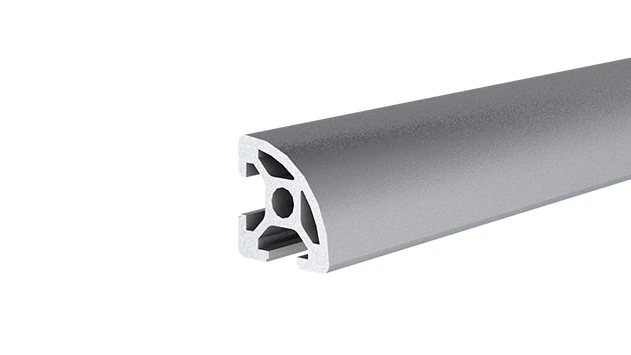
2020R is a 2.00 x 2.00CM fractional 20 series square extrusion T-slot profile with four open T-slots, two side with 2.00cm face, the other side with round face. The profile has align-a-grooves to assist in aligning connecting profiles.
Walk into any modern manufacturing facility, and you'll likely notice a common thread: workstations, material racks, and assembly lines that feel both sturdy and surprisingly flexible. These aren't just random structures—they're the result of careful planning, using components designed to adapt to changing needs. At the heart of many of these setups are aluminum profiles, lightweight yet durable, and the joints that hold them together. Today, we're diving deep into one specific player in this world: the 2020r EU Standard Aluminum Profile, its joints, and how they play nice (or not) with another industry staple—lean pipe connectors. Whether you're a small workshop owner looking to upgrade your setup or a production manager scaling operations, understanding this compatibility can save you time, money, and plenty of headaches.
What Even Is the 2020r EU Standard Aluminum Profile?
Before we get into joints and connectors, let's make sure we're all on the same page about the star of the show: the 2020r EU Standard Aluminum Profile. If you've ever seen those sleek, silver bars with grooves running along their length, you've probably encountered an aluminum profile. The "2020" in its name refers to its cross-section: 20mm by 20mm. That compact size makes it perfect for smaller-scale applications—think workbenches for electronics assembly, lightweight material racks, or even custom machine guards. The "r" stands for "rounded," a subtle but important detail. Unlike sharp-edged profiles, the 2020r has gently curved edges, which isn't just about aesthetics. In busy factories, those rounded edges reduce the risk of scrapes and cuts, making workspaces safer for operators who might brush against them daily.
But what really sets the 2020r apart is its adherence to EU standards. These aren't just guidelines—they're strict specifications for material quality, dimensional accuracy, and even surface finish. Most 2020r profiles are made from 6063-T5 aluminum alloy, a material prized for its strength-to-weight ratio. It's lightweight enough that a single worker can carry a 2-meter length without straining, yet strong enough to support the weight of tools, parts, or even small machinery. The T5 tempering process adds to its durability, ensuring it resists bending under load and stands up to the wear and tear of daily use. And let's not forget corrosion resistance: aluminum's natural oxide layer means the 2020r holds up well in environments where moisture or chemicals might be present, unlike steel, which can rust if not coated.
So, where do you typically find 2020r profiles? They're everywhere, but especially in industries where precision and flexibility matter. Electronics manufacturers use them for static-safe workstations (paired with ESD accessories, but more on that later). Automotive suppliers rely on them for small parts storage racks that can be reconfigured as production lines change. Even labs and cleanrooms favor them because they're easy to clean and don't shed particles. Simply put, the 2020r is the Swiss Army knife of aluminum profiles—small, versatile, and ready to adapt.
Joints: The Unsung Heroes of Aluminum Profile Assembly
An aluminum profile is just a fancy metal bar without the right joints. Joints are the unsung heroes that turn individual profiles into functional structures—corner brackets for 90-degree angles, straight connectors for extending lengths, and swivel joints for adjustable components. For the 2020r profile, these joints are designed with one key feature in mind: the T-slot. If you look closely at the 2020r, you'll notice those grooves I mentioned earlier—those are T-slots, and they're the reason aluminum profiles are so flexible. T-slots let you slide in bolts, nuts, or specialized accessories, meaning you can attach joints (or shelves, or tools, or just about anything) anywhere along the profile, not just at fixed intervals.
Let's break down some common 2020r joints you might encounter. First up: the 90° aluminum profile connector. As the name suggests, this joint is for connecting two profiles at a right angle—think the corner of a workbench or the vertical and horizontal parts of a material rack. These come in two flavors: external and internal. External 90° joints wrap around the outside of the profiles, making them easy to install but adding a bit of bulk. Internal joints, on the other hand, fit inside the T-slots, creating a cleaner, more streamlined look (and sometimes stronger connection, since they're embedded in the profile). Then there's the 45° aluminum profile connector, useful for building angled structures like sloped chutes or ergonomic work surfaces that tilt toward the operator.
Straight joints are another staple. The internal straight aluminum joint, for example, lets you connect two 2020r profiles end-to-end to make a longer length, perfect for spanning gaps in a workstation. And if you need to split a profile into three directions—say, adding a side shelf to a main rack—there's the three-way aluminum profile connector. These joints often use hex bolts or quick-release levers, making assembly and disassembly a breeze. No welding, no drilling—just tighten a bolt, and you're good to go. That's the beauty of aluminum profile systems: they're modular. Need to reconfigure your workspace next month? Just loosen the joints, rearrange the profiles, and tighten them back up. It's like building with giant, industrial Legos.

Lean Pipe Connectors: The Old Reliable of Flexible Manufacturing
Now, let's shift gears to lean pipe connectors. If aluminum profiles are the new kids on the block, lean pipes (sometimes called "flexible pipes" or "kitchen pipes") are the seasoned veterans. Traditional lean pipes are typically steel tubes coated in plastic (often yellow, though you'll see other colors too), and they've been a mainstay in lean manufacturing for decades. The idea behind lean pipes is simple: use lightweight, affordable tubes and connectors to build structures that can be quickly modified to eliminate waste in production. Need a new material trolley? Grab some pipes, a handful of connectors, and you're done in an hour. The connectors are the magic here—clamp-on pieces that let you join pipes at various angles without any permanent fasteners.
Common lean pipe connectors include the 90° fixed lean pipe joint (for corners), the 180° fixed joint (for straight extensions), and swivel joints that let parts rotate. There are even multi-way joints for branching into three or four directions. What makes these connectors so popular? They're cheap, easy to use, and incredibly forgiving. If you make a mistake, just loosen the clamp, adjust, and retighten. No special tools required—just a hex key or a wrench. For small businesses or startups, lean pipe systems are often the first choice because they're budget-friendly and don't require a huge upfront investment.
But lean pipes have their limitations. The plastic coating can wear off over time, exposing the steel underneath to rust. They're not as rigid as aluminum profiles, so they might sag under heavy loads. And while they're flexible, that flexibility can be a downside if you need a structure that stays perfectly stable, like a precision assembly workstation. That's where aluminum profiles like the 2020r come in—they offer the best of both worlds: the modularity of lean pipes with the strength and durability of metal. But here's the catch: many facilities already have shelves full of lean pipe connectors. If you switch to aluminum profiles, can you still use those old connectors? That's the compatibility question we're here to answer.
The Big Question: Do 2020r Aluminum Profile Joints Play Nice with Lean Pipe Connectors?
Imagine this scenario: You've decided to upgrade your workshop from wobbly lean pipe workbenches to sturdier 2020r aluminum profiles. You're excited about the better stability and corrosion resistance, but then you open your storage cabinet and see a box of leftover lean pipe connectors—dozens of 90° joints, swivel brackets, and clamps you paid good money for. Can you reuse them with the new aluminum profiles? The short answer: sometimes. It depends on the type of connector, the accessories you have, and how creative you're willing to get.
Let's start with the obvious: 2020r aluminum profiles and traditional lean pipes are different beasts. Lean pipes are round (typically 28mm in diameter), while aluminum profiles are square (or in this case, rounded-square) with T-slots. A standard lean pipe connector is designed to clamp around a round tube, so trying to attach it directly to a square aluminum profile is like trying to fit a square peg in a round hole—it just won't work. But that doesn't mean all hope is lost. Enter aluminum profile accessories—the unsung heroes of compatibility. Many manufacturers now offer adapters specifically designed to bridge this gap. For example, an aluminum pipe clamp can attach to the T-slot of the 2020r profile, providing a round "stub" that mimics a lean pipe. Then, you can slide your existing lean pipe connector onto that stub, just like you would with a regular lean pipe. It's a simple solution, but it works surprisingly well for light to medium loads.
Another option is hybrid joints. Some lean system suppliers now offer connectors that are explicitly designed to work with both lean pipes and aluminum profiles. These might have a T-slot-compatible base for the aluminum profile and a clamp-on section for the lean pipe. For example, a 90° hybrid joint could have one end that bolts into the T-slot of a 2020r profile and another end that clamps onto a lean pipe, letting you build a structure that combines both materials. This is especially useful if you want to keep some parts of your setup as lean pipes (like a lightweight trolley) while upgrading others to aluminum (like a heavy-duty workbench top frame).
But compatibility isn't just about physical fit—it's also about load capacity. Aluminum profiles are stronger than lean pipes, so even if a lean pipe connector fits, you need to make sure it can handle the weight the aluminum profile is supporting. A flimsy plastic-coated steel joint might work for a light lean pipe shelf, but if you're using 2020r profiles to hold heavy machinery, that same joint could fail. In those cases, it's often better to invest in native aluminum profile joints, even if it means retiring some old lean pipe connectors. Remember: the goal is a safe, reliable workspace, not just saving a few dollars on parts.
Real-World Examples: When Compatibility (and Incompatibility) Matters
Let's look at a couple of real-world scenarios to see how this plays out. First, consider a small electronics manufacturer we'll call "TechWorks." TechWorks has been using lean pipe workbenches for years but recently started producing larger circuit boards that require more stable surfaces. They decide to switch to 2020r aluminum profiles for the bench frames but want to reuse their existing lean pipe material racks, which are still in good shape. Their solution? They use aluminum pipe clamps on the 2020r bench frames to attach lean pipe connectors, then build the upper material racks using the old lean pipes and connectors. The result: a sturdy aluminum frame for the work surface and lightweight lean pipe racks above, combining the best of both worlds.
On the flip side, consider "AutoParts Inc.," a manufacturer of car components. They tried to reuse heavy-duty lean pipe joints with their 2020r aluminum profiles without adapters, thinking they could "force" the clamps to fit around the square profile. Spoiler: it didn't work. The clamps wouldn't tighten properly, leading to wobbly structures that had to be rebuilt. They ended up losing time and money, not to mention frustrating their team. The lesson here? Don't skip the adapters. It might seem like a shortcut, but using the right aluminum profile accessories is always worth the small extra cost.
| Feature | 2020r Aluminum Profile Joints | Traditional Lean Pipe Joints (with Adapters) |
|---|---|---|
| Material | Aluminum alloy (6063-T5) | Steel with plastic coating (connectors); aluminum adapters |
| Compatibility with 2020r Profiles | Native (designed for T-slots) | Requires aluminum pipe clamp or hybrid adapter |
| Load Capacity | Medium to high (up to 50kg per joint, depending on type) | Low to medium (up to 30kg per joint; limited by adapter strength) |
| Installation | Tool-assisted (hex key or wrench for T-slot bolts) | Tool-assisted (wrench for adapter + hex key for lean pipe clamp) |
| Corrosion Resistance | High (aluminum oxide layer) | Moderate (plastic coating on steel; adapters add corrosion resistance) |
| Best For | Permanent or semi-permanent structures, heavy loads, clean environments | Temporary setups, repurposing old parts, light loads |
Tips for Making It Work: From a Seasoned Pro
If you're dead set on mixing 2020r aluminum profiles with lean pipe connectors, here are some tips to avoid common pitfalls. First, always test the load capacity. Even if an adapter says it can handle 30kg, do a quick stress test with a heavy box before trusting it with expensive parts. Second, don't overcomplicate. If you're building a structure that's mostly aluminum, it's usually better to use aluminum joints for critical connections and reserve lean pipe connectors for non-essential parts (like a small shelf or a tool holder). Third, invest in quality adapters. Cheap adapters might save you a few bucks upfront, but they'll bend or break under load, leading to more expense down the line. Stick with reputable brands or ask your lean system supplier for recommendations—they've seen it all and can point you to the most reliable options.
Another pro move: consider the environment. If your workspace is humid (like a food processing plant) or exposed to chemicals (like a battery assembly line), aluminum profile joints are the way to go—their corrosion resistance is unmatched. Lean pipe connectors, even with adapters, have steel components that can rust over time in harsh environments. On the flip side, if you're in a dry, low-moisture area (like a electronics cleanroom), the hybrid approach might work just fine. Finally, don't forget about future flexibility. One of the biggest benefits of both aluminum profiles and lean pipes is their modularity. When mixing components, make sure your adapters and joints don't lock you into a permanent setup. You want to be able to take it apart and reconfigure it down the line, just like you would with a pure aluminum or pure lean pipe system.
Wrapping It Up: Compatibility Is About Problem-Solving
At the end of the day, the compatibility between 2020r aluminum profile joints and lean pipe connectors isn't black and white—it's about problem-solving. With the right adapters, a little creativity, and some common sense, you can absolutely reuse those old lean pipe connectors with your new aluminum profiles. It might take a bit more effort than using native aluminum joints, but it can be a great way to save money and reduce waste. Just remember: know your load limits, invest in good accessories, and don't be afraid to ask for help from a lean system supplier if you're unsure.
Whether you go all-in on aluminum profiles, stick with lean pipes, or mix and match, the goal is the same: a workspace that works for you, adapts to your needs, and helps you produce better products with less hassle. The 2020r EU Standard Aluminum Profile and its joints are powerful tools in that mission, and with a little know-how, they can play nicely with the tools you already have. So go ahead—grab those old lean pipe connectors, pick up a few adapters, and start building. Your future self (and your production line) will thank you.