- Company Articles
- Industry articles
- Industry standards
- 2020r EU Standard Aluminum Profile Load Capacity: Testing & Certification

2020r EU Standard Aluminum Profile Load Capacity: Testing & Certification
Related Product
2020R EU Standard Aluminum Profile
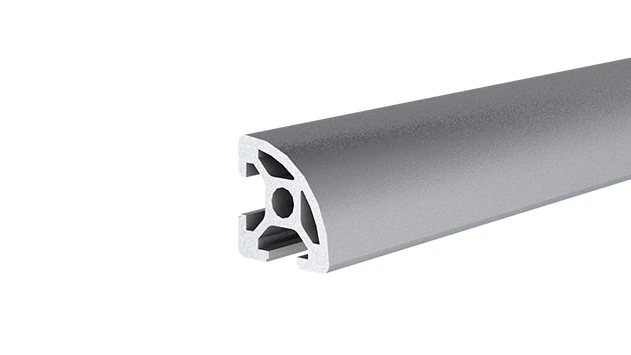
2020R is a 2.00 x 2.00CM fractional 20 series square extrusion T-slot profile with four open T-slots, two side with 2.00cm face, the other side with round face. The profile has align-a-grooves to assist in aligning connecting profiles.
In the bustling world of manufacturing and industrial design, every component plays a silent but critical role in keeping operations running smoothly. From the smallest widget on an assembly line to the sturdiest workbench in a warehouse, the materials we choose can make or break productivity, safety, and long-term efficiency. Among these materials, aluminum extrusion profiles have emerged as unsung heroes—lightweight, durable, and endlessly adaptable. But not all aluminum profiles are created equal. Today, we're diving deep into one specific player that's making waves in factories and workshops across Europe: the 2020r EU Standard Aluminum Profile . We'll explore what makes it tick, how its load capacity is put to the test, and why certification matters when every pound of weight and every minute of downtime counts.
Aluminum Extrusion Profiles: The Backbone of Modern Industry
Before we zoom in on the 2020r, let's take a step back and appreciate why aluminum extrusion profiles have become so indispensable. Unlike traditional materials like steel, aluminum offers a rare blend of strength and lightness. Its versatility comes from the extrusion process—forcing heated aluminum through a custom die to create complex cross-sectional shapes. This allows for profiles tailored to specific needs, whether it's a sleek frame for a medical device or a rugged support beam for a factory workbench.
But here's the thing: in industrial settings, "good enough" simply isn't enough. A profile that bends under pressure, warps under heat, or fails to hold up over time can disrupt workflows, compromise safety, and eat into profits. That's where standards come in. EU standards, in particular, are known for their rigorous benchmarks, ensuring that products like aluminum profiles meet strict criteria for quality, performance, and reliability. And the 2020r? It's a standout in this space, designed to balance flexibility with uncompromising strength.
What Is the 2020r EU Standard Aluminum Profile?
At first glance, the name "2020r" might sound like just another code, but it tells a story. The "2020" refers to its cross-sectional dimensions: 20mm by 20mm, a compact size that belies its capabilities. The "r" stands for "rounded," a nod to its gently curved edges—a design choice that reduces sharp corners, minimizing the risk of cuts during assembly and adding a polished look. But don't let its small stature fool you. This profile is a workhorse, commonly used in everything from lightweight machine frames to modular workbenches and material racks.
What sets the 2020r apart is its adherence to EU standards. This isn't just a marketing buzzword; it's a promise that the profile has been tested against strict guidelines for material composition, dimensional accuracy, and, crucially, load capacity. For manufacturers and facility managers, that means peace of mind: when you choose the 2020r, you're not guessing whether it can handle the job—you're relying on a product that's been put through its paces.
Material Matters: The Aluminum Behind the Profile
The 2020r is typically made from 6063-T5 aluminum alloy, a popular choice for extrusions. Why? 6063 aluminum offers excellent corrosion resistance, making it suitable for both indoor and mild outdoor environments. The "T5" designation refers to its heat treatment—artificially aged to enhance strength without sacrificing ductility. This combination ensures the profile can withstand daily wear and tear, from the vibrations of machinery to the occasional bump of a forklift.
But the alloy alone isn't enough. The extrusion process itself plays a role in the profile's final strength. During extrusion, the aluminum is forced through a die under high pressure, aligning its grain structure and creating a uniform, dense material. This gives the 2020r consistent strength across its length—no weak spots, no surprises. When paired with quality aluminum profile accessories like brackets, connectors, and end caps, it becomes part of a system designed to work in harmony.

Load Capacity: More Than Just a Number
"Load capacity" is one of those terms that gets thrown around a lot, but what does it really mean for the 2020r? Simply put, it's the maximum weight the profile can support without permanent deformation or failure. But it's not a one-size-fits-all figure. Load capacity depends on several factors, including how the profile is oriented, how it's supported, and whether the load is static (stationary) or dynamic (moving).
Imagine a workbench in a small electronics shop. The top is made from a 2020r frame, with a wooden surface laid over it. On any given day, that workbench might hold a soldering iron, a stack of PCBs, and a bin of screws—maybe 50kg in total. That's a static load, and the 2020r handles it with ease. Now, picture a material rack in a warehouse, using 2020r profiles to support boxes of parts being slid in and out multiple times an hour. That's a dynamic load, and the profile must not only bear the weight but also withstand the friction and occasional impacts of movement. This is where the 2020r's design shines: its rounded edges reduce snagging, and its structural integrity ensures it doesn't flex under repeated use.
Factors That Influence Load Capacity
To truly understand the 2020r's load capacity, we need to look at the variables that shape it:
- Length of the Profile: Like a diving board, a longer span of aluminum will bend more under the same load than a shorter one. The 2020r's load capacity decreases as its unsupported length increases. For example, a 500mm section might support 80kg, while a 1000mm section of the same profile might only support 40kg.
- Support Points: How the profile is mounted matters. A profile supported at both ends (like a bridge) will handle more weight than one supported at only one end (like a cantilever). This is why aluminum profile accessories like brackets and connectors are so important—they distribute weight evenly across support points.
- Load Distribution: A concentrated load (like a heavy tool placed in the middle of a workbench) puts more stress on the profile than a distributed load (like a layer of evenly spaced parts). The 2020r is designed to handle both, but engineers often calculate for the worst-case scenario: the most uneven, heavy load it might face.
- Environmental Conditions: While aluminum is corrosion-resistant, extreme temperatures can affect its performance. In very cold environments, aluminum becomes slightly more brittle, while high heat can reduce its yield strength. The 2020r's EU certification includes testing under a range of temperatures, ensuring it performs reliably in typical industrial settings.
Testing the 2020r: How Load Capacity Is Verified
Certification isn't just a stamp of approval—it's the result of rigorous testing. To earn its EU standard label, the 2020r must undergo a series of trials designed to push its limits and ensure it meets safety and performance benchmarks. Let's walk through some of the key tests.
Static Load Testing: The Foundation of Reliability
Static load testing is the most straightforward: the profile is mounted in a controlled setup (usually supported at both ends), and a gradually increasing weight is applied to its center. Engineers measure how much the profile bends (deflection) and check for permanent deformation. For the 2020r, the goal is to ensure that under a specified load—say, 50kg over a 500mm span—the deflection is minimal (often less than 1mm per 100mm of length) and that once the load is removed, the profile springs back to its original shape with no lasting damage.
Why does this matter? In real-world use, a workbench or shelf built with the 2020r will often hold static loads for hours or even days at a time. If the profile deforms permanently, the structure could sag, throwing off assembly alignment or even causing items to slide off. Static testing ensures that won't happen.
Dynamic Load Testing: Handling the Hustle and Bustle
Factories aren't static places—parts move, tools get shifted, and equipment vibrates. Dynamic load testing simulates this reality by applying repeated or moving loads to the profile. For example, a machine might drop a weighted plate onto the profile hundreds or thousands of times, mimicking the impact of parts being placed on a workbench. Alternatively, a conveyor system might drag a load back and forth across the profile, testing its resistance to friction and fatigue.
The 2020r excels here, thanks to its robust alloy and uniform extrusion. Even after thousands of cycles, it maintains its shape and strength, proving it can keep up with the demands of a busy production line.
Bending and Torsion Testing: Beyond Up-and-Down Loads
Loads don't always come straight down. In some setups, the 2020r might face sideways forces (bending) or twisting (torsion). Bending tests apply force perpendicular to the profile's length, checking how much it can flex before cracking. Torsion tests twist the profile, ensuring it doesn't shear or warp under rotational stress.
These tests are especially important for applications like robotic arms or moving gantries, where the profile might be pulled in multiple directions. The 2020r's square cross-section and rounded edges help distribute these forces, preventing stress from in one area.
Certification: What the EU Standard Really Means
So, what does it take for the 2020r to earn the "EU Standard" title? It starts with compliance with the European Construction Products Regulation (CPR), which sets safety standards for construction materials, including aluminum profiles. To meet CPR requirements, the profile must carry a CE mark, indicating it conforms to essential safety requirements like mechanical resistance and stability.
But the CE mark is just the beginning. For industrial applications, additional standards come into play. EN 1090, for example, is a European standard that specifies requirements for the design and fabrication of steel and aluminum structures. Profiles like the 2020r, when used in load-bearing structures, must meet EN 1090's Class 1 or higher, depending on the application. This ensures they've been tested for everything from material strength to weldability (though the 2020r is often assembled with aluminum profile accessories rather than welding, making installation faster and more flexible).
For buyers, certification is a shortcut to trust. It means they don't have to conduct their own tests or guess about quality—they can rely on independent third-party labs to have already verified the profile's performance. In a world where time and resources are tight, that's invaluable.
Real-World Applications: Where the 2020r Shines
Numbers and tests are important, but nothing illustrates the 2020r's value like real-world examples. Let's look at a few scenarios where this profile makes a tangible difference.
Modular Workbenches: The Heart of the Workshop
Walk into any modern manufacturing facility, and you'll likely find modular workbenches built with aluminum profiles. These workbenches need to support tools, parts, and sometimes even heavy equipment like 3D printers or testing machines. The 2020r is a favorite here because it's lightweight enough to allow for easy reconfiguration (a key part of lean system principles) but strong enough to handle the daily load.
Consider a workbench used for assembling small appliances. The top might be a plywood or aluminum panel mounted on a frame of 2020r profiles. Over the course of a shift, workers place screwdrivers, circuit boards, and half-assembled products on the bench—easily totaling 50kg or more. Thanks to the 2020r's load capacity, the bench stays level, ensuring precise assembly and reducing worker fatigue. And when the production line changes, the bench can be disassembled and rebuilt in minutes, using the same profiles and accessories—no waste, no downtime.
Material Racks: Organizing Efficiency
Material racks are another common application for the 2020r. In a warehouse, these racks hold boxes of parts, raw materials, or finished goods. The 2020r's compact size makes it ideal for building shelves that fit into tight spaces, while its load capacity ensures each shelf can hold multiple boxes without sagging.
Take a small parts warehouse storing electronic components. Each shelf, built with 2020r profiles and supported by brackets, might hold 10-15 boxes, each weighing 3-5kg. Over a 1.2m shelf, that's 30-75kg of weight. The 2020r handles this with ease, keeping the shelves straight and the parts accessible. And because the profiles are corrosion-resistant, there's no risk of rust staining the boxes—a small detail that adds up to better product quality.
Lightweight Machine Frames: Power in a Small Package
Not all machines are massive. Smaller equipment like labeling machines, packaging sealers, or testing devices often rely on aluminum profiles for their frames. The 2020r is perfect here, providing a rigid structure that keeps moving parts aligned without adding unnecessary weight. This makes the machines easier to transport, install, and maintain—all while ensuring they run smoothly, even at high speeds.
The Role of Accessories: Completing the System
A profile is only as good as the accessories that connect it. The 2020r's load capacity doesn't exist in a vacuum; it depends on high-quality aluminum profile accessories to distribute weight, secure connections, and reinforce joints. Let's take a closer look at some key accessories and how they contribute to the system's overall strength.
- Connectors: These small but mighty parts link profiles together at angles—90°, 45°, or even custom angles. Well-designed connectors, like the 90° aluminum profile connectors, lock the profiles in place, preventing movement and ensuring the load is shared across the structure.
- Brackets: Brackets add support where it's needed most. For example, a corner bracket might reinforce the joint between two horizontal and vertical profiles, increasing the structure's resistance to twisting.
- End Caps: While they might seem cosmetic, end caps protect the profile's ends from damage and prevent debris from getting inside, which could weaken the structure over time.
- Leveling Feet: These adjustable feet attach to the bottom of the profile frame, ensuring the structure sits evenly on uneven floors. By distributing the load across all four feet, they prevent rocking and reduce stress on individual profiles.
When choosing accessories for the 2020r, it's crucial to opt for those designed to work with EU standard profiles. Off-brand or ill-fitting accessories can compromise the system's load capacity, turning a reliable structure into a safety hazard. Reputable suppliers ensure their accessories are tested alongside the profiles, guaranteeing a perfect fit and maximum performance.
Comparing the 2020r to Other Profiles: Why Size Isn't Everything
You might be wondering: why choose the 2020r when there are larger profiles available, like the 3030 or 4040? The answer lies in balance. Larger profiles can handle more weight, but they're also heavier, more expensive, and less flexible. For many applications, the 2020r hits the sweet spot—offering enough load capacity without overcomplicating the design.
To illustrate, let's compare the 2020r to two other common EU standard profiles: the 2020 (square edges) and the 3030r (30mm x 30mm rounded). The table below shows their approximate load capacities under similar conditions (supported at both ends, 500mm span, static load):
| Profile Type | Dimensions (mm) | Max Static Load (kg)* | Weight per Meter (kg) | Common Applications |
|---|---|---|---|---|
| 2020 (square) | 20x20 | 60-70 | 0.7 | Light-duty frames, shelving |
| 2020r (rounded) | 20x20 | 70-80 | 0.8 | Modular workbenches, material racks |
| 3030r (rounded) | 30x30 | 120-140 | 1.5 | Heavy-duty workbenches, machine frames |
*Approximate values based on 6063-T5 aluminum, 500mm span, supported at both ends.
As you can see, the 2020r outperforms its square-edged cousin, the 2020, thanks to its slightly thicker walls and rounded design, which distributes stress more evenly. While the 3030r can handle more weight, it's also twice as heavy per meter—making it overkill for many lightweight applications. For a lean system focused on efficiency and flexibility, the 2020r often provides the best return on investment.
Choosing a Supplier: Trust and Quality
Now that we've explored the 2020r's load capacity, testing, and applications, there's one last piece of the puzzle: choosing the right supplier. Not all 2020r profiles are created equal, even if they claim to meet EU standards. A reputable supplier will provide certification documents, test reports, and samples, proving their profiles live up to the hype.
Look for suppliers who specialize in EU standard aluminum profiles and have a track record in industrial applications. They should be able to answer detailed questions about load capacity, material composition, and accessory compatibility. Avoid suppliers who can't provide clear documentation—this is a red flag that their products might not have undergone proper testing.
Additionally, consider the supplier's commitment to sustainability. Aluminum is highly recyclable, and eco-friendly production processes (like using renewable energy for extrusion) can reduce the profile's carbon footprint—a plus for companies aiming to meet green manufacturing goals.
Conclusion: The 2020r—Small Profile, Big Impact
In the world of industrial design, it's often the smallest components that make the biggest difference. The 2020r EU Standard Aluminum Profile is a perfect example. Its 20mm x 20mm frame, rounded edges, and 6063-T5 alloy might seem unassuming, but together, they create a profile that's strong, flexible, and reliable. Whether it's supporting a workbench in a electronics factory, organizing parts in a warehouse, or forming the frame of a lightweight machine, the 2020r delivers—day in and day out.
But what truly sets it apart is its commitment to standards. Load capacity isn't just a number on a spec sheet; it's a promise that the profile has been tested, certified, and proven to perform. When paired with quality aluminum profile accessories and integrated into a lean system, it becomes more than just a material—it's a tool for efficiency, safety, and innovation.
So, the next time you walk through a factory or workshop, take a closer look at the aluminum structures around you. Chances are, you'll spot the 2020r hard at work, quietly supporting the operations that keep our world running. And now, you'll know the story behind that small but mighty profile: a story of engineering, testing, and a dedication to excellence that defines EU standard aluminum extrusion profiles.