- Company Articles
- Industry articles
- Industry standards
- 2020r EU Standard Aluminum Profile Supplier Guide: Choosing Reliable Manufacturers

2020r EU Standard Aluminum Profile Supplier Guide: Choosing Reliable Manufacturers
Related Product
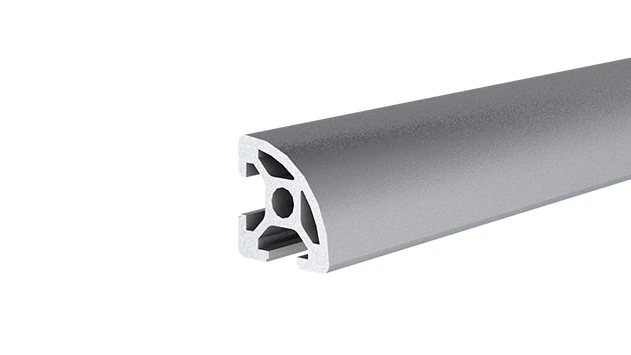
2020R EU Standard Aluminum Profile
2020R is a 2.00 x 2.00CM fractional 20 series square extrusion T-slot profile with four open T-slots, two side with 2.00cm face, the other side with round face. The profile has align-a-grooves to assist in aligning connecting profiles.
Walk into any modern factory, warehouse, or workshop, and you'll likely spot them: sleek, sturdy structures that form the backbone of production lines, workbenches, and material racks. These are aluminum profiles—unassuming in appearance but critical to keeping operations running smoothly. From the workbench where assemblers piece together electronics to the conveyor systems that move parts across the floor, aluminum profiles are the silent workhorses of lean manufacturing. But not all profiles are created equal, and when it comes to the 2020r EU standard, choosing the right supplier can mean the difference between a seamless production process and a logistical nightmare.
If you've ever dealt with warped frames, ill-fitting joints, or delayed shipments, you know the frustration of partnering with a subpar supplier. For manufacturers relying on 2020r EU standard aluminum profiles—common in compact workbenches, small-scale lean systems, and precision equipment—this decision is even more critical. EU standards are rigorous, designed to ensure consistency, safety, and compatibility across borders. But meeting those standards requires expertise, attention to detail, and a commitment to quality that not every supplier can deliver. In this guide, we'll break down what you need to know to find a reliable 2020r EU standard aluminum profile supplier, from understanding the standard itself to vetting manufacturers and avoiding common pitfalls.
Understanding the 2020r EU Standard Aluminum Profile
First things first: What exactly is a 2020r EU standard aluminum profile? Let's start with the basics. The "2020" typically refers to the profile's cross-sectional dimensions—20mm by 20mm in this case—making it a popular choice for smaller structures like workbench frames, machine guards, or lightweight conveyor components. The "r" might denote a specific tolerance class, radius edge design, or material grade, depending on the manufacturer, but universally, it signals compliance with EU standards. These standards aren't just suggestions; they're strict guidelines governing everything from material composition (think high-purity aluminum alloys like 6063-T5, known for strength and corrosion resistance) to dimensional accuracy (tolerances as tight as ±0.1mm on critical edges) and surface finish (anodized coatings that resist wear and chemicals).
Why does this matter? EU standards exist to ensure consistency. If you're a manufacturer in Germany sourcing profiles for a workbench destined for a customer in France, you need to know those profiles will fit with the aluminum profile accessories—connectors, end caps, gussets—you've already purchased. They also ensure safety: profiles used in workbenches or lean systems must support specific weights without bending or breaking, and EU standards set clear benchmarks for load-bearing capacity. In short, 2020r EU standard profiles are the goldilocks of the aluminum world: small enough for compact applications, robust enough for daily use, and standardized enough to play well with others.
Why Choosing the Right Supplier Matters More Than You Think
Let's cut to the chase: A bad aluminum profile supplier can derail your entire operation. I once worked with a small electronics manufacturer that decided to save a few euros by switching to a budget supplier for their 2020r profiles. At first, everything seemed fine—the price was lower, and the delivery was on time. But when their assembly team started building workbenches, they noticed the problem: the profiles were slightly warped. Not enough to notice at first glance, but enough that the aluminum profile accessories—specifically the 90° connectors—wouldn't seat properly. Workers had to hammer them into place, bending the connectors and weakening the joints. Within weeks, the workbenches started wobbling; within months, two collapsed under the weight of equipment. The cost of replacing the benches, repairing damaged tools, and lost production time? Far more than the "savings" from the cheap supplier.
On the flip side, a great supplier acts like a partner. They anticipate your needs, flag potential issues before they arise, and stand behind their products. Take lean system suppliers, for example. These companies design and build entire lean manufacturing setups—think flow racks, conveyors, and workstations—all built on aluminum profiles. They rely heavily on their profile suppliers to deliver consistent quality, because a single flawed profile can throw off an entire system's efficiency. A reliable 2020r supplier would work with the lean system supplier to ensure profiles are cut to exact lengths, pre-drilled for accessories, and delivered just-in-time to keep assembly on track. That's the kind of partnership that turns suppliers into assets.

Key Criteria for Evaluating 2020r EU Standard Aluminum Profile Suppliers
So, how do you separate the reliable suppliers from the ones that'll leave you with warped profiles and missed deadlines? Here are the critical factors to check:
1. Quality Certifications: More Than Just a Piece of Paper
Any supplier worth their salt will have certifications to back up their claims of EU compliance. Look for CE marking, which indicates the product meets EU safety, health, and environmental requirements. ISO 9001 is another must—it shows the supplier has a documented quality management system in place, from raw material sourcing to final inspection. But don't just take their word for it: ask for copies of the certificates and verify them with the issuing body (yes, fake certifications are a thing). For 2020r profiles, you should also request material test reports (MTRs) that confirm the alloy composition, tensile strength, and hardness. A supplier that hesitates to provide these is a red flag.
2. Sample Quality: Test Before You Invest
Never place a large order without first testing samples. Request a few 2020r profiles and a selection of aluminum profile accessories (connectors, end caps) to see how they fit. Check the surface finish: it should be smooth, with no scratches, dents, or uneven anodization. Measure the dimensions with a caliper—does the 20mm width actually measure 20mm, or is it 19.8mm (too loose) or 20.3mm (too tight for accessories)? Assemble a small frame: do the connectors slide in easily, or do they require force? A good sample tells you more than any sales pitch.
3. Customization Capabilities: Flexibility for Your Needs
Most manufacturers don't need off-the-shelf profiles. Maybe you need profiles cut to specific lengths for a custom workbench, or pre-drilled holes for mounting accessories. Does the supplier offer CNC cutting, drilling, or tapping? Can they anodize profiles in custom colors (beyond the standard silver or black)? A supplier with in-house customization saves you time and money—no need to outsource secondary.
4. Lead Times and Production Capacity: Can They Keep Up?
Ask about their production capacity: How many tons of profiles can they extrude monthly? Do they have dedicated lines for small profiles like 2020r, or will your order get pushed back by larger jobs? Be clear about your timeline—if you need 500 meters of profile in two weeks, a supplier with a six-week lead time won't work. Also, check their inventory: Do they stock common lengths of 2020r, or do they only produce to order? Stock availability can be a lifesaver for replacements.
5. After-Sales Support: When Things Go Wrong
Even the best suppliers make mistakes. What happens if a batch of profiles is defective? Will they replace them quickly, or make you jump through hoops? Ask about their warranty: most reputable suppliers offer 12–24 months for material defects. Also, evaluate their technical support: if you're unsure which aluminum profile accessories to use with 2020r, can their team offer guidance? Responsive support turns a potential crisis into a minor inconvenience.
Supplier Evaluation Checklist: A Quick Reference
| Criteria | Questions to Ask | Red Flags |
|---|---|---|
| Certifications | Do you have CE, ISO 9001, and MTRs for 2020r profiles? | Hesitates to provide certificates; certificates are expired or from unrecognized bodies. |
| Sample Quality | Can I test samples of 2020r profiles and accessories? | Samples have uneven finish, dimensional inaccuracies, or loose-fitting accessories. |
| Customization | Do you offer CNC cutting, drilling, or custom anodizing? | Only offers standard lengths; no in-house secondary. |
| Lead Times | What's your typical lead time for a 500m order of 2020r? | Lead times exceed 4 weeks for standard orders; no rush options. |
| After-Sales | What's your warranty policy for defective profiles? | No clear warranty; unresponsive to quality complaints. |
Common Pitfalls to Avoid
Even with careful evaluation, it's easy to fall into traps. Here are the biggest mistakes to steer clear of:
• Choosing Based Only on Price
It's tempting to go with the cheapest quote, but remember: You get what you pay for. A supplier offering 2020r profiles at 30% below market rate is likely using lower-grade aluminum, thinner walls, or skipping quality checks. The cost of replacing defective profiles or delaying production will far outweigh the initial savings.
• Overlooking Small-Order Support
If you're a small manufacturer or need prototypes, some suppliers only cater to large orders (10,000+ meters). Ask upfront if they handle small batches—otherwise, you might end up overordering just to meet their minimums.
• Ignoring Logistics
A great supplier in China might offer low prices, but can they ship EU-standard profiles to your factory in Poland without damage? Poor packaging (e.g., no protective sleeves for profiles) leads to bent or scratched products. Also, check if they're familiar with EU customs—delays at the border can cost you dearly.
The Role of Aluminum Profile Accessories in Supplier Selection
A profile is only as good as the accessories that go with it. A supplier that offers a full range of aluminum profile accessories—connectors, end caps, gussets, hinges—designed specifically for 2020r profiles is a huge advantage. Why? Because third-party accessories might not fit perfectly, leading to loose joints or wobbly structures. For example, a 2020r profile with a T-slot design requires connectors that match the slot width and depth. A supplier that manufactures both profiles and accessories ensures compatibility, saving you the headache of hunting for parts elsewhere.
Case Study: How a Lean System Supplier Boosted Efficiency with the Right Profile Partner
Consider a lean system supplier based in Hungary that designs custom workstations for automotive factories. They were struggling with inconsistent profile quality from their previous supplier: some workbenches would wobble, while others took hours to assemble due to ill-fitting accessories. After switching to a 2020r EU standard specialist, they noticed immediate improvements. The new profiles had precise dimensions, so accessories slid into place effortlessly—cutting assembly time by 25%. The consistent material quality also reduced workbench failures, leading to fewer customer complaints. Today, they credit their profile supplier as a key partner in scaling their business.
Final Thoughts: Your Supplier, Your Success
Choosing a 2020r EU standard aluminum profile supplier isn't just about buying metal—it's about investing in your production's reliability, efficiency, and reputation. By prioritizing quality certifications, sample testing, customization, and after-sales support, you'll find a partner that helps you build better products, faster. Remember: The best suppliers don't just sell profiles—they solve problems. Take the time to vet them, and you'll reap the rewards for years to come.