- Company Articles
- Industry articles
- Industry standards
- 2020r EU Standard Aluminum Profile Surface Treatment: Anodizing vs. Powder Coating

2020r EU Standard Aluminum Profile Surface Treatment: Anodizing vs. Powder Coating
Related Product
2020R EU Standard Aluminum Profile
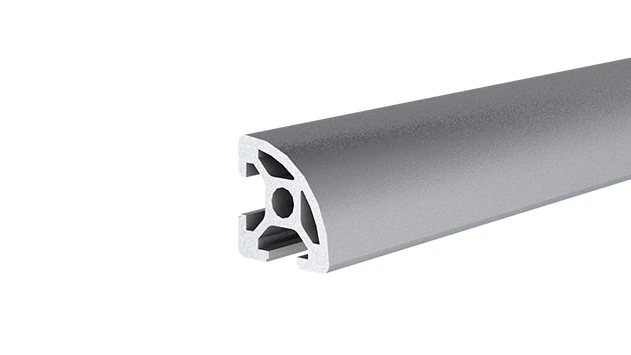
2020R is a 2.00 x 2.00CM fractional 20 series square extrusion T-slot profile with four open T-slots, two side with 2.00cm face, the other side with round face. The profile has align-a-grooves to assist in aligning connecting profiles.
Walk into any modern factory, workshop, or even a trendy co-working space, and you'll likely spot the unsung backbone of industrial design: aluminum profiles. These sleek, versatile structures form everything from workbenches and material racks to conveyor systems and display shelves. But what makes a good aluminum profile great? It's not just the precision of its extrusion or the quality of its material—it's the surface treatment that protects it, enhances its appearance, and ensures it stands up to the demands of daily use. Today, we're zeroing in on a popular workhorse in the industry: the 2020r EU Standard Aluminum Profile. And more importantly, we're diving into the age-old debate that has manufacturers, designers, and DIY enthusiasts alike scratching their heads: anodizing vs. powder coating. Which one deserves a spot on your next project?
First Things First: What is the 2020r EU Standard Aluminum Profile?
Before we compare surface treatments, let's get to know the star of the show: the 2020r EU Standard Aluminum Profile. If you're new to the world of aluminum extrusion profiles, the "2020" in its name is a quick clue to its dimensions—it typically measures 20mm in width and 20mm in height, making it a compact yet sturdy choice for lightweight to medium-duty applications. The "r" stands for "rounded," referring to its gently curved edges, which not only add a sleek aesthetic but also reduce the risk of scratches or snags during assembly and use. As part of the EU standard lineup, this profile adheres to strict quality and safety guidelines, ensuring consistency in thickness, tolerance, and material composition—no surprise there, since EU standards are renowned for their rigor.
What really makes the 2020r profile a favorite, though, is its versatility. Pair it with aluminum profile accessories like end caps, rubber strips, or T-slot connectors, and it transforms into almost anything: a workbench for electronics assembly, a shelving unit for a garage, or even a custom frame for a 3D printer. Its small footprint makes it ideal for projects where space is limited, while its aluminum core (usually 6063 or 6061 alloy) offers a winning combo of strength and lightness. But here's the catch: aluminum, while naturally corrosion-resistant, isn't invincible. Without proper surface treatment, it can dull, stain, or even degrade over time—especially in harsh environments. That's where anodizing and powder coating step in.
Anodizing: Giving Aluminum a "Second Skin" from the Inside Out
The Science Behind the Shine
Anodizing isn't just a coating—it's a transformation. Imagine taking a plain aluminum profile and turning its surface into a hard, porous layer that's actually part of the metal itself. That's essentially what anodizing does. The process starts with cleaning the profile thoroughly to remove any oil, dirt, or oxides—think of it as prepping a canvas before painting. Then, the profile is submerged in an electrolytic bath (usually sulfuric acid), where it acts as the anode in an electrical circuit. When electricity flows, oxygen ions from the bath bond with the aluminum surface, forming a layer of aluminum oxide (Al₂O₃). This layer is naturally porous, which is why the next step is sealing: the profile is dipped in hot water or a specialized sealant, causing the pores to close up and creating a smooth, non-porous finish.
The result? A surface that's up to 10 times harder than raw aluminum. But hardness is just the beginning. Anodized 2020r profiles have a distinct, almost metallic sheen—think brushed nickel or matte silver—that many designers love for its industrial, no-nonsense look. And because the color (if any) is integrated into the oxide layer (via dyeing during the porous stage), it won't chip or fade easily. You'll often see anodized profiles in shades of black, gold, or bronze, though natural (clear) anodizing is the most common, letting the aluminum's natural color shine through.
The Pros: Why Anodizing Wins Fans
Let's start with durability. Anodized surfaces are tough—really tough. They resist scratches, abrasions, and wear, making them perfect for high-traffic areas like workbench tops or material racks where tools, parts, or boxes are constantly sliding around. Remember those 2020r profiles used in electronics manufacturing? Anodizing helps them stand up to daily use without showing signs of wear and tear. Corrosion resistance is another big plus. The aluminum oxide layer acts as a barrier, preventing moisture, chemicals, or salt (hello, coastal environments!) from reaching the underlying metal. That's why anodized profiles are a staple in outdoor applications, from garden furniture to marine equipment—though, to be fair, they're not entirely immune to extreme conditions (we'll get to that later).
Aesthetics aside, anodizing also offers functional benefits. Unlike some coatings, it doesn't add significant thickness to the profile, so it won't interfere with tight tolerances or T-slot connections—critical for projects where precision assembly is key. And here's a fun fact: anodized aluminum is electrically conductive (depending on the thickness of the oxide layer), making it a solid choice for applications where grounding or static dissipation matters, like ESD workstations. Oh, and let's not forget maintenance. Anodized surfaces are easy to clean—just wipe them down with a damp cloth and mild soap—and they don't require regular re-coating or touch-ups. Once anodized, they're good to go for years.
The Cons: Where Anodizing Falls Short
No treatment is perfect, and anodizing has its share of quirks. For starters, color options are limited. While you can dye the porous oxide layer, the range is nowhere near as vast as powder coating—think earthy tones and metallics, not neon pink or sky blue. If your project demands a specific brand color or a bold statement, anodizing might leave you wanting more. Cost is another consideration. Anodizing is a multi-step, labor-intensive process, which can drive up the price tag, especially for small batches. If you're working on a tight budget and need hundreds of profiles, the cost might add up quickly.
Then there's the matter of repair. Unlike powder coating, which can be touched up with a spray can, anodized surfaces are tricky to fix if damaged. A deep scratch or chip will expose the raw aluminum underneath, and while you can polish minor imperfections, major damage often means replacing the entire profile. Finally, while anodizing is great for corrosion resistance, it's not invincible in highly acidic or alkaline environments. In places like chemical plants or swimming pool areas, the oxide layer can degrade over time, leaving the metal vulnerable. For those cases, you might need a heavier-duty treatment—or a different material altogether.

Powder Coating: Color, Coverage, and a Coat of Armor in One Go
From Powder to Perfection: How It Works
If anodizing is about enhancing aluminum's natural properties, powder coating is about transformation. Picture this: fine, dry powder (think talcum powder, but colored) is electrostatically charged and sprayed onto the aluminum profile. The charged powder sticks to the metal like a magnet, coating every nook and cranny—even the rounded edges of the 2020r profile. Then, the profile is baked in an oven (usually around 180–200°C), where the powder melts, flows, and cures into a hard, smooth film. The result? A thick, uniform coating that covers the aluminum completely, hiding minor imperfections and giving you almost endless color options.
Powder coating comes in two main types: thermoset and thermoplastic. Thermoset is the most common for industrial profiles—it cures into a cross-linked polymer, which is heat-resistant and tough. Thermoplastic, on the other hand, softens when heated and hardens when cooled, making it more flexible but less heat-resistant. For 2020r profiles, thermoset is usually the way to go, offering a balance of durability and finish quality.
The Pros: Why Powder Coating Steals the Spotlight
Let's start with the obvious: color. If you've ever walked into a hardware store and marveled at the rainbow of spray paint cans, multiply that by 10, and you'll get an idea of powder coating's color range. From vibrant reds and blues to subtle pastels, metallic finishes, or even textured options (think sandblasted or hammered), the sky's the limit. This makes powder coating a dream for designers who want their 2020r profiles to match a brand's color scheme or make a bold statement. Retail display racks, event booths, or custom furniture? Powder coating has you covered—literally.
Durability is another strong suit. Powder coating creates a thick layer (typically 50–150 microns, compared to anodizing's 5–25 microns), which acts as a robust barrier against scratches, dents, and corrosion. It's especially resistant to chipping and impact, making it ideal for profiles that might get bumped or knocked around—like those on a hand trolley or a mobile workbench. And while anodizing relies on the oxide layer for protection, powder coating adds an extra physical barrier, which can be a lifesaver in harsh environments. Think outdoor applications: rain, snow, UV rays—powder coating with UV-resistant additives can stand up to years of sun exposure without fading.
Cost-effectiveness is another feather in powder coating's cap—at least for large batches. Once the initial setup (color mixing, spray equipment) is done, coating multiple profiles is quick and efficient. This makes it a popular choice for manufacturers churning out hundreds of 2020r profiles for mass-produced products. Plus, powder coating is relatively low-maintenance. A quick wipe with a damp cloth is usually all it takes to keep it looking fresh, and if it does get damaged, touch-up kits are widely available (though the finish might not be as seamless as the original).
The Cons: When Powder Coating Misses the Mark
For all its perks, powder coating isn't without flaws. Let's talk thickness again. While that thick layer is great for protection, it can be a problem for precision applications. If you're using 2020r profiles with tight-tolerance aluminum profile accessories—like T-slot nuts or internal rotary joints—too much coating can make assembly a headache. The extra thickness might even prevent parts from fitting together properly, forcing you to sand down the coating (and risk damaging it) or opt for a thinner layer (which reduces protection). It's a balancing act.
Then there's the texture. Powder coating can sometimes leave a slight "orange peel" texture (a bumpy, uneven surface), which is a turn-off for projects where a smooth finish is non-negotiable—like high-end furniture or display cases. While skilled applicators can minimize this, it's not always avoidable. Conductivity is another issue. Unlike anodized aluminum, powder coating is an insulator, which means it's not the best choice for applications that require electrical grounding, like ESD workbenches or electronic test rigs. You could always leave part of the profile uncoated, but that defeats the purpose of full protection.
Finally, heat sensitivity. Remember that curing oven? Powder coating can soften or discolor if exposed to high temperatures (above 150°C for most formulations), making it a poor fit for profiles near heat sources—like industrial ovens or engine compartments. Anodized aluminum, by contrast, can handle much higher temps, thanks to its oxide layer.
Head-to-Head: Anodizing vs. Powder Coating for 2020r Profiles
Still on the fence? Let's break it down with a side-by-side comparison. We've compiled the key factors you'll want to consider before choosing between anodizing and powder coating for your 2020r EU Standard Aluminum Profile:
| Factor | Anodizing | Powder Coating |
|---|---|---|
| Process | Electrochemical reaction forms an aluminum oxide layer (integral to the metal). | Electrostatically charged powder is sprayed on and baked to form a polymer film (added layer). |
| Thickness | Thin (5–25 microns); minimal impact on dimensions. | Thick (50–150 microns); can affect tight tolerances. |
| Color Range | Limited (natural, black, gold, bronze; dye-based). | Vast (solid colors, metallics, textures; pigment-based). |
| Durability | Hard, scratch-resistant; good for wear. | Thick, impact-resistant; good for chipping/abrasion. |
| Corrosion Resistance | Excellent (oxide layer barrier); better for acidic/alkaline environments. | Very good (physical barrier); better with UV additives for outdoors. |
| Cost | Higher for small batches (labor-intensive process). | Lower for large batches (efficient, quick setup). |
| Conductivity | Conductive (depending on thickness). | Non-conductive (insulator). |
| Best For | Precision parts, ESD applications, industrial workbenches, indoor use. | Color-critical projects, outdoor use, mobile equipment, mass production. |
Real-World Showdown: Anodizing vs. Powder Coating in Action
To make this less theoretical, let's look at a few real-world scenarios where the choice between anodizing and powder coating matters—big time.
Scenario 1: Electronics Assembly Workbench
Imagine you're building a workbench for assembling sensitive electronic components—think circuit boards, microchips, or sensors. ESD (electrostatic discharge) protection is non-negotiable here; a single static shock could fry thousands of dollars' worth of parts. The workbench frame will be made from 2020r EU Standard Aluminum Profiles, and you need to choose a surface treatment. Anodizing is the clear winner here. Why? Because anodized aluminum retains some conductivity, making it easier to ground the workbench and dissipate static charges. Powder coating, being an insulator, would block that grounding path—unless you leave sections of the profile uncoated, which is a hassle and compromises protection. Plus, anodizing's scratch resistance is perfect for a workbench where tools and parts are constantly being set down and moved around.
Scenario 2: Outdoor Retail Display Rack
Now, picture a retail store that wants a custom display rack for its outdoor patio section. The rack will be exposed to rain, sun, and humidity year-round, and the store owner wants it to match their brand color—a bright, sunny yellow. Here, powder coating is the way to go. Its thick, UV-resistant layer will stand up to the elements without fading, and the ability to match that specific yellow shade is a dealbreaker. Anodizing, with its limited color options, would struggle to replicate the brand's signature hue, and while it's corrosion-resistant, the constant UV exposure might dull its finish over time. Powder coating's impact resistance is also a plus—customers might bump into the rack, and a chipped anodized surface would be harder to repair than a powder-coated one.
Scenario 3: DIY Garage Shelving
Finally, let's consider a weekend warrior building garage shelving with 2020r profiles. Budget is tight, and the shelves will hold tools, paint cans, and the occasional heavy box. The DIYer wants something durable but doesn't care too much about color—function over form. Here, it's a toss-up. If they're only building a few shelves (small batch), anodizing might be more cost-effective (since powder coating setup fees could outweigh the per-unit cost). Anodizing's scratch resistance would also handle the rough and tumble of garage use. But if they're building multiple shelves (or want to paint them to match the garage walls), powder coating could be cheaper in the long run. It all comes down to batch size, budget, and personal preference.
The Verdict: Which One Should You Choose?
At the end of the day, there's no "one size fits all" answer. Anodizing and powder coating are both excellent surface treatments, but they shine in different scenarios. Here's a quick cheat sheet to help you decide:
- Choose anodizing if: You need conductivity (ESD applications), precision fit with aluminum profile accessories, a natural/metallic look, or scratch resistance for indoor use. It's also a good pick for small batches where color isn't critical.
- Choose powder coating if: You want vibrant, custom colors, maximum impact/corrosion resistance (especially outdoors), or are working with large batches (to save on cost). It's ideal for projects where aesthetics and durability in harsh environments take priority.
And remember, the 2020r EU Standard Aluminum Profile itself is a rockstar—regardless of the treatment. Its consistent quality, compact size, and compatibility with a wide range of aluminum profile accessories (like 2020 aluminum profile end caps or aluminum profile rubber strips) make it a reliable base. The surface treatment is just the cherry on top—enhancing its performance and making it truly yours.
Wrapping Up: It's All About Your Project's Needs
Anodizing vs. powder coating isn't a battle to the death—it's a choice that depends on what matters most to you. Whether you're building a workbench for a lab, a display rack for a store, or shelves for your garage, the 2020r EU Standard Aluminum Profile is a solid foundation. Anodizing will give it a sleek, industrial edge with built-in durability, while powder coating will let your creativity run wild with color and extra protection. So, take a step back, assess your project's needs (environment, budget, aesthetics, functionality), and choose the treatment that turns a good profile into a great one. After all, the best surface treatment is the one that makes your project shine—literally and figuratively.