- Company Articles
- Industry articles
- Industry standards
- 2020r EU Standard Aluminum Profile vs. Carbon Steel: Weight Reduction Advantages

2020r EU Standard Aluminum Profile vs. Carbon Steel: Weight Reduction Advantages
Related Product
2020R EU Standard Aluminum Profile
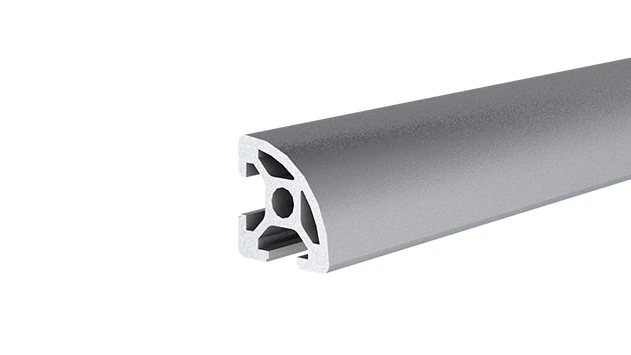
2020R is a 2.00 x 2.00CM fractional 20 series square extrusion T-slot profile with four open T-slots, two side with 2.00cm face, the other side with round face. The profile has align-a-grooves to assist in aligning connecting profiles.
Walk into any modern factory, warehouse, or workshop, and you'll notice a quiet revolution happening right underfoot—literally. The heavy, clunky steel workbenches and rigid material racks of the past are slowly being replaced by sleeker, lighter alternatives. At the heart of this shift? Profiles made from aluminum, specifically the 2020r EU Standard Aluminum Profile. But why is this material gaining such traction? Let's start with a simple scenario: A team of assembly line workers needs to reconfigure their workspace to accommodate a new product line. With traditional carbon steel workbenches, this might mean calling in extra help, straining muscles, or even using forklifts to move equipment. Now, imagine the same team using workbenches built with 2020r aluminum profiles. Suddenly, two people can easily lift and reposition a bench, tools stay within reach, and downtime shrinks from hours to minutes. That's the power of weight reduction—and it's changing how businesses operate.
In this article, we'll dive deep into why the 2020r EU Standard Aluminum Profile is outshining carbon steel in industrial settings, focusing on its most game-changing advantage: reduced weight. We'll explore what makes this aluminum profile unique, how it stacks up against carbon steel in real-world use, and why those extra kilograms (or pounds) matter more than you might think. Along the way, we'll touch on key components like aluminum profile accessories that make these systems so adaptable, and even share a side-by-side comparison to highlight the differences. Whether you're a plant manager looking to boost efficiency, a safety officer prioritizing worker well-being, or simply curious about industrial materials, this is your guide to understanding why lighter often means better.
What Is the 2020r EU Standard Aluminum Profile?
Before we pit it against carbon steel, let's get to know the star of the show: the 2020r EU Standard Aluminum Profile. First, the "2020" in its name refers to its cross-sectional dimensions—20mm by 20mm. That might sound small, but don't let the size fool you; this profile is a workhorse. The "r" stands for "rounded," a subtle but crucial detail. Unlike sharp-edged steel profiles, the rounded corners of the 2020r reduce the risk of cuts and scrapes, a small change that makes a big difference in busy work environments where workers are constantly moving around equipment.
Then there's the "EU Standard" label. This isn't just a marketing buzzword. It means the profile meets strict European union regulations for quality, safety, and environmental sustainability. From the purity of the aluminum alloy to the precision of the extrusion process, every aspect is held to high standards. Speaking of extrusion—this is how the 2020r profile comes to life. Aluminum extrusion profile manufacturing involves heating aluminum billets until they're malleable, then forcing them through a die (a custom-shaped mold) to create the profile's unique T-slot design. Those T-slots are what make the 2020r so versatile; they allow for easy attachment of aluminum profile accessories like connectors, end caps, and brackets, turning a simple length of aluminum into a fully functional workbench, rack, or conveyor system.
But what truly sets the 2020r apart is its composition. Made primarily from 6063-T5 aluminum alloy—a blend known for its excellent strength-to-weight ratio and corrosion resistance—it's built to handle the demands of industrial use without the bulk. This isn't the flimsy aluminum you'd find in a soda can; it's a structural material designed to support tools, parts, and even heavy machinery, all while staying surprisingly light.
Carbon Steel: The Traditional Heavyweight
To appreciate the 2020r aluminum profile's advantages, we need to understand the material it's often replacing: carbon steel. For decades, carbon steel has been the go-to for industrial structures. Why? It's strong, affordable, and readily available. Walk into an older factory, and you'll see it everywhere—from thick steel beams supporting the roof to the workbenches where products are assembled. Carbon steel's appeal lies in its raw strength; it can withstand heavy loads and resist bending, making it a reliable choice for static structures that rarely need to move.
But here's the catch: that strength comes with a price—weight. Carbon steel is dense, with a density of around 7.85 grams per cubic centimeter (g/cm³). To put that in perspective, a 20mm x 20mm carbon steel profile might weigh three times as much as the same-sized aluminum profile. This heft makes it challenging to work with in dynamic environments. Need to adjust a steel workbench's height? You'll likely need a wrench and extra hands. Want to reposition a steel material rack? Better call the maintenance team for a forklift. Over time, this rigidity and weight can slow down operations, increase labor costs, and even contribute to workplace fatigue.
Another downside? Corrosion. Unless coated with paint, zinc, or another protective layer, carbon steel is prone to rust when exposed to moisture or chemicals—common in factories where spills happen or humidity is high. That means extra maintenance: repainting, replacing rusted parts, or even replacing entire structures prematurely. For businesses aiming to reduce downtime and long-term costs, these are significant drawbacks.

The Numbers Don't Lie: Weight Reduction in Action
Let's cut to the chase: how much lighter is the 2020r aluminum profile compared to carbon steel? Let's break it down with hard numbers. First, density: aluminum has a density of about 2.7 g/cm³, while carbon steel sits at 7.85 g/cm³. That means, for the same volume, aluminum is roughly 70% lighter than carbon steel. But volume alone doesn't tell the whole story—we need to look at real-world applications.
Take a standard 20mm x 20mm profile, 1 meter in length. For carbon steel, assuming a solid cross-section (common in industrial profiles), the volume is 20mm * 20mm * 1000mm = 400,000 cubic millimeters (mm³), or 400 cubic centimeters (cm³). Multiply that by carbon steel's density (7.85 g/cm³), and you get a weight of 400 * 7.85 = 3,140 grams, or 3.14 kilograms per meter. Now, the 2020r aluminum profile: same 20mm x 20mm cross-section, same 1-meter length. Aluminum's density is 2.7 g/cm³, so 400 * 2.7 = 1,080 grams, or 1.08 kilograms per meter. That's a difference of 2.06 kilograms per meter —meaning a 3-meter workbench frame made with aluminum would weigh just 3.24 kg, compared to 9.42 kg for steel. To put that in everyday terms, the steel frame would feel like carrying a large watermelon, while the aluminum frame is more like a small backpack. No wonder workers prefer the latter!
But wait—doesn't aluminum's lighter weight mean it's weaker? Not at all. The 2020r profile is engineered with a hollow, T-slot design that maximizes strength while minimizing material. Its 6063-T5 alloy offers a tensile strength of around 180 MPa (megapascals), which is more than enough for most industrial applications like workbenches, light-duty conveyor systems, or material racks. In fact, when properly assembled with aluminum profile accessories like reinforced joints and brackets, these profiles can support hundreds of kilograms without bending or warping. For context, a typical carbon steel profile of the same size might have a higher tensile strength (around 300 MPa), but in many cases, that extra strength is overkill—like using a sledgehammer to hang a picture frame.
Why Lighter Weight Matters: Beyond "Easier to Lift"
At first glance, "lighter weight" might seem like a minor convenience, but in industrial settings, it ripples into a cascade of benefits that touch everything from worker safety to the bottom line. Let's unpack the most impactful advantages:
1. Worker Safety and Reduced Fatigue
Ask any warehouse or factory worker what their biggest daily challenge is, and "heavy lifting" will likely top the list. The Bureau of Labor Statistics (BLS) reports that overexertion injuries—like strains from lifting heavy objects—cost U.S. businesses billions annually in workers' compensation and lost productivity. Carbon steel equipment amplifies this risk: a single steel workbench might weigh 50 kg or more, requiring two or more people to move. Over time, repeated heavy lifting can lead to chronic back pain, joint issues, or even acute injuries.
Enter the 2020r aluminum profile. A workbench built with these profiles might weigh 15–20 kg, meaning one or two workers can move it safely without straining. This reduces the risk of injuries and lowers fatigue, keeping teams energized throughout shifts. When workers aren't exhausted from moving equipment, they're more focused, make fewer mistakes, and stay motivated—all of which boost overall productivity.
2. Faster Reconfiguration and Adaptability
Modern manufacturing thrives on flexibility. Product lines change, customer demands shift, and workspace layouts need to adapt quickly. With carbon steel systems, reconfiguration is often a logistical headache. Disassembling a steel rack might require tools, time, and multiple people, leading to hours (or days) of downtime. Aluminum profiles, however, are designed for speed. Thanks to their lightweight nature and modular design—enabled by aluminum profile accessories like quick-connect joints, T-slot nuts, and snap-on brackets—teams can reconfigure workspaces in minutes. Need to add a shelf to a workbench? Slide in a new aluminum profile and secure it with a few bolts. Want to extend a conveyor track? Connect additional roller track sections with compatible connectors. This agility lets businesses respond faster to market changes, reduce setup time for new projects, and stay competitive.
3. Lower Transportation and Installation Costs
Weight doesn't just affect on-site handling—it impacts costs long before the profiles even reach your facility. Shipping a pallet of carbon steel profiles requires more fuel, larger trucks, and often special handling fees. Compare that to aluminum profiles: a truck can carry three times as many aluminum profiles as steel ones, cutting shipping costs by up to 60%. Once on-site, installation is faster too. With lighter materials, crews need fewer people and less equipment (like cranes or forklifts) to get the job done. For a medium-sized factory installing 50 workbenches, that could mean saving thousands of dollars in labor and equipment rental alone.
4. Energy Efficiency in Automated Systems
For facilities with automated production lines—think conveyor belts, robotic arms, or assembly stations—weight directly impacts energy use. A conveyor system built with heavy steel tracks requires more powerful motors to move products, increasing electricity bills. Aluminum profiles, being lighter, reduce the load on these motors, lowering energy consumption by 15–20% in some cases. Over time, these savings add up, making aluminum profiles a greener, more cost-effective choice for sustainable operations.
5. Longer Lifespan with Less Maintenance
We touched on corrosion earlier, but it's worth emphasizing: aluminum is naturally resistant to rust and corrosion. Unlike carbon steel, which needs regular painting or coating, aluminum profiles form a thin oxide layer when exposed to air, protecting the material underneath. This means less maintenance, fewer replacements, and a longer lifespan—often 10–15 years compared to 5–7 years for uncoated steel. For businesses, that translates to lower long-term costs and more predictable budgeting.
6. Improved Ergonomics
Ergonomics—the science of designing workspaces for comfort and efficiency—has become a top priority for forward-thinking employers. Heavy steel equipment often forces workers into awkward positions: bending to reach tools on low shelves, stretching to adjust high racks, or straining to move materials. Aluminum profiles, being lightweight, allow for more flexible, ergonomic designs. For example, height-adjustable workbenches can be easily raised or lowered to match each worker's stature, reducing neck and back strain. Mobile carts built with aluminum profiles can be pushed with one hand, keeping workers' arms and shoulders relaxed. Over time, these small ergonomic improvements lead to happier, healthier teams and lower turnover rates.
Where the 2020r Aluminum Profile Shines: Real-World Applications
Now that we understand the "why" behind the 2020r aluminum profile's weight advantage, let's look at the "where." These profiles aren't just theoretical—they're transforming specific tools and systems across industries:
Workbenches: The Heart of the Workshop
Workbenches are the unsung heroes of any production line, and here, aluminum profiles truly excel. A standard 1.5-meter workbench built with 2020r profiles might weigh 25 kg, compared to 75 kg for a steel equivalent. This means workers can adjust the bench's position, add accessories like tool hooks or monitor mounts (using aluminum profile accessories), or even move it to a new station without breaking a sweat. For example, in electronics manufacturing, where precision is key, technicians often need to angle their workbenches to reduce glare or access hard-to-reach components—something that's nearly impossible with a heavy steel bench. With aluminum, it's as simple as loosening a few joints, adjusting the angle, and tightening them back up.
Lean System Setups: Flexibility for Continuous Improvement
Lean manufacturing—focused on minimizing waste and maximizing efficiency—relies on adaptable workspaces. The 2020r aluminum profile is a lean system's best friend. Whether it's a kanban board, a pull-system material rack, or a modular assembly line, aluminum's lightweight and modular design lets teams experiment with layouts, test new processes, and scale up (or down) quickly. For instance, a food packaging plant using lean principles might need to switch between packaging sizes daily. With aluminum material racks, workers can adjust shelf heights in minutes, ensuring ingredients stay organized and accessible, reducing downtime between batches.
Material Racks and Trolleys: Moving Goods with Ease
Material handling is another area where weight reduction makes a huge difference. A typical steel turnover trolley might weigh 40 kg empty, limiting how much it can carry before becoming unwieldy. An aluminum trolley of the same size? Just 15 kg, meaning it can hold more products while remaining easy to push. Similarly, aluminum roller tracks—often used to slide boxes or components between workstations—reduce friction and require less force to operate, making material flow smoother and faster. In warehouses, this translates to fewer bottlenecks and happier workers who don't have to struggle with heavy loads.
Side-by-Side: 2020r Aluminum Profile vs. Carbon Steel
| Feature | 2020r EU Standard Aluminum Profile | Carbon Steel (20mm x 20mm Profile) |
|---|---|---|
| Material Composition | 6063-T5 Aluminum Alloy (97% Aluminum, 1% Magnesium, 0.6% Silicon) | Iron (98%), Carbon (0.2–2%), Manganese, Silicon |
| Density | 2.7 g/cm³ | 7.85 g/cm³ |
| Weight per Meter (20mm x 20mm) | 1.08 kg/m | 3.14 kg/m |
| Tensile Strength | 180 MPa (suitable for light-to-medium loads) | 300 MPa (higher, but often overkill for non-heavy-duty use) |
| Corrosion Resistance | Excellent (natural oxide layer; no coating needed) | Poor (requires painting/coating to prevent rust) |
| Flexibility/Adaptability | High (modular design with T-slots; compatible with aluminum profile accessories like quick-connect joints) | Low (rigid; requires welding or heavy tools to modify) |
| Installation Time (per 10-meter system) | 2–3 hours (2 workers) | 6–8 hours (4 workers + tools/forklift) |
| Typical Applications | Workbenches, lean system setups, material racks, lightweight conveyor tracks, mobile trolleys | Heavy machinery frames, static structural supports, high-load shelving (rarely moved) |
The Unsung Heroes: Aluminum Profile Accessories
What makes the 2020r aluminum profile truly versatile isn't just the profile itself—it's the ecosystem of aluminum profile accessories that bring it to life. These small, often-overlooked components turn basic aluminum tubes into fully functional systems, and they play a key role in maximizing the benefits of lightweight design. Let's take a closer look at a few essentials:
Connectors and Joints: These are the "glue" that holds aluminum systems together. From 90° angle connectors to swivel joints, these accessories let you build everything from straight workbenches to complex, multi-angle structures. Unlike steel, which often requires welding or drilling, aluminum connectors simply slot into the T-slots and tighten with a hex key, making assembly fast and tool-friendly.
End Caps and Rubber Strips: Safety first! Rounded end caps cover the open ends of profiles, preventing cuts from sharp edges, while rubber strips line T-slots to reduce noise and protect components from scratches. In busy factories, these small details add up to fewer workplace injuries and longer-lasting equipment.
Casters and Wheels: Add casters to an aluminum frame, and you've got a mobile workstation or trolley. Since the frame is lightweight, even with casters, the whole unit remains easy to maneuver—perfect for moving tools or materials between stations.
Together, these accessories transform the 2020r aluminum profile from a simple piece of metal into a building block for endless possibilities. They're the reason aluminum systems can adapt to almost any need, from a basic workbench to a custom lean system, without sacrificing strength or adding unnecessary weight.
Why the 2020r Aluminum Profile Is More Than Just "Lighter"
At the end of the day, the 2020r EU Standard Aluminum Profile isn't just about weight reduction—it's about reimagining what industrial equipment can be: flexible, safe, cost-effective, and worker-friendly. By shedding unnecessary kilograms, it solves real-world problems that businesses face daily: reducing injuries, cutting downtime, lowering costs, and adapting to change faster.
Carbon steel will always have its place in heavy-duty applications where maximum strength is non-negotiable. But for the majority of industrial settings—where adaptability, safety, and efficiency matter most—the 2020r aluminum profile is proving to be a smarter choice. It's a material that doesn't just keep up with the demands of modern manufacturing; it helps businesses get ahead.
So, the next time you walk through a factory and see workers effortlessly moving a workbench or reconfiguring a production line, take a closer look. Chances are, you'll spot the 2020r aluminum profile hard at work—quietly, lightweight, and changing the game, one kilogram at a time.