- Company Articles
- Industry articles
- Industry standards
- 2020r EU Standard Aluminum Profile vs. Plastic Extrusions: Which Is Better for Lean Systems?

2020r EU Standard Aluminum Profile vs. Plastic Extrusions: Which Is Better for Lean Systems?
Related Product
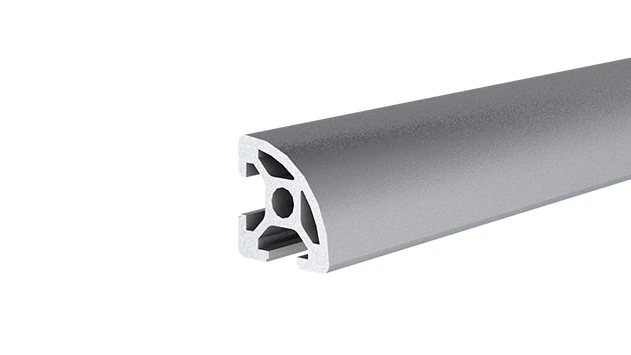
2020R EU Standard Aluminum Profile
2020R is a 2.00 x 2.00CM fractional 20 series square extrusion T-slot profile with four open T-slots, two side with 2.00cm face, the other side with round face. The profile has align-a-grooves to assist in aligning connecting profiles.
Walk into any modern manufacturing facility, and you'll notice a quiet revolution happening on the shop floor. Lean systems—those sleek, waste-cutting workflows designed to maximize efficiency—are no longer just buzzwords; they're the backbone of how products go from blueprint to box. But here's the thing about lean systems: they're only as strong as the tools and structures that support them. When it comes to building the workbenches, flow racks, and conveyors that keep lean operations humming, two materials often duke it out for top spot: 2020r EU Standard Aluminum Profiles and Plastic Extrusions. Both promise durability, flexibility, and cost-effectiveness—but which one truly delivers when the pressure is on? Let's roll up our sleeves and break it down.
First, Let's Talk Lean: Why Material Matters
Before we dive into aluminum vs. plastic, let's ground ourselves in what lean systems really need. At its core, lean is about eliminating waste—whether that's time wasted searching for tools, space wasted on clunky equipment, or money wasted on frequent replacements. The structures in a lean environment (think workbenches where assemblies are built, roller tracks that move parts between stations, or racks that store materials at eye level) must be:
- Modular: Easy to reconfigure when workflows change (because in lean, change is constant).
- Durable: Able to handle daily wear and tear without bending, cracking, or warping.
- Lightweight enough to move, but sturdy enough to last: No one wants to wrestle with a 500-pound workbench during a layout redesign, but you also don't want a shelf that collapses under a box of screws.
- Cost-effective over time: Cheap upfront might mean expensive replacements later—lean hates waste, even financial waste.
With that in mind, let's meet our contenders.
Contender 1: 2020r EU Standard Aluminum Profile—The "Built to Last" Choice
If aluminum profiles were a person, they'd be that reliable coworker who shows up early, stays late, and never complains—even when the workload spikes. The 2020r EU Standard Aluminum Profile, in particular, is a rockstar in the lean world. Let's start with the basics: it's part of the 2020 series, a family of aluminum extrusion profiles defined by their 20mm x 20mm cross-section (hence "2020"). The "r" in 2020r stands for "rounded," referring to its smooth, curved edges—a small detail that makes a big difference in safety (no sharp corners to snag gloves or scrape forearms) and aesthetics (because even lean systems deserve to look clean).
What Makes Aluminum Profiles a Lean Darling?
First, strength without the bulk . Aluminum is naturally lightweight, but don't let that fool you. The 2020r profile, made from high-grade aluminum extrusion profile, is engineered to handle heavy loads—think 50kg+ on a single shelf—without flexing. That's crucial for lean pipe workbenches, where assemblers might stack tools, parts bins, and half-finished products. Unlike flimsy materials that sag over time, aluminum holds its shape, ensuring workflows stay consistent (no more readjusting shelves because a rack "tired out").
Then there's modularity . Ever tried reconfiguring a fixed steel workbench? It's like trying to rearrange furniture with a wrench and a prayer. Aluminum profiles, though? They're designed for change. Thanks to T-slots—those handy grooves running along their length—you can snap on accessories (like brackets, shelves, or even LED lights) in minutes. Need to add a tool holder to your workbench? Slide in a T-nut, tighten a bolt, and done. Running a new conveyor line? Connect aluminum guide rails with a few brackets, and you're good to go. In lean systems, where workflows shift based on demand, this flexibility isn't just nice—it's non-negotiable.
Let's not forget durability . Aluminum resists rust, corrosion, and dents, which is a big deal in factories where spills (oil, coolant, cleaning solutions) are par for the course. Unlike plastic, which can crack if you drop a wrench on it, aluminum takes a beating and keeps going. I once visited a automotive plant that had been using 2020r aluminum workbenches for over a decade—they still looked new, save for a few paint chips. When you're building a lean system, longevity means less waste (no need to replace parts every year) and lower long-term costs.
The Catch? Upfront Cost
Let's be real: aluminum profiles aren't the cheapest option upfront. A 2-meter length of 2020r EU standard profile might cost 2-3x more than a similar plastic extrusion. For small businesses or startups watching every penny, that sticker shock can sting. But here's the lean truth: cheap now often costs more later . Plastic might save you $50 on a shelf today, but if it cracks in 6 months and disrupts production, the downtime and replacement costs will eat that savings alive. Aluminum, with its 10+ year lifespan, ends up being the smarter investment for most lean operations.

Contender 2: Plastic Extrusions—The Lightweight Underdog
Plastic extrusions, on the other hand, are the scrappy newcomers in the lean ring. Made from materials like PVC, polypropylene, or ABS, they're lightweight, colorful (hello, plastic roller track guide rail yellow and grey!), and budget-friendly. At first glance, they seem perfect for low-stress applications—like light-duty conveyors or temporary storage racks. But do they hold up in the chaos of a full-tilt lean system?
The Appeal of Plastic: Flexibility and Frugality
Plastic's biggest selling point is cost . For businesses just starting their lean journey, or those with seasonal workflows (think holiday packaging lines), plastic extrusions offer a way to build functional structures without draining the budget. A basic plastic roller track, for example, might cost half as much as its aluminum counterpart. That's hard to ignore when you're trying to prove the ROI of lean to upper management.
It's also lightweight to the extreme . A 2-meter plastic rail weighs next to nothing, making it easy to move, cut, and install—no need for a forklift or extra hands. This is great for temporary setups, like pop-up assembly stations during peak seasons. And because plastic is non-conductive, it's sometimes used in electronics manufacturing, where static electricity is a no-go (though aluminum can be anodized for ESD protection, too).
But Here's Where Plastic Struggles
Lean systems thrive on consistency, and plastic? It's prone to environmental mood swings . Leave a plastic extrusion in direct sunlight, and it might warp. Expose it to high temperatures (like near a welding station), and it could melt or become brittle. Even heavy loads can cause it to bend over time—imagine a plastic flow rack that starts sloping, sending parts sliding off prematurely. Suddenly, that "cheap" rail becomes a bottleneck, as workers stop to retrieve fallen parts or adjust the rack. Waste, meet your new best friend.
Then there's wear and tear . Plastic roller track guide rail wheels, for example, can wear down quickly under constant use. I visited a food packaging plant once that switched to plastic conveyors to save money—within 8 months, half the wheels were cracked, causing jams. The maintenance team was replacing parts weekly, and downtime spiked. What started as a cost-saver ended up costing more in labor and lost production.
Head-to-Head: Aluminum vs. Plastic in Lean Systems
Still on the fence? Let's put them side by side. The table below compares key factors lean managers care about most:
| Factor | 2020r EU Standard Aluminum Profile | Plastic Extrusions |
|---|---|---|
| Load Capacity | High (50kg+ per linear meter) | Low to Medium (best for <20kg loads) |
| Durability | 10+ years (resists rust, dents, warping) | 1-3 years (prone to cracking, warping, UV damage) |
| Modularity | Excellent (T-slots for easy accessory swaps) | Limited (often glued or snap-fit; hard to reconfigure) |
| Long-Term Cost | Lower (high upfront cost, minimal maintenance) | Higher (low upfront cost, frequent replacements) |
| Best For | Permanent lean systems, heavy loads, high-temperature areas | Temporary setups, light loads, low-budget pilot projects |
So, Which One Should You Choose?
The answer, as with most lean decisions, depends on your reality . Let's break it down by scenario:
Choose Aluminum If…
- You're building a permanent lean system (think 5+ years of use).
- Your workflows involve heavy loads (tools, metal parts, machinery).
- You need modularity (frequent reconfigurations, adding/removing accessories).
- Your facility has extreme conditions (high temps, moisture, chemicals).
Choose Plastic If…
- You're running a temporary or seasonal setup (3 months or less).
- Loads are light and consistent (small packages, paper products).
- You need to test a lean concept before investing in permanent infrastructure.
Here's a real-world example: A medical device manufacturer I worked with started with plastic workbenches to prototype their lean line. Once they proved the workflow worked, they swapped in 2020r aluminum profiles. Today, those aluminum benches have been reconfigured 12 times (adding new tool holders, integrating barcode scanners) and still look brand-new. The plastic prototypes? They're collecting dust in the storage room.
The Verdict: Aluminum Profiles for Lean, Plastic for Pit Stops
At the end of the day, lean systems are about investing in long-term efficiency —and that's where 2020r EU Standard Aluminum Profiles shine. They're not just materials; they're partners in reducing waste, minimizing downtime, and scaling operations. Plastic has its place, but it's more of a pit stop than a finish line. It can get you started, but aluminum will carry you across the finish line, year after year.
So, the next time you're standing in front of a shelf of extrusions, remember: lean isn't about cutting costs today—it's about creating value tomorrow. And when it comes to value, aluminum profiles don't just meet the standard—they set it.