- Company Articles
- Industry articles
- Industry standards
- 2020r EU Standard Aluminum Profile vs. Steel: Cost-Effectiveness & Sustainability Analysis

2020r EU Standard Aluminum Profile vs. Steel: Cost-Effectiveness & Sustainability Analysis
Related Product
2020R EU Standard Aluminum Profile
2020R is a 2.00 x 2.00CM fractional 20 series square extrusion T-slot profile with four open T-slots, two side with 2.00cm face, the other side with round face. The profile has align-a-grooves to assist in aligning connecting profiles.
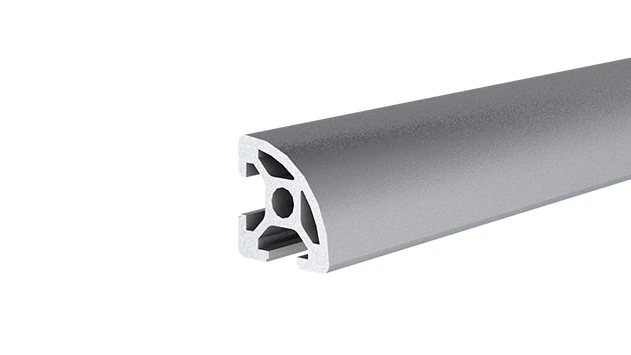
In the world of manufacturing, construction, and industrial design, choosing the right material can feel like solving a puzzle—one where every piece (cost, durability, environmental impact) has to fit just right. For decades, steel has been the go-to choice, the reliable workhorse that built everything from skyscrapers to assembly lines. But in recent years, a new contender has been gaining ground: aluminum profiles, specifically the 2020r EU standard aluminum profile. Lightweight, modular, and surprisingly tough, this aluminum extrusion profile is challenging steel's dominance, especially in lean manufacturing systems, workbenches, and material handling setups.
But is switching to aluminum really worth it? Let's dive in. This article isn't just about specs and numbers—it's about helping you decide whether 2020r aluminum profile or steel is the smarter choice for your project, balancing short-term budgets with long-term sustainability and cost savings. We'll break down their cost-effectiveness, sustainability credentials, and real-world performance, so you can make a choice that feels both practical and forward-thinking.
First Things First: What Even Is 2020r EU Standard Aluminum Profile?
If you're not deep into manufacturing or industrial design, terms like "2020r EU standard aluminum profile" might sound like tech jargon. Let's simplify. The "2020" refers to its dimensions: roughly 20mm by 20mm in cross-section (think a small, square tube). The "r" likely stands for "rounded," hinting at its smooth, edge-rounded design—safer to handle and easier to integrate with other components. And "EU standard" means it meets strict European manufacturing norms for quality, consistency, and safety.
But what makes it special? Unlike generic aluminum bars, this is an aluminum extrusion profile. Extrusion is a manufacturing process where heated aluminum is pushed through a die (a mold) to create complex, uniform shapes. For 2020r profiles, this means they come with built-in T-slots—long, narrow grooves running along their length. These slots are game-changers because they let you attach aluminum profile accessories (like brackets, connectors, or shelves) without drilling or welding. It's like building with modular Lego blocks, but for industrial use.
Commonly used in lean systems—think assembly line workbenches, material racks, or lightweight conveyor frames—2020r profiles are loved for their flexibility. Need to reconfigure a workbench? Just slide off the old accessories and snap on new ones. Want to add a shelf to a material rack? No problem—T-slots make it quick and tool-friendly. This modularity is a big part of why it's become a favorite among lean system suppliers and manufacturers aiming to streamline operations.
Steel: The Old Reliable—But Is It Still the Best?
Let's not knock steel. For generations, it's been the backbone of manufacturing. Strong, abundant, and relatively cheap upfront, steel has earned its reputation as the "tough guy" of materials. It's used in everything from heavy machinery to storage racks, and for good reason: it can handle extreme weights, resist bending under pressure, and stand up to harsh environments (if properly treated).
But steel has its downsides. It's heavy—really heavy. That means higher shipping costs, trickier installation (you might need extra labor or equipment to move it), and limits on where it can be used (e.g., upper floors of buildings with weight restrictions). It's also prone to rust and corrosion unless it's painted, galvanized, or coated—adds extra steps (and costs) to maintenance.
In short, steel is a solid choice for projects where raw strength is non-negotiable, like building bridges or heavy industrial machinery. But for smaller-scale applications—think a workshop workbench, a lightweight conveyor, or a material rack in a warehouse—its bulk and maintenance needs might make it more hassle than it's worth.

Cost-Effectiveness: The Numbers Game
Let's get to the bottom line: money. At first glance, steel often looks cheaper. Walk into a hardware store or contact a supplier, and you'll probably find steel bars or tubes with a lower price tag per meter than 2020r aluminum profiles. But cost-effectiveness isn't just about the initial purchase—it's about the total cost over the material's lifetime. Let's break it down.
Initial Cost: Steel Has the Edge (But Not by Much)
No denying it: steel is generally cheaper upfront. For example, a 2-meter length of basic steel square tube (20x20mm) might cost $5–$10, while the same length of 2020r aluminum profile could run $10–$15. If you're working on a tight budget and need a quick fix, steel might seem like the obvious choice. But here's the catch: aluminum's modularity can save you money in other ways right out of the gate.
With steel, customizing or assembling a structure often means welding, drilling, or hiring a fabricator—all extra costs. Aluminum profiles, on the other hand, use simple aluminum profile accessories (connectors, brackets, end caps) that snap into T-slots. No welding, no specialized tools, no extra labor. So while the aluminum itself costs more, the assembly process is faster and cheaper. For a small workbench, that might mean saving $50–$100 on labor. For a larger project, like a warehouse full of material racks, the savings could add up to thousands.
Long-Term Costs: Aluminum Starts to Shine
Where aluminum really pulls ahead is in long-term costs. Let's talk maintenance first. Steel, as we mentioned, rusts. Even with a coat of paint, over time—especially in humid or industrial environments—that paint chips, moisture seeps in, and rust forms. Fixing it means sanding, repainting, or even replacing corroded parts. Aluminum, though? It's naturally corrosion-resistant. Its surface forms a thin oxide layer that protects it from rust, even in damp or chemical-exposed areas. No painting, no rust treatment, no regular maintenance checks. Over 5–10 years, those maintenance savings alone can outweigh the initial price difference.
Then there's durability. Steel is strong, but aluminum is stronger than it looks. The 2020r profile, made from high-grade aluminum alloy, can handle loads up to 50–100kg per meter (depending on the setup)—more than enough for most workbenches, shelving, or light conveyor systems. And because it's lightweight, there's less stress on the structure itself, meaning it's less likely to warp or bend over time compared to steel, which can sag under its own weight in long spans.
Energy efficiency is another hidden cost factor. Aluminum's lightweight nature makes it easier to transport—trucks can carry more aluminum profiles per trip than steel, reducing fuel costs and carbon emissions. In manufacturing facilities, lighter equipment (like aluminum workbenches or trolleys) is easier for workers to move, reducing fatigue and increasing productivity. Steel's weight, by contrast, can slow down operations and hike up shipping fees year after year.
Cost Comparison: 2020r Aluminum vs. Steel (Over 10 Years)
| Cost Factor | 2020r Aluminum Profile | Steel (20x20mm Tube) |
|---|---|---|
| Initial Material Cost (10 meters) | $120–$150 | $50–$100 |
| Assembly/Labor Cost | $50–$100 (modular accessories, no welding) | $200–$300 (welding, drilling, fabricator fees) |
| Annual Maintenance Cost | $0–$10 (occasional cleaning) | $50–$100 (painting, rust treatment) |
| 10-Year Total Cost | $170–$350 | $750–$1,400 |
*Estimates based on average market prices and common industrial usage scenarios.
Sustainability: Aluminum's Green Advantage
These days, sustainability isn't just a buzzword—it's a business imperative. Customers, regulators, and even employees care about the environmental impact of the products and systems we build. So how do 2020r aluminum profile and steel stack up here?
Material Sourcing and Production
Steel production is energy-intensive. It starts with mining iron ore, which requires massive amounts of land disruption and energy. Then, that ore is processed in blast furnaces, which burn coal (a fossil fuel) to reach temperatures over 1,500°C. The result? For every ton of steel produced, about 1.8 tons of CO2 are released into the atmosphere. That's a big carbon footprint.
Aluminum production isn't without its own environmental costs—mining bauxite (the ore used to make aluminum) can disrupt ecosystems, and refining bauxite into alumina uses a lot of energy. But here's the kicker: when you use recycled aluminum, the energy savings are staggering. Producing aluminum from recycled scrap uses just 5% of the energy needed to make it from raw bauxite. And the 2020r EU standard profile? Many manufacturers prioritize using recycled aluminum in their extrusion process, drastically cutting its carbon footprint. Some suppliers even source 100% recycled aluminum, making their profiles nearly carbon-neutral in production.
Recyclability: Aluminum's Superpower
Steel is recyclable, but aluminum is infinitely recyclable. That means it can be melted down and reused over and over without losing quality. In fact, about 75% of all aluminum ever produced is still in use today. When your 2020r profile workbench or material rack reaches the end of its life, you can sell it to a recycler, who'll melt it down and turn it into new profiles, cans, or car parts. Steel, while recyclable, often loses some strength when recycled, limiting its reuse in high-stress applications.
There's also the matter of waste. Aluminum extrusion is a precise process—less material is wasted compared to steel fabrication, where cutting and welding often leave scraps. And because aluminum profiles are modular, you can reconfigure them instead of replacing them. Need a longer workbench? Just add another 2020r section. Steel structures, once welded, are fixed—if you need to change them, you often have to cut them apart and start over, creating more waste.
Real-World Applications: When to Choose Which?
Okay, so aluminum has better long-term costs and sustainability—but steel is still stronger and cheaper upfront. When should you pick one over the other?
Choose 2020r Aluminum Profile if:
- You need a lightweight, modular system (e.g., lean manufacturing workbenches, mobile trolleys, or adjustable material racks).
- Your project is in a corrosive environment (humid warehouses, food processing plants, or chemical labs).
- Sustainability and long-term cost savings are priorities.
- You want to avoid welding or complex fabrication (DIY or small-team projects).
Stick with Steel if:
- You need to support extremely heavy loads (e.g., industrial machinery bases, structural beams).
- Upfront cost is the only budget consideration, and you don't mind ongoing maintenance.
- Your project is outdoors in extreme conditions (e.g., heavy rain, saltwater) where even aluminum might need extra protection (though marine-grade aluminum could still work).
Wrapping It Up: The Smart Choice for the Future
At the end of the day, the 2020r EU standard aluminum profile isn't here to replace steel—it's here to offer a better alternative for the right jobs. For lean systems, workbenches, material handling, and projects where flexibility, low maintenance, and sustainability matter, aluminum is the clear winner. Its modular design, corrosion resistance, and recyclability make it a forward-thinking choice that saves money and reduces environmental impact over time.
Steel will always have its place—there's no substitute for its raw strength in heavy construction or industrial machinery. But for the everyday projects that keep factories, workshops, and warehouses running, 2020r aluminum profile is proving that sometimes, the newer, lighter option is also the smarter one. So next time you're planning a project, don't just look at the price tag—look at the whole picture. Your budget, your team, and the planet will thank you.