- Company Articles
- Industry articles
- Industry News
- 2025 Market Trends: Three Way Lean Pipe Joint Innovations

2025 Market Trends: Three Way Lean Pipe Joint Innovations
Related Product
Three Way Lean Pipe Joint
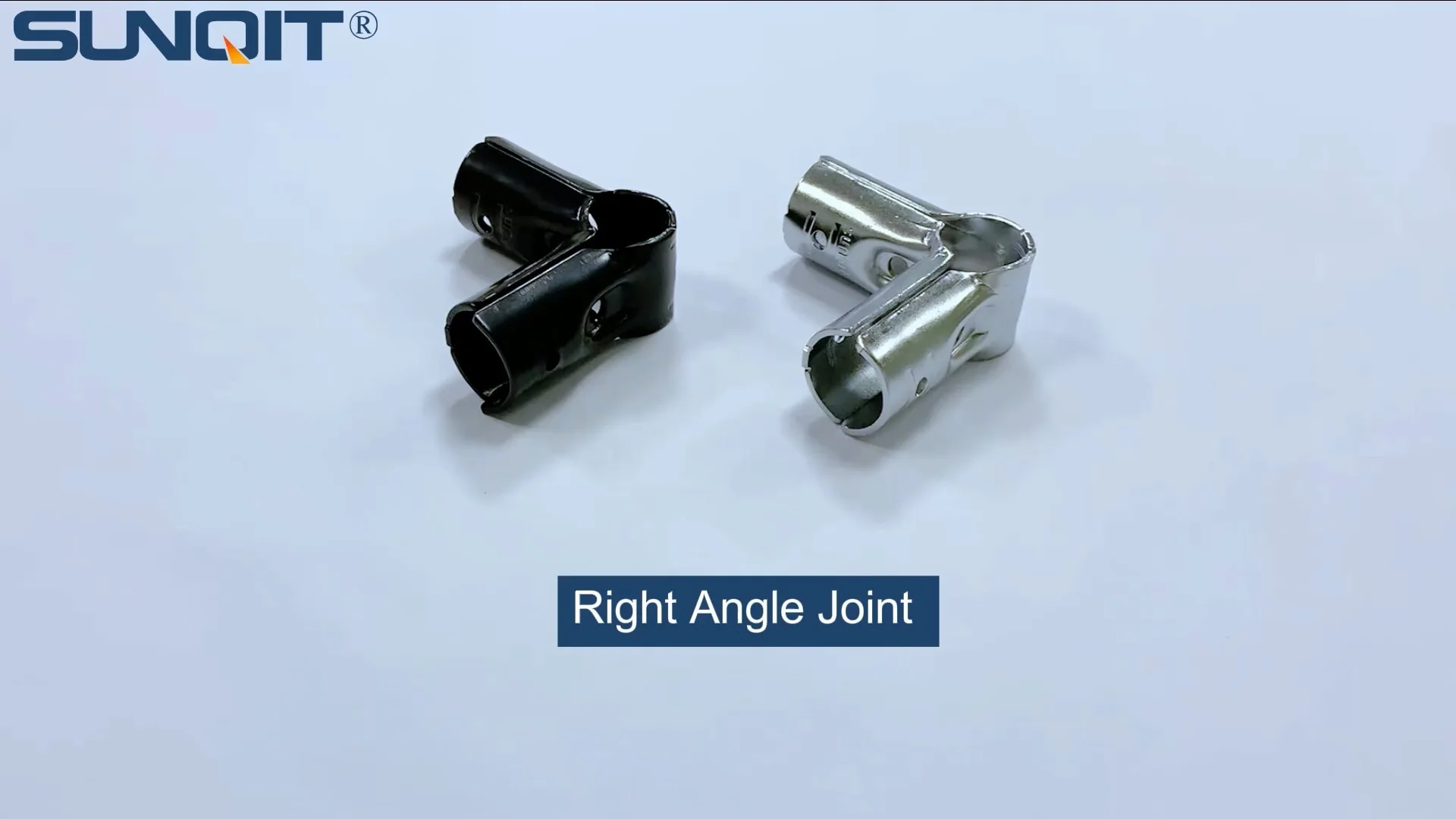
Three way lean pipe joint for 3 pcs 28MM lean pipe connection in straight angle, which used widely in workbench, flow rack, hand trolley frame connection.
Walk into any modern manufacturing facility today, and you'll notice a quiet revolution happening on the factory floor – one that starts with the smallest components but ripples out to transform entire production lines. At the heart of this shift are lean systems, the backbone of efficient, waste-reducing operations. And if lean systems are the backbone, then lean pipe joints are the unsung heroes holding everything together. In 2025, one component stands out as a game-changer: the three way lean pipe joint. More than just a connector, it's a catalyst for flexibility, sustainability, and smarter workflows. Let's dive into how this humble yet powerful tool is redefining what's possible in manufacturing.
The Evolution of Lean Pipe Joints: From Static to Dynamic
Lean manufacturing isn't new – for decades, businesses have chased the "just-in-time" dream, trimming waste and streamlining processes. But the tools that make lean possible have evolved dramatically. Think back to the early 2000s: lean pipe joints were often clunky, one-size-fits-all steel pieces. They held pipes together, sure, but reconfiguring a workstation or flow rack meant hours of unscrewing, adjusting, and reattaching. If a factory needed to shift from assembling smartphones to tablets, the entire setup felt like a puzzle with missing pieces.
Then came the 2010s, and with it, the rise of modularity. Plastic-coated steel joints introduced some flexibility, and aluminum began to replace heavier materials, making setups easier to move. But even then, three way joints – which connect three pipes at once, forming corners or junctions – remained limited. They were fixed in angle, hard to adjust, and often incompatible with newer accessories like roller tracks or ESD workbench components. Manufacturers were still stuck in a cycle of "good enough," not "great."
Fast forward to 2025, and the landscape has shifted. Today's three way lean pipe joint isn't just a connector; it's a multi-functional hub. Thanks to advances in materials, design, and engineering, these joints are lighter, stronger, and smarter than ever. They're the reason a small electronics plant can reconfigure a production line in an afternoon instead of a week, or why a warehouse can adapt its flow racks to handle seasonal demand spikes without calling in a contractor. The question isn't just "What does it do?" anymore – it's "What can't it do?"
2025 Innovations in Three Way Lean Pipe Joints: Breaking the Mold
Material Revolution: Aluminum Takes Center Stage
Gone are the days of heavy steel joints weighing down workbenches and slowing down reconfigurations. In 2025, aluminum is king – and for good reason. The three way lean pipe joints of today are crafted from high-grade aluminum alloys, a material that marries strength with lightness. A typical aluminum three way joint weighs 40% less than its steel predecessor, making it easier for a single worker to adjust a workstation without extra help. But it's not just about weight: aluminum resists corrosion, a critical feature in factories where moisture or chemicals are present. And when paired with aluminum profile accessories, these joints create a seamless, durable system that stands up to daily wear and tear.
Take, for example, a food packaging plant in Ohio that switched to aluminum three way joints last year. Their old steel joints would rust after repeated cleanings, leading to wobbly flow racks and frequent replacements. Now, with aluminum joints, they've cut maintenance costs by 35% and eliminated the need for quarterly part swaps. "It's like switching from a flip phone to a smartphone," says Maria Gonzalez, the plant's operations manager. "You don't realize how much you were missing until you make the change."
Design Breakthroughs: Flexibility at Your Fingertips
If materials are the "what" of 2025's three way joints, design is the "how." The biggest leap? Adjustable angles. Traditional three way joints locked pipes at 90-degree angles, limiting creativity. Today's models? Think of them as "swivel artists." Many feature internal rotatory mechanisms – similar to the internal rotatary aluminum joint – that let workers pivot pipes up to 180 degrees, then lock them in place with a simple twist. No tools, no hassle, no downtime.
Consider a workstation setup: A manufacturer needs a material rack B (3 row and 3 floor) to feed parts to an assembly line. With a traditional joint, the rack's shelves would be fixed horizontally. But with a 2025 three way joint, the middle shelf can tilt slightly downward, letting gravity help parts glide toward workers – reducing the need to reach or bend. It's a small change, but over a 12-hour shift, it adds up to less fatigue and fewer errors.
Quick-connect technology is another win. Many joints now use a "snap-and-lock" system, where pipes slide into place and secure with a spring-loaded pin. What used to take 10 minutes to assemble now takes 30 seconds. For a lean pipe supplier, this means faster installations for clients. For the clients themselves, it means less time setting up and more time producing. "We used to have two guys spend half a day building a single turnover trolley," says Raj Patel, owner of a small automotive parts shop. "Now, one person can build three in the same time. That's the difference between meeting a deadline and scrambling to catch up."
Compatibility: Playing Well with Others
A joint is only as good as the system it supports. In 2025, three way lean pipe joints aren't just connectors – they're team players. They work seamlessly with everything from roller tracks to ESD workbenches, aluminum profiles to caster wheels. This compatibility is a game-changer for manufacturers who need to mix and match components to suit their unique needs.
Take roller tracks, for instance. A flow rack relies on smooth-rolling tracks to move products from point A to B. Older joints often didn't align with roller track placon mounts, leading to wobbly, jamming tracks. Today's three way joints, though, are designed with standardized grooves and mounting points that fit roller track accessories like puzzle pieces. Whether it's a plastic roller track guide rail (yellow or grey) or an aluminum guide rail A, the joint holds everything steady, ensuring parts glide without a hitch.
ESD workbench compatibility is another key feature. In electronics manufacturing, static electricity can fry sensitive components, so ESD-safe setups are non-negotiable. 2025 three way joints often include conductive materials or coatings that ground static, integrating seamlessly with ESD workbench surfaces. "Before, we had to use separate grounding straps for our workstations," explains Tom Chen, an engineer at a semiconductor plant. "Now, the joints themselves do the job. It's one less thing to worry about, and one more layer of protection for our parts."
Sustainability: Lean for the Planet, Too
Lean manufacturing has always been about reducing waste – but in 2025, that mission extends to the planet. Three way lean pipe joints are leading the charge here, too. Aluminum, for starters, is 100% recyclable, and many manufacturers now use recycled aluminum in their joints, cutting down on raw material use. What's more, the modularity of these joints means less waste overall. Instead of scrapping an entire workstation when needs change, you can swap out a few joints and pipes, keeping usable components in circulation.
Take a furniture manufacturer that recently upgraded to 2025 three way joints. When they shifted from making office chairs to sofas, they reused 80% of their existing lean pipe system by reconfiguring joints and adding new aluminum profiles. "We used to throw away old racks and workbenches," says sustainability director Lisa Wong. "Now, we're sending 60% less to the landfill. It's not just good for the environment – it's good for our bottom line, too."
Case Study: How a Lean Pipe Supplier Transformed a Client's Production Line
The Client: A mid-sized medical device manufacturer in Texas, producing surgical tools. Their challenge? High turnover in product designs (new tool models every 6-8 months) and rigid lean systems that couldn't keep up. Their old flow racks and workbenches took 2-3 days to reconfigure, leading to production gaps and missed deadlines.
The Solution: Partnering with a lean pipe supplier specializing in 2025 three way joints and aluminum profiles. The supplier replaced all traditional joints with adjustable, quick-connect aluminum models and added compatible roller tracks and caster wheels for mobility.
The Result: Reconfiguration time dropped from 3 days to 4 hours. The manufacturer now launches new product lines 20% faster and has cut overtime costs by $45,000 annually. "We used to dread design changes," says production manager James Wilson. "Now, we look forward to them – the system adapts as quickly as we do."

Why Three Way Joints Matter: The Hidden Cost of "Good Enough"
It's easy to overlook the impact of a single joint. After all, in a factory full of robots and high-tech machinery, a small aluminum connector might seem insignificant. But here's the truth: inefficiencies compound. A joint that takes 5 extra minutes to assemble adds up to 20 hours of lost time over a year for a single workstation. A fixed-angle joint that forces workers into awkward positions leads to higher turnover and more mistakes. A non-compatible joint that requires custom parts hikes up costs and delays repairs.
2025's three way lean pipe joints attack these inefficiencies head-on. They're not just about "better" – they're about "smarter." They let manufacturers focus on what they do best: making great products. As Gonzalez puts it: "We don't talk about joints in meetings anymore. And that's the point. They work so well, we can focus on our customers instead of our tools."

Looking Ahead: What's Next for Lean Pipe Innovation?
If 2025 is any indication, the future of three way lean pipe joints is bright – and even more connected. We're already seeing prototypes with built-in sensors that alert maintenance teams when a joint is loose or under stress. Imagine a flow rack that sends a text to your phone before it wobbles, or a workstation that auto-adjusts angles based on worker height data. Some lean pipe suppliers are even experimenting with 3D-printed joints, allowing for hyper-custom shapes that fit unique workflows.
Sustainability will also deepen. Expect to see joints made from bio-based plastics or aluminum blended with recycled ocean plastics, appealing to eco-conscious brands. And as factories go digital, joints may integrate with IoT systems, feeding data into production management software to optimize layouts in real time.

Conclusion: The Joint That Connects the Future
In the end, 2025's three way lean pipe joint is more than a tool – it's a symbol of manufacturing's evolution. It represents a shift from rigidity to flexibility, from waste to sustainability, from "good enough" to "what's next." For businesses, it's an investment that pays off in faster production, happier workers, and a stronger bottom line. For the industry, it's proof that even the smallest components can drive the biggest change.
So, whether you're a lean pipe supplier looking to wow clients, a manufacturer aiming to stay competitive, or just someone curious about the future of making things, keep an eye on the three way joint. It may be small, but its impact? Nothing short of revolutionary.