- Company Articles
- Industry articles
- Industry standards
- 2040 EU Standard Aluminum Profile: Understanding CE Compliance Requirements

2040 EU Standard Aluminum Profile: Understanding CE Compliance Requirements
Related Product
2040 EU Standard Aluminum Profile
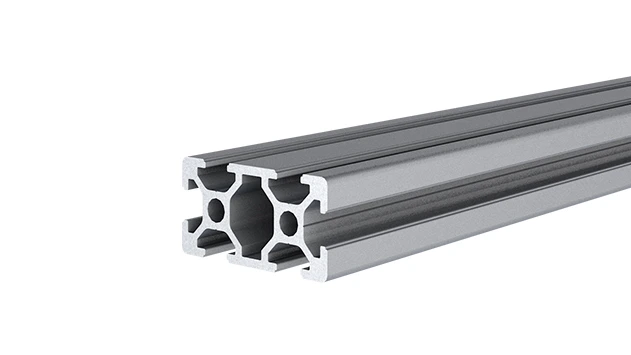
2040 is a 2.00 x 4.00CM fractional 20 series square extrusion T-slot profile with four open T-slots, two side with 2.00cm face, the other side with 4.00cm face. The profile has align-a-grooves to assist in aligning connecting profiles.
If you've ever walked through a manufacturing plant, a warehouse, or even a modern office, you've probably seen structures that look sleek, modular, and surprisingly sturdy—think workbenches, material racks, or assembly line stations. Chances are, many of these are built using aluminum profiles, and one of the most versatile players in this space is the 2040 EU standard aluminum profile. But what makes this profile so popular, and why does "CE compliance" keep popping up when manufacturers and buyers talk about it? Let's dive in.
What Is the 2040 EU Standard Aluminum Profile?
First things first: let's get familiar with the star of the show. The 2040 EU standard aluminum profile is a specific type of aluminum extrusion profile, named for its dimensions: 20 millimeters in width and 40 millimeters in height. It's part of a family of standardized profiles designed for modular construction, meaning you can mix and match it with other components to build almost anything—from simple shelves to complex industrial workbenches. What sets it apart? Its balance of strength, lightweight design, and adaptability. Made from aluminum alloys (typically 6063, known for its excellent extrudability and corrosion resistance), it's strong enough to support heavy loads but light enough to be easily reconfigured as needs change.
Imagine a construction toy for adults, but instead of plastic bricks, you're using precision-engineered aluminum. That's the 2040 profile in a nutshell. Its T-slot design—grooves running along its length—lets you slide in accessories like brackets, connectors, or panels, making assembly a breeze. No welding, no drilling; just click, tighten, and you're good to go. This modularity is why it's a favorite in industries ranging from automotive manufacturing to electronics, where flexibility and efficiency are key.
The Role of Aluminum Extrusion Profiles in Modern Industry
Aluminum extrusion profiles like the 2040 aren't just "parts"—they're the backbone of modern industrial design. Here's why:
1. Lean System Integration: In lean manufacturing, the goal is to eliminate waste and streamline workflows. 2040 profiles excel here because they let you build custom workbenches, flow racks, and material trolleys that fit your exact process. Need a workbench that's 1.2 meters long with a shelf for tools? No problem. Want to add a roller track for easy material movement? Just attach the right aluminum profile accessories. This adaptability reduces downtime and keeps operations running smoothly.
2. Cost-Effective Scalability: Traditional steel structures are heavy and hard to modify. If your production line needs to expand or change, you'd likely have to rebuild from scratch. With 2040 profiles, you can simply add more sections or reconfigure existing ones. This scalability saves money in the long run, especially for growing businesses.
3. Safety First: Aluminum is non-sparking and corrosion-resistant, making it ideal for environments where safety is critical (think food processing or chemical plants). Plus, its smooth finish and rounded edges (when paired with accessories like 2040 aluminum profile end caps) reduce the risk of cuts or scrapes—essential for workbenches where operators spend hours daily.

What Is CE Compliance, and Why Does It Matter?
Now, let's talk about the elephant in the room: CE compliance. If you've shopped for industrial equipment in the EU, you've probably seen the CE mark—a small symbol that looks like "CE" on products. But it's more than just a sticker. CE stands for "Conformité Européenne," which translates to "European Conformity." It's a legal requirement for products sold in the European Economic Area (EEA), indicating that the product meets EU safety, health, and environmental protection standards. Without it, a product can't be legally sold or used in the EU.
For 2040 aluminum profiles, CE compliance isn't optional. Why? Because these profiles are used in structures that directly impact workplace safety. A poorly made profile could bend or break under load, causing workbenches to collapse, tools to fall, or workers to get injured. CE compliance ensures that the profile has been tested and meets strict criteria, giving buyers confidence that it's safe and reliable.
Key CE Compliance Requirements for 2040 Aluminum Profiles
CE compliance isn't a one-size-fits-all process. It depends on the product's intended use, but for 2040 aluminum profiles, there are several core requirements manufacturers must meet. Let's break them down:
1. Compliance with the Construction Products Regulation (CPR)
Most aluminum profiles, including the 2040, fall under the EU's Construction Products Regulation (CPR), which sets standards for products used in construction and industrial structures. The CPR requires that construction products carry a CE mark if they're covered by a harmonized European standard (EN). For aluminum profiles, the key harmonized standard is EN 755 —a set of standards covering aluminum and aluminum alloys extruded profiles. EN 755 specifies everything from mechanical properties (like tensile strength and yield strength) to dimensional tolerances and surface quality.
For example, EN 755-2:2016 outlines the mechanical requirements for extruded profiles. A 2040 profile made from alloy 6063-T6 (a common temper for structural use) must have a minimum tensile strength of 200 MPa and a yield strength of at least 160 MPa. These numbers aren't arbitrary—they ensure the profile can support the loads it's designed for, whether that's a workbench holding 50kg of tools or a material rack stacked with heavy components.
2. Dimensional Accuracy and Tolerances
Ever tried building something with parts that don't fit? Frustrating, right? For industrial structures, poor dimensional accuracy isn't just annoying—it's dangerous. A 2040 profile that's supposed to be 20mm wide but is actually 19.5mm might not grip accessories properly, leading to loose connections and unstable structures. CE compliance requires strict adherence to dimensional tolerances set by EN 755-1:2008, which covers tolerances on profile dimensions, straightness, and twist.
Tolerances vary by profile type, but for a standard 2040 profile, the width (20mm) might have a tolerance of ±0.3mm, and the height (40mm) ±0.4mm. Wall thickness, too, is critical—thinner walls could compromise strength, while thicker ones add unnecessary weight. Manufacturers must test samples from each production batch to ensure these tolerances are met.
3. Mechanical Strength and Durability
A profile is only as good as its ability to handle stress. CE-compliant 2040 profiles undergo rigorous mechanical testing to prove their strength. Tensile testing is the most common: a sample of the profile is pulled until it breaks, measuring how much force it can withstand before failing. This ensures the profile won't snap under normal use. Other tests include bending tests (to check flexibility) and impact tests (to simulate accidental drops or collisions).
Durability is also key. Aluminum naturally resists corrosion, but some applications (like outdoor use or humid environments) require extra protection. CE compliance may require testing for corrosion resistance, such as salt spray tests, where the profile is exposed to a saltwater mist for hours or days to check for rust or pitting.
4. Safety and Ergonomics
Industrial equipment isn't just about function—it's about keeping people safe. CE-compliant 2040 profiles must meet ergonomic and safety standards to prevent workplace injuries. This includes:
- Smooth Surfaces: No sharp edges or burrs that could cut operators. This is where aluminum profile accessories like 2040 aluminum profile end caps come in—they snap onto the ends of the profile, covering sharp edges and adding a finished look.
- Load-Bearing Capacity: Workbenches and racks built with 2040 profiles must support their rated loads without deforming. Manufacturers provide load charts indicating how much weight the profile can handle when used in different configurations (e.g., span length, number of supports).
- Chemical Safety: If the profile is coated (e.g., powder-coated for color or extra protection), the coating must be free of harmful substances like lead or cadmium, complying with the RoHS Directive (Restriction of Hazardous Substances).
5. Documentation and Traceability
CE compliance isn't just about testing the product—it's about proving it. Manufacturers must create a Technical File that includes:
- Test reports from accredited labs (e.g., tensile test results, dimensional checks).
- Details of the manufacturing process (material sources, extrusion parameters).
- Instructions for use, including load limits and assembly guidelines.
- A Declaration of Conformity (DoC)—a legal document signed by the manufacturer or importer stating the product meets all relevant EU standards.
Traceability is also crucial. Each batch of profiles should have a unique identifier (like a batch number) that links back to the Technical File, so if an issue arises, manufacturers can quickly track down the affected products.
6. Aluminum Profile Accessories Compliance
A profile is only as good as the accessories it's paired with. You can have the most CE-compliant 2040 profile in the world, but if you use a cheap, non-compliant connector, the whole structure becomes unsafe. That's why aluminum profile accessories—like brackets, joints, and 2040 aluminum profile end caps—must also meet CE requirements.
For example, 2040 aluminum profile end caps are small but critical. They prevent debris from getting into the T-slots, protect operators from sharp edges, and give the structure a polished look. To comply with CE, end caps must be made from durable, non-toxic materials (RoHS-compliant) and fit snugly enough that they won't fall off during use. Similarly, connectors must be strong enough to hold the profile sections together under load—no slipping or bending allowed.
The CE Compliance Process: From Factory to Floor
So, how does a 2040 aluminum profile go from raw aluminum to a CE-marked product? Let's walk through the process:
Step 1: Material Selection – It starts with the aluminum itself. Manufacturers must source high-quality aluminum alloys (like 6063) from reputable suppliers, ensuring the material meets EN 573 standards for chemical composition. This is critical because impurities in the aluminum can weaken the final profile.
Step 2: Extrusion – The aluminum billet is heated to around 500°C, then pushed through a die to form the 2040 profile's shape. Extrusion parameters (temperature, speed, pressure) are carefully controlled to ensure consistent quality. After extrusion, the profile is cooled and aged (heat-treated) to achieve the desired mechanical properties (like T6 temper).
Step 3: Testing and Inspection – Samples from each batch are tested for dimensional accuracy, mechanical strength, and surface quality. This might involve using calipers for measurements, tensile testers for strength, and visual checks for burrs or defects.
Step 4: Documentation – Once testing passes, the manufacturer compiles the Technical File and issues a Declaration of Conformity. The CE mark is then applied to the profile (usually via laser etching or stickers).
Step 5: Post-Market Surveillance – Compliance doesn't end at production. Manufacturers must monitor their products in the market, investigating complaints and recalling non-compliant products if necessary.
Why CE Compliance Matters for Buyers and Suppliers
You might be thinking, "Why should I care about CE compliance? Can't I just buy the cheapest 2040 profile I find?" The short answer: no. Here's why CE compliance matters for everyone involved:
For Buyers:
- Safety: CE-marked profiles are tested to ensure they're safe to use. This reduces the risk of workplace accidents, which can lead to injuries, downtime, and legal liability.
- Legal Protection: Using non-CE marked products in the EU is illegal. If authorities inspect your facility and find non-compliant profiles, you could face fines or product seizures.
- Quality Assurance: CE compliance is a sign of a manufacturer's commitment to quality. It means they've invested in testing and documentation, so you're less likely to get subpar products.
For Suppliers:
- Market Access: Without CE marking, you can't sell your profiles in the EU—a market of over 450 million consumers.
- Reputation: CE compliance builds trust with buyers. It signals that you're a reliable, professional supplier, not a fly-by-night operation.
- Reduced Risk: By meeting standards upfront, you avoid costly recalls, lawsuits, or damage to your brand.
| Requirement | Standard/Directive | What It Ensures | Testing Method |
|---|---|---|---|
| Mechanical Strength | EN 755-2:2016 | Profile can withstand loads without breaking | Tensile testing, bending tests |
| Dimensional Tolerances | EN 755-1:2008 | Profile dimensions (width, height, wall thickness) are consistent | Caliper measurements, straightness checks |
| Surface Safety | CPR (Ergonomic Requirements) | No sharp edges or burrs to prevent injury | Visual inspection, tactile testing |
| Accessories Compliance | EN 755 + RoHS | End caps, connectors are safe and durable | Fit tests, material composition analysis |
| Documentation | CPR (Technical File) | Proof of compliance | Review of test reports, DoC |
Common Pitfalls to Avoid
Even with strict standards, some manufacturers cut corners. Here are red flags to watch for when buying 2040 profiles:
1. Missing CE Mark: If the profile doesn't have a CE mark, walk away. It's either non-compliant or counterfeit.
2. Vague Documentation: A reputable supplier should be able to provide a Declaration of Conformity and test reports upon request. If they hesitate or give excuses, that's a warning sign.
3. Inconsistent Quality: Profiles from the same batch should look identical. If some are bent, discolored, or have rough surfaces, they likely weren't properly inspected.
4. Non-Compliant Accessories: Even if the profile is CE-marked, cheap accessories can undo its safety. Always check that aluminum profile accessories (like end caps and connectors) are also compliant.
Case Study: Lean System Transformation with CE-Compliant 2040 Profiles
Let's put this into context with a real-world example. A mid-sized electronics manufacturer in Germany was struggling with outdated, fixed workbenches. Their production line often changed to accommodate new products, but reconfiguring the steel workbenches took days, leading to costly downtime. They decided to switch to a lean system built with 2040 EU standard aluminum profiles.
They chose CE-compliant profiles from a reputable supplier, ensuring the workbenches met EN 755 standards for load-bearing and safety. The results? Assembly time for new workbenches dropped from days to hours. The modular design let them add shelves, tool holders, and even ESD (electrostatic discharge) mats for sensitive electronics. Most importantly, the CE mark gave them peace of mind: during an EU safety audit, they had no issues proving their workbenches met regulatory requirements, avoiding fines and delays.
Employees also noticed a difference. The smooth, ergonomic workbenches reduced fatigue, and the easy adjustability meant each operator could customize their station for comfort. Downtime due to equipment issues fell by 30%, and the company estimates the switch paid for itself within six months.
Future Trends: What's Next for CE-Compliant Aluminum Profiles?
CE compliance standards are always evolving, and aluminum profiles are no exception. Here are two trends to watch:
1. Sustainability: The EU is doubling down on green initiatives, so future CE standards may include stricter requirements for recycled content in aluminum extrusion profiles. Manufacturers are already exploring ways to use more recycled aluminum (which uses 95% less energy than producing new aluminum) without compromising strength.
2. Digital Compliance: Paper Technical Files are becoming a thing of the past. Expect to see more digital documentation, with QR codes on profiles linking to online test reports and DoCs. This makes compliance checks faster and more transparent for buyers.
Conclusion: Why CE-Compliant 2040 Profiles Are Worth the Investment
The 2040 EU standard aluminum profile is more than just a piece of metal—it's a building block for safe, efficient, and flexible industrial systems. CE compliance ensures that this building block is reliable, reducing risks for both buyers and suppliers. Whether you're setting up a lean manufacturing line, building workbenches, or designing storage solutions, choosing CE-marked 2040 profiles (and compliant aluminum profile accessories) is an investment in safety, efficiency, and peace of mind.
So, the next time you're shopping for aluminum profiles, remember: the CE mark isn't just a symbol. It's a promise that the product in front of you has been tested, inspected, and proven to meet the highest standards. And in a world where every second and every safety detail counts, that promise is worth its weight in aluminum.