- Company Articles
- Industry articles
- Industry standards
- 2040 EU Standard Aluminum Profile vs. Steel Framing: Cost & Weight Comparison

2040 EU Standard Aluminum Profile vs. Steel Framing: Cost & Weight Comparison
Related Product
2040 EU Standard Aluminum Profile
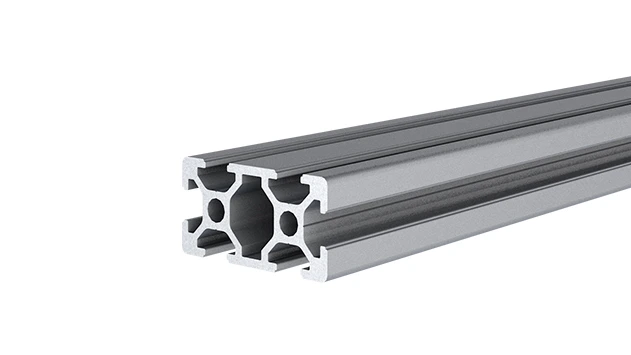
2040 is a 2.00 x 4.00CM fractional 20 series square extrusion T-slot profile with four open T-slots, two side with 2.00cm face, the other side with 4.00cm face. The profile has align-a-grooves to assist in aligning connecting profiles.
The Backbone of Modern Workspaces
Walk into any manufacturing plant, warehouse, or tech startup today, and you'll notice something fundamental shaping the space: the frames, racks, and workbenches that organize tools, materials, and workflows. These aren't just pieces of metal—they're the backbone of productivity. The choice between materials like aluminum and steel here isn't trivial. It affects everything from how easily you can reconfigure a production line to how much your electricity bill spikes from moving heavy equipment. Today, we're diving deep into two heavyweights (pun intended) of industrial framing: the 2040 EU standard aluminum profile and traditional steel framing. We'll break down their weight, cost, and real-world impact to help you decide which one deserves a spot in your workspace.
Why focus on these two? Steel has been the go-to for decades, prized for its raw strength. But aluminum—specifically profiles like the 2040 EU standard—has been quietly revolutionizing industries with its blend of lightness and versatility. If you've ever wondered whether that shiny aluminum workbench is worth the extra upfront cost or if sticking with steel is the safer bet, you're in the right place. Let's start by getting to know each contender.
What is 2040 EU Standard Aluminum Profile?
First things first: let's decode the name. "2040 EU standard aluminum profile" might sound like industry jargon, but it's actually quite straightforward. The numbers "2040" refer to its cross-sectional dimensions: 20 millimeters in width and 40 millimeters in height. The "EU standard" part means it adheres to strict European manufacturing guidelines, ensuring consistency in size, quality, and compatibility across suppliers. This isn't just a random piece of aluminum—it's a precision-engineered building block.
So, how is this profile made? It all starts with aluminum extrusion profile technology. Imagine heating a solid aluminum billet (a cylindrical block of aluminum) until it's malleable, then forcing it through a custom die under high pressure. The die shapes the aluminum into the 20x40mm cross-section, complete with T-shaped slots running along its length. These T-slots are game-changers. They're like built-in tracks that let you slide in nuts, brackets, or accessories without drilling holes or welding. Need to add a shelf? Slide a bracket into the T-slot, tighten a screw, and you're done. It's this flexibility that makes the 2040 profile a favorite in dynamic environments.
But it's not just about convenience. The 2040 EU standard aluminum profile is also designed for strength. While aluminum is lighter than steel, its alloy composition (often including magnesium and silicon) gives it impressive load-bearing capabilities. Think of it as the Goldilocks of materials: not too heavy, not too flimsy, but just right for most industrial and commercial applications.

Steel Framing: The Traditional Contender
Now, let's turn to steel framing—the tried-and-true veteran of industrial construction. When most people think of steel framing, they picture thick, heavy beams or square tubes welded together to form rigid structures. And they're not wrong. Steel has been the backbone of construction for over a century, valued for its unmatched tensile strength and durability.
Steel framing comes in many forms, from mild steel (the most common, used for general structural work) to stainless steel (resistant to corrosion, part of the broader stainless steel pipe series ). For industrial framing, mild steel is often the default. It's strong, cheap, and easy to weld, bend, or cut. But here's the catch: all that strength comes with a price—literally and figuratively. Steel is dense, which means even a small section can weigh a lot. A 1-meter length of 20x40mm steel tube, for example, can weigh three to four times as much as its aluminum counterpart. And while welding makes steel structures incredibly rigid, it also makes them permanent. Want to move a steel workbench six months down the line? You'll likely need to cut it apart and reweld it, or hire a team to muscle it into place.
Steel also has a Achilles' heel: rust. Unless it's coated with paint, galvanized, or made from stainless steel (which is pricier), steel will corrode over time, especially in humid or industrial environments. That means regular maintenance—scraping rust, repainting—to keep it in shape. For some operations, that's a minor inconvenience. For others, it's a recurring cost and hassle.
Weight Comparison: Lightweight vs. Heavy-Duty
Let's get down to brass tacks: weight. This is where the 2040 EU standard aluminum profile and steel framing start to diverge dramatically. To put it simply: aluminum is light, steel is heavy. But just how much of a difference does that make in real life?
Aluminum has a density of about 2.7 grams per cubic centimeter (g/cm³), while steel clocks in at around 7.8 g/cm³. That means, volume for volume, steel is nearly three times denser than aluminum. Let's take a concrete example: a 1-meter length of 2040 EU standard aluminum profile with a wall thickness of 1.5mm weighs roughly 0.8 to 1.0 kilograms. An equivalent steel tube (same dimensions, same wall thickness) would weigh around 3.0 to 3.5 kilograms. That's more than three times the weight for the same size!
Why does this matter? Let's start with installation. Imagine you're setting up a new production line with 20 workstations, each requiring 5 meters of framing. With steel, that's 20 workstations x 5m x 3.5kg/m = 350kg of steel to move, lift, and position. With 2040 aluminum, it's 20 x 5m x 1.0kg/m = 100kg. That's a difference of 250kg—like comparing the weight of a small motorcycle to a large dog. For a team of workers, that means fewer strained backs, less reliance on heavy lifting equipment, and faster setup times. In fact, many aluminum profiles can be installed by a single person with basic tools, whereas steel often requires two or more people and sometimes a forklift or hoist.
Transportation is another factor. Shipping 350kg of steel framing costs significantly more than shipping 100kg of aluminum. Whether you're ordering from a local supplier or importing from abroad, those weight-based shipping fees add up. And if you ever need to relocate your workspace (say, expanding to a new facility), aluminum's lightness makes disassembly and transport a breeze—no need to hire a specialty moving crew.
Then there's ergonomics. In lean manufacturing or assembly lines where workers interact with the framing daily—adjusting shelves, moving workbenches, or reconfiguring flow racks—lighter materials reduce fatigue. A steel shelf that's hard to move might lead to workers avoiding necessary adjustments, stagnating processes. Aluminum shelves, on the other hand, encourage frequent tweaks and improvements, aligning perfectly with lean system principles of continuous optimization.
Cost Analysis: Beyond the Initial Price Tag
"But aluminum is more expensive than steel, right?" It's the first question most people ask, and it's not without merit. At first glance, the per-kilogram cost of aluminum is indeed higher than mild steel. But here's the thing: cost isn't just about the price you pay at the supplier. It's about the total cost of ownership—initial material costs, installation labor, maintenance, and lifespan. Let's break it down.
Initial Material Costs
Yes, aluminum costs more per kilogram. As of 2025, mild steel might run you $1.50–$2.00 per kg, while aluminum alloy (like the kind used in 2040 profiles) is around $3.00–$4.00 per kg. But remember, aluminum is lighter. Let's go back to our 1-meter 2040 profile example: aluminum at $3.50/kg x 1.0kg = $3.50 per meter. Steel at $1.75/kg x 3.5kg = $6.13 per meter. Suddenly, aluminum is cheaper per meter! That's because you're paying for less material overall to get the same structural shape.
Installation Labor Costs
Steel framing often requires welding, which means hiring certified welders at $30–$50 per hour. Even if you use bolt-together steel components, drilling holes (since steel doesn't have T-slots) adds time. A typical steel workstation might take 2–3 hours to assemble. Aluminum, with its T-slots and aluminum profile accessories (like pre-made brackets and hinges), can be assembled in 1–1.5 hours by a non-specialized worker earning $20–$25 per hour. Over 20 workstations, that's a labor savings of $600–$1,400.
Maintenance Costs
Steel's biggest long-term cost is corrosion. Unless it's stainless steel (which costs 2–3x more than mild steel), you'll need to repaint it every 2–3 years to prevent rust. A gallon of industrial paint costs $40–$60, and labor for painting adds up. Aluminum, on the other hand, forms a natural oxide layer that resists corrosion—no painting needed. Over a 10-year lifespan, steel maintenance could cost $200–$500 per workstation, while aluminum costs next to nothing.
Lifespan and Resale Value
Steel can last 30+ years, but only with proper maintenance. Aluminum, too, has a 30+ year lifespan, but without the upkeep. Plus, aluminum is 100% recyclable, and many suppliers will buy back used profiles at a fraction of the original cost. Steel, while recyclable, is often sold as scrap metal for pennies on the dollar.
| Cost Factor | 2040 EU Standard Aluminum Profile | Equivalent Steel Framing |
|---|---|---|
| Material Cost (per meter) | $3.50–$4.50 | $6.00–$7.00 |
| Installation Time (per workstation) | 1–1.5 hours | 2–3 hours |
| Annual Maintenance Cost | $0–$5 | $20–$50 |
| Estimated Lifespan | 30+ years (no maintenance) | 30+ years (with regular maintenance) |
| Resale Value (after 10 years) | 20–30% of original cost | 5–10% of original cost (as scrap) |
When you add it all up, the 2040 EU standard aluminum profile often ends up being cheaper than steel over a 5–10 year period. It's a classic case of "pay a little more upfront, save a lot later."
Aluminum Profile Accessories: The Icing on the Cake
What really makes the 2040 EU standard aluminum profile shine isn't just the profile itself—it's the ecosystem of aluminum profile accessories designed to work with it. Think of the profile as a blank canvas, and the accessories as the paintbrushes and paints that let you create exactly what you need. From brackets to hinges to end caps, these small components turn a simple 20x40mm extrusion into a fully functional workspace.
Let's start with T-slot nuts and bolts—the unsung heroes of aluminum framing. These small, often hexagonal nuts slide into the T-slots of the 2040 profile, allowing you to attach accessories anywhere along the length of the profile. No pre-drilled holes, no measuring—just slide, position, and tighten. It's like having a infinitely adjustable grid for mounting shelves, tools, or monitors.
Then there are the connectors. Need to join two profiles at a 90-degree angle? Use a corner bracket. Want to create a T-junction? A T-connector. There are even swivel joints that let you adjust angles on the fly—perfect for shelving or ergonomic workbenches. Many of these connectors are made from the same aluminum alloy as the profile, ensuring a seamless look and consistent strength.
Don't forget about end caps. The 2040 aluminum profile end cap is a small plastic or aluminum piece that snaps onto the ends of the profile, covering sharp edges and giving a clean, finished look. It's a tiny detail, but it makes a big difference in safety (no more scratched hands!) and aesthetics.
Other accessories include hinges for fold-down tables, casters for mobile workstations, and panel mounts for attaching plywood or acrylic sheets. There's even lighting brackets that let you mount LED strips directly to the profile, illuminating work surfaces without cluttering the area. The beauty of these accessories is that they're all compatible with the EU standard, so you can mix and match from different suppliers without worrying about sizing issues.
Compare this to steel framing, where accessories are often custom-made or require drilling and welding. With steel, adding a shelf might mean measuring, marking, drilling a hole, and bolting on a bracket—if you make a mistake, you're stuck with a useless hole. With aluminum, you can experiment, adjust, and reconfigure without permanent damage. It's this flexibility that makes aluminum profiles so popular in industries where change is constant.
Real-World Applications: Where Each Shines
At this point, you might be wondering: "If aluminum is so great, why would anyone still use steel?" The answer lies in application. While the 2040 EU standard aluminum profile is versatile, there are cases where steel's raw strength is non-negotiable. Let's explore where each material excels.
Aluminum: Ideal for Dynamic, Light-to-Medium Loads
Aluminum profiles thrive in environments where adaptability and weight matter most. Think electronics manufacturing, where production lines change every few months to accommodate new phone models or circuit boards. A lean system here requires workstations that can be reconfigured in a day, not a week. The 2040 profile's light weight and easy assembly make it perfect for this.
Another sweet spot is retail and commercial spaces. Pop-up shops, trade show booths, or office partitions often need to be set up and taken down quickly. Aluminum profiles are lightweight enough to transport in a van and sturdy enough to support shelves, signage, or displays. Even in warehouses, aluminum flow racks (used for picking and packing) benefit from the material's lightness—workers can easily adjust the height of shelves to match the size of boxes.
Ergonomics is another key area. In laboratories or medical facilities, where technicians stand for hours, adjustable workbenches made with 2040 aluminum allow for quick height changes to reduce strain. The same goes for workshops, where tools and equipment need to be within arm's reach—aluminum's flexibility lets you design workstations that fit the worker, not the other way around.
Steel: Best for Heavy-Duty, Static Loads
Steel still reigns supreme in applications requiring maximum strength. For example, in automotive manufacturing, where robot arms weighing hundreds of kilograms need stable mounting, steel frames provide the rigidity and vibration resistance aluminum can't match. Similarly, industrial storage racks that hold pallets of heavy goods (think 1,000+ kg per shelf) rely on steel's ability to bear extreme loads without bending.
Outdoor environments with harsh conditions (like coastal areas with saltwater spray) might also prefer stainless steel (from the stainless steel pipe series ) for its corrosion resistance, though aluminum can hold its own here too with proper alloying. And in construction, where buildings need to withstand earthquakes or high winds, steel's structural integrity is unmatched.
The takeaway? It's not about aluminum vs. steel—it's about choosing the right material for the job. For most light-to-medium duty, dynamic applications, the 2040 EU standard aluminum profile is the clear winner. For heavy, static loads or extreme conditions, steel still has its place.
Case Study: A Small Electronics Manufacturer's Switch to Aluminum
To put this all in perspective, let's look at a real-world example. XYZ Electronics, a small manufacturer of smartphone chargers, was struggling with their production setup. They had been using steel workbenches and flow racks for years, but as they expanded their product line, they faced two major issues: reconfiguring the line took too long, and workers were complaining about back pain from moving heavy steel components.
In 2023, they decided to test the 2040 EU standard aluminum profile. They replaced four steel workstations with aluminum ones, complete with adjustable shelves, LED lighting, and tool holders. The results were striking:
- Installation time: The four aluminum workstations took 6 hours to assemble (1.5 hours each), compared to 16 hours for the steel ones (4 hours each). That's a 62.5% reduction in labor.
- Worker feedback: Within a month, reports of back pain dropped by 75%. Workers noted that adjusting shelves or moving the workstations (on aluminum casters) was "effortless" compared to steel.
- Reconfiguration speed: When XYZ launched a new charger model in 2024, they reconfigured the four workstations in 2 hours, down from 8 hours with steel. This let them start production a full day earlier than planned.
- Cost savings: While the initial material cost for aluminum was $1,200 (vs. $800 for steel), the labor savings from faster installation and reconfiguration offset the difference within 6 months. Over two years, they estimate saving $5,000 in labor and $1,200 in maintenance (no repainting needed).
Today, XYZ has replaced all 12 of their steel workstations with 2040 aluminum profiles. "It's not just about the money," says their operations manager. "It's about giving our team the tools to adapt quickly. In this industry, if you can't change fast, you get left behind."
Making the Choice: Which is Right for You?
So, how do you decide between the 2040 EU standard aluminum profile and steel framing for your own workspace? Here's a simple checklist to guide you:
Choose Aluminum If:
- You need to reconfigure your setup regularly (e.g., lean system environments, product launches).
- Weight matters (e.g., mobile workstations, shipping costs, ergonomics).
- You want to reduce installation time and labor costs.
- Your application involves light-to-medium loads (up to 100kg per linear meter).
- Corrosion resistance is important (e.g., humid environments, food processing).
Choose Steel If:
- You need to support heavy loads (over 200kg per linear meter).
- The structure will be permanent (no need for reconfiguration).
- You're working in extreme conditions (e.g., high heat, heavy vibration).
- Initial cost is the only consideration (and you don't mind long-term maintenance).
Remember, there's no one-size-fits-all answer. Some facilities even use a hybrid approach: aluminum for workstations and flow racks, steel for heavy-duty storage. The key is to assess your specific needs—load, environment, adaptability, and budget—and choose accordingly.
Conclusion: Building for the Future
The 2040 EU standard aluminum profile and steel framing are both excellent materials, but they serve different purposes. Steel is the strong, silent type—reliable for heavy, permanent structures but weighed down by its density and lack of flexibility. The 2040 aluminum profile, on the other hand, is the agile innovator—lightweight, adaptable, and cost-effective over the long haul.
As industries shift toward lean system principles, sustainability, and worker safety, the demand for flexible, lightweight materials is growing. The 2040 EU standard aluminum profile isn't just a trend—it's a reflection of how workspaces are evolving. It's about building environments that can keep up with change, reduce waste, and prioritize the people who use them.
So, whether you're setting up a new production line, revamping a warehouse, or building a home workshop, consider the 2040 EU standard aluminum profile. It might just be the backbone your workspace needs—strong enough to support your goals, flexible enough to grow with you, and light enough to keep things moving forward.