- Company Articles
- Industry articles
- Industry standards
- 2040 National Standard Profile Cutting Techniques: Precision & Efficiency

2040 National Standard Profile Cutting Techniques: Precision & Efficiency
Related Product
2040 National Standard Profile
45° external bending joint, used for 45° external connection of two aluminum pipes.
Introduction: The Backbone of Modern Manufacturing
In the fast-paced world of manufacturing, where every millimeter counts and efficiency can make or break a production line, the role of high-quality materials and precise fabrication cannot be overstated. Among the unsung heroes of this industry is the aluminum extrusion profile —a versatile, lightweight, and durable material that forms the skeleton of everything from factory workbenches and conveyor systems to electronic enclosures and automotive components. Within this category, the 2040 national standard profile stands out as a workhorse, prized for its balanced dimensions, structural integrity, and compatibility with a wide range of aluminum profile accessories . But even the best materials fall short without the right cutting techniques. Precision cutting isn't just about making straight lines; it's about ensuring that each piece fits seamlessly with connectors, brackets, and other components, reducing assembly time, minimizing waste, and guaranteeing the final product's reliability. In this article, we'll dive deep into the art and science of cutting 2040 national standard profiles, exploring techniques that marry precision with efficiency, and how the right tools and accessories—from clamps to calibration—can elevate your fabrication process.
Understanding the 2040 National Standard Profile
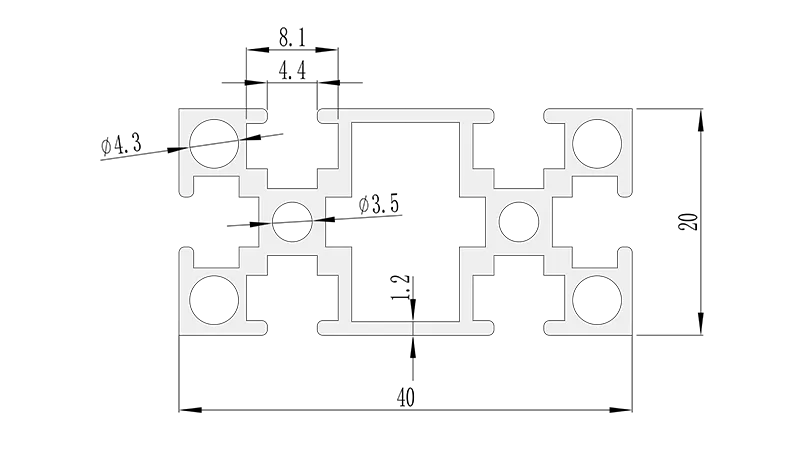
Before we explore cutting techniques, let's first get to know the star of the show: the 2040 national standard profile. As the name suggests, this profile adheres to strict national manufacturing standards, ensuring consistency in dimensions, material quality, and performance across suppliers. Its defining feature is its cross-section: 20 millimeters in width and 40 millimeters in height, with a T-slot design that runs along its length. This T-slot is more than just a design quirk; it's what makes the profile so adaptable. It allows for easy integration with aluminum profile accessories like sliding nuts, bolts, and brackets, enabling quick assembly and reconfiguration without welding or drilling—perfect for lean manufacturing environments where flexibility is key.
Material Composition and Properties
Most 2040 profiles are made from 6063 aluminum alloy, a heat-treatable material known for its excellent extrudability, corrosion resistance, and moderate strength. This alloy strikes a balance between malleability (making it easy to extrude into complex shapes) and durability (ensuring it can support heavy loads in applications like workbenches or conveyor frames). The surface is often anodized, providing a smooth, scratch-resistant finish that also enhances corrosion resistance—ideal for use in factories, labs, or outdoor settings.
Common Applications
The 2040 profile's dimensions make it a jack-of-all-trades. Its narrow width (20mm) allows for compact designs, while its height (40mm) provides vertical strength, making it suitable for both horizontal and vertical framing. You'll find it in:
- Workbenches and Assembly Stations: Used as the frame for sturdy, customizable work surfaces, often paired with aluminum profile rubber strip to dampen vibrations and protect delicate components.
- Conveyor Systems: Forms the rails and supports for roller tracks, where precision cuts ensure smooth material flow.
- Machine Guards and Enclosures: Creates lightweight yet robust barriers around equipment, with T-slots allowing for easy attachment of panels or doors.
- Storage Racks and Trolleys: Builds modular shelving and carts that can be adjusted to fit changing storage needs.
Why does this matter for cutting? Because each application demands different tolerances. A workbench frame might tolerate a 0.5mm error, but a conveyor rail that guides delicate electronics could require precision down to 0.1mm. Understanding the end use is the first step in choosing the right cutting technique.
Key Cutting Techniques for 2040 Profiles
Cutting 2040 aluminum profiles isn't a one-size-fits-all process. The technique you choose depends on factors like production volume, required precision, material thickness (yes, even within 2040 profiles, wall thickness can vary), and budget. Let's break down the most common methods, their pros and cons, and when to use each.
1. Circular Saw Cutting: The Workhorse of High Volume
Circular saws are the backbone of many fabrication shops, and for good reason. They're fast, affordable, and versatile, making them ideal for high-volume production of 2040 profiles. Most shops use a mitre saw or a dedicated aluminum cutting saw with a carbide-tipped blade designed for non-ferrous metals. The blade's teeth are spaced to minimize clogging (aluminum chips can stick to blades, causing rough cuts), and the saw is often equipped with a coolant system to reduce heat buildup—critical, as excessive heat can warp the profile or discolor the anodized finish.
Pros: High speed (cuts per minute), low cost per cut, suitable for straight cuts and simple angles (up to 45 degrees). Cons: Precision is limited to around ±0.2mm (unless using a high-end saw with digital readouts), and burrs are common, requiring post-cut deburring. Best for: Mass production of standard-length profiles, like those used in shelving or basic frames.
2. Laser Cutting: Precision Personified
For applications where precision is non-negotiable—think aerospace components or medical device frames—laser cutting is king. A focused laser beam melts, burns, or vaporizes the aluminum, leaving a clean, burr-free edge with tolerances as tight as ±0.05mm. Modern fiber laser cutters can handle 2040 profiles with ease, even cutting complex shapes or notches directly into the T-slot (though this requires careful programming to avoid damaging the slot's integrity).
Pros: Exceptional precision, minimal burrs, no contact (reducing material distortion), and the ability to cut intricate designs. Cons: High upfront cost (laser cutters are expensive), slower than sawing for simple straight cuts, and the heat-affected zone (HAZ) near the cut can discolor anodized surfaces if not controlled. Best for: Low-volume, high-precision parts, or profiles requiring custom notches, holes, or angles.
3. Band Saw Cutting: Versatility for Thick or Irregular Shapes
Band saws use a continuous loop of toothed blade to cut through material, making them a good choice for thicker-walled 2040 profiles or for cutting at non-standard angles (e.g., 60 degrees). They're slower than circular saws but offer better control, especially when cutting large batches of the same length. Vertical band saws are common for manual cutting, while horizontal band saws are better for automated, high-volume operations. Like circular saws, band saws benefit from coolant to reduce friction and blade wear.
Pros: Versatile (handles thick materials and odd angles), lower cost than laser cutting, and produces less waste than some methods. Cons: Slower than circular saws, requires skilled operators for precision, and may leave more burrs than laser cutting. Best for: Medium-volume production, thick-walled profiles, or custom angle cuts.
4. Waterjet Cutting: Cold Precision for Sensitive Materials
Waterjet cutting is the gentle giant of cutting techniques. It uses a high-pressure stream of water mixed with abrasive particles (like garnet) to erode the aluminum, leaving a smooth, burr-free edge without heat. This "cold cutting" method is ideal for profiles with sensitive finishes (like anodized or painted surfaces) or for materials that warp easily under heat. Waterjets can cut any shape—from straight lines to complex curves—with precision comparable to laser cutting (±0.1mm).
Pros: No HAZ, preserves material finish, cuts thick or layered materials, and handles complex shapes. Cons: Very slow (not ideal for high volume), messy (requires water and abrasive disposal), and expensive to operate. Best for: Sensitive finishes, thick profiles, or one-off custom parts where heat damage is a concern.
Precision in Cutting: The Difference Between "Good" and "Great"
Precision isn't just a buzzword in profile cutting—it's the foundation of reliable assembly. A profile cut even 0.5mm too short can throw off an entire frame, leading to gaps, misaligned T-slots, or loose connections. Over time, these small errors compound, reducing structural integrity and increasing maintenance costs. So, what factors influence precision, and how can you ensure your cuts are consistently accurate?
Key Factors Affecting Precision
- Tool Calibration: Even the best saw or laser cutter will produce inaccurate cuts if it's not calibrated. Regularly check and adjust blade alignment, laser focus, and cutting speed to ensure they match the profile's thickness and material.
- Material Clamping: Aluminum is soft, and if it shifts during cutting, the result is a crooked cut. Using aluminum pipe clamps or vice jaws lined with rubber (to prevent marring) ensures the profile stays rigid. For long profiles, use multiple clamps along the length to prevent flexing.
- Blade/Nozzle Condition: Dull saw blades or worn laser nozzles produce rough, imprecise cuts. replace blades when they start leaving burrs or burning the material, and clean laser nozzles to avoid clogging (which can cause uneven beam focus).
- Cooling and Lubrication: Heat buildup during cutting can cause the material to expand, leading to warping or inaccurate measurements. Coolant systems (for saws) or compressed air (for lasers) help dissipate heat, keeping the material stable.
- Operator Skill: Even automated machines require skilled operators to program cutting paths, adjust settings, and inspect finished parts. Training is key—invest in teaching your team how to read blueprints, use measuring tools (like calipers or micrometers), and troubleshoot common issues.
Comparing Techniques: Precision, Speed, and Cost
To help you choose the right technique for your needs, let's compare the four main methods across key metrics:
| Cutting Technique | Precision (Tolerance) | Speed (Meters per Minute) | Cost (Per Meter Cut) | Material Waste | Best For |
|---|---|---|---|---|---|
| Circular Saw | ±0.2mm – ±0.5mm | 5 – 15 | Low ($0.50 – $2) | Medium (burrs, sawdust) | High-volume, straight cuts |
| Laser Cutting | ±0.05mm – ±0.1mm | 1 – 5 | High ($5 – $15) | Low (narrow kerf) | Precision parts, complex shapes |
| Band Saw | ±0.3mm – ±0.8mm | 2 – 8 | Medium ($1 – $5) | Medium (burrs, blade width) | Thick profiles, custom angles |
| Waterjet Cutting | ±0.1mm – ±0.3mm | 0.5 – 3 | Very High ($10 – $30) | Low (abrasive waste) | Sensitive finishes, thick materials |
As the table shows, there's no "perfect" technique—each trade off precision for speed or cost. For most 2040 profile applications (like workbenches or conveyor frames), circular saws or band saws offer enough precision at a reasonable cost. But for medical or aerospace components, laser or waterjet cutting may be worth the investment.
Efficiency: Cutting More, Wasting Less
Precision is critical, but in manufacturing, time is money. Even the most precise cuts won't help if your process is slow or wasteful. Efficiency in cutting 2040 profiles means maximizing output while minimizing material waste, labor costs, and downtime. Here are actionable strategies to boost efficiency in your shop:
Optimize Cutting Parameters
Every cutting technique has sweet spots for speed, feed rate, and power. For example, circular saws cut best at a specific RPM—too fast, and the blade overheats; too slow, and it tears the aluminum, leaving burrs. Experiment with parameters (or consult the tool manufacturer's guidelines) to find the balance between speed and quality. For batch cutting, pre-program these settings into your equipment to avoid manual adjustments between runs.
Batch Processing and Nesting
Instead of cutting one profile at a time, group similar lengths together. Most cutting software (for laser, waterjet, or CNC saws) allows for "nesting"—arranging multiple cut parts on a single length of profile to minimize waste. For example, if you need 10 pieces of 300mm and 5 pieces of 400mm, nest them on a 3-meter profile to avoid leftover scraps. Even small scraps can add up; over a year, a shop cutting 100 profiles daily could save hundreds of meters of material with smart nesting.
Invest in Tool Maintenance
A dull blade or misaligned laser isn't just inaccurate—it's slow. Dull blades require more force to cut, increasing cycle time and straining the machine. Set up a regular maintenance schedule: sharpen saw blades every 500 cuts, clean laser lenses daily, and replace worn parts (like coolant filters or band saw guides) before they fail. The upfront time and cost of maintenance pale in comparison to the downtime caused by a broken tool.
Automate Where Possible
For high-volume shops, automated cutting systems are game-changers. CNC circular saws can load, cut, and unload profiles with minimal operator input, running 24/7 if needed. Even semi-automated tools—like saws with programmable length stops—reduce human error and speed up batch processing. Pair these with barcode scanners or digital work orders to ensure the right parts are cut at the right time, eliminating mix-ups.
Use the Right Accessories
Efficiency starts before the cut even begins. Using aluminum pipe clamps with quick-release mechanisms speeds up material loading, while in-feed/out-feed tables support long profiles, preventing bending and reducing operator strain. For laser or waterjet cutting, vacuum chucks hold profiles securely without clamping, allowing for faster setup and more flexible nesting. Don't overlook small accessories—they add up to big time savings.
Common Challenges and Solutions
Even with the best techniques and tools, cutting 2040 profiles comes with challenges. Let's address the most common issues and how to solve them:
Burrs: The Unwelcome Aftermath
Burrs—those rough, jagged edges left after cutting—are more than just unsightly. They can scratch operators, damage aluminum profile accessories (like rubber strips or gaskets), and interfere with assembly. Solution: Use sharp blades with the correct tooth count (for saws, 60-80 teeth per inch works well for aluminum), apply coolant to reduce friction, and deburr immediately after cutting with a deburring tool or sandpaper. For high volume, invest in a dedicated deburring machine to automate the process.
Material Warping
Aluminum expands when heated, and uneven cooling during cutting can cause profiles to warp—especially in thick-walled or long pieces. Solution: Use a coolant system to keep the material temperature stable, clamp the profile firmly along its entire length (not just at the ends), and allow cut pieces to cool on a flat surface before handling. For laser cutting, reduce the laser power or increase cutting speed to minimize the HAZ.
Inconsistent Lengths
Even with automated tools, lengths can vary if the material slips during cutting or the stop gauge is misaligned. Solution: Calibrate stop gauges daily using a precision ruler, use non-slip clamps or rubber jaw liners to prevent shifting, and inspect the first few cuts of each batch to catch errors early. For CNC machines, run a test cut with a scrap profile before starting production.
T-Slot Damage
The T-slot is critical for assembly, but cutting can sometimes deform or clog it with chips. Solution: When cutting, position the profile so the T-slot faces up or away from the blade/laser to avoid direct impact. Use compressed air to blow out chips immediately after cutting, and avoid clamping directly on the T-slot (use the profile's flat edges instead).
Conclusion: Precision and Efficiency—A Winning Combination
Cutting 2040 national standard profiles is more than a manufacturing step; it's a bridge between raw material and finished product. The techniques we've explored—from the speed of circular saws to the precision of lasers—each have their place, but the best results come from matching the technique to the application, prioritizing both accuracy and efficiency. Remember, precision isn't just about measurements; it's about ensuring every cut piece works seamlessly with aluminum profile accessories , reducing assembly headaches and boosting product reliability. Efficiency, meanwhile, is about respecting both time and material—minimizing waste, optimizing workflows, and investing in tools and maintenance that pay off in the long run.
Whether you're cutting a handful of profiles for a custom workbench or thousands for a production line, the principles remain the same: know your material, choose the right technique, calibrate your tools, and never overlook the small details—like a sharp blade or a well-placed clamp. By mastering these skills, you'll not only produce better parts but also build a fabrication process that's resilient, adaptable, and ready to meet the demands of modern manufacturing. After all, in a world where every millimeter and minute counts, precision and efficiency aren't just goals—they're the keys to success.