- Company Articles
- Industry articles
- Industry standards
- 2040 National Standard Profile Dimensions: A Complete Guide for Manufacturers

2040 National Standard Profile Dimensions: A Complete Guide for Manufacturers
Related Product
2040 National Standard Profile
45° external bending joint, used for 45° external connection of two aluminum pipes.
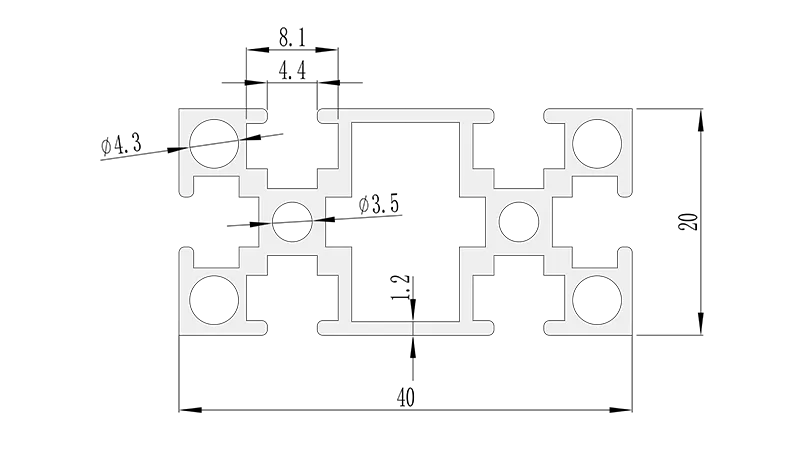
If you've ever stepped into a bustling manufacturing facility, you've likely seen the backbone of efficient production: sturdy, modular frames holding up workbenches, organizing tools, or guiding materials along assembly lines. More often than not, those frames are built with aluminum extrusion profiles—and among the most versatile of these is the 2040 national standard profile . For manufacturers, choosing the right profile dimensions isn't just about checking boxes on a spec sheet; it's about building systems that adapt to your workflow, stand the test of time, and keep your team productive. In this guide, we'll break down everything you need to know about 2040 national standard profile dimensions, from critical measurements to real-world applications, and why this profile has become a go-to for lean system setups and beyond.
What Is the 2040 National Standard Profile?
Before diving into dimensions, let's clarify what makes the 2040 profile unique. As part of the aluminum extrusion profile family, it's named for its approximate width and height: 20mm (width) by 40mm (height). But "national standard" is key here—it means the profile adheres to strict size, material, and tolerance guidelines set by industry regulations, ensuring consistency across suppliers and compatibility with aluminum profile accessories . This standardization is a game-changer for manufacturers: whether you're building a single workbench or an entire production line, you can trust that components from different batches or suppliers will fit together seamlessly.
Aluminum is the material of choice for these profiles, and for good reason. It's lightweight yet surprisingly strong, resistant to corrosion (thanks to its natural oxide layer), and easy to machine or modify. Unlike steel, it doesn't require heavy tools for cutting or assembly, making it ideal for quick reconfigurations—essential in dynamic manufacturing environments where production needs can shift overnight.
Critical Dimensions of the 2040 National Standard Profile
For manufacturers, precision matters. A profile that's even 1mm off in width can throw off an entire assembly, leading to wobbly workbenches or misaligned conveyor tracks. Below is a detailed breakdown of the 2040 national standard profile's key dimensions, along with why each matters for your setup:
| Dimension | Specification | Why It Matters |
|---|---|---|
| Width (W) | 20mm ± 0.2mm | Determines compatibility with accessories like brackets and end caps; ensures profiles fit into tight spaces in workbenches or racks. |
| Height (H) | 40mm ± 0.2mm | Affects load-bearing capacity; taller profiles like 2040 offer more stability than narrower ones (e.g., 2020) for heavier workbenches or material racks. |
| Wall Thickness (T) | 1.2mm–2.0mm (varies by grade) | Thicker walls increase strength for heavy-duty applications (e.g., holding metal parts), while thinner walls save weight for lightweight setups. |
| Slot Width (S) | 6mm ± 0.1mm | Fits standard T-slot nuts and bolts, the primary method for attaching accessories like shelves or side guards. |
| Slot Depth (D) | 8mm–10mm | Ensures enough thread engagement for secure connections; deeper slots accommodate longer bolts for thicker accessories. |
| Length Tolerance | ± 0.5mm per meter | Critical for aligning multiple profiles in long structures, like conveyor tracks or assembly line workstations. |
*Note: Tolerances may vary slightly by manufacturer, but national standards ensure they stay within acceptable ranges for interoperability.
Why These Dimensions Work for Manufacturers
At first glance, these numbers might seem like just technical details, but they directly impact how well the 2040 profile serves your production needs. Let's break down the real-world benefits:
1. Versatility for Diverse Applications
The 20x40mm size strikes a perfect balance between compactness and strength. It's narrow enough to fit into tight workspaces (like a small electronics assembly area) but tall enough to support heavy loads—up to 150kg per linear meter with a 2.0mm wall thickness. This makes it ideal for everything from lightweight workbench tops to sturdy material racks (think: holding boxes of components or finished products). Unlike bulkier profiles (e.g., 4080), it doesn't waste valuable floor space, which is a win for manufacturers operating in crowded facilities.
2. Seamless Compatibility with Accessories
Remember those aluminum profile accessories ? The 2040's standardized slot width (6mm) and dimensions mean you can mix and match components from different suppliers without guesswork. Need to add a shelf to your workbench? Grab a 2040-compatible bracket. Want to cap the ends to prevent snags? Slide on a 2040 end cap. This modularity cuts down on lead times—no waiting for custom parts—and lets you iterate quickly. For example, if your production line needs a new tool holder, you can assemble one in hours using off-the-shelf 2040 profiles and connectors, not days or weeks.
3. Cost-Effective for Lean Systems
Lean manufacturing (a key focus for many facilities) is all about eliminating waste—time, space, and resources. The 2040 profile aligns perfectly with this ethos. Its lightweight aluminum construction reduces shipping and handling costs. Its modular design means you can reconfigure systems instead of replacing them entirely when needs change (e.g., repurposing a workbench into a material cart by adding casters). And because it's mass-produced to national standards, it's more affordable than custom-machined alternatives. Over time, these savings add up, making 2040 profiles a cornerstone of cost-efficient lean system setups.
Real-World Applications: How Manufacturers Use 2040 Profiles
To truly understand the value of 2040 national standard profiles, let's look at how they're applied on the factory floor. These examples highlight their adaptability and why they're a favorite among production managers:
1. Custom Workbenches for Assembly Lines
A typical electronics manufacturing plant might use 2040 profiles to build workbenches tailored to specific tasks. For instance, a soldering workstation needs a heat-resistant top, tool hooks, and a small parts bin. Using 2040 profiles as the frame, workers can attach a fire-retardant panel (via T-slot bolts), mount hooks for soldering irons, and add a shelf for bins—all without welding or complex tools. If the assembly process changes, the workbench can be disassembled and reconfigured in hours, not days. Compare that to a fixed wooden workbench, which would need to be replaced entirely.
2. Material Racks for Just-in-Time (JIT) Inventory
JIT manufacturing relies on having materials exactly when they're needed, which means storage racks must be organized and accessible. 2040 profiles shine here: they're used to build multi-tiered racks where each shelf is adjustable. For example, a material rack B (3 row and 3 floor) (a common setup) can be constructed using 2040 vertical posts and horizontal beams, with shelves height-adjustable via T-slot connectors. If a new component is taller than expected, simply loosen the bolts, move the shelf up, and retighten—no cutting or drilling required. This flexibility ensures inventory is always within reach, reducing downtime.
3. Lean System Workstations for Production Flow
Lean systems aim to streamline workflow, and 2040 profiles are the backbone of this. Imagine a production assemble line where each station is connected by a flow rack (for materials) and a conveyor (for moving products). The flow rack's frame is built with 2040 profiles, with roller tracks (another accessory) attached via brackets to let materials glide smoothly to the next station. The conveyor's side rails? Also 2040 profiles, ensuring alignment and stability. Because all components use the same profile, the entire system feels cohesive and easy to maintain—if a roller track gets damaged, it's simple to swap out the affected section without disrupting the whole line.
Choosing the Right Aluminum Profile Accessories
A profile is only as good as the accessories that bring it to life. For 2040 national standard profiles, the right accessories turn a simple extrusion into a fully functional system. Here are the must-haves for most manufacturing setups:
- Connectors: These join profiles at angles (90°, 45°, 135°) or in straight lines. Look for internal or external connectors—internal ones sit flush for a clean look, while external ones offer extra strength for heavy loads.
- End Caps: Plastic or aluminum caps that cover the ends of profiles, preventing dust buildup and protecting workers from sharp edges. 2040-specific end caps (like 2040 aluminum profile end cap ) ensure a snug fit.
- Brackets and Supports: Used to attach shelves, panels, or other components. L-shaped brackets are great for right angles, while center support brackets add stability to long spans (e.g., a workbench top).
- Rubber Strips and Seal Covers: T-slot rubber seal cover fits into the profile's slots to keep out debris and reduce noise when sliding accessories. Rubber strips on workbench edges protect products from scratches.
- Casters: For mobile setups like trolleys or portable workbenches. Choose casters with brakes for stability when in use, and ensure they're compatible with 2040's frame (most suppliers offer caster mounting plates that attach via T-slots).
Pro tip: Buy accessories from the same supplier as your profiles when possible. While national standards ensure compatibility, some suppliers tweak accessory designs slightly for better fit with their profiles—this can save time during assembly.
Tips for Working with 2040 National Standard Profiles
Even if you're new to aluminum extrusion profiles, working with 2040 is straightforward. Here are some tips to ensure your project goes smoothly:
1. Measure Twice, Cut Once
Aluminum is easy to cut with a miter saw or hacksaw, but precise measurements are key. Use a tape measure and square to mark cuts, and double-check lengths before cutting—especially for long sections like conveyor rails. Most suppliers also offer custom cutting services, which can save time and reduce waste if you need exact lengths.
2. Invest in Quality Tools
You don't need a fully equipped machine shop, but a few tools will make assembly easier: a hex key set (for T-slot bolts), a rubber mallet (to tap connectors into place without damaging profiles), and a level (to ensure workbenches or racks are straight). A deburring tool is also handy to smooth cut edges, preventing snags and injury.
3. Test Loads Before Full Deployment
Even with strong profiles, it's wise to test load capacity before relying on a structure for production. For example, if you're building a workbench to hold 50kg of equipment, gradually add weight (starting with 25kg, then 40kg, then 50kg) and check for bending or instability. This catches issues early—like using a thin-wall profile for a heavy load—before they cause downtime.
Finding a Reliable 2040 Profile Supplier
With so many suppliers offering aluminum extrusion profiles, how do you choose one that meets national standards and supports your manufacturing goals? Here's what to look for:
- Certifications: Ensure the supplier's profiles meet national standards (look for certifications like ISO 9001 or local quality marks). This guarantees consistency in dimensions and material quality.
- Range of Accessories: A good supplier stocks not just profiles but all the aluminum profile accessories you need—connectors, end caps, brackets, etc. This saves you from ordering from multiple vendors.
- Technical Support: Even experienced manufacturers run into questions. Choose a supplier with a knowledgeable team that can help with design advice, load capacity calculations, or troubleshooting assembly issues.
- Lead Times: In manufacturing, delays cost money. Ask about production and shipping times, especially for custom-cut profiles or large orders. Reliable suppliers will provide clear timelines and stick to them.
Final Thoughts: Why 2040 National Standard Profiles Are a Manufacturer's Best Friend
At the end of the day, manufacturing is about efficiency, adaptability, and reliability—and the 2040 national standard profile delivers on all three. Its precise dimensions ensure compatibility, its aluminum construction offers strength without weight, and its modular design lets you build, modify, and repurpose systems as your needs evolve. Whether you're setting up a small workshop or scaling a large production line, 2040 profiles (paired with the right aluminum profile accessories ) provide the foundation for a lean, productive workspace.
So, the next time you walk through your facility and spot a wobbly workbench or a disorganized material rack, consider this: with 2040 national standard profiles, you could transform that chaos into a streamlined, adaptable system—one that grows with your business and keeps your team focused on what they do best: making great products.