- Company Articles
- Industry articles
- Industry standards
- 2040 National Standard Profile for Lean Kanban Systems: Implementation Guide

2040 National Standard Profile for Lean Kanban Systems: Implementation Guide
Related Product
2040 National Standard Profile
45° external bending joint, used for 45° external connection of two aluminum pipes.
Picture this: A mid-sized electronics plant where workers spend 15 minutes each hour searching for tools, assembly lines stall because materials aren't delivered on time, and reconfiguring workstations for a new product takes a full day. Sound familiar? For many manufacturing teams, inefficiency isn't just a hassle—it's a silent profit killer. The good news? There's a solution that doesn't involve overhauls or massive budgets. Enter the 2040 National Standard Aluminum Profile: a versatile, durable building block that's transforming how lean systems operate, one workstation and flow rack at a time.
In this guide, we'll walk through why the 2040 profile has become a go-to for lean managers, how to integrate it into your Kanban system with workbenches and roller tracks, and real-world results you can expect. Whether you're struggling with bottlenecks in production or simply want to future-proof your workflow, this is your playbook for turning chaos into clarity.
Why Lean Systems Struggle (And How the 2040 Profile Fixes It)
Lean manufacturing is all about eliminating waste—time, movement, inventory, you name it. But even the best Kanban boards and 5S protocols fall flat if the physical infrastructure holding everything together is rigid or flimsy. Traditional steel workbenches, for example, are heavy and hard to modify. Generic plastic flow racks crack under weight. And when your tools, parts, and assemblies can't move smoothly, neither can your team.
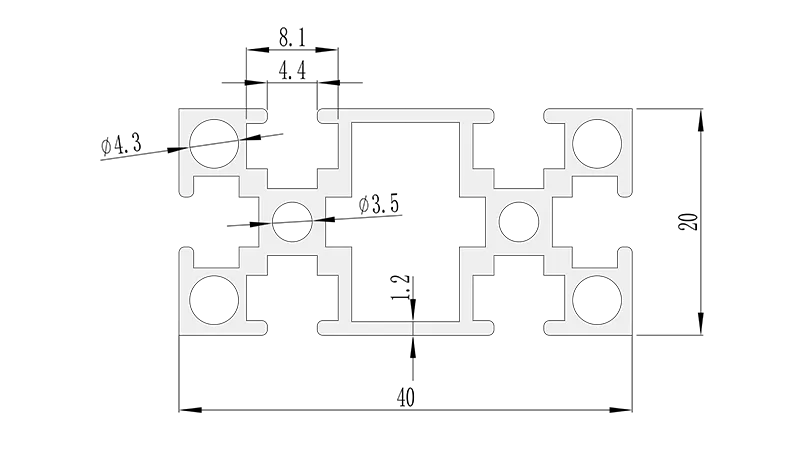
That's where the 2040 National Standard Aluminum Profile shines. At 20mm by 40mm, it's the Goldilocks of profiles—not too bulky to limit flexibility, not too narrow to skimp on strength. Its T-slot design lets you attach accessories (think shelves, hooks, roller tracks) in seconds, without welding or drilling. And because it's aluminum, it's lightweight enough to reconfigure by hand but tough enough to handle daily wear in high-traffic areas like assembly lines or warehouses.
Let's break down the key pain points it solves:
- Wasted Time on Reconfiguration: Old workstations take hours to adjust. With 2040's modular joints and t-slot accessories, you can add a shelf or relocate a roller track in 10 minutes flat.
- Material Flow Bottlenecks: When parts get stuck on clunky racks, production stalls. The 2040 profile pairs seamlessly with roller tracks, letting materials glide from storage to assembly without manual lifting.
- High Replacement Costs: Cheap plastic racks crack; steel rusts. Aluminum resists corrosion, and the 2040's standardized design means you only replace damaged parts, not entire systems.
Understanding the 2040 National Standard Aluminum Profile
Before diving into implementation, let's get up close with what makes the 2040 profile special. Unlike custom-made or non-standard materials, this profile follows national manufacturing guidelines, ensuring consistency across suppliers and compatibility with a wide range of aluminum profile accessories. Here's what you need to know:
Core Features
- Dimensions: 20mm (width) x 40mm (height) cross-section, with wall thicknesses ranging from 1.2mm to 2.0mm (we recommend 1.5mm for most workbench and flow rack applications—it balances weight and durability).
- Material: 6063-T5 aluminum alloy, known for its strength, weldability, and resistance to corrosion. Perfect for both indoor workshops and semi-outdoor storage areas.
- T-Slot Design: Parallel slots along the length of the profile accept bolts, nuts, and brackets, making it easy to attach everything from tool holders to roller track placon mounts. No more hunting for the right size drill bit!
- Weight Capacity: A single 2-meter length of 1.5mm 2040 profile can support up to 80kg when properly mounted—enough for most hand tools, small assemblies, or bins of components.
To put this in perspective, let's compare the 2040 with two common alternatives: the smaller 2020 profile (20x20mm) and the larger 4040 profile (40x40mm). The table below shows why the 2040 hits the sweet spot for lean systems:
| Profile Type | Dimensions (WxH) | Typical Load Capacity (Per 2m Length) | Best For | Downside for Lean Kanban |
|---|---|---|---|---|
| 2020 | 20x20mm | 40-50kg | Light-duty shelving, small tool holders | Too narrow for flow racks or workbench surfaces; limits accessory options. |
| 2040 | 20x40mm | 70-90kg | Workbenches, flow racks, roller tracks, mobile trolleys | None—balances strength, weight, and flexibility for most lean needs. |
| 4040 | 40x40mm | 150-200kg | Heavy machinery bases, large storage racks | Overkill for most Kanban systems; adds unnecessary weight and cost. |
Building Your Lean System: 2040 Profile in Action
Now that you know why the 2040 profile works, let's get practical. The best lean systems are built from the ground up, starting with the tools your team interacts with daily. Here's how to integrate 2040 into three critical areas: workbenches, flow racks with roller tracks, and material delivery trolleys.
1. Workbenches: The Heart of Your Assembly Line
A workbench isn't just a table—it's where your team spends 80% of their day. A poorly designed one leads to strained backs, lost tools, and slow cycle times. With the 2040 profile, you can build a workstation that adapts to your process, not the other way around.
Step 1: Start with the frame. Use 2040 profiles for the legs and tabletop supports. For a standard 120cm x 60cm workbench, you'll need four 80cm legs (adjustable with aluminum foot bases for uneven floors) and four 120cm crossbars. Connect them with 90° aluminum pipe joints—no tools required beyond a hex key.
Step 2: Add the work surface. Top the frame with a 15mm aluminum honeycomb panel (lightweight but rigid) or a plywood sheet covered in ESD matting if you're working with electronics. Attach it using t-slot bolts that slide into the 2040's grooves—no drilling into the panel itself.
Step 3: Customize for your team. This is where the 2040's magic happens. Add a tool rail along the back with hooks for screwdrivers and pliers. Mount a small shelf above for instruction manuals. Even attach a roller track along one side to feed parts directly into the assembly area. When a new product comes in, just slide off the old accessories and pop on new ones—no more waiting for maintenance to build a "temporary" bench.
Case in point: A automotive parts manufacturer in Guangzhou recently swapped their fixed steel workbenches for 2040-based setups. Their team now reconfigures for new part types in 30 minutes instead of 8 hours, and tool retrieval time dropped by 70%. "It's like giving each operator a personalized workspace," their production manager noted. "Morale even went up—people feel heard when their tools are right where they need them."
2. Flow Racks with Roller Tracks: Keeping Materials Moving
Kanban lives and dies by "pull"—materials should arrive just as they're needed, no sooner, no later. But if your flow rack is a jumble of bins that stick or tip, your pull system breaks down. The 2040 profile, paired with roller tracks, solves this by creating gravity-fed lanes that deliver parts smoothly to the line.
Designing your flow rack: Start with a 2040 frame (4 legs, 2 side rails, 3-4 crossbars for stability). Tilt the side rails at a 5° angle using adjustable feet so gravity does the work. Then, mount roller tracks along the length of the crossbars. For small parts like screws or washers, use 0.5-inch swivel roller balls (they let bins glide even with light loads). For heavier items like circuit boards, go with 1-inch steel roller tracks—they handle up to 15kg per linear meter without sagging.
Pro tip: Color-code your roller tracks (yellow for "urgent" parts, grey for "routine") using plastic guide rails. It sounds simple, but a electronics plant in Suzhou reported a 22% drop in picking errors after adding color cues—operators no longer grab the wrong resistor bin in a hurry.
What about space? A 2040 flow rack with 3 rows and 3 floors (Material Rack B, in industry terms) takes up just 120cm x 60cm of floor space but holds 9 bins—perfect for tight lines. And because it's modular, you can add more levels or widen it later if demand grows.
3. Mobile Trolleys: Bridging the Gap Between Storage and Production
Even the best flow rack can't help if materials are stuck in the warehouse. That's where 2040-based mobile trolleys come in. Lightweight but sturdy, they let your material handlers push parts directly to the line without forklifts or heavy lifting.
Build one in an hour: Use four 2040 profiles for the base (60cm x 40cm), mount casters (swivel with brakes for stability), and add two levels of roller tracks. Now, when the Kanban card for "capacitors" hits the board, the handler loads a bin onto the trolley, rolls it to the workbench, and slides the bin onto the bench's roller track. No lifting, no straining, no delays.
A furniture manufacturer in Dongguan tried this and cut material delivery time by 40%. "Before, we had two people dedicated to pushing heavy wooden carts," their logistics coordinator said. "Now one person handles twice the load with the 2040 trolleys. We even use them to move finished goods to shipping—they're that versatile."
From Design to Deployment: Your 3-Week Implementation Plan
Ready to roll out 2040 profiles in your lean system? Don't rush—planning prevents headaches later. Here's a step-by-step timeline to keep you on track:
Week 1: Assess and Design
- Day 1-2: Map your current workflow. Walk the line with operators and ask: Where do they wait? What tools are hardest to reach? Which materials cause the most delays? Jot down pain points (e.g., "Workbench #3 needs a taller shelf" or "Flow rack in Zone B jams with large bins").
- Day 3-4: Sketch your ideal setup. Use graph paper or a free tool like SketchUp to draft workbenches, flow racks, and trolley designs. Focus on 3 key areas first: the most problematic workstation, the busiest flow rack, and the material delivery path.
- Day 5: Order materials. Stick with a reputable 2040 supplier—look for profiles with smooth T-slots (no burrs!) and accessories like joints and roller tracks that come with warranties. A basic kit for one workbench and one flow rack costs ~$200-$300, depending on accessories.
Week 2: Build and Test
- Day 1-2: Assemble your first prototype. Start with the workstation—you'll get a feel for how the 2040 joints and accessories work. Invite an operator to test it: Is the height comfortable? Can they reach tools without stretching? Adjust as needed.
- Day 3-4: Build the flow rack and trolley. Test the roller tracks with actual bins—add more rollers if parts get stuck. Check that the trolley rolls smoothly across your floor (replace casters with larger wheels if you have uneven concrete).
- Day 5: Run a trial shift. Use the new setup for a half-day with a small team. Take notes: What worked? What slowed them down? A common fix is adding extra crossbars to a wobbly flow rack or adjusting roller track angles for faster/slower flow.
Week 3: Roll Out and Train
- Day 1-3: Assemble the remaining setups. Enlist your team—many operators love building with 2040 profiles (it's like adult Legos!). Turn it into a contest: "Who can build their workstation the fastest?"
- Day 4: Train everyone on adjustments. Show the team how to tighten joints, add accessories, and level workbenches. Create a quick-reference guide with photos of common setups (e.g., "How to add a tool rail in 3 steps").
- Day 5: Celebrate small wins. Acknowledge the team's effort with a lunch or shoutout. Then, start tracking metrics: cycle time, tool retrieval time, reconfiguration speed. You'll need data to justify expanding to other areas later!
Maintaining Your 2040 System: Simple Habits for Longevity
Aluminum profiles are low-maintenance, but they're not indestructible. A little care goes a long way in keeping your system running smoothly for years:
- Clean T-slots monthly: Dust and debris can clog the grooves, making it hard to slide in bolts. Wipe them out with a dry cloth or compressed air—avoid water, which can cause aluminum to oxidize (though it's rare with 6063 alloy).
- Tighten joints quarterly: With daily use, joints can loosen slightly. A quick check with a hex key takes 5 minutes per workstation and prevents wobbling.
- replace worn roller tracks: If balls start sticking, swap out the track section (it's modular, remember?). Keep a few spares on hand—nothing kills momentum like a broken roller in the middle of a shift.
- Label accessories: Store extra joints, bolts, and brackets in labeled bins near the workstations. When someone needs a replacement, they won't waste time hunting through the toolroom.
Final Thoughts: More Than Metal—A Lean Mindset
At the end of the day, the 2040 National Standard Aluminum Profile isn't just a piece of metal. It's a tool that empowers your team to own their workflow, adapt quickly, and focus on what matters: building great products. When workstations adjust to people, not the other way around; when materials flow like water instead of sludge; when change feels exciting instead of exhausting—that's when lean truly comes alive.
So, are you ready to stop fighting your infrastructure and start working with it? Grab a 2040 profile, a handful of joints, and a team member who's been itching to fix that frustrating workstation. You'll be amazed at how quickly a few aluminum bars and roller tracks can turn "we can't" into "we just did."
Here's to smoother flows, happier teams, and a lean system that grows with you—one T-slot at a time.