- Company Articles
- Industry articles
- Industry standards
- 2040 National Standard Profile: Future-Proofing Your Production with Standardization

2040 National Standard Profile: Future-Proofing Your Production with Standardization
Related Product
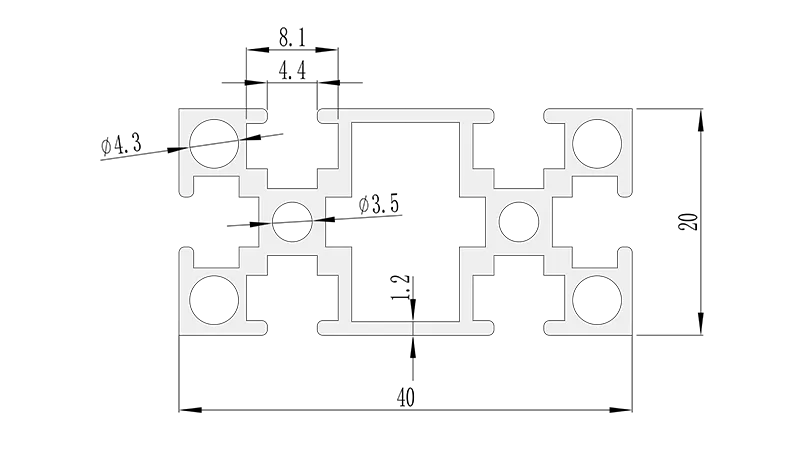
2040 National Standard Profile
45° external bending joint, used for 45° external connection of two aluminum pipes.
How a single standardized component is transforming factory floors, reducing waste, and building adaptable workflows for tomorrow's manufacturing challenges
The Hidden Cost of "Good Enough" in Manufacturing
Walk into almost any manufacturing facility, and you'll likely spot the same silent productivity killer: mismatched parts. A workbench here that's an inch too short, a flow rack there with brackets that don't quite fit, a conveyor system held together with makeshift clamps because the original parts wore out. These small inconsistencies add up—costing hours of downtime, frustrating workers, and turning simple upgrades into full-blown overhauls.
For years, many manufacturers accepted this as the norm. "It works well enough," becomes the mantra, even when "well enough" means losing 10% of each shift to fixing wobbly shelves or hunting for replacement parts that don't exist. But in an era where agility and efficiency are the keys to staying competitive, "good enough" is no longer enough. That's where standardization steps in—and at the heart of that standardization is the 2040 National Standard Profile.
What Is the 2040 National Standard Profile, Anyway?
Let's start with the basics. The 2040 National Standard Profile is a type of aluminum extrusion profile—think of it as a building block for your production line. Its name gives away its dimensions: 20mm in width and 40mm in height, with a precision-engineered T-slot design that runs along its length. But this isn't just any piece of aluminum. What makes it "national standard" is its adherence to strict industry specifications, ensuring that no matter which supplier you buy from, the profile will fit with aluminum profile accessories from any other manufacturer.
Imagine ordering a set of brackets for your workbench and knowing they'll snap into place without filing down edges or drilling new holes. Or expanding a flow rack by adding a few extra profiles and being confident they'll align perfectly with the existing structure. That's the promise of the 2040 National Standard Profile: consistency you can count on, day in and day out.
Why aluminum? Aluminum is lightweight yet surprisingly strong—strong enough to support heavy tools on a workbench or stack pallets on a material rack. It's resistant to corrosion, so it holds up in dusty warehouses or humid assembly lines. And unlike steel, it doesn't require painting or finishing, which cuts down on maintenance costs. Best of all, aluminum is 100% recyclable, making it a sustainable choice for eco-conscious manufacturers.
Beyond the Profile: The Power of Aluminum Profile Accessories
A profile is only as useful as the accessories that bring it to life. The 2040 National Standard Profile shines here because it's designed to work seamlessly with a vast ecosystem of aluminum profile accessories —everything from corner codes to end caps, brackets to hinges. These aren't just add-ons; they're the reason the profile can transform from a simple beam into a fully functional workbench, a mobile trolley, or a high-capacity flow rack.
Take the 2020 switch to aluminum corner codes, for example. These small, L-shaped brackets replace traditional welding or bolting, letting you assemble a frame in minutes instead of hours. Slide the corner code into the T-slot, tighten a screw, and you've got a joint that's sturdy enough to support hundreds of pounds yet easy to disassemble if you need to reconfigure later. Or consider gusset alp 2020 accessories—triangular plates that reinforce corners, adding stability without adding bulk. These little details turn a basic aluminum profile into a system that adapts to your needs.
Even the smallest accessories matter. Plastic end caps, for instance, prevent dust and debris from clogging the T-slots, ensuring that your profiles stay functional for years. Rubber strips line the slots to reduce noise when inserting accessories, making the factory floor a little quieter for workers. It's these thoughtful touches that make the 2040 National Standard Profile more than just a part—it's a complete solution.
Building a Lean System: How 2040 Profiles Support Lean Manufacturing
Lean manufacturing isn't just a buzzword—it's a philosophy centered on eliminating waste, streamlining workflows, and empowering workers to do their best. But lean principles are hard to put into practice when your tools and equipment work against you. A wobbly workbench forces operators to adjust their posture, leading to fatigue. A flow rack that's too tall or too short creates bottlenecks as workers stretch or bend to reach materials. These are forms of waste too—waste of time, energy, and morale.
The 2040 National Standard Profile was built with lean in mind. Its modular design means you can build exactly what you need, no more, no less. Need a workbench that's 4 feet long with a shelf at 30 inches? Assemble it in an hour using profiles and accessories, then tweak it next month if your process changes. Want a flow rack that feeds materials directly to the assembly line, reducing the need for workers to walk back and forth? Use 2040 profiles with roller tracks, and adjust the angle or height as your production demands shift.
Real Results: How One Manufacturer Cut Waste with 2040 Profiles
A mid-sized electronics manufacturer in Guangdong was struggling with a common lean challenge: their assembly line was rigid. When they introduced a new product, they had to rebuild their workbenches and flow racks from scratch, taking the line offline for days. After switching to 2040 National Standard Profiles, they saw immediate changes. They could reconfigure their workstations in hours instead of days, using the same profiles and accessories for different products. Downtime dropped by 40%, and workers reported less frustration—since the workbenches now fit their ergonomic needs, they could focus on assembling, not adjusting.
Lean systems thrive on adaptability, and the 2040 profile delivers that. It's not just about building things—it's about building things that can evolve with your business. Whether you're scaling up production, launching a new product, or shifting to a more efficient layout, your 2040-based equipment can grow with you, minimizing waste and maximizing value.
From Workbenches to Flow Racks: Real-World Applications
The versatility of the 2040 National Standard Profile means it shows up in almost every corner of the factory. Let's break down some of the most common applications—and how they benefit from standardization.
Workbenches: The Heart of the Assembly Line
A workbench is more than a table—it's where the magic happens. With 2040 profiles, you can build workbenches that are tailored to your operators' needs. Need a single-deck workbench without casters for a fixed assembly station? Use the Workbench E design, pairing 2040 profiles with a plywood or aluminum honeycomb top for a flat, sturdy surface. Add a shelf below for tools, and you're ready to go. If you need mobility, swap out the fixed feet for casters with brakes—no need to buy a whole new bench.
Ergonomics matter here, too. Adjust the height of the workbench by changing the length of the profile legs, ensuring that workers don't strain their backs. Add a monitor arm or tool holder using T-slot accessories, keeping everything within arm's reach. The result? Happier, more productive workers—and fewer injuries.
Flow Racks: Keeping Materials Moving
Material flow is the lifeblood of manufacturing. A well-designed flow rack ensures that parts move smoothly from storage to assembly, reducing the time workers spend fetching supplies. The 2040 National Standard Profile excels here, especially when paired with roller tracks. Material Rack B, for example—a 3-row, 3-floor design built with 2040 profiles—uses gravity to feed parts to the front, so the next component is always within reach. The roller tracks, which snap into the T-slots of the profiles, glide smoothly even with heavy loads, minimizing jams and delays.
What if you need to change the flow direction? No problem. Loosen the roller track connectors, rotate the rack, and tighten them back up. The standardized holes and slots mean every part aligns, so you're not left with gaps or misalignments. It's this flexibility that makes 2040-based flow racks a staple in lean facilities.
Future-Proofing: Why Standardization Today Saves Headaches Tomorrow
Manufacturing isn't static. New technologies emerge, customer demands shift, and regulations change. The equipment you invest in today needs to keep up with these changes—not become obsolete in three years. That's what "future-proofing" is all about, and the 2040 National Standard Profile is built for it.
Take scalability, for example. As your business grows, you'll need more workbenches, more flow racks, more conveyors. With standardized profiles, you can add new components without worrying about compatibility. Buy a few extra 2040 profiles and accessories today, and they'll work seamlessly with the ones you already have next year. No more "this part was discontinued" or "this supplier changed their design" headaches.
Sustainability is another piece of the puzzle. Aluminum is infinitely recyclable, so if you do need to retire a piece of equipment, you can recycle the profiles instead of sending them to a landfill. And since the system is modular, you can repurpose parts—turn an old workbench into a mobile cart, or a retired flow rack into a storage shelf—reducing waste even further.
Perhaps most importantly, the 2040 National Standard Profile is backed by industry consensus. As new manufacturing standards emerge, the profile is updated to meet them, ensuring that your equipment stays compliant. This is critical in regulated industries like automotive or medical device manufacturing, where non-compliance can lead to costly fines or production halts.
Traditional vs. Standardized: A Clear Comparison
| Feature | Traditional Custom Profiles | 2040 National Standard Profile |
|---|---|---|
| Assembly Time | Hours (requires welding/bolting) | Minutes (uses aluminum profile accessories like corner codes) |
| Compatibility | Limited (parts only fit specific systems) | Universal (works with any brand of standard accessories) |
| Reconfigurability | Difficult (often requires cutting/welding) | Easy (disassemble and reassemble in minutes) |
| Maintenance | High (hard-to-find replacement parts) | Low (standard accessories available globally) |
| Cost Over Time | Higher (frequent replacements, downtime) | Lower (durable, adaptable, recyclable) |
Is It Time to Make the Switch?
Adopting the 2040 National Standard Profile isn't just about buying new parts—it's about investing in a smarter way to manufacture. It's about giving your workers the tools they need to be efficient, reducing stress from constant fixes, and building a production line that grows with your business.
Start small if you're unsure. replace one wobbly workbench with a 2040-based model and see how it impacts your team's productivity. Chances are, you'll notice the difference within a week: fewer complaints about discomfort, faster assembly times, and a workbench that actually stays level. From there, expand to a flow rack or a trolley. Before long, you'll wonder how you ever managed with mismatched parts.
In the end, manufacturing is about making things—but it's also about making things better. The 2040 National Standard Profile doesn't just make things; it makes your entire operation better. More efficient, more adaptable, more ready for whatever the future brings. And in today's fast-paced world, that's not just an advantage—it's a necessity.