- Company Articles
- Industry articles
- Industry standards
- 2040 National Standard Profile in Food Processing: Hygiene & Corrosion Resistance

2040 National Standard Profile in Food Processing: Hygiene & Corrosion Resistance
Related Product
2040 National Standard Profile
45° external bending joint, used for 45° external connection of two aluminum pipes.
Walk into any modern food processing facility, and you'll notice a symphony of precision: conveyor belts gliding with ingredients, workers in sanitized gear assembling products, and machinery humming to life—all under the watchful eye of strict hygiene protocols. Behind this seamless operation lies a critical, often overlooked element: the materials that form the backbone of the workspace. From workbenches where ingredients are prepped to material racks storing supplies, the right materials don't just support efficiency—they safeguard the integrity of the food itself. In this high-stakes environment, one material has emerged as a game-changer: the 2040 National Standard Profile, a type of aluminum extrusion profile designed to meet the unique demands of food processing. Let's dive into why this unassuming component has become indispensable, focusing on its unmatched hygiene and corrosion resistance.
The Food Processing Challenge: Why Material Matters
Food processing is a battlefield for materials. Daily, surfaces and structures face a onslaught of challenges: constant exposure to water from (cleaning), acidic or alkaline food residues, harsh sanitizers like bleach, and fluctuations in temperature from refrigeration to baking. Add to that the pressure of regulatory bodies like the FDA and HACCP, which set non-negotiable standards for preventing contamination, and it's clear: not just any material will do. Traditional options often fall short. Wood, for example, absorbs moisture and harbors bacteria in tiny cracks, making it a breeding ground for pathogens. Uncoated steel rusts when exposed to water and chemicals, flaking off into food products. Even some plastics degrade over time, reacting with cleaning agents or warping under heat. What food processors need is a material that can withstand these assaults while staying easy to clean and safe for food contact. Enter aluminum extrusion profiles—and specifically, the 2040 National Standard Profile.
Aluminum Extrusion Profiles: A Natural Fit for Food Safety
Aluminum has long been favored in industries where hygiene and durability collide, and for good reason. Its natural properties make it a standout: it's lightweight yet surprisingly strong, resistant to corrosion, and 100% recyclable. But what truly sets aluminum extrusion profiles apart is the manufacturing process itself. Extrusion involves pushing heated aluminum through a die to create consistent, custom cross-sectional shapes—like the 20mm x 40mm dimensions of the 2040 National Standard Profile. This process results in smooth, seamless surfaces with no cracks, gaps, or pores where bacteria can hide. Unlike welded steel, which often has rough, uneven joints, extruded aluminum profiles offer a uniform finish that's a breeze to wipe down. For food processors, this translates to less time spent scrubbing and more time focusing on production—without sacrificing safety.
But not all aluminum profiles are created equal. The "National Standard" designation is key here. It ensures that the 2040 profile meets strict, standardized specifications for dimensions, material composition, and performance. This consistency is vital for food processors, who rely on interchangeable parts and reliable suppliers to keep operations running. Whether you're building a workbench, a material rack, or a custom conveyor support, knowing that every 2040 National Standard Profile will fit perfectly with its aluminum profile accessories—from corner codes to end caps—eliminates guesswork and reduces downtime.
2040 National Standard Profile: Breaking Down the Basics
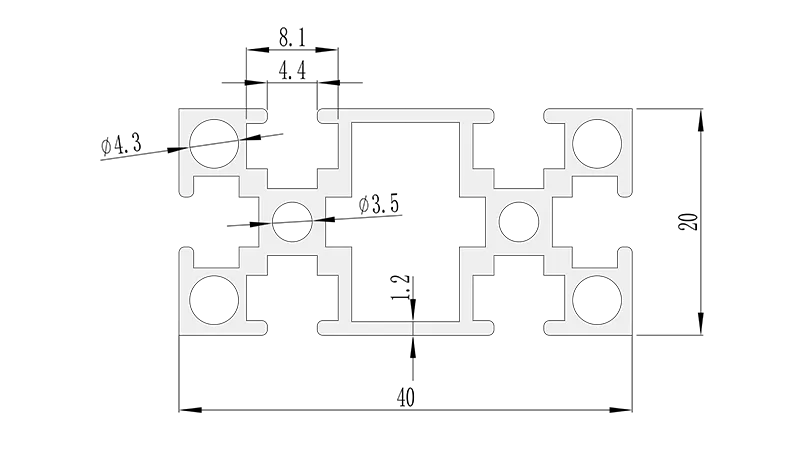
Let's start with the basics: what exactly is the 2040 National Standard Profile? As the name suggests, it's an aluminum extrusion profile with a cross-sectional dimension of 20mm (width) by 40mm (height). This specific size strikes a sweet spot in food processing applications: it's narrow enough to fit into tight spaces (like under conveyor belts or between workstations) but sturdy enough to support heavy loads, such as stacks of ingredient boxes or industrial-grade workbench tops. The profile is typically made from 6063-T5 aluminum alloy, a material known for its excellent corrosion resistance and formability—ideal for extrusion. Its surface is often anodized, a process that creates a protective oxide layer, enhancing both its resistance to wear and its ability to repel water and chemicals.
One of the most notable features of the 2040 profile is its T-slot design. Running along its length are grooves (or "T-slots") that allow for easy attachment of aluminum profile accessories without welding or drilling. Need to add a shelf to a material rack? Slide a bracket into the T-slot and secure it with a bolt. Want to attach a workbench top? Use corner codes (like the 2020 switch to aluminum corner codes) to lock the profile into place. This modularity is a boon for food processors, who often need to reconfigure workspaces to adapt to new products or seasonal demands. Unlike fixed structures, the 2040 profile system can be disassembled, modified, and reassembled in hours—no special tools required.
Hygiene First: How 2040 Profiles Keep Food Safe
In food processing, hygiene isn't just a priority—it's the law. Contamination can lead to product recalls, damaged reputations, and even public health crises. The 2040 National Standard Profile addresses this head-on with design features that make cleanliness second nature.
Smooth, Non-Porous Surfaces
Bacteria love hiding in cracks, and traditional materials like wood or welded steel are full of them. The 2040 profile, thanks to its extrusion process, has a smooth, uniform surface with no crevices. Even at the microscopic level, there are no pores for moisture or food particles to cling to. A quick wipe with a sanitizing cloth is often enough to remove residue, reducing the risk of cross-contamination. This is especially critical in areas like meat processing or dairy production, where even a tiny bacterial colony can spread rapidly.
Compatibility with Food-Grade Cleaners
Food processors don't mess around with cleaning. They use strong agents like quaternary ammonium compounds (QACs) or peracetic acid to kill pathogens. The 2040 profile's anodized surface is impervious to these chemicals, meaning it won't degrade, discolor, or leach harmful substances into the environment. Unlike some plastics, which can become brittle or cloudy with repeated exposure to sanitizers, aluminum holds its ground—ensuring the profile remains safe and functional for years.
Easy Disassembly for Deep Cleaning
Even the smoothest surface needs a deep clean occasionally, especially in high-risk areas. The 2040 profile's modular design shines here. Aluminum profile accessories like end caps (think 4040 aluminum profile end cap) and gussets (gusset alp 2020) can be quickly removed, allowing workers to access every nook and cranny of a workbench or rack. No more struggling to clean around welded joints or permanent fixtures—disassemble, scrub, reassemble, and back to production. This flexibility not only keeps surfaces sanitized but also extends the life of the equipment by preventing buildup that can cause wear and tear.
Corrosion Resistance: Standing Strong Against the Elements
If hygiene is about preventing contamination, corrosion resistance is about longevity. In food processing, where water, chemicals, and humidity are constants, corrosion isn't just unsightly—it's dangerous. Rust flakes from steel can fall into food, while degraded plastics can shed particles. Aluminum, however, has a built-in defense mechanism: when exposed to oxygen, it forms a thin, invisible layer of aluminum oxide that seals the surface and prevents further oxidation. This layer self-heals if scratched, making aluminum naturally resistant to rust and corrosion.
The 2040 National Standard Profile takes this a step further. Its anodized finish thickens this oxide layer, making it even more durable. In tests, anodized aluminum profiles have withstood thousands of hours of exposure to salt spray, acidic solutions, and high humidity without showing signs of corrosion—far exceeding the demands of most food processing environments. Compare this to uncoated steel, which might start rusting within weeks of installation, or even stainless steel, which, while corrosion-resistant, is heavier and more expensive. For processors looking to balance performance and cost, the 2040 profile is a clear winner.
Consider a typical scenario: a material rack in a dairy plant used to store milk cartons. The rack is hosed down daily to remove spills, and the air is humid from refrigeration. A steel rack here would rust within months, requiring frequent replacement. A 2040 profile rack, though? It stays strong, clean, and rust-free year after year—saving money on replacements and avoiding the risk of contamination.
Practical Applications: 2040 Profiles in Action
Enough theory—let's look at how the 2040 National Standard Profile transforms real-world food processing operations. Its versatility means it's used in everything from small workbenches to large-scale conveyor systems. Here are a few key applications:
Workbenches: The Heart of Food Prep
Every food processor needs sturdy, clean workbenches for tasks like chopping vegetables, assembling sandwiches, or packaging products. The 2040 profile is the ideal frame for these workbenches. Its 20mm x 40mm dimensions provide a stable base, while its T-slots allow for easy attachment of tops—whether aluminum honeycomb panels for lightweight durability or stainless steel for heat resistance. Add aluminum profile accessories like gussets for extra stability, and you have a workbench that can handle heavy loads, resist stains, and be wiped down in seconds. Unlike wooden workbenches, which warp or harbor mold, or plastic ones that scratch easily, 2040 profile workbenches stand the test of time.
Material Racks: Organizing Supplies Safely
Storing ingredients, packaging, and tools efficiently is crucial for workflow. Material racks built with 2040 profiles—like the "Material Rack B (3 row and 3 floor)" design—offer a smart solution. These racks use aluminum guide rails to create smooth, sliding shelves, making it easy to access items without straining. The 2040 profile's corrosion resistance ensures the rack stays sturdy even when storing refrigerated goods (which drip condensation) or acidic ingredients like tomatoes. And because the racks are modular, they can be expanded or reconfigured as inventory needs change—no need to buy new racks every time your product line grows.
Conveyor Supports: Keeping Production Moving
Conveyor systems are the arteries of food processing, moving products from one station to the next. The supports that hold these conveyors in place must be strong, stable, and resistant to the vibrations and moisture of the environment. 2040 National Standard Profiles excel here. Their lightweight yet rigid structure reduces the load on ceiling or floor mounts, while their corrosion resistance ensures they don't degrade from exposure to conveyor lubricants or cleaning sprays. Even in high-temperature areas like bakery ovens, the 2040 profile maintains its shape and strength, making it a reliable choice for supporting roller tracks and conveyor belts.
Aluminum Profile Accessories: The Unsung Heroes
A profile is only as good as the accessories that complete it. The 2040 National Standard Profile works hand-in-hand with a range of aluminum profile accessories, each designed to enhance hygiene, durability, and functionality. Let's highlight a few key players:
- Aluminum Corner Codes: These small, L-shaped brackets (like the 2020 switch to aluminum corner codes) connect 2040 profiles at 90-degree angles, replacing welded joints. They're easy to install with bolts, create a smooth, gap-free connection, and can be removed for cleaning.
- End Caps: Fitting snugly into the ends of profiles, end caps (such as the 4040 aluminum profile end cap) seal off T-slots, preventing dirt, water, or food particles from getting trapped inside. They're typically made of food-safe plastic or aluminum and snap into place—no tools required.
- Gussets: Gussets like the "gusset alp 2020" add extra stability to joints, reinforcing the structure of workbenches or racks. Made of thin, flat aluminum, they lie flush against the profile, leaving no room for bacteria to hide.
- Adjustable Feet: For uneven floors, adjustable feet attach to the bottom of 2040 profile frames, leveling the structure and preventing rocking. Many are made with rubber or suction cups to grip the floor and resist slipping—important in wet environments.
Together, these accessories ensure that the entire system—profile and hardware alike—meets the same high standards of hygiene and corrosion resistance. No loose screws, no crevices, no compromises.
Comparing 2040 National Standard Profile to Alternatives
To truly appreciate the 2040 National Standard Profile, it helps to see how it stacks up against other common materials and profiles. Below is a comparison table highlighting key factors for food processors:
| Feature | 2040 National Standard Profile | 3030 National Standard Profile | 2020 National Standard Profile | Stainless Steel (304 Grade) |
|---|---|---|---|---|
| Dimensions | 20mm x 40mm | 30mm x 30mm | 20mm x mm | Varies (typically 1-3mm thick sheets/tubes) |
| Load Capacity (per meter) | Up to 150kg (horizontal) | Up to 120kg (horizontal) | Up to 80kg (horizontal) | Up to 200kg (horizontal, but heavier overall) |
| Hygiene Features | Smooth extrusion, T-slot design for easy cleaning, compatible with all sanitizers | Similar to 2040, but narrower profile may limit accessory options | Smaller T-slots harder to clean; lower load capacity limits large workspaces | Smooth, non-porous, but heavier and more expensive; welded joints may harbor bacteria |
| Corrosion Resistance | Anodized aluminum oxide layer; excellent resistance to water, chemicals, humidity | Same as 2040, but smaller profile may bend under heavy loads, increasing stress corrosion risk | Same as 2040, but lower strength limits durability in high-stress areas | Excellent, but prone to pitting in chloride-rich environments (e.g., salt) |
| Cost-Effectiveness | Moderate upfront cost; low maintenance; long lifespan (10+ years) | Lower upfront cost, but lower load capacity may require more profiles, increasing total cost | Lowest upfront cost, but limited to light-duty use; frequent replacement needed | High upfront cost; heavy weight increases installation/transport costs; long lifespan but overkill for many applications |
As the table shows, the 2040 National Standard Profile strikes a balance that's hard to beat: it's strong enough for most food processing tasks, easy to clean, resistant to corrosion, and cost-effective over time. For processors who need a reliable, versatile solution, it's the clear front-runner.
Case Study: A Bakery's Journey to 2040 Profiles
To put this into perspective, let's look at a real-world example: a mid-sized bakery in the Midwest that recently switched to 2040 National Standard Profiles. Before the switch, the bakery relied on wooden workbenches for dough preparation and steel racks for storing flour and sugar. The issues were mounting: wooden benches absorbed flour and water, requiring daily scrubbing with harsh chemicals to prevent mold. Steel racks, despite regular painting, rusted at the joints, leaving red streaks on bags of flour. The bakery was spending $5,000 annually replacing benches and racks, not to mention lost production time due to cleaning delays.
The solution? The bakery invested in workbenches and material racks built with 2040 National Standard Profiles. The workbenches featured 2040 frames with stainless steel tops, while the material racks used a 3-row, 3-floor design (similar to Material Rack B) with aluminum guide rails for easy sliding of heavy flour bags. The results were immediate: cleaning time dropped by 40% because the smooth aluminum surfaces wiped clean with a damp cloth. After six months, there was zero signs of rust on the racks, and the workbenches showed no scratches or warping. Most importantly, the bakery passed its next FDA inspection with flying colors, with inspectors noting the "exceptional cleanliness of food contact surfaces." Within a year, the bakery had recouped its investment through reduced replacement costs and increased productivity.
Looking Ahead: Why 2040 Profiles Will Lead the Way
The future of food processing is all about smarter, safer, and more sustainable operations. As regulations tighten and consumers demand greater transparency, processors will increasingly turn to materials that align with these goals. The 2040 National Standard Profile is perfectly positioned to meet this future head-on. Its recyclability (aluminum can be recycled indefinitely without losing quality) supports sustainability initiatives, while its modular design reduces waste by allowing reconfiguration instead of replacement. Even better, as national standards evolve, the 2040 profile will adapt—ensuring it stays compliant with the latest safety and performance requirements.
Moreover, the rise of automation in food processing (think robotic arms and AI-driven quality control) demands lightweight, precise structures that can support advanced machinery. The 2040 profile's strength-to-weight ratio and compatibility with aluminum profile accessories make it ideal for building custom frames for these technologies. Whether it's supporting a robotic packaging arm or a sensor-equipped conveyor system, the 2040 profile provides the stability and reliability modern processors need.
Conclusion: More Than a Profile—A Commitment to Safety
In the world of food processing, every detail matters. The 2040 National Standard Profile may not be the most glamorous part of the operation, but it's a silent guardian of food safety. By combining unmatched hygiene (smooth surfaces, easy cleaning, compatibility with sanitizers) and corrosion resistance (natural aluminum oxide layer, anodized finish), it solves the two biggest material challenges processors face. Add in its versatility, cost-effectiveness, and support from a range of aluminum profile accessories, and it's no wonder more and more facilities are making the switch.
So, the next time you walk through a food processing plant, take a closer look at the workbenches, racks, and supports. Chances are, you'll spot the 2040 National Standard Profile hard at work—quietly ensuring that the food we eat is safe, fresh, and made with care. In an industry where trust is everything, that's not just a material choice—it's a commitment to excellence.