- Company Articles
- Industry articles
- Industry standards
- 2040 National Standard Profile in Furniture Manufacturing: Lean Office Solutions

2040 National Standard Profile in Furniture Manufacturing: Lean Office Solutions
Related Product
2040 National Standard Profile
45° external bending joint, used for 45° external connection of two aluminum pipes.
In today's fast-paced work environment, offices are no longer just spaces to sit and work—they're dynamic ecosystems where productivity, collaboration, and adaptability reign supreme. As companies strive to meet evolving demands, the furniture that fills these spaces has become a critical tool in achieving operational efficiency. Enter the 2040 National Standard Profile —a humble yet revolutionary aluminum extrusion that's quietly transforming how we design, build, and use office furniture. More than just a material, it's a cornerstone of lean system principles, enabling workspaces that reduce waste, enhance flexibility, and grow with your team. Let's dive into how this unassuming profile is reshaping furniture manufacturing and redefining what a "lean office" can be.
What is the 2040 National Standard Profile?
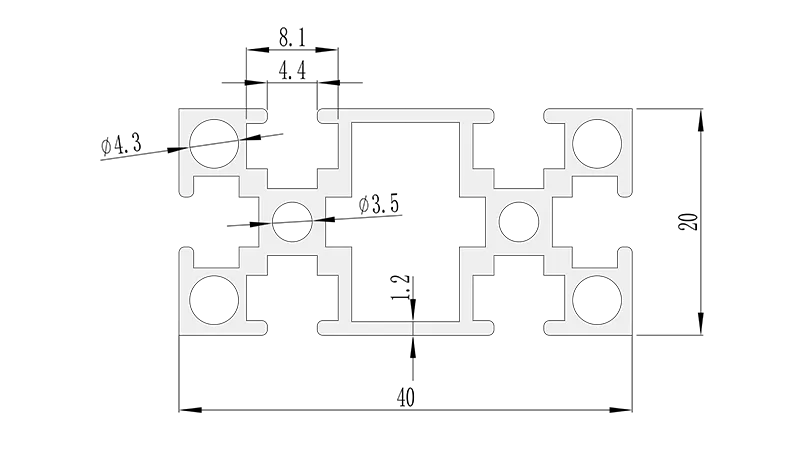
Before we explore its role in lean offices, let's get to know the star of the show: the 2040 National Standard Profile. At its core, this is an aluminum extrusion with a cross-sectional dimension of 20mm (width) by 40mm (height)—hence the "2040" name. But don't let its simple size fool you. What makes this profile special is its adherence to national standards, ensuring consistency in dimensions, material quality, and compatibility across manufacturers. This standardization is a game-changer for furniture makers and end-users alike, eliminating the guesswork of mismatched parts and ensuring a seamless building experience.
Crafted from high-grade aluminum alloy, the 2040 profile balances strength and lightweight design. Aluminum, known for its durability and corrosion resistance, ensures the profile can withstand daily wear and tear—think bumps from office chairs, heavy equipment on workbench surfaces, or the constant movement of flow rack systems. Yet, it's light enough to be easily reconfigured, a key trait for lean environments where adaptability is non-negotiable. The profile's surface is typically anodized or powder-coated, giving it a sleek, professional finish that fits modern office aesthetics while protecting against scratches and fading.
But the real magic lies in its T-slot design. Running along the length of the profile are precision-machined slots (usually 6mm or 8mm wide) that act as built-in connection points. These slots allow for easy attachment of aluminum profile accessories —think brackets, connectors, end caps, and even custom components—without the need for welding or drilling. This modularity is what sets the 2040 profile apart from traditional materials like wood or steel, which often require permanent modifications and are difficult to repurpose.
Lean Systems in the Office: Why It Matters
To understand the 2040 profile's impact, we first need to grasp the principles of a lean system . Originating in manufacturing (think Toyota's famous production system), lean is all about maximizing value while minimizing waste. In an office context, "waste" can take many forms: cluttered workspaces that slow down tasks, rigid furniture that can't adapt to new team sizes, or inefficient material flow that leads to unnecessary movement. A lean office, then, is one that's designed to eliminate these inefficiencies, creating a space where every tool, every piece of furniture, and every workflow serves a clear purpose.
Key lean principles relevant to office furniture include:
- Flexibility : The ability to reconfigure spaces quickly as teams grow, shrink, or change focus.
- Flow : Ensuring materials, documents, and people move through the office with minimal friction.
- Elimination of Waste : Reducing unused space, redundant furniture, or tools that don't add value.
- Standardization : Using consistent, interchangeable components to simplify maintenance and reduce costs.
For years, traditional office furniture struggled to meet these principles. Wooden desks were heavy and fixed, steel shelving was hard to modify, and custom-built solutions were expensive to replace. The 2040 National Standard Profile, with its modular design and compatibility with aluminum profile accessories , addresses these pain points head-on. It's not just furniture—it's a system that grows, adapts, and evolves with your office's needs.
How 2040 Profile Supports Lean Systems: The Perfect Match
So, how exactly does the 2040 profile bring lean principles to life? Let's break it down through three key applications: workbenches, flow racks, and mobile workstations. Each of these is a staple in modern offices, and each is dramatically improved by the 2040 profile's unique properties.
1. Lean Workbenches: The Heart of the Productive Workspace
A workbench is more than just a table—it's where ideas take shape, tasks get completed, and collaboration happens. In a lean office, a workbench should be customizable to the user's needs, sturdy enough to hold equipment, and flexible enough to reconfigure when projects change. The 2040 profile excels here.
Imagine a team of designers who need extra surface area for large blueprints one week, then a compact setup for computer work the next. With a 2040 profile workbench, adding or removing shelves, attaching tool holders, or even extending the surface is as simple as sliding in a few T-slot bolts and aluminum profile accessories like angle brackets or panel mounts. No need for a carpenter or new furniture—just a few minutes and a hex key. This reduces "setup waste" (a key lean enemy) and ensures the workbench always serves the team's current needs, not some outdated idea of what they might need.
But it's not just about adjustability. The 2040 profile's strength means these workbenches can support heavy loads—think 50kg or more on a single shelf—without bending or warping. This durability reduces "replacement waste," as the workbench won't need to be replaced every few years. And because aluminum is recyclable, even when the time comes to retire the bench, the materials can be repurposed, aligning with lean's sustainability goals.
2. Flow Racks: Streamlining Material Movement
In offices that handle physical materials—whether it's documents, samples, or inventory— flow rack systems are essential for keeping things moving. A flow rack uses gravity to feed materials from the back to the front, ensuring easy access and reducing the need for workers to bend, reach, or search for items. But traditional flow racks are often bulky, hard to adjust, or limited to specific container sizes. The 2040 profile changes that.
By using 2040 profiles as the frame, flow racks become infinitely customizable. Need to adjust the height of shelves to fit taller boxes? Loosen the T-slot bolts, slide the profile to the desired height, and retighten. Want to add dividers to separate different materials? Attach aluminum guide rails (another type of aluminum profile accessory ) directly into the slots. Even the roller tracks—critical for smooth material flow—can be swapped out for different sizes or materials (like plastic for quiet operation or steel for heavy loads) without replacing the entire rack.
This adaptability ensures the flow rack grows with your inventory. A marketing team that starts with a few product samples can expand to multiple shelves as their line grows, all without buying a new rack. It's lean at its finest: maximizing the use of existing resources and eliminating the waste of unused space or ill-fitting storage.
3. Mobile Workstations: Flexibility on Wheels
In a lean office, people shouldn't have to move to the work—the work should move to the people. That's where mobile workstations, equipped with caster wheel systems, come into play. And again, the 2040 profile is the ideal foundation.
A mobile workstation built with 2040 profiles is lightweight enough to roll across the office (thanks to aluminum's low density) but stable enough to stay put when in use. The T-slot design makes adding a caster wheel base a breeze—simply bolt caster mounts into the slots, attach the wheels, and you're done. Need to lock the workstation in place during a meeting? Choose casters with brakes. Want to move it to a different department for a collaborative project? Unlock the brakes and roll—no heavy lifting required.
This mobility reduces "transportation waste" (another lean no-no) by eliminating the need to carry materials or equipment across the office. A designer can roll their workstation to a client meeting, a project manager can bring their tools to a team huddle, and at the end of the day, the entire setup can be tucked away to free up space for tomorrow's activities. It's a workspace that literally moves with your workflow.
Aluminum Profile Accessories: The Unsung Heroes of Lean Design
The 2040 profile is powerful on its own, but it's the aluminum profile accessories that truly unlock its potential. These small, standardized components turn a simple extrusion into a versatile building block for lean furniture. Let's shine a light on a few key players:
- End Caps : These plastic or aluminum caps snap into the ends of the 2040 profile, covering sharp edges and giving a clean, finished look. They're a small detail, but they reduce "defect waste" by preventing snags on clothing or damage to materials.
- Angle Brackets : These L-shaped connectors join two profiles at 90-degree angles, perfect for building shelves, frames, or workbench legs. Their standardized size ensures they work with any 2040 profile, eliminating compatibility issues.
- Panel Mounts : Ideal for attaching wooden or acrylic surfaces to the profile, these mounts slide into T-slots and hold panels securely. Need to replace a damaged workbench top? Just swap out the panel—no need to replace the entire frame.
- Tool Hooks and Holders : Designed to fit into T-slots, these accessories keep tools, cables, and supplies within arm's reach, reducing "motion waste" (lean's term for unnecessary movement) and keeping workspaces organized.
The beauty of these accessories is their standardization. Because they're built to the same national standards as the 2040 profile, you can mix and match components from different suppliers without worrying about fit. This competition drives innovation and keeps costs low, making lean solutions accessible to businesses of all sizes.
Traditional vs. 2040 Profile Furniture: A Lean Comparison
Still not convinced the 2040 profile is worth the switch? Let's put it head-to-head with traditional office furniture in a lean-focused comparison. The table below breaks down key metrics that matter to modern offices:
| Metric | Traditional Furniture (Wood/Steel) | 2040 Profile Furniture |
|---|---|---|
| Setup Time | Hours to days (requires tools, assembly, or professional installation) | Minutes to hours (modular design; T-slot accessories snap into place) |
| Reconfiguration Ease | Difficult/impossible (permanent fasteners; risk of damage when modified) | Simple (no tools needed for basic changes; parts can be reused) |
| Weight Capacity | High (but at the cost of weight and rigidity) | High (aluminum alloy is strong; supports 50kg+ per shelf) |
| Mobility | Poor (heavy; often fixed to the floor) | Excellent (lightweight; easy to add caster wheel bases) |
| Waste Generation | High (replaced entirely when outdated; materials often non-recyclable) | Low (parts reused/recycled; only components, not entire units, need replacement) |
| Cost Over Time | High (frequent replacements; customization fees) | Low (durable; modular upgrades cost less than new furniture) |
Real-World Impact: A Lean Office Success Story
Numbers and tables are great, but nothing beats a real example. Let's look at a mid-sized tech company—we'll call them "Innovatech"—that switched to 2040 profile furniture in 2023. Pre-switch, their office was cluttered with mismatched wooden desks, static steel shelving, and a flow rack system that couldn't keep up with their growing inventory of prototypes.
Their main pain points? Setup time for new teams (it took 2 days to assemble desks for a 5-person project group), wasted space (shelves that were either overflowing or half-empty), and high costs (they replaced 30% of their furniture every year due to damage or obsolescence).
After adopting 2040 profile workbenches, mobile workstations with caster wheel bases, and customizable flow racks, here's what changed:
- Setup Time: New project teams were up and running in 2 hours instead of 2 days. The modular workbenches snapped together, and aluminum profile accessories like monitor mounts and tool hooks were added in minutes.
- Space Optimization: Flow racks were adjusted to fit prototype sizes, reducing unused space by 40%. Mobile workstations were rolled into storage when not in use, freeing up 200 sq. ft. of floor space.
- Cost Savings: Furniture replacement costs dropped by 65% in the first year. Instead of buying new desks, they reconfigured existing ones. Damaged shelves were replaced with new 2040 profile sections, not entire units.
- Team Satisfaction: Employees reported a 30% increase in productivity, citing "less time searching for tools" and "a workspace that fits how I work, not the other way around."
Innovatech's story isn't unique. From startups to Fortune 500 companies, businesses are discovering that the 2040 profile isn't just a material upgrade—it's a strategic investment in lean efficiency.
The Future of Lean Offices: Where 2040 Profile Leads
As offices continue to evolve—with hybrid work, hot-desking, and agile teams becoming the norm—the demand for flexible, lean furniture will only grow. The 2040 National Standard Profile is poised to lead this charge, thanks to ongoing innovations in aluminum profile accessories and manufacturing techniques.
Looking ahead, we can expect to see even more integration between 2040 profile furniture and smart office technology. Imagine workbenches with built-in charging ports (powered via T-slot accessories), flow racks with sensors that track inventory levels, or mobile workstations that connect to office IoT systems to adjust lighting or temperature based on occupancy. The T-slot design makes adding these features simple—no need to rewire or rebuild; just plug in a smart module and go.
Sustainability will also play a bigger role. As companies prioritize eco-friendly practices, the 2040 profile's recyclable aluminum and modular design (which reduces waste) will become even more attractive. Manufacturers are already exploring recycled aluminum alloys and biodegradable finishes, making the profile an even greener choice.
Conclusion: Lean Offices Start with the Right Foundation
At the end of the day, a lean office isn't about cutting corners or sacrificing comfort—it's about creating a space that works for your team, not against them. The 2040 National Standard Profile, with its modularity, durability, and compatibility with aluminum profile accessories , provides the perfect foundation for this vision. Whether you're building a workbench for a solo designer, a flow rack for inventory management, or a mobile workstation for a dynamic team, this profile empowers you to design furniture that adapts, grows, and eliminates waste at every turn.
So, if you're ready to transform your office from a static space into a lean, productive ecosystem, start with the basics: choose furniture built on the 2040 National Standard Profile. Your team, your budget, and your workflow will thank you.