- Company Articles
- Industry articles
- Industry standards
- 2040 National Standard Profile in Mechanical Manufacturing: Advantages Over Traditional Framing

2040 National Standard Profile in Mechanical Manufacturing: Advantages Over Traditional Framing
Related Product
2040 National Standard Profile
45° external bending joint, used for 45° external connection of two aluminum pipes.
Walk into any modern factory, workshop, or assembly line, and you'll notice an unsung hero holding everything together: framing. It's the quiet backbone of manufacturing—supporting workbenches where precision assembly happens, holding up racks stacked with components, and guiding roller tracks that keep production flowing. For decades, manufacturers relied on "the usual suspects" for framing: heavy steel beams, warping wooden planks, or clunky early aluminum setups. But these materials often felt like square pegs in round holes—hard to adjust, tedious to install, and prone to slowing down the very workflows they were meant to streamline.
Enter the 2040 National Standard Profile. This unassuming aluminum extrusion, with its sleek T-slot design and standardized dimensions, is redefining what framing can do. It's not just a material upgrade; it's a shift in how teams build, adapt, and thrive on the factory floor. In this article, we'll explore why the 2040 National Standard Profile has become a game-changer, outshining traditional framing in flexibility, durability, and worker-centric design—all while seamlessly integrating with essential tools like aluminum profile accessories and lean system principles.
What Is the 2040 National Standard Profile?
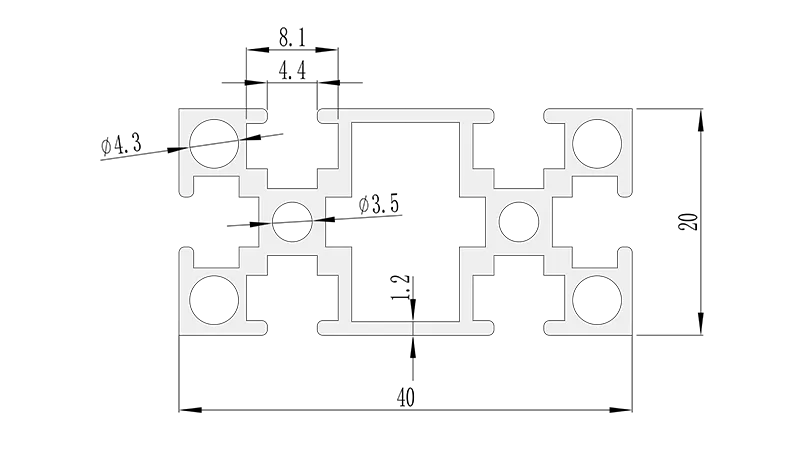
At first glance, the 2040 National Standard Profile looks like a simple aluminum bar. But its simplicity is deceptive. Measuring 20mm in width and 40mm in height, this extrusion is crafted through a precise process: heated aluminum alloy is forced through a die, forming a consistent cross-section with internal T-slots—those signature grooves that run the length of the profile. These slots aren't just for show; they're the secret to its versatility, allowing bolts, brackets, and accessories to slide in and lock into place without welding or drilling.
Made primarily from 6063-T5 aluminum alloy, the 2040 profile balances strength and lightness. It's corrosion-resistant, thanks to aluminum's natural oxide layer, and designed to meet strict national standards—meaning every piece from every supplier fits together perfectly. This standardization is key: whether you're ordering from a local distributor or a global supplier, a 2040 profile will always have the same slot spacing, wall thickness, and load capacity. No more guessing if parts will match.
Traditional Framing: The Old Ways and Their Growing Pains
To appreciate the 2040 profile, let's first look at what came before. Traditional framing materials weren't "bad"—they just weren't built for the fast-paced, ever-changing needs of modern manufacturing.
Wood: The Original Workhorse (But Not for Long)
Wood was once the go-to for workbenches and lightweight racks. It's cheap, easy to cut, and has a familiar, tactile feel. But in a factory setting, wood quickly shows its flaws. It warps with humidity, splinters under heavy tools, and can't handle repeated cleaning with industrial solvents. worse, it's a fire risk and offers zero resistance to pests. A wooden workbench might start sturdy, but after a year of daily use, it's often wobbly, stained, and in need of replacement.
Steel: Strong but Clunky
Steel took over when durability mattered most. I-beams, square tubes, and angle irons could hold tons of weight—perfect for heavy-duty racks or industrial shelving. But strength came with a price: steel is heavy . Installing a steel workbench required a team of workers and a forklift, not just a wrench. Welding was often needed to join pieces, turning a simple adjustment into a multi-hour project. And without constant painting or coating, steel rusts—leaving unsightly stains on products and creating sharp, unsafe edges over time.
Early Aluminum: A Step Forward, But Not Standardized
Aluminum profiles emerged as a middle ground—lighter than steel, resistant to rust, and easier to work with. But early versions lacked consistency. One supplier's "20x40" profile might have slots 10mm apart, another's 12mm. Accessories like brackets or connectors rarely worked across brands, trapping manufacturers in "vendor lock-in." Without national standards, these profiles felt more like a niche solution than a universal tool.
The 2040 Profile: Why It Outperforms Traditional Framing
The 2040 National Standard Profile addresses nearly every pain point of traditional materials. Let's break down its biggest advantages.
Lightweight Yet Surprisingly Strong
Aluminum's strength-to-weight ratio is a game-changer. A 1-meter length of 2040 profile weighs just 0.8kg—less than half the weight of a steel tube with similar load capacity. This means a single worker can carry, position, and assemble a 2-meter workbench frame alone, no forklift needed. Don't let the lightness fool you: the 2040 profile can support up to 150kg per linear meter when properly mounted. That's enough for heavy tools, stacks of components, or even small machinery.
Worker Impact: Lighter framing reduces strain on assembly teams. A study by the Manufacturing Ergonomics Institute found that factories using aluminum profiles reported a 22% drop in back injuries related to equipment setup—simply because workers weren't lifting heavy steel or wrestling with warped wood.
T-Slots: Flexibility at Your Fingertips
The T-slots running along the 2040 profile's length are its most innovative feature. Instead of welding or drilling, you slide bolts, nuts, or specialized aluminum profile accessories into these slots and tighten them. Need to add a shelf to a workbench? Slide a bracket into the slot, lock it, and done. Want to reposition a tool holder? Loosen a nut, move it, and retighten. This "tool-less" adjustment turns hours of work into minutes.
Traditional materials can't compete here. Modifying a steel frame means cutting new holes or welding on new brackets—skills most factory workers don't have. Wood? You'd need to drill new holes, which weakens the material over time. With 2040 profiles, even temporary setups feel permanent, and permanent setups feel temporary—perfect for agile manufacturing where production lines change monthly (or weekly).
Corrosion Resistance: Built to Last in Tough Environments
Factories are messy places. Oils, coolants, cleaning chemicals, and even humidity can eat away at traditional materials. Steel rusts, wood swells, but aluminum? Its surface forms a thin, invisible oxide layer that stops corrosion in its tracks. A 2040 profile can handle daily exposure to water, mild acids, and industrial solvents without flaking, staining, or weakening. This longevity means fewer replacements, lower maintenance costs, and a cleaner, more professional-looking workspace.
Cost-Efficiency: Saving Money Over Time
It's true: 2040 profiles cost more upfront than wood or basic steel. But think long-term. A wooden workbench might cost $100, but you'll replace it every 1–2 years. A steel workbench could cost $500 and last 5 years, but installation and modifications add hidden costs. A 2040 aluminum workbench? It costs around $300 upfront, installs in an hour with basic tools, and lasts 10+ years. Plus, when you need to reconfigure it for a new product line, you reuse 90% of the parts—no need to buy new materials.
Head-to-Head: 2040 Profile vs. Traditional Framing
| Feature | Wood Framing | Steel Framing | 2040 National Standard Profile |
|---|---|---|---|
| Weight (per meter) | 2–3kg (pine) | 4–6kg (mild steel) | 0.8kg (aluminum alloy) |
| Assembly Time (basic workbench) | 2–3 hours (cutting, drilling, sanding) | 4–5 hours (welding, painting, lifting) | 30–45 minutes (tool-less T-slot connection) |
| Customization Ease | Easy to cut, but weakens with modifications | Requires welding; difficult to adjust | Tool-less adjustments; reconfigurable in minutes |
| Durability (typical lifespan) | 1–2 years (with daily use) | 5–7 years (with rust protection) | 10+ years (corrosion-resistant, no warping) |
| Maintenance Needs | Frequent sanding, staining, or replacement | Regular painting/coating to prevent rust | Minimal—just wipe clean with a cloth |
| Worker Safety | Splinters, wobbly surfaces over time | Heavy lifting risks, sharp rust edges | Lightweight, smooth edges, stable connections |
Real-World Impact: How 2040 Profiles Transform Workflows
Case Study: A Small Electronics Factory's Lean Makeover
Take "TechFlow Electronics," a 50-person factory producing circuit boards. Three years ago, their assembly line relied on steel workbenches and wooden component racks. Workers complained about the heavy steel tables—adjusting height required loosening bolts with a wrench and shimming with wood blocks. The wooden racks warped in the humid environment, causing components to slide off. And when a new product line required a narrower workbench, the team had to order a custom steel frame, wait two weeks for delivery, and spend a day installing it.
Then they switched to 2040 National Standard Profiles. Today, their workbenches are height-adjustable with a twist of a knob (thanks to T-slot leg brackets). Component racks are built with roller track, letting parts glide smoothly to workers instead of being lifted. When a new product line launched last month, the team reconfigured three workbenches in an afternoon using leftover profiles and aluminum profile accessories—no new materials needed. "It's like building with adult Legos," one supervisor joked. Productivity up 18%? That's the 2040 difference.
Beyond Workbenches: Where 2040 Profiles Shine
The 2040 profile isn't limited to workbenches. Its versatility makes it ideal for:
- Lean System Integration: Lean manufacturing thrives on minimizing waste and maximizing flow. 2040 profiles pair perfectly with lean principles—easily building kanban racks, in-process storage, or modular assembly cells that adapt as workflows improve.
- Roller Tracks & Conveyors: Mount roller track directly to 2040 profiles to create gravity-fed lines for parts. The T-slots let you adjust track angles or add guides in seconds, ensuring smooth, consistent movement.
- Mobile Carts: Lightweight yet strong, 2040 profiles make durable carts for transporting materials. Add casters (via T-slot brackets, of course) and you've got a cart that's easy to push, even loaded with components.
Aluminum Profile Accessories: The Cherry on Top
A profile is only as good as its accessories, and the 2040 National Standard Profile has a robust ecosystem. From end caps that cover sharp edges to hinges that let workbenches fold, these accessories turn basic framing into custom solutions:
Connectors: 90° brackets, corner joints, and T-connectors let you build frames in any shape—no welding required. Simply slide them into the T-slot and tighten a bolt.
Panels & Covers: Attach plywood, acrylic, or metal panels to create workbench tops, cabinet doors, or machine guards. The T-slots hold panels securely without drilling.
Lighting & Power: Specialized brackets mount LED strips or power strips directly to profiles, keeping cords organized and workspaces well-lit.
Best of all, these accessories are standardized. A 2040 profile from Supplier A works with accessories from Supplier B—so you're never stuck buying "proprietary" parts.
Conclusion: Building for the Future, Not Just Today
The 2040 National Standard Profile isn't just a framing material—it's a tool for empowerment. It turns rigid, static workspaces into dynamic, adaptable environments where teams can build, adjust, and innovate without waiting for tools, welders, or new parts. Traditional framing forced manufacturers to work around its limitations; 2040 profiles work with teams, making their jobs easier, safer, and more efficient.
In a world where manufacturing never stands still—where product cycles shorten and customization is king—the 2040 profile is more than an upgrade. It's a promise: that your factory's backbone can keep up with your ambition. And that's a future worth building.