- Company Articles
- Industry articles
- Industry standards
- 2040 National Standard Profile in Medical Industry: Sterility & Cleanroom Compatibility

2040 National Standard Profile in Medical Industry: Sterility & Cleanroom Compatibility
Related Product
2040 National Standard Profile
45° external bending joint, used for 45° external connection of two aluminum pipes.
Walk into any modern hospital laboratory, pharmaceutical manufacturing plant, or surgical suite, and you'll notice something subtle but critical: the air feels different. It's cleaner, crisper, almost weightless. That's the magic of a cleanroom—an environment where airborne particles, microbes, and contaminants are rigorously controlled to protect patients, samples, and life-saving treatments. But what often goes unnoticed is the backbone of these spaces: the structures that hold equipment, support workbenches, and organize supplies. These aren't just metal frames; they're silent guardians of sterility. And among them, one component stands out for its ability to blend durability, adaptability, and hygiene: the 2040 national standard profile.
In an industry where a single speck of dust can compromise a vaccine batch or a misplaced tool can risk a patient's life, the materials and design of these structures matter more than we might think. The 2040 national standard profile, a type of aluminum extrusion profile, has quietly become a cornerstone in healthcare facilities worldwide. It's not just about being "strong enough"—it's about being smart enough to meet the unique demands of sterility and cleanroom protocols. Let's dive into why this unassuming aluminum profile has become a go-to choice for engineers, facility managers, and healthcare professionals alike.
The Basics: What Is the 2040 National Standard Profile?
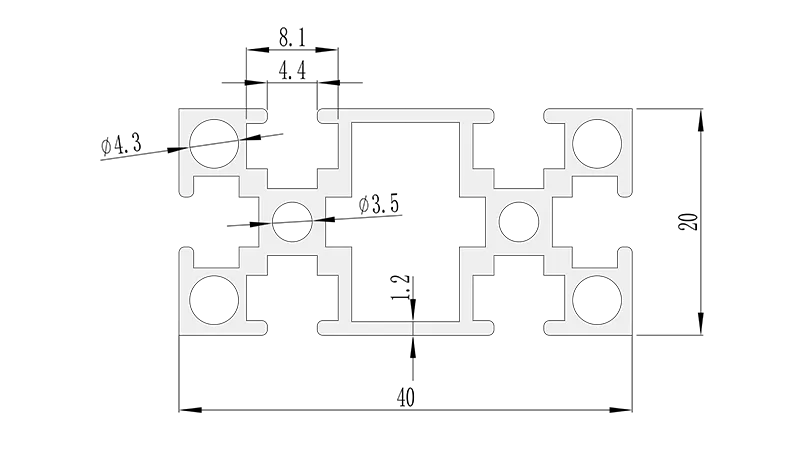
First things first: Let's break down the name. "2040" refers to its dimensions—20 millimeters in width and 40 millimeters in height. It's part of a family of aluminum extrusion profiles, which are created by pushing heated aluminum through a die to form a specific cross-sectional shape. This process isn't just about making metal bars; it's about precision. The result is a lightweight, yet surprisingly strong, structure with a consistent, smooth surface. The "national standard" label means it adheres to strict manufacturing guidelines, ensuring uniformity across batches—critical for industries where interchangeability and reliability are non-negotiable.
But why aluminum? In the medical field, materials must check multiple boxes: they need to resist corrosion (since cleaning agents are often harsh), be easy to sanitize (no hiding spots for bacteria), and ideally, be lightweight (to avoid straining facility floors or making equipment hard to move). Aluminum checks all these boxes. It's naturally resistant to rust, doesn't off-gas harmful chemicals, and its malleability allows for intricate designs without compromising strength. When you combine that with the 2040's specific dimensions, you get a profile that's versatile enough for everything from small workbenches to large material racks, yet compact enough to fit into tight cleanroom spaces.
Why Sterility Starts with the Surface
In a cleanroom, "sterile" isn't just a buzzword—it's a science. According to ISO 14644, the international standard for cleanrooms, even an ISO 7 cleanroom (common in pharmaceutical labs) allows no more than 352,000 particles larger than 0.5 microns per cubic meter. To put that in perspective, outdoor air in a city can have millions of such particles. Achieving this level of cleanliness requires every surface to be a barrier, not a breeding ground for contaminants. That's where the 2040 national standard profile's design shines.
Unlike traditional steel or wood, aluminum extrusion profiles like the 2040 have a non-porous surface. Think of it as a smooth, glass-like exterior that leaves nowhere for bacteria, dust, or moisture to hide. When you wipe it down with a disinfectant—whether it's 70% isopropyl alcohol, hydrogen peroxide, or bleach—the solution can reach every inch without getting trapped in cracks or pores. This is a game-changer compared to, say, painted steel, which can chip over time, creating tiny crevices where microbes thrive. Or wood, which absorbs liquids and becomes a Petri dish for mold. The 2040 profile's surface is inherently "cleanable," which is the first step toward maintaining sterility.
But it's not just about the material—it's about the extrusion process itself. When aluminum is extruded, it forms a seamless, uniform shape. There are no welds, seams, or rough edges (unless intentionally added, which they rarely are in medical applications). This means when you run a cloth or a sanitizing wipe over it, there's no resistance—no nooks where a fiber from the wipe might snag and leave behind a particle. For cleanroom operators, who spend hours each day sanitizing surfaces, this translates to less time scrubbing and more time focusing on critical tasks.
Modularity: Adapting to the Chaos of Healthcare
Healthcare facilities are dynamic places. A lab might need to reconfigure its workbenches to accommodate a new testing machine next month. A hospital supply room might need to expand its material racks to store more PPE during a surge. Rigid, one-size-fits-all structures simply can't keep up. That's where the 2040 national standard profile's modularity comes into play, thanks in large part to aluminum profile accessories.
Imagine building with a set of high-quality, industrial-grade Legos. The 2040 profile acts as the "bricks," and aluminum profile accessories—like connectors, end caps, and brackets—are the "studs" that hold everything together. These accessories are designed to snap, bolt, or clip onto the profile's T-slots (the grooves running along its length), allowing for quick assembly and disassembly. No welding, no drilling, no specialized tools required. A team of two can reconfigure a workbench in an hour, whereas a steel frame might take a day and a crew of contractors.
Take, for example, a pharmacy compounding lab. Pharmacists need workbenches that are sturdy enough to hold scales, mixers, and reagent bottles, but also flexible enough to adjust shelf heights as new equipment is added. With 2040 profiles and accessories like adjustable brackets, they can raise a shelf by 5cm or lower it by 10cm in minutes. If the lab expands, they can simply add more profiles and connectors to extend the workbench—no need to buy an entirely new unit. This modularity doesn't just save time and money; it reduces waste. In an industry increasingly focused on sustainability, being able to repurpose components instead of replacing them is a big win.
Cleanroom Compatibility: Meeting the Strictest Standards
Cleanrooms aren't just "clean"—they're classified by how clean they are. From ISO 1 (the cleanest, with fewer than 10 particles of 0.1 microns per cubic meter) to ISO 9 (the least strict, with up to 35,200,000 particles of 0.5 microns), each class has specific requirements for air filtration, pressure differentials, and surface materials. The 2040 national standard profile isn't just "compatible" with these standards—it's engineered to exceed them.
One key factor is particle shedding. In cleanrooms, even the materials themselves can release particles (like dust from wood or flakes from aging paint). Aluminum extrusion profiles, including the 2040, are low-shedding by nature. Their smooth, non-porous surface doesn't degrade easily, so they don't release fibers, flakes, or dust into the air. This is critical for ISO 5 and ISO 6 cleanrooms (common in semiconductor manufacturing and some pharmaceutical processes), where even a single particle can ruin a batch of medication or a medical device component.
Another consideration is chemical resistance. Cleanrooms rely on aggressive cleaning agents to kill bacteria and viruses—think hydrogen peroxide vapor, quaternary ammonium compounds, or even strong alkalis. The 2040 profile's aluminum surface is resistant to most of these chemicals, meaning it won't corrode, discolor, or degrade over time with repeated cleaning. Compare that to plastic profiles, which can warp or crack when exposed to harsh solvents, or untreated steel, which might rust if not dried properly after cleaning. The 2040 profile holds up, ensuring the structure remains intact and hygienic for years.
Let's also talk about electrostatic discharge (ESD). While not all medical cleanrooms require ESD protection, some—like those handling sensitive electronic medical devices (e.g., pacemakers, insulin pumps)—do. Aluminum is a conductor, which means it can be grounded to dissipate static electricity, preventing sparks that could damage equipment or ignite flammable substances. While the 2040 profile isn't inherently "ESD-safe" (that often requires specialized coatings), its metallic nature makes it easier to integrate ESD features compared to non-conductive materials like plastic. This adaptability is just another reason it's a favorite in diverse medical settings.
Real-World Applications: Where the 2040 Profile Shines
Theory is great, but let's look at how the 2040 national standard profile is actually used in healthcare facilities. From workbenches to material racks, its versatility makes it indispensable in daily operations.
Workbenches: The Heart of the Lab
In a clinical lab, the workbench is where the magic happens—where samples are tested, slides are prepared, and data is analyzed. It needs to be stable (so microscopes don't vibrate), adjustable (to fit different technicians' heights), and, above all, sterile. A workbench made with 2040 profiles checks all these boxes. The aluminum frame is lightweight enough to move (with the addition of casters, another aluminum profile accessory) but rigid enough to support heavy equipment. The smooth surface is easy to wipe down between samples, and with accessories like pegboards or tool holders clipped into the T-slots, technicians can keep tools organized without cluttering the workspace.
Take a microbiology lab, for example. Technicians often work with infectious agents, so their workbenches must be sanitized after every shift. A 2040 profile workbench with a stainless steel top (another common pairing) can withstand daily disinfection with bleach without rusting or warping. If the lab switches to a larger centrifuge next year, they can simply add a reinforced shelf using 2040 profiles and brackets—no need to replace the entire bench.
Material Racks: Organizing Supplies Without Compromising Cleanliness
Hospitals and pharmacies go through mountains of supplies: bandages, syringes, IV bags, medications. Storing these efficiently while keeping them sterile is a constant challenge. Material racks made with 2040 profiles offer a solution. Unlike wire shelving, which can bend under heavy loads and has gaps where small items fall through, or plastic bins, which can crack and harbor bacteria, 2040 profile racks are sturdy, customizable, and easy to clean.
A typical material rack might have multiple shelves, each adjustable in height using brackets. The vertical supports are 2040 profiles, connected at the corners with 90-degree connectors. The shelves themselves can be made of aluminum or a compatible material like HDPE (high-density polyethylene), which is also easy to sanitize. Since the racks are modular, a pharmacy can add more shelves during flu season when demand for medications spikes, then remove them when things calm down. And because the profiles are lightweight, the racks can be moved (with casters) to different parts of the facility as needed—say, from a storage room to a nursing station during a code.
The Role of Aluminum Profile Accessories: The Unsung Heroes
If the 2040 national standard profile is the star of the show, aluminum profile accessories are the supporting cast that makes it shine. These small components—end caps, connectors, brackets, leveling feet—might seem insignificant, but they're critical for ensuring the profile performs in sterile environments.
Take end caps, for example. The 2040 profile has open ends (from the extrusion process), which could collect dust, lint, or liquid if left uncovered. Aluminum profile end caps—specifically designed for 2040 profiles—snap into these ends, creating a seamless, closed surface. No more dust bunnies hiding in the tube, and no more liquid seeping in and causing internal corrosion. It's a tiny detail, but in a cleanroom, tiny details add up.
Then there are connectors. A basic 90-degree connector joins two profiles at a right angle, but in medical settings, you might need something more secure. Enter heavy-duty connectors with locking mechanisms, which prevent the rack or workbench from wobbling during use. Or swivel connectors, which allow shelves to tilt slightly for easier access to supplies (useful in tight spaces). These accessories are designed to fit snugly into the T-slots, leaving no gaps where particles can accumulate.
Leveling feet are another unsung hero. Cleanroom floors aren't always perfectly flat, and an uneven workbench can cause equipment to slide or vibrate. Leveling feet screw into the bottom of 2040 profile legs, allowing technicians to adjust each leg's height by a few millimeters, ensuring the surface is perfectly level. They also raise the frame off the floor, making it easier to clean underneath—no more bending down to scrub dust from under the workbench.
How Does It Compare to Other Materials? A Quick Breakdown
To truly appreciate the 2040 national standard profile, it helps to see how it stacks up against other common materials used in healthcare facilities. Let's compare it to stainless steel, plastic, and wood in key areas like sterility, durability, and cost.
| Material | Sterility (Cleanability) | Durability | Modularity | Cost (Initial & Long-Term) | Cleanroom Suitability |
|---|---|---|---|---|---|
| 2040 Aluminum Profile | High (non-porous, smooth surface; compatible with harsh cleaners) | High (corrosion-resistant; lightweight but strong) | Excellent (modular with accessories; easy to reconfigure) | Moderate initial; low long-term (no replacement needed) | ISO 5–9 (low particle shedding, adaptable) |
| Stainless Steel | High (similar to aluminum, but heavier) | Very High (scratch-resistant, long-lasting) | Poor (welded joints; hard to modify) | High initial; moderate long-term (prone to dents) | ISO 5–9 (excellent, but heavy and rigid) |
| Plastic (PVC/ABS) | Moderate (porous over time; can crack) | Low (bends under heavy loads; UV degradation) | Moderate (some modular options, but less durable) | Low initial; high long-term (needs frequent replacement) | ISO 8–9 (high particle shedding; not ideal for strict cleanrooms) |
| Wood | Low (porous; absorbs liquids; harbors mold) | Low (prone to warping, scratches, and rot) | Poor (fixed design; no reconfiguration) | Low initial; very high long-term (needs constant replacement) | Not suitable (high contamination risk) |
As the table shows, stainless steel is a strong competitor in terms of sterility and durability, but it's heavy, expensive, and hard to modify. Plastic is cheap upfront but falls apart quickly, making it a poor long-term investment. Wood is out of the question for cleanrooms. The 2040 aluminum profile strikes a balance: it's as cleanable as stainless steel, more adaptable than plastic, and more cost-effective than both in the long run. No wonder it's become a favorite.
Case Study: A Hospital Lab's Transition to 2040 Profiles
Let's put this into context with a real-world example. In 2023, a mid-sized hospital in the Midwest decided to renovate its clinical lab. The old lab had wooden workbenches (which were warped and stained) and wire shelving (which was bent and covered in dust bunnies). The lab manager, Dr. Sarah Chen, wanted to upgrade to a system that would reduce cleaning time, improve organization, and meet the new ISO 7 cleanroom standards required for their expanded testing services.
After researching options, Dr. Chen's team chose to install workbenches and material racks made with 2040 national standard profiles. The transition took two weeks (during a scheduled shutdown), and the results were immediate. "Our technicians used to spend 45 minutes each morning sanitizing the old wooden benches," Dr. Chen recalls. "Now, with the aluminum frames and stainless steel tops, they can wipe them down in 15 minutes. And because the racks are adjustable, we've doubled our storage capacity without expanding the lab's footprint."
Six months later, the lab saw a 30% reduction in cleaning time and a 50% decrease in "lost" supplies (since everything now had a designated spot on the 2040 profile racks). Most importantly, their ISO 7 certification audit passed with flying colors, thanks in part to the low particle shedding of the aluminum profiles. "It was an investment, but it paid off in less stress for my team and better patient care," Dr. Chen says.
Future Trends: Where the 2040 Profile Is Headed
The medical industry is constantly evolving, and the 2040 national standard profile is evolving with it. Here are a few trends we're seeing that could make this aluminum profile even more indispensable in the years to come:
Smart Integration
Imagine a workbench that can "talk" to the lab's inventory system—alerting staff when supplies are low or when a surface needs sanitizing. With the rise of IoT (Internet of Things) in healthcare, 2040 profiles could soon serve as platforms for sensors. Tiny sensors clipped into the T-slots could monitor temperature, humidity, or even surface cleanliness (via UV light or chemical detectors). This would add a new layer of safety to cleanrooms, ensuring conditions stay optimal 24/7.
Sustainability
Hospitals and labs are under increasing pressure to reduce their carbon footprints. Aluminum is 100% recyclable, and the extrusion process uses less energy than steel manufacturing. As more facilities aim for LEED certification, the 2040 profile's eco-friendly credentials will become even more attractive. Some manufacturers are already experimenting with recycled aluminum in their extrusion processes, making the profiles even greener without sacrificing quality.
Advanced Coatings
While the 2040 profile's surface is already cleanable, new coatings could make it even more resistant to chemicals or bacteria. For example, antimicrobial coatings that kill microbes on contact could add an extra layer of protection in high-risk areas like operating rooms. Or hydrophobic coatings that repel liquids, making spills easier to clean up. These coatings would be applied during the extrusion process, ensuring they're durable and long-lasting.
Conclusion: More Than Just a Profile—A Partner in Patient Safety
At the end of the day, the 2040 national standard profile is more than just a piece of aluminum. It's a tool that helps healthcare professionals do their jobs better, safer, and more efficiently. In a world where sterility can mean the difference between life and death, its ability to resist contamination, adapt to changing needs, and stand up to the rigors of daily use is invaluable.
Whether it's supporting a workbench in a lab, organizing supplies in a pharmacy, or forming the frame of a mobile cart in a hospital, the 2040 profile quietly contributes to the sterility and functionality of healthcare spaces. It's a reminder that innovation in healthcare doesn't always come in the form of a new drug or a high-tech machine. Sometimes, it's in the details—the unassuming structures that keep the industry running, one clean, sturdy, and adaptable profile at a time.
So the next time you walk into a cleanroom or a lab, take a moment to look around. Chances are, you'll spot the 2040 national standard profile hard at work. And now, you'll know why it's there: to protect what matters most.