- Company Articles
- Industry articles
- Industry standards
- 2040 National Standard Profile vs 1530: Cost-Efficiency Analysis for Small-Scale Production

2040 National Standard Profile vs 1530: Cost-Efficiency Analysis for Small-Scale Production
Related Product
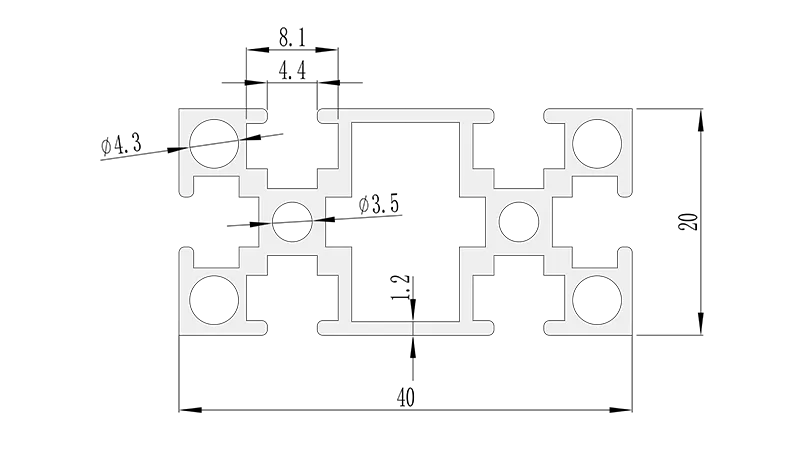
2040 National Standard Profile
45° external bending joint, used for 45° external connection of two aluminum pipes.
Running a small production shop isn't just about making products—it's about making smart choices with every dollar. Whether you're assembling electronics, packaging goods, or building custom parts, the tools and materials you use shape your daily workflow, your team's productivity, and ultimately, your bottom line. One decision that often flies under the radar but carries huge weight? The type of aluminum extrusion profile you choose for workbenches, material racks, and assembly stations. Today, we're diving into two popular options: the 2040 National Standard Profile and the 1530 profile. By the end, you'll know which one delivers the best bang for your buck when you're working with a small team and a tight budget.
Why Aluminum Extrusion Profiles Matter for Small-Scale Shops
First, let's get clear on what we're talking about. Aluminum extrusion profiles are lightweight, hollow aluminum bars shaped into specific cross-sections (like rectangles, squares, or T-shapes) during manufacturing. They're modular, meaning you can bolt, clamp, or snap them together with aluminum profile accessories (think brackets, end caps, or connectors) to build just about anything—workbenches, shelving, carts, even mini conveyor frames. For small shops, this flexibility is a game-changer: you don't need welding skills or expensive tools, and you can reconfigure setups in hours, not days.
But not all profiles are created equal. Sizes matter. The numbers "2040" and "1530" refer to the cross-sectional dimensions in millimeters: 20mm x 40mm for 2040, and 15mm x 30mm for 1530. At first glance, the difference might seem tiny, but when you're buying 10+ meters for a workbench or rack, those millimeters translate to differences in cost, strength, and versatility. Let's break them down.
Meet the Contenders: 2040 vs 1530 Profiles
The 2040 National Standard Profile: The Workhorse
The 2040 National Standard Profile is like the pickup truck of aluminum profiles—sturdy, reliable, and built for work. Its 20mm x 40mm cross-section (often with a T-slot down the middle for accessories) gives it a solid core that can handle more weight than smaller profiles. You'll commonly see it in shops that need durable setups: heavy-duty workbenches, multi-tier material racks, or stations where tools and parts are constantly being placed and removed.
What stands out about 2040 is its adaptability. Because it's a standard size, there's a huge range of aluminum profile accessories designed for it: from simple corner brackets to adjustable feet, cable management clips, and even wheeled casters for mobile workstations. This means if you buy 2040 today, you can easily expand or modify your setup tomorrow without hunting for custom parts.
The 1530 Profile: The Lightweight Budget Option
The 1530 profile, on the other hand, is the compact car of the bunch. At 15mm x 30mm, it's slimmer and lighter than 2040, which translates to two immediate benefits: it's cheaper per meter, and it's easier to handle for quick, lightweight projects. Think small shelving for tools, mobile carts for moving small parts, or temporary assembly stations where heavy loads (over 20kg per linear meter) aren't a concern.
But there's a tradeoff: its smaller size means lower load capacity and fewer accessory options. While you can still find basic brackets and end caps, specialized parts (like heavy-duty hinges or high-load casters) might be harder to source. And if you try to overload it—say, stacking 50kg of parts on a 1530-based shelf—you'll notice sagging or bending over time, which means replacing parts sooner.
Cost Showdown: 2040 vs 1530 by the Numbers
Let's cut to the chase: how do these profiles stack up when you're writing checks? To make this real, we'll compare them across five key areas that matter for small-scale production: upfront material costs, accessory expenses, installation time, load capacity, and lifespan. (Note: Prices here are based on average wholesale rates for aluminum extrusion profile in 2024—your local supplier might vary slightly.)
| Feature | 2040 National Standard Profile | 1530 Profile |
|---|---|---|
| Material Cost (per meter) | $8–$12 | $5–$7 |
| Typical Accessories Cost (per workbench setup) | $35–$50 (brackets, end caps, feet) | $25–$35 (simpler brackets, fewer options) |
| Installation Time (per basic workbench) | 1.5–2 hours (sturdier build, more) | 1–1.5 hours (lighter, fewer parts) |
| Load Capacity (per linear meter) | 80–120 kg (safely supports tools, heavy parts) | 30–50 kg (best for lightweight items, small boxes) |
| Estimated Lifespan (with regular use) | 7–10 years (thicker walls resist bending/wear) | 3–5 years (may sag under repeated heavy use) |
At first glance, 1530 looks cheaper: $5–$7 per meter vs. $8–$12 for 2040, plus lower accessory costs. But let's zoom out. Suppose you need to build a basic workbench (1.8m long, 0.6m deep) and a 2-tier material rack (2m long). For 1530, you'd need ~8 meters of profile and $30 in accessories, totaling ~$86. For 2040, it's ~$105. That's a $19 difference upfront—not nothing for a small shop. But here's the catch: if your workbench holds heavy tools (like a drill press or soldering station), 1530 might start sagging in a year. Replacing that workbench with 1530 again? Another $86. Suddenly, the "cheaper" option costs $172 over 2 years, while the 2040 setup, at $105, is still going strong.
Beyond the Price Tag: Versatility and Long-Term Flexibility
Cost isn't just about what you pay today—it's about what you can do tomorrow. Small production shops rarely stay small forever. Maybe this year you're assembling 50 units a day; next year, it's 200. That growth means you'll need to add workbenches, expand material storage, or even build a mini conveyor. Here's where 2040 National Standard Profile shines: it's a "future-proof" choice.
For example, let's say you start with a 2040 workbench. Six months later, you need a mobile cart to move parts between stations. You can repurpose some of the 2040 profile, add casters, and boom—you've got a cart that can carry 80kg without wobbling. Try that with 1530, and you might end up with a cart that tilts when loaded, risking damaged parts or worker strain. 2040 also plays nicer with other profiles: you can bolt it to larger sizes (like 3030 or 4040) if you need to build something heavier later, whereas 1530's small size limits how it connects to bigger, sturdier systems.
Then there are the accessories. 2040 is an industry standard, so suppliers stock everything from specialized brackets for mounting LED lights under workbenches to adjustable shelves that slide along its T-slots. 1530, being less common, often requires generic or custom parts, which can delay projects or force you to compromise on design. For example, if you need a shelf that tilts for easy part access, 2040 has off-the-shelf hinges; with 1530, you might have to rig something with zip ties or 3D-printed parts—hardly ideal for a professional setup.
Real-World Example: Maria's Electronics Assembly Shop
Let's put this into practice with a story. Maria runs a small electronics assembly shop with 3 employees, building custom circuit boards for local businesses. She needs 2 workbenches (for soldering and testing) and 1 material rack (to hold component bins). Her budget is tight—she's got $300 max to spend on profiles and accessories. Should she go with 2040 or 1530?
Option 1: 1530 Profile
- 2 workbenches (8m of profile total) + 1 rack (4m) = 12m of 1530 profile at $6/m = $72
- Accessories (basic brackets, end caps, feet) = $80 (for 3 setups)
- Total: $152. She saves $148, which she can put toward tools.
But here's the catch: The material rack holds 10 bins of components, each weighing ~8kg. That's 80kg total—way over 1530's 50kg max load. Within 6 months, the rack sags, bins start sliding, and an employee trips over a wobbly shelf. Maria has to replace the rack with 2040, spending another $120 (6m of 2040 at $10/m + $60 in accessories). Now her total is $272, and she's lost time fixing the mess.
Option 2: 2040 National Standard Profile
- 2 workbenches (8m) + 1 rack (4m) = 12m of 2040 profile at $10/m = $120
- Accessories (sturdier brackets, adjustable feet, shelf slides) = $150
- Total: $270. She spends $118 more upfront but avoids replacement costs. The rack holds the 80kg of bins easily, and a year later, when she lands a bigger client, she reconfigures one workbench into a small testing station using extra 2040 parts—no new purchases needed.
For Maria, 2040 wasn't just a better choice—it was the only choice that kept her shop running smoothly as she grew.
When to Choose 1530 (Yes, There Are Cases!)
We've sung 2040's praises, but 1530 isn't useless. If your production line fits one or more of these descriptions, 1530 might be the smarter pick:
- You're building temporary setups (e.g., a pop-up assembly station for a 3-month project).
- Your loads are consistently light (e.g., packaging small items like jewelry or phone cases, where each bin weighs <10kg).
- Space is extremely limited (e.g., a garage shop where even 20mm of extra width blocks walkways).
- You're 100% sure you won't expand in the next 3–5 years (unlikely for most small businesses, but possible).
Final Verdict: 2040 National Standard Profile Wins for Long-Term Cost-Efficiency
For small-scale production shops balancing budget, productivity, and growth, the 2040 National Standard Profile is the clear winner. Yes, it costs more upfront, but its higher load capacity, longer lifespan, and versatility mean you won't be replacing sagging racks or reworking setups every year. When you factor in the cost of downtime, replacement parts, and lost productivity from flimsy equipment, 2040 pays for itself within 18–24 months.
And remember: aluminum profiles aren't just tools—they're investments. The right ones will grow with you, adapt to new projects, and keep your team working efficiently, even when orders pick up. So next time you're scrolling through supplier catalogs, skip the quick, cheap fix. Choose the profile that'll still be standing (and saving you money) when your small shop isn't so small anymore.