- Company Articles
- Industry articles
- Industry standards
- 2040 National Standard Profile vs Wood Framing: Durability & Cost Comparison

2040 National Standard Profile vs Wood Framing: Durability & Cost Comparison
Related Product
2040 National Standard Profile
45° external bending joint, used for 45° external connection of two aluminum pipes.
Choosing the right material for framing or structural projects is a decision that echoes through the lifespan of a build. Whether you're setting up a workshop, constructing a material rack, or designing an industrial workbench, the materials you pick directly impact how well the structure holds up over time—and how much it costs to build and maintain. For decades, wood has been the go-to for many, prized for its familiarity and initial affordability. But in recent years, metal alternatives like the 2040 national standard profile have emerged as strong contenders, especially in industrial and commercial settings. Today, we're diving deep into two popular options: the 2040 national standard profile (a type of aluminum extrusion profile) and traditional wood framing. We'll break down their durability, cost, and practicality to help you decide which one truly delivers long-term value.
What Are We Comparing, Exactly?
Before we jump into the details, let's clarify what each material is. Wood framing is straightforward: it typically uses dimensional lumber (like 2x4s or 2x6s) cut to size and joined with nails, screws, or brackets. It's been used for centuries in everything from homes to furniture, valued for its natural look and ease of cutting.
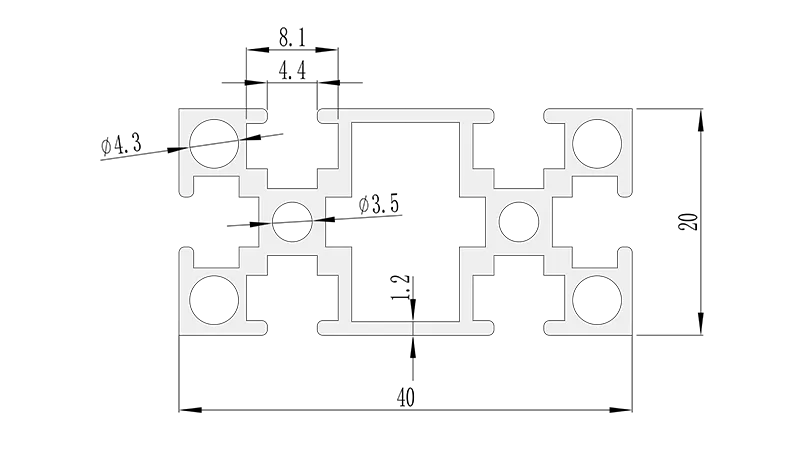
On the other side, the 2040 national standard profile is a type of aluminum extrusion profile. Aluminum extrusion profiles are created by forcing heated aluminum through a die to form specific cross-sectional shapes, resulting in lightweight, rigid, and highly customizable pieces. The "2040" refers to its dimensions: 20mm in width and 40mm in height, making it a versatile choice for medium-duty applications like workbenches, material racks, and lean system setups. Unlike wood, these profiles come with built-in T-slots, which allow for easy attachment of accessories like brackets, shelves, or panels—no drilling or welding required.
Durability: Which Material Stands the Test of Time?
Wood Framing: Vulnerable to the Elements and Wear
Wood is a organic material, and that's both its charm and its downfall. Let's start with its strengths: when properly treated, wood can handle moderate loads and looks warm and natural. But durability? That's where it starts to falter.
First, moisture is wood's worst enemy. Even pressure-treated lumber, designed to resist rot, can warp, crack, or split if exposed to prolonged humidity or rain. In workshops or factories where spills are common, or in garages with poor ventilation, wood framing absorbs moisture like a sponge. Over time, this leads to swelling, which can throw off the structure's alignment—imagine a workbench that's no longer level because the legs warped, or a material rack that sags under weight because the crossbeams bent.
Then there are pests. Termites, carpenter ants, and even mold love wood. A small infestation can weaken the frame from the inside out, turning a solid structure into a safety hazard. And once pests take hold, treating them often means replacing damaged wood, adding unexpected costs.
Structural integrity is another concern. Wood has "grain"—natural lines that determine its strength. If a board is cut against the grain, it's more likely to snap under stress. Over time, even well-cut wood can weaken due to repeated loading and unloading (like placing heavy tools on a workbench day after day). Unlike metal, wood doesn't "bounce back" from stress; it deforms permanently, leading to sagging shelves or wobbly frames.
On average, untreated wood framing in high-moisture environments might last 5–10 years before needing repairs. Treated wood can stretch that to 15–20 years, but only if it's maintained—sanded, repainted, and sealed regularly.
2040 National Standard Profile: Built to Resist, Not Just Survive
Now, let's talk about the 2040 national standard profile. As an aluminum extrusion profile, it's engineered for durability from the ground up. Aluminum itself is naturally resistant to corrosion, thanks to a thin oxide layer that forms on its surface, protecting it from rust and moisture. That means even in damp workshops or outdoor settings, the 2040 profile won't warp, rust, or degrade—no sealing or painting required.
Pests? They don't stand a chance. Aluminum isn't a food source for termites or mold, so you'll never have to worry about hidden infestations weakening the structure. This is a game-changer for industrial settings where hygiene and reliability are non-negotiable—like in food processing plants or cleanrooms, where wood's organic nature could harbor bacteria.
Structurally, aluminum extrusion profiles are designed for strength without bulk. The 2040 national standard profile, with its T-slot design, distributes weight evenly across the frame. Unlike wood, aluminum doesn't have a grain, so it's consistently strong in all directions. This makes it ideal for heavy-duty applications, like supporting tool racks or holding up a workbench loaded with machinery. Even with daily use, aluminum frames maintain their shape and alignment for decades.
Another advantage? Aluminum is inherently lightweight, but that doesn't mean it's flimsy. The 2040 profile has a high strength-to-weight ratio, meaning it can handle significant loads without being cumbersome to install. This is especially useful for mobile setups, like turnover trolleys or workbenches on casters—you get the strength of metal without the hassle of moving heavy wood.
How long does it last? In indoor industrial settings, a well-built 2040 national standard profile frame can easily last 30–50 years. Even outdoors, with exposure to rain and sun, it'll outlive wood by decades. And when it does reach the end of its life, aluminum is 100% recyclable, making it a sustainable choice too.
Cost: Beyond the Initial Price Tag
Cost is often the first thing people consider, but it's rarely as simple as comparing the price per foot of wood vs. aluminum. To truly understand value, we need to look at the "total cost of ownership"—initial materials, labor, maintenance, and replacement over time.
Wood Framing: Low Upfront Cost, High Long-Term Expenses
At first glance, wood seems cheaper. A standard 2x4 pine board costs around $3–$5 per linear foot, depending on the grade. For a small project, like a basic workbench, you might spend $50–$100 on lumber. That's hard to beat, especially if you're on a tight budget today.
But here's the catch: wood needs ongoing care. To protect it from moisture and pests, you'll need to treat it with sealant or paint every 1–2 years. A gallon of quality wood sealant costs $20–$40, and if you're not handy, hiring someone to apply it adds labor fees. Over 10 years, that's $200–$400 in maintenance alone for a single frame.
Then there's replacement. Even with maintenance, wood warps, rots, or gets damaged. A sagging shelf might need new boards; a pest-infested frame could require a full rebuild. Let's say your wood workbench lasts 10 years before needing major repairs. Replacing warped legs or cracked beams could cost $150–$300, and you'll have to repeat this cycle every decade.
Labor is another hidden cost. Wood requires precise cutting, drilling, and fastening. If you're not experienced, you might waste boards on mistakes (and wood isn't cheap to replace). Hiring a carpenter to build a custom wood frame? That could add $300–$500 to the project cost, depending on complexity.
2040 National Standard Profile: Higher Initial Cost, Lower Lifespan Expenses
Aluminum extrusion profiles like the 2040 national standard profile do have a higher upfront cost. You'll pay around $8–$12 per linear foot for the profile itself, plus accessories like brackets or connectors (which are often sold separately). For that same small workbench, materials might cost $150–$200 initially—double the wood price.
But here's where aluminum shines: almost zero maintenance. No sealant, no paint, no termite treatments. Once it's installed, you can forget about it. There's no need to sand, refinish, or repair warped parts. Over 10 years, that's $0 in maintenance costs—compared to $200–$400 for wood.
Replacement? It's rarely needed. A 2040 profile frame built with quality aluminum profile accessories (like brackets and connectors) will last 30+ years without major issues. Even if a single part breaks (say, a connector), aluminum accessories are modular and easy to swap out—no need to rebuild the entire frame. A replacement bracket costs $5–$10, compared to $50+ for new wood boards.
Labor is also simpler with aluminum. The T-slot design of the 2040 national standard profile means you can assemble frames with basic tools—no sawing or drilling required. Just slide brackets into the slots and tighten with a hex key. This saves time (and money) whether you're doing it yourself or hiring help. A handyperson could build an aluminum workbench in an afternoon, compared to a full day for wood (which requires measuring, cutting, and securing with screws).
Let's crunch the numbers for a 20-year lifespan:
- Wood Framing: $100 initial materials + $400 maintenance (20 years of sealant) + $300 replacement (2 rebuilds) = $800 total
- 2040 National Standard Profile: $200 initial materials + $0 maintenance + $20 replacement (1 bracket) = $220 total
Over two decades, aluminum ends up costing less than a third of wood. That's a massive difference—and it only grows for larger projects, like material racks or lean system setups.
Practicality: When to Choose Wood, When to Choose Aluminum
Durability and cost are critical, but practicality matters too. There are scenarios where wood still makes sense, and others where aluminum is clearly superior.
Best for Wood: Small, Short-Term, or Aesthetic Projects
Wood is hard to beat if you need a quick, temporary structure—like a seasonal display rack or a DIY shelf that might get moved in a year. Its natural look also works well for residential projects, like a bookshelf or a garden trellis, where appearance matters more than industrial strength. If you're on a shoestring budget today and don't mind replacing the structure in 5–10 years, wood could be a stopgap.
Best for 2040 National Standard Profile: Industrial, High-Use, or Long-Term Setups
Aluminum extrusion profiles like the 2040 national standard profile are tailor-made for industrial environments. Think workshops, factories, or warehouses where equipment is heavy, usage is constant, and downtime from repairs is costly. They're also ideal for lean system setups, where efficiency and adaptability are key—since aluminum frames are modular, you can reconfigure them as your needs change (add a shelf, extend a workbench, or move a material rack) without rebuilding from scratch.
Moisture-prone areas? Aluminum is a no-brainer. Laundries, garages, or outdoor covered spaces where wood would rot quickly? The 2040 profile laughs off humidity. And if you need mobility—like a turnover trolley or a workbench on casters—aluminum's lightweight strength makes it easy to move without sacrificing stability.
Side-by-Side Comparison: Key Factors at a Glance
| Factor | 2040 National Standard Profile (Aluminum Extrusion) | Wood Framing |
|---|---|---|
| Expected Lifespan | 30–50 years (indoor); 20–30 years (outdoor) | 5–10 years (untreated); 15–20 years (treated) |
| Moisture Resistance | Excellent (no warping, rust, or rot) | Poor (warps, swells, or rots without treatment) |
| Pest Resistance | Immune to termites, mold, and insects | Vulnerable to pests; requires chemical treatments |
| Maintenance Required | None (no painting, sealing, or repairs) | High (seal/paint every 1–2 years; frequent repairs) |
| Initial Material Cost | Higher ($8–$12/linear foot) | Lower ($3–$5/linear foot) |
| Total Cost Over 20 Years | ~$220 (small project) | ~$800 (small project) |
| Assembly Difficulty | Easy (modular T-slot design; no cutting needed) | Moderate (requires cutting, drilling, and precise measuring) |
| Weight | Lightweight (easy to move; high strength-to-weight ratio) | Heavier (bulky to transport and install) |
| Sustainability | 100% recyclable; low energy to recycle | Depends on sourcing (may contribute to deforestation) |
Final Thoughts: Investing in Long-Term Value
Wood framing has its place, but when it comes to durability and cost-effectiveness, the 2040 national standard profile pulls ahead—especially for industrial, commercial, or long-term projects. Its resistance to moisture, pests, and wear means it lasts decades with zero maintenance, while its modular design makes assembly and reconfiguration a breeze. Yes, the upfront cost is higher, but the total cost of ownership over 20+ years is a fraction of wood's.
If you're building something that needs to stand up to daily use, humidity, or heavy loads—like a workbench, a material rack, or a lean system—the 2040 national standard profile isn't just an alternative to wood; it's an upgrade. It's an investment in a structure that works as hard as you do, without costing you time or money down the line.
At the end of the day, the best material depends on your needs. But if you want durability, low maintenance, and true long-term value, aluminum extrusion profiles like the 2040 national standard profile are hard to beat. After all, a structure that lasts 50 years isn't just a purchase—it's a legacy.