- Company Articles
- Industry articles
- Industry standards
- 2060 EU Standard Aluminum Profile for Conveyor Systems: Design Tips

2060 EU Standard Aluminum Profile for Conveyor Systems: Design Tips
Related Product
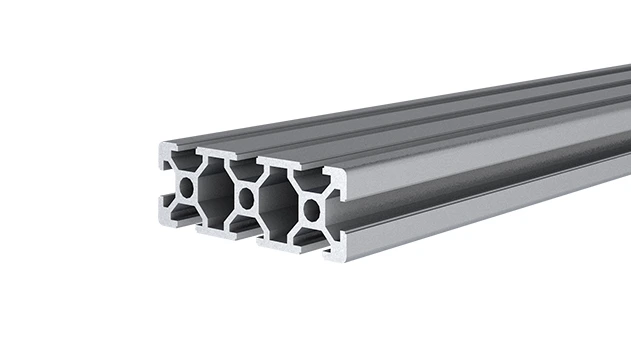
2060 EU Standard Aluminum Profile
2060 is a 2.00 x 4.00CM fractional 20 series square extrusion T-slot profile with four open T-slots, two side with 2.00cm face, the other side with 6.00cm face. The profile has align-a-grooves to assist in aligning connecting profiles.
The Unsung Hero of Smooth Production: Why Conveyors Deserve Better Design
Walk into any bustling manufacturing plant, warehouse, or distribution center, and you'll quickly spot the backbone of the operation: conveyor systems. These unassuming lines of rollers, belts, and tracks keep products moving—from raw materials to assembly stations, and finally to packaging and shipping. But here's the thing: not all conveyors are created equal. A poorly designed system can turn into a daily headache—jamming, slowing down workflows, or even breaking down entirely when you need it most. If you've ever stood staring at a pile of backed-up parts because a conveyor couldn't keep up, you know exactly what I'm talking about.
The good news? The right materials can transform even the most frustrating conveyor into a seamless, efficient workhorse. And in the world of conveyor design, one material has been quietly revolutionizing how we build these systems: the 2060 EU Standard Aluminum Profile. It's not just another piece of metal—it's a flexible, durable, and surprisingly smart solution that addresses the most common pain points in conveyor design. Let's dive into why this profile matters, and how to design with it to create conveyors that don't just work, but elevate your entire production line.
What Even Is a 2060 EU Standard Aluminum Profile? Let's Break It Down
First things first: let's demystify the term. "2060 EU Standard Aluminum Profile" might sound like industry jargon, but it's actually pretty straightforward. Let's start with the numbers: "2060" refers to the profile's cross-sectional dimensions, measured in millimeters. Specifically, it's 20mm wide and 60mm tall—think of it as a long, slender beam with a precise, consistent shape. Then there's "EU Standard," which means it's manufactured to strict European quality and dimensional standards. That might not sound exciting, but trust me—consistency is everything when you're building modular systems like conveyors. You don't want to waste time trying to force mismatched parts together because one supplier cut corners on measurements.
But the real magic is in the "aluminum extrusion profile" part. Aluminum extrusion is a manufacturing process where heated aluminum is pushed through a die to create complex cross-sectional shapes. For the 2060 profile, this process results in a lightweight yet surprisingly strong structure with built-in T-slots—those handy grooves running along the length of the profile that let you attach accessories (like brackets, rollers, or workbench surfaces) anywhere you need them. Unlike traditional steel profiles with pre-drilled holes (which limit where you can attach things), T-slots give you endless flexibility. Need to move a roller track a few inches to the left? No problem—just loosen the bolts, slide the accessory, and tighten. It's that simple.
Quick Fact:
Aluminum extrusion profiles like the 2060 are 30-50% lighter than steel profiles of the same strength. That means easier installation, lower shipping costs, and less strain on your facility's floors and support structures. And since aluminum doesn't rust, you won't have to worry about corrosion—even in humid or dusty environments like food processing plants or automotive workshops.
So why does this matter for conveyors? Conveyors are all about balance: they need to be strong enough to carry heavy loads, flexible enough to adapt to changing production needs, and durable enough to withstand daily wear and tear. The 2060 EU Standard Aluminum Profile checks all three boxes. Its slender 20x60mm shape makes it ideal for lightweight to medium-duty conveyors (think: moving small components, packages, or parts weighing up to 50kg per linear meter), while its T-slots and compatibility with aluminum profile accessories mean you can customize it to fit almost any workflow.

Design Tip 1: Start with Load Capacity—Because "Good Enough" Will Cost You Later
Let's get practical. The first rule of conveyor design with the 2060 profile? Know your load. It sounds obvious, but you'd be surprised how many teams guess at how much weight their conveyor needs to handle—only to end up with sagging tracks or jammed rollers a few months later. The 2060 profile is strong, but it's not indestructible. So, before you start assembling, ask yourself: What am I actually moving?
Let's break it down. Load capacity isn't just about the weight of the product itself—it's about dynamic vs. static loads. Static load is the weight when the conveyor is stopped (like a pile of parts waiting to be moved). Dynamic load is the weight when the conveyor is running, plus the force of acceleration and deceleration (think: starting and stopping the conveyor, which adds stress to the system). For example, a conveyor moving 10kg electronic components might seem light, but if it starts and stops 50 times an hour, that repeated stress can add up.
The 2060 EU Standard Aluminum Profile has a recommended maximum static load of around 80-100kg per linear meter when properly supported (more on support spacing later). For dynamic loads, aim for 50-70kg per linear meter to be safe. If your products are heavier than that—say, 100kg+—you might need to pair the 2060 with a thicker aluminum profile (like the 3060 or 4040) or add support brackets. But for most small to medium-sized components—think automotive sensors, pharmaceutical vials, or cosmetic packaging—the 2060 is more than up to the task.
| Profile Type | Dimensions (mm) | Max Static Load (kg/m) | Common Conveyor Applications |
|---|---|---|---|
| 2020 EU Standard | 20x20 | 30-40 | Light-duty: small electronics, lab samples |
| 2060 EU Standard | 20x60 | 80-100 | Medium-duty: components, packages, small parts |
| 3030 EU Standard | 30x30 | 120-150 | Heavy-duty: automotive parts, large boxes |
Another key factor? Support spacing. Even if your load is within the 2060's limits, if you space the support legs too far apart, the profile will sag. For the 2060, we recommend support legs every 80-100cm for medium loads (50kg/m) and every 60-80cm for heavier loads (70kg/m). Think of it like building a bridge: the more supports you have, the less stress on the structure. And since the 2060 is lightweight, adding extra supports won't add much weight or cost—so there's no reason to skimp.
Here's a real-world example: A small electronics manufacturer I worked with once designed a conveyor using the 2060 profile to move circuit boards (each weighing ~2kg). They spaced the supports 150cm apart, assuming "it's just circuit boards—how heavy can they be?" Within a month, the middle of the conveyor was sagging, causing boards to jam as they hit the dip. We added two extra supports (spaced 75cm apart), and the problem vanished. Moral of the story? When in doubt, add a support. It's cheaper than replacing bent profiles later.
Design Tip 2: Lean into Aluminum Profile Accessories—They're the Secret to Flexibility
One of the biggest advantages of the 2060 EU Standard Aluminum Profile is its compatibility with aluminum profile accessories. These little parts—brackets, connectors, end caps, and more—turn a simple beam into a fully customizable conveyor system. And if you're not using them, you're missing out on the profile's biggest strength: adaptability.
Let's start with the basics: T-slot connectors. The 2060 profile has T-slots running along its length (typically two or three slots, depending on the manufacturer), which means you can attach accessories anywhere—no pre-drilled holes required. For conveyor design, this is a game-changer. Need to add a side guide to keep parts from falling off? Use a 90° aluminum profile connector to attach a strip of aluminum guide rail. Want to mount a roller track at an angle? Slide a swivel bracket into the T-slot and adjust to the perfect tilt. Unlike steel profiles, where you're stuck with holes drilled at fixed intervals, T-slots let you tweak and adjust as your needs change.
Here are the must-have accessories for 2060 conveyor systems:
- End Caps: These plastic or aluminum caps snap onto the ends of the 2060 profile to prevent dust, debris, or fingers from getting stuck in the T-slots. A small detail, but it makes maintenance easier and keeps your workspace safer.
- Corner Brackets: For turning conveyor corners (e.g., from a straight line to a 90° angle), 90° or 135° aluminum profile connectors let you join two 2060 profiles securely without welding. Look for brackets with built-in gussets (reinforcing triangles) for extra strength.
- Roller Track Mounts: To attach roller track to the 2060 profile, use placon mounts (those flat, L-shaped brackets with T-slot bolts). They come in "flat" or "drop" styles—flat mounts keep the roller track flush with the profile, while drop mounts lower it slightly for easier loading/unloading.
- Leveling Feet: Even the most carefully designed conveyor will wobble if the floor isn't level. Adjustable aluminum pipe adjustable leveling feet screw into the bottom of the 2060 profile, letting you tweak the height by a few millimeters to keep everything stable.
Pro Hack:
Mix and match accessories from different suppliers—but stick to EU-standard parts. EU-standard aluminum profiles and accessories are designed to work together, so you won't have to worry about T-slot sizes or bolt compatibility. Non-standard parts might be cheaper, but they'll cost you time (and frustration) when they don't fit.
Let's talk about customization. Suppose you run a small bakery and need a conveyor to move trays of cookies from the oven to the cooling rack. In the morning, you're moving small 1kg trays; in the afternoon, larger 3kg trays. With the 2060 profile and aluminum profile accessories, you can easily swap out roller tracks (using quick-release placon mounts) or add side guides (with T-slot brackets) to accommodate the bigger trays. No need to buy a whole new conveyor—just reconfigure the one you have. That's the power of modular design.
Design Tip 3: Master Roller Track Integration—Because Smooth Flow = Happy Teams
Conveyors are only as good as their ability to move things smoothly. And when it comes to smooth movement, nothing matters more than the roller track. Roller track is the part of the conveyor that actually touches the product—the series of small wheels (rollers) that let items glide along with minimal friction. Pairing the right roller track with your 2060 EU Standard Aluminum Profile can mean the difference between a conveyor that hums and one that grinds to a halt.
First, choose the right roller type. Roller tracks come in two main materials: plastic and steel. Plastic rollers (like the plastic roller track guide rail yellow or grey) are lightweight, quiet, and gentle on delicate products (think: electronics or glassware). They're also cheaper and easier to replace. Steel rollers (like the 40 steel roller track with yellow or black wheels) are stronger and better for heavier loads or rough surfaces (e.g., metal parts with sharp edges). For most 2060-based conveyors (medium-duty, small to medium parts), plastic rollers are the way to go—they're low-maintenance and reduce noise, which makes for a nicer work environment.
Next, spacing is key. Rollers that are too far apart will cause products to tip or get stuck; too close, and you're wasting money on unnecessary parts. A good rule of thumb: the distance between rollers should be no more than half the length of the smallest product you're moving. For example, if you're moving 10cm-long circuit boards, space the rollers 5cm apart. That way, at least two rollers are always supporting the product, preventing sagging.
Now, mounting the roller track to the 2060 profile. This is where those placon mounts we talked about earlier come in. Roller track placon mounts are designed to attach the track to the aluminum profile securely. For the 2060, you'll want to use "flat" or "high" placon mounts, depending on how high you want the roller track to sit. Flat mounts keep the track close to the profile (good for low-profile conveyors), while high mounts raise it up (useful if you need to fit something under the conveyor, like a waste bin or cable management tray).
Let's visualize this: Imagine you're building a conveyor for a cosmetics factory, moving small 5cm-wide lipstick tubes. You'd use the 2060 profile as the main frame, attach flat placon mounts every 30cm along the T-slots, and then snap a plastic roller track (grey or yellow—whatever matches your facility's color scheme!) into the mounts. Space the rollers 2.5cm apart (half the length of the lipstick tubes) to keep them stable, and add aluminum guide rail a along the sides to prevent the tubes from rolling off. The result? A quiet, smooth conveyor that moves tubes from filling to labeling without a single jam.
Common Mistake:
Forgetting about slope. If your conveyor isn't perfectly level, products might roll too fast (causing collisions) or too slow (backing up). Use a spirit level when mounting the 2060 profile, and if you need a slight slope (e.g., to use gravity instead of motors), aim for no more than 3-5 degrees. Steeper slopes can cause products to tip or damage delicate items.
Design Tip 4: Ergonomics—Because Your Team Deserves a Conveyor That Works With Them
Conveyors aren't just about moving products—they're about moving them in a way that makes life easier for the people using them. Poorly designed conveyors force operators to bend, reach, or strain, leading to fatigue, mistakes, and even injuries. The 2060 EU Standard Aluminum Profile's lightweight design and modularity make it easy to build ergonomic conveyors that keep your team comfortable (and productive).
Start with height. The ideal conveyor height depends on what your team is doing. For loading/unloading by hand, the top of the roller track should sit at elbow height (about 75-85cm for most adults). If operators are standing, that means the 2060 profile frame (including legs) should be around 70-80cm tall. If they're sitting, lower it to 65-70cm. With adjustable leveling feet and caster wheels (yes, you can add casters to the 2060 profile using castor install base plates!), you can tweak the height on the fly to fit different operators or tasks.
Next, consider reach distance. Operators shouldn't have to stretch more than 50-60cm to grab a product from the conveyor. If your conveyor is wider than that, add a center support bracket (using those handy T-slots!) and split the roller track into two lanes. That way, products are always within easy reach. For example, a 120cm-wide conveyor can be split into two 50cm lanes with a 20cm gap in the middle—no more leaning over the track.
Another ergonomic win: tilt. Sometimes, tilting the conveyor slightly (5-10 degrees) can make it easier to pick up products. For example, in a warehouse where operators are scanning packages, tilting the conveyor so the packages face upward reduces neck strain. With swivel placon mounts and 45° aluminum profile connectors, you can angle the 2060 profile and roller track to the perfect position.
Let's wrap this up with a story. A local electronics repair shop once came to me with a problem: their technicians were complaining about back pain from leaning over their conveyor to reach circuit boards. The conveyor was too low (60cm) and too wide (150cm), forcing them to bend and stretch all day. We redesigned it using the 2060 profile: raised the height to 80cm, split the roller track into two 60cm lanes with a center support, and added a slight 5° tilt so the boards faced upward. Within a week, the technicians reported less pain—and the shop saw a 15% increase in repair speed, since no one was wasting time adjusting their posture.
Design Tip 5: Maintenance—Keep It Simple, Keep It Running
Even the best conveyor will fail if you ignore maintenance. The good news? The 2060 EU Standard Aluminum Profile is designed to be low-maintenance—but you still need to put in a little effort. Here's how to keep your conveyor running smoothly for years:
First, clean the T-slots. Dust, grease, and debris love to build up in the T-slots of aluminum profiles, which can make it hard to adjust accessories later. Once a month, run a soft brush or compressed air through the slots to clear out gunk. For stubborn grime, wipe with a damp cloth and mild soap—aluminum is corrosion-resistant, so you don't have to worry about water damage.
Next, check the roller track. Rollers can get stuck if dirt builds up in the bearings or if the axles loosen. Every two weeks, spin each roller by hand—if it doesn't turn smoothly, spray a little lubricant (WD-40 works) into the bearing. If a roller is bent or cracked, replace it immediately (remember those quick-release placon mounts? They make swapping rollers a 2-minute job, not a 2-hour one).
Tighten the bolts. Vibrations from daily use can loosen the T-slot bolts holding your accessories in place. Once a month, go along the conveyor with a hex key and give each bolt a gentle tighten. Don't over-tighten—you could strip the T-slot threads. Just enough to keep things secure.
Finally, inspect the 2060 profile itself. Look for dents, cracks, or bending—especially around supports and joints. Aluminum is strong, but it can warp if overloaded or hit by heavy objects. If you spot damage, replace the section immediately. A bent profile will throw off the entire conveyor's alignment, leading to jams and uneven wear.
Maintenance Checklist (Print and Keep by the Conveyor!):
- Daily: Wipe down roller track, check for jams.
- Weekly: Spin rollers, lubricate if needed.
- Monthly: Clean T-slots, tighten bolts, inspect profile for damage.
- Quarterly: Check leveling feet and casters (if used) for wear.
- Daily: Wipe down roller track, check for jams.
- Weekly: Spin rollers, lubricate if needed.
- Monthly: Clean T-slots, tighten bolts, inspect profile for damage.
- Quarterly: Check leveling feet and casters (if used) for wear.
Case Study: How a Small Automotive Shop Transformed Their Line with 2060 Profile
Let's put all these tips into action with a real example. A small automotive parts manufacturer near me (let's call them "AutoParts Co.") was struggling with their old conveyor system. It was a hodgepodge of steel tracks and wooden frames, heavy, noisy, and impossible to adjust. They were moving small plastic components (door handles, about 1kg each) from molding to assembly, but the conveyor jammed constantly, and the steel tracks rusted in their humid workshop. They needed a better solution—on a tight budget.
We recommended a conveyor built with the 2060 EU Standard Aluminum Profile. Here's how we designed it:
- Frame: 2060 aluminum profiles as the main rails, supported by adjustable leveling feet every 80cm (to handle the 1kg parts and dynamic load from starting/stopping).
- Roller Track: Plastic roller track guide rail grey (quiet, rust-proof) with rollers spaced 2.5cm apart (half the length of the door handles).
- Accessories: 90° aluminum profile connectors for the corners, aluminum guide rail b along the sides to keep parts from falling off, and end caps to seal the T-slots.
- Ergonomics: Height set to 75cm (elbow height for their assembly workers), with a slight 3° slope to let parts roll gently by gravity (no motor needed—saving on electricity!)
The result? The new conveyor cost 30% less than a steel alternative, took two workers only 4 hours to assemble (thanks to the T-slots and quick-connect accessories), and ran silently. Best of all, when AutoParts Co. introduced a new, slightly larger door handle (12cm long), they just adjusted the roller spacing (using the T-slots) and added wider guide rails—no new conveyor needed. Six months later, they reported zero jams, lower maintenance costs, and happier workers (no more straining to unjam rusted steel tracks).
Conclusion: Build Conveyors That Grow With You
At the end of the day, the 2060 EU Standard Aluminum Profile isn't just a material—it's a tool for building conveyor systems that adapt, endure, and empower your team. By focusing on load capacity, leveraging aluminum profile accessories, integrating roller track thoughtfully, prioritizing ergonomics, and keeping up with simple maintenance, you can create a conveyor that doesn't just move products—it moves your business forward.
So, what's next? Grab a tape measure, list out your products' weights and sizes, and start sketching. Remember: the best conveyor is one that's designed for your unique needs. And with the 2060 profile and a little creativity, the possibilities are endless.
Here's to smoother workflows, happier teams, and conveyors that finally work as hard as you do.