- Company Articles
- Industry articles
- Industry standards
- 2060 EU Standard Aluminum Profile: Key Advantages for Automotive Manufacturing

2060 EU Standard Aluminum Profile: Key Advantages for Automotive Manufacturing
Related Product
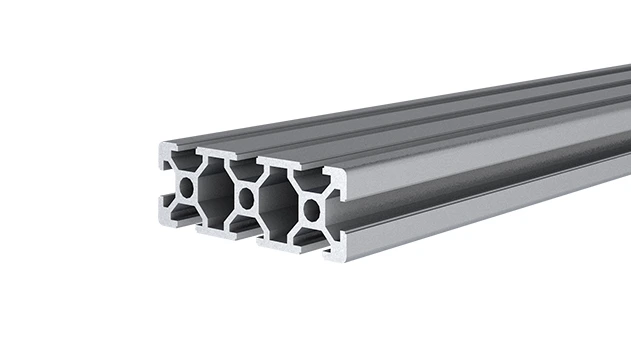
2060 EU Standard Aluminum Profile
2060 is a 2.00 x 4.00CM fractional 20 series square extrusion T-slot profile with four open T-slots, two side with 2.00cm face, the other side with 6.00cm face. The profile has align-a-grooves to assist in aligning connecting profiles.
In the high-stakes world of automotive manufacturing, every second counts. Production lines hum with precision, workers move with purpose, and the pressure to meet deadlines while maintaining quality is relentless. But here's the thing: the tools and structures that keep these operations running—from assembly workbenches to material transport systems—often don't get the attention they deserve. Many manufacturers still rely on outdated materials that slow down processes, increase costs, or limit flexibility. That's where the 2060 EU Standard Aluminum Profile comes in. This unassuming yet powerful component is quietly revolutionizing how automotive plants operate, offering a blend of strength, adaptability, and efficiency that's hard to match. Let's dive into why this aluminum extrusion profile has become a go-to choice for forward-thinking manufacturers.
What Exactly Is the 2060 EU Standard Aluminum Profile?
Before we jump into its advantages, let's get clear on what we're talking about. The 2060 EU Standard Aluminum Profile is a specific type of aluminum extrusion profile—meaning it's shaped by forcing heated aluminum through a die to create a consistent cross-section. The "2060" refers to its dimensions: 20mm in width and 60mm in height, making it a versatile middleweight in the world of industrial profiles. What sets it apart, though, is its compliance with EU standards, which ensure strict quality control, safety, and performance benchmarks. This isn't just any aluminum bar; it's a precision-engineered solution designed to meet the rigorous demands of modern manufacturing.
But the profile itself is only part of the story. What truly makes it indispensable is its compatibility with a wide range of aluminum profile accessories—think connectors, brackets, end caps, and hinges. These accessories turn a simple length of aluminum into a building block for almost anything: workbenches, material racks, conveyor systems, you name it. It's like a grown-up version of building blocks, but instead of creating castles, you're building production lines that can keep up with the fastest cars on the planet.
Advantage 1: Structural Integrity Without the Bulk
Automotive manufacturing isn't for the faint of heart. Assembly lines support heavy tools, parts, and sometimes even workers. A flimsy structure here isn't just inefficient—it's dangerous. The 2060 profile shines in this area, offering impressive structural integrity without the weight of traditional materials like steel. Let's put this into perspective: aluminum has a strength-to-weight ratio that's roughly three times higher than steel. That means a 2060 profile frame can support the same load as a steel frame but weigh significantly less. Why does that matter? For starters, lighter structures are easier to move, reconfigure, and install. Imagine needing to shift a workbench (a staple in any automotive plant) to accommodate a new production line layout. With a steel workbench, you might need a forklift and a team of workers. With one built from 2060 aluminum profiles? Two people could handle it, saving time and reducing the risk of workplace injuries.
But don't mistake "lightweight" for "weak." The 2060 profile's design—with its hollow core and reinforced edges—distributes weight evenly, making it surprisingly tough. In tests, it's been shown to withstand static loads of up to 500kg per linear meter, which is more than enough for most automotive applications, from holding engine components to supporting heavy-duty power tools. And because it's aluminum, it won't rust or corrode, even in the oily, humid environments common in automotive plants. That means less maintenance, fewer replacements, and more uptime—all critical in an industry where downtime can cost thousands of dollars per minute.

Advantage 2: Modularity That Keeps Up with Change
If there's one constant in automotive manufacturing, it's change. New car models, updated safety regulations, and shifting consumer demands mean production lines need to adapt quickly. Here's where the 2060 profile's modularity—powered by aluminum profile accessories—becomes a game-changer. Unlike welded steel structures, which are fixed and hard to modify, aluminum profiles are designed to be assembled and disassembled with ease. Thanks to accessories like T-slot connectors, corner brackets, and end caps, you can build a structure in the morning and reconfigure it in the afternoon without cutting, welding, or specialized tools.
Let's take a common scenario: a plant needs to add a new roller track to its assembly line to transport smaller components. With traditional steel roller tracks, this might involve custom fabrication, welding, and days of downtime. With 2060 aluminum profiles and compatible roller track accessories? You can bolt the profiles together, attach the roller track brackets, and have the new system up and running by the end of the shift. Even better, if the next month brings another change, you can take it apart and reuse the components elsewhere. This kind of flexibility isn't just convenient—it's strategic. It allows manufacturers to respond to market changes faster, reduce waste (since components aren't thrown away), and stay ahead of competitors stuck with rigid infrastructure.
Another example: workbenches. Automotive assembly workbenches need to be customized for specific tasks—some might require integrated tool holders, others need ESD (electrostatic discharge) protection, and some might need to be height-adjustable for ergonomic reasons. With 2060 profiles, you can mix and match accessories to create exactly what you need. Want a shelf under the workbench? Add a few brackets and a panel. Need to attach a monitor arm for digital work instructions? Use a T-slot nut to secure it. The possibilities are nearly endless, and because the accessories are standardized, you don't have to worry about compatibility issues. It's like building with Lego, but for industrial equipment.
Advantage 3: Corrosion Resistance for Long-Term Reliability
Walk into any automotive plant, and you'll notice a few things: oil, coolant, cleaning agents, and humidity. These are all part of the job, but they're also enemies of metal structures. Steel, for example, is prone to rust when exposed to moisture and chemicals, which means frequent repainting, repairs, or replacements. Over time, that adds up—both in terms of cost and downtime. The 2060 EU Standard Aluminum Profile, however, is naturally resistant to corrosion. Aluminum forms a thin oxide layer when exposed to air, which acts as a protective barrier against rust and chemical damage. This layer is self-healing, too: if it gets scratched, it reforms on its own, ensuring long-term durability.
This resistance is a big deal for automotive manufacturers. Take material racks, for instance. These racks hold everything from nuts and bolts to larger components like door panels, and they're often located near wash stations or in areas with high humidity. A steel rack might start showing signs of rust within a year, weakening its structure and potentially contaminating parts with rust particles. An aluminum rack built with 2060 profiles? It could last a decade or more with minimal maintenance. The same goes for roller tracks used to transport parts through wash or coating processes—aluminum won't corrode, even when splashed with water or cleaning solutions. This longevity not only reduces replacement costs but also ensures a safer work environment, as there's less risk of structural failure.
For plants that operate in harsh environments—like those near the coast with salt air, or in regions with extreme temperature fluctuations—the corrosion resistance of 2060 profiles is even more valuable. It's one less thing to worry about, allowing maintenance teams to focus on more critical tasks instead of repainting or patching up rusted steel.
Advantage 4: Cost-Effectiveness Over the Lifespan
At first glance, aluminum profiles might seem more expensive than steel. After all, aluminum is a premium material, and the initial cost of purchasing 2060 profiles and aluminum profile accessories can be higher than buying steel tubing. But here's the catch: cost isn't just about the upfront price tag. It's about the total cost of ownership over the lifespan of the product. When you factor in installation, maintenance, replacement, and energy costs, the 2060 profile often comes out ahead.
Let's break it down. Installation: Aluminum is lighter than steel, so it's easier and cheaper to transport and install. You don't need heavy machinery or specialized labor to move and assemble 2060 profiles, which cuts down on installation time and labor costs. Maintenance: As we discussed, aluminum doesn't rust, so you save on painting, repairs, and replacements. A steel structure might need repainting every 2–3 years, costing thousands of dollars each time; aluminum needs nothing more than an occasional wipe-down. Energy costs: Lighter structures are easier to move, which can reduce energy usage for material handling equipment like forklifts. Even small savings here add up over time.
Then there's the issue of scalability. Because 2060 profiles are modular, you can start small and expand as needed. For example, if a manufacturer initially builds a single workbench but later needs three more, they can simply order additional profiles and accessories instead of buying an entirely new system. This incremental approach reduces upfront investment and avoids overbuilding. Compare that to steel, where you might have to weld new sections onto an existing structure, which is both costly and time-consuming.
| Feature | 2060 EU Aluminum Profile | Steel Tubing | Plastic Extrusions |
|---|---|---|---|
| Strength-to-Weight Ratio | High (3x steel) | Medium (heavy for equivalent strength) | Low (prone to bending under load) |
| Corrosion Resistance | Excellent (self-healing oxide layer) | Poor (requires painting/coating) | Good (but prone to UV damage over time) |
| Modularity | High (easily assembled/disassembled with accessories) | Low (requires welding/ cutting) | Medium (some snap-together options, but limited strength) |
| Total Cost Over 10 Years* | $X (low maintenance, reusable) | $3X (high maintenance, frequent replacement) | $2X (needs replacement every 3–5 years) |
*Estimated costs based on average automotive plant usage; actual costs may vary.
Real-World Applications: How Automotive Plants Are Using 2060 Profiles
Theory is great, but nothing beats real examples. Let's look at how some automotive manufacturers are putting the 2060 EU Standard Aluminum Profile to work today.
Assembly Line Workbenches
One of the most common uses is assembly line workbenches. A major European automaker recently replaced all its steel workbenches with ones built from 2060 profiles. The result? Workbenches that are 40% lighter, making them easier to reposition for different production runs. They also added custom accessories like tool hooks, cable management channels, and ESD mats—all attached via T-slot connections. Workers reported less fatigue from moving tools (since the workbenches could be adjusted to ideal heights) and supervisors noted a 25% reduction in setup time for new models. Plus, because the workbenches are corrosion-resistant, they've held up perfectly in the plant's humid environment, with no signs of wear after two years.
Material Handling Roller Tracks
Another application is roller tracks for material transport. A mid-sized automotive supplier in Asia needed a way to move plastic components from the molding department to assembly. They chose 2060 profiles to build the roller track frame, paired with plastic roller track guide rails (grey, in this case) for smooth movement. The lightweight aluminum frame made installation a breeze—two workers set up a 50-foot track in a single day. Since then, the track has handled thousands of parts daily, with no jams or breakdowns. The modular design also allowed them to add a branch in the track six months later when they expanded production, with minimal downtime.
Custom Material Racks
Material storage is another area where 2060 profiles excel. A North American automotive plant was struggling with disorganized storage for small parts, leading to wasted time searching for components. They used 2060 profiles to build custom material racks with adjustable shelves—each shelf can be moved up or down by simply loosening a few bolts. The racks are also mounted on casters (another aluminum profile accessory), making them easy to roll to the assembly line when needed. The plant reports a 30% reduction in time spent retrieving parts, and because the racks are lightweight, they can be moved by a single worker, freeing up forklifts for other tasks.
Why EU Standards Matter
We've mentioned "EU standards" a few times, but it's worth emphasizing why this matters. EU standards for aluminum profiles are some of the strictest in the world, covering everything from material composition to dimensional accuracy to environmental impact. For example, the 2060 profile must meet specific tensile strength and yield strength requirements to ensure it can handle industrial loads. It also undergoes rigorous testing for corrosion resistance, thermal stability, and even recyclability (aluminum is 100% recyclable, with no loss of quality). For automotive manufacturers, this compliance is a seal of approval. It means they can trust that the profiles will perform as advertised, reducing the risk of equipment failure and ensuring safety for workers. It also simplifies international trade, as EU-compliant components are accepted in most global markets, making it easier for manufacturers to scale their operations across borders.
Conclusion: Investing in the Future of Manufacturing
The 2060 EU Standard Aluminum Profile isn't just a piece of metal—it's a tool for innovation. In an industry where efficiency, flexibility, and reliability are everything, it delivers on all fronts. Its structural strength, modularity (thanks to aluminum profile accessories), corrosion resistance, and cost-effectiveness make it a smart choice for automotive manufacturers looking to stay competitive. Whether it's building workbenches that adapt to changing needs, roller tracks that keep parts moving smoothly, or material racks that stand the test of time, this aluminum extrusion profile is proving that sometimes, the most impactful innovations are the ones that quietly make everything else work better.
As automotive manufacturing continues to evolve—with trends like electric vehicles, automation, and customization driving change—the need for adaptable infrastructure will only grow. The 2060 profile isn't just keeping up with these changes; it's helping to lead the way. So, if you're involved in automotive manufacturing and looking for a way to boost efficiency, reduce costs, and future-proof your operations, it might be time to take a closer look at this unassuming but powerful component. Chances are, you'll wonder how you ever managed without it.