- Company Articles
- Industry articles
- Industry standards
- 2060 EU Standard Aluminum Profile: Thermal Conductivity & Performance

2060 EU Standard Aluminum Profile: Thermal Conductivity & Performance
Related Product
2060 EU Standard Aluminum Profile
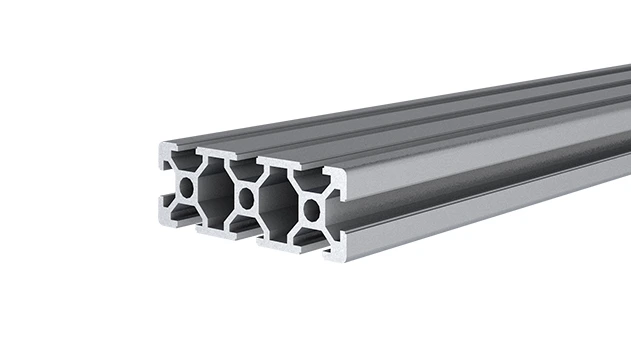
2060 is a 2.00 x 4.00CM fractional 20 series square extrusion T-slot profile with four open T-slots, two side with 2.00cm face, the other side with 6.00cm face. The profile has align-a-grooves to assist in aligning connecting profiles.
Introduction: The Backbone of Modern Workspaces
Picture this: a bustling manufacturing floor, where workers move with purpose, tools hum in rhythm, and every second counts. Behind the scenes of this efficiency lies a silent hero—the aluminum profile. These unassuming structures form the skeleton of workbenches, material racks, and lean systems, quietly supporting the flow of production. Among the stars of this lineup is the 2060 EU Standard Aluminum Profile, a workhorse that blends strength, versatility, and thermal efficiency to keep operations running smoothly. In this article, we'll dive into what makes this profile stand out, focusing on its thermal conductivity and overall performance, and why it's become a go-to choice for industries worldwide.
What Exactly Is the 2060 EU Standard Aluminum Profile?
Let's start with the basics. The "2060" in its name refers to its cross-sectional dimensions: typically 20mm in width and 60mm in height, though exact measurements can vary slightly by manufacturer. The "EU Standard" tag is no small detail—it means this profile adheres to strict European union guidelines for quality, safety, and environmental sustainability. This isn't just a piece of metal; it's a product of precision engineering, designed to meet the rigorous demands of industrial and commercial spaces.
As part of the broader family of aluminum extrusion profiles, the 2060 is created through a process called extrusion. Imagine squeezing toothpaste from a tube—extrusion works similarly, but on a much larger scale. Heated aluminum billets are forced through a custom die, shaping them into the 20x60mm cross-section we recognize. This method allows for intricate designs, consistent dimensions, and the ability to incorporate features like T-slots (those handy grooves along the profile) that make assembly a breeze.
But why 20x60mm? This size strikes a sweet spot between compactness and load-bearing capacity. It's narrow enough to fit into tight workspaces yet tall enough to support shelves, workbench tops, and even light machinery. Whether you're building a sleek aluminum workbench for electronics assembly or a sturdy material rack for warehouse storage, the 2060 profile brings the structural integrity needed to get the job done.

Composition: The Alloy Behind the Performance
Aluminum on its own is soft and malleable—hardly ideal for industrial use. That's where alloys come in. Most 2060 EU Standard Aluminum Profiles are made from alloys like 6063 or 6061, two of the most popular choices for extrusions. These alloys blend aluminum with small amounts of silicon and magnesium, creating a material that's both strong and lightweight.
Let's break it down: 6063 aluminum, often called "architectural aluminum," is prized for its excellent extrudability and smooth finish. It's slightly less strong than 6061 but offers better corrosion resistance and a more uniform surface—perfect for profiles that might be exposed to moisture or chemicals. 6061, on the other hand, includes copper in its alloy mix, boosting tensile strength, which makes it a favorite for applications needing extra durability. Both alloys contribute to the 2060's impressive performance, including its thermal conductivity.
Thermal Conductivity: Why It Matters in Your Workspace
Thermal conductivity is a measure of how well a material transfers heat. Think of it as a material's "heat highway"—higher conductivity means heat travels faster through it. For aluminum, this property is a double-edged sword: it can be a liability if you're trying to insulate, but a huge asset when you need to dissipate heat.
In industrial settings, heat management is critical. Imagine an aluminum workbench used for soldering electronics: the tools generate heat, and if the workbench surface retains that heat, it could damage sensitive components or make the workspace uncomfortable for operators. Here's where the 2060 profile shines. With a thermal conductivity of around 160–180 W/m·K (watts per meter-kelvin), it efficiently draws heat away from the surface and distributes it, keeping the work area cool and safe.
But thermal conductivity isn't just about cooling. In lean systems—those optimized workflows that minimize waste and maximize efficiency—consistent temperatures can prevent equipment malfunctions and extend the life of tools. A material rack built with 2060 profiles, for example, won't warp or degrade if placed near heat sources like ovens or machinery, ensuring stability in even the warmest corners of the factory.
Factors That Shape Thermal Conductivity in 2060 Profiles
Not all 2060 profiles are created equal when it comes to thermal conductivity. Several factors influence how well they transfer heat:
Alloy Composition:
As mentioned earlier, 6063 and 6061 alloys have different thermal properties. 6063, with lower copper content, typically has higher conductivity than 6061. Manufacturers often tweak the alloy blend to balance conductivity with other needs like strength or cost.
Extrusion Process:
The way aluminum is extruded affects its microstructure. During extrusion, the metal's grains align along the direction of flow, creating a "grain orientation" that enhances thermal conductivity along the length of the profile. This means heat travels faster from one end of the profile to the other than it does across the width—a detail engineers consider when designing heat-sensitive systems.
Temperature:
Thermal conductivity isn't constant; it changes with temperature. Aluminum's conductivity increases slightly as it cools and decreases as it heats up. For most industrial applications, though, the variation is minimal enough that the 2060 profile remains reliable across typical operating temperatures (think 10°C to 40°C in a factory).
Surface Treatments:
Anodizing (a process that adds a protective oxide layer) or powder coating can slightly reduce thermal conductivity by acting as a thin insulator. However, these treatments are often worth the trade-off for their benefits—corrosion resistance, color customization, and scratch protection. The reduction is usually small enough that the profile still outperforms materials like steel in heat transfer.
Beyond Thermal Conductivity: The 2060's All-Around Performance
Thermal conductivity is a standout feature, but the 2060 profile brings more to the table. Let's explore its other performance metrics:
Strength-to-Weight Ratio:
Aluminum is already lightweight, but the 2060's design maximizes strength without adding bulk. A typical 2060 profile weighs around 1.5–2 kg per meter, yet it can support loads of up to 50 kg or more when properly installed. This makes it ideal for mobile applications, like rolling workbenches or hand trolleys, where reducing weight eases movement without sacrificing stability.
Corrosion Resistance:
Thanks to aluminum's natural oxide layer (and optional treatments like anodizing), the 2060 resists rust and corrosion. This is a game-changer for humid environments, food processing facilities, or outdoor use, where steel might degrade over time.
Modularity:
The T-slots along the profile's length are a stroke of genius. They allow for quick attachment of aluminum profile accessories—think brackets, end caps, and connectors—without drilling or welding. Need to add a shelf to your workbench? Slide a bracket into the T-slot and tighten a screw. Want to reconfigure a material rack? Simply loosen the connectors and rearrange the profiles. This flexibility is a cornerstone of lean system design, where adaptability equals efficiency.
Cost-Effectiveness:
While aluminum is pricier than steel upfront, its longevity, low maintenance, and recyclability make it a cost-effective choice in the long run. The 2060 profile, in particular, offers a balance of performance and affordability, making it accessible to small workshops and large factories alike.
A Closer Look: Thermal Conductivity Compared
To truly appreciate the 2060's thermal performance, let's see how it stacks up against other materials and aluminum profiles. The table below compares thermal conductivity (in W/m·K), density (kg/m³), and common uses:
| Material/Profile | Thermal Conductivity (W/m·K) | Density (kg/m³) | Typical Applications |
|---|---|---|---|
| 2060 EU Aluminum Profile (6063 alloy) | 170–180 | 2700 | Workbenches, lean systems, material racks |
| 3030 EU Aluminum Profile (6063 alloy) | 165–175 | 2700 | Small shelves, lightweight frames |
| 4040 EU Aluminum Profile (6061 alloy) | 150–160 | 2700 | Heavy-duty workbenches, machinery frames |
| Mild Steel | 45–50 | 7850 | Structural supports, industrial machinery |
| Copper | 401 | 8960 | Heat sinks, electrical wiring |
As you can see, the 2060 profile outperforms steel by a wide margin in thermal conductivity, while being significantly lighter. It's not as conductive as copper, but copper is far heavier and more expensive—making the 2060 a practical choice for most industrial needs. Compared to other aluminum profiles like the 3030 or 4040, the 2060 holds its own, offering slightly higher conductivity than the 4040 (thanks to its 6063 alloy) and similar performance to the 3030, but with greater load capacity.
Aluminum Profile Accessories: The Unsung Partners of 2060
A profile is only as good as the accessories that bring it to life. Aluminum profile accessories are the puzzle pieces that turn raw 2060 lengths into functional workspaces. Let's highlight a few key players:
End Caps:
These simple plastic or metal caps snap onto the ends of profiles, hiding sharp edges and preventing dust buildup in T-slots. Options like the 2020 aluminum profile end cap (for smaller profiles) or 4040 aluminum profile end cap (for larger ones) ensure a clean, professional finish.
Connectors:
Need to join two profiles at a right angle? Reach for a 90° aluminum profile connector. For a 45° angle, there's a connector for that too. These accessories slide into T-slots and tighten with bolts, creating sturdy joints without welding.
Brackets and Supports:
From shelf brackets to leg supports, these accessories add versatility. A workbench built with 2060 profiles, for example, might use angle brackets to attach the top surface or center support brackets to reinforce long spans, ensuring it can handle the weight of tools and materials.
Together, these accessories make the 2060 profile modular and adaptable. Whether you're building a fixed aluminum workbench or a mobile turnover trolley, the right accessories turn a vision into reality in hours, not days.
Real-World Impact: 2060 Profiles in Lean Systems and Workbenches
Let's ground this in real life. Consider a small electronics manufacturer that recently upgraded to lean systems. Their old workbenches were clunky, made of wood and steel, and prone to overheating when soldering irons were left on for hours. Switching to aluminum workbenches built with 2060 profiles transformed their workflow:
Heat Management:
The 2060's thermal conductivity dissipated heat from soldering tools, keeping the work surface cool to the touch and preventing damage to sensitive circuit boards.
Modularity:
Using T-slots and connectors, the team added tool holders, cable management clips, and small shelves exactly where they needed them, reducing clutter and wasted movement.
Durability:
The corrosion-resistant profile stood up to daily cleaning with disinfectants, ensuring a hygienic workspace for handling electronics.
In a warehouse setting, a material rack built with 2060 profiles and 3-row, 3-floor shelving (similar to "Material Rack B" in product catalogs) proved equally valuable. Its lightweight design made it easy to reposition during floor layout changes, while its thermal stability meant it could be placed near a shipping dock without warping in summer heat or freezing in winter cold.
Future Trends: What's Next for 2060 Profiles?
The 2060 EU Standard Aluminum Profile isn't resting on its laurels. As industries push for greener practices, manufacturers are exploring recycled aluminum for extrusions, reducing the carbon footprint of production. We're also seeing smarter designs, like profiles with integrated channels for wiring or sensors, making them ideal for Industry 4.0 smart factories.
Another trend is customization. With advanced extrusion dies, companies can now add unique features to 2060 profiles—like extra T-slots or curved edges—tailoring them to niche applications. And as aluminum profile accessories become more specialized, we'll see even more creative uses, from ergonomic workstations to modular retail displays.
Conclusion: Why the 2060 Profile Deserves Its Spotlight
The 2060 EU Standard Aluminum Profile may not be the flashiest piece of equipment in your workspace, but it's undoubtedly one of the most essential. Its thermal conductivity ensures stability in heat-prone environments, while its strength, modularity, and affordability make it a versatile solution for lean systems, aluminum workbenches, and beyond. Paired with the right aluminum profile accessories, it transforms from a simple extrusion into a cornerstone of efficient, adaptable workspaces.
So the next time you walk through a factory or workshop, take a moment to notice the aluminum frames holding it all together. Chances are, many of them are 2060 profiles—quietly working to keep the world of production moving forward, one T-slot at a time.