- Company Articles
- Industry articles
- Industry standards
- 2060 EU Standard Aluminum Profile: Weight-to-Strength Ratio Explained

2060 EU Standard Aluminum Profile: Weight-to-Strength Ratio Explained
Related Product
2060 EU Standard Aluminum Profile
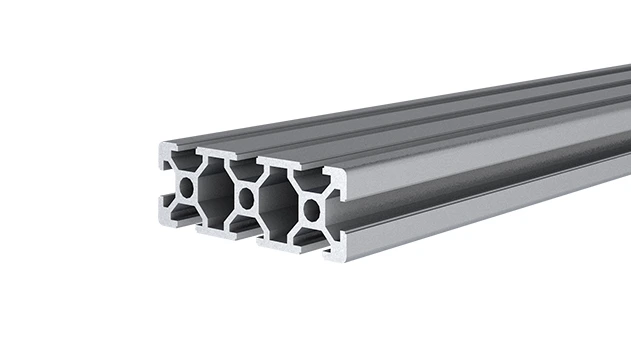
2060 is a 2.00 x 4.00CM fractional 20 series square extrusion T-slot profile with four open T-slots, two side with 2.00cm face, the other side with 6.00cm face. The profile has align-a-grooves to assist in aligning connecting profiles.
Walk into any modern factory, warehouse, or assembly line, and you'll notice a silent workhorse holding everything together: aluminum profiles. These unassuming metal structures are the backbone of workbenches, flow racks, and lean systems, quietly balancing strength, flexibility, and efficiency. But not all aluminum profiles are created equal. Today, we're zeroing in on one that's been turning heads in manufacturing circles: the 2060 EU Standard Aluminum Profile . What makes it stand out? It's all about that sweet spot between weight and strength—the weight-to-strength ratio. Let's break it down, no engineering degree required.
Why Aluminum Profiles? The Unsung Heroes of Modern Manufacturing
Before we dive into the 2060 specifically, let's talk about why aluminum profiles have become so popular. Think back to the days when factories relied on heavy steel frames or clunky wooden workbenches. They got the job done, but at a cost: steel is heavy (hard to move or reconfigure), wood warps over time, and both lack the adaptability modern production lines need. Enter aluminum profiles—lightweight, corrosion-resistant, and infinitely customizable. They're like the Lego blocks of manufacturing: snap together with aluminum profile accessories , take them apart, and rebuild when your needs change. No welding, no heavy lifting, just pure flexibility.
Aluminum's magic lies in its natural properties. It's about a third the weight of steel but can match or even exceed steel's strength when alloyed correctly. That means you get a structure that's tough enough to hold heavy tools or materials but light enough to move around (hello, mobile workbenches!) or suspend from overhead racks without straining support systems. And let's not forget sustainability—aluminum is 100% recyclable, which matters more than ever in an industry pushing for greener practices.
EU Standards: What's in a Name?
You've probably seen terms like "EU standard" thrown around when shopping for aluminum profiles. What does that actually mean? In short: consistency and quality. EU standards (set by organizations like DIN or EN) ensure that profiles are manufactured to strict dimensions, tolerances, and material specifications. That means a 2060 profile from one aluminum extrusion profile supplier will fit perfectly with accessories from another—no guesswork, no mismatched parts. For manufacturers, this consistency is gold. It reduces downtime, simplifies ordering, and ensures that every workbench or flow rack you build will perform exactly as expected.
Now, the "2060" part. Those numbers aren't random. They refer to the profile's cross-section: 20mm in width and 60mm in height. Picture a rectangle, 20mm by 60mm, with a hollow center (to save weight) and T-slots running along the sides (where accessories like brackets or panels slide in). This specific dimensions strike a unique balance—wider than slimmer profiles (like the 2020) but more compact than bulkier ones (like the 4040). That makes it versatile, fitting into tight spaces while still packing a punch in strength.

The Star Metric: Weight-to-Strength Ratio
Okay, let's get to the heart of the matter: weight-to-strength ratio. Simply put, it's a measure of how much strength a material offers relative to its weight. Think of it as a efficiency score: a higher ratio means you're getting more strength per pound (or kilogram) of material. Why does this matter? Imagine building a workbench that needs to hold 500kg of tools but also needs to be moved across the factory floor occasionally. A high weight-to-strength ratio means the bench can handle the load without being so heavy that you need a forklift to move it. Or consider a flow rack in a warehouse: lighter materials mean you can stack more racks without overloading the floor, and they're easier to install or reposition.
For the 2060 EU Standard profile, this ratio is where it truly shines. Thanks to its optimized cross-section (hollow design, reinforced corners) and high-grade aluminum alloy (typically 6063-T5, a common choice for structural applications), it delivers impressive tensile strength (around 210 MPa, for the numbers folks) while weighing in at just 1.8-2.2 kg per meter (depending on wall thickness). To put that in perspective: a 2-meter length of 2060 profile weighs about as much as a small backpack but can support over 200kg when properly mounted. That's the kind of efficiency that makes engineers smile.
| Profile Type | Dimensions (WxH) | Weight per Meter (kg) | Tensile Strength (MPa) | Weight-to-Strength Ratio (MPa/kg) | Best For |
|---|---|---|---|---|---|
| 2020 EU Standard | 20x20mm | 0.8-1.0 | 190-210 | ~210 | Light-duty frames, small workbenches |
| 3030 EU Standard | 30x30mm | 1.3-1.5 | 210-230 | ~153 | Medium-duty racks, machine guards |
| 2060 EU Standard | 20x60mm | 1.8-2.2 | 210-230 | ~109 | Workbenches, flow racks, lean systems |
| 4040 EU Standard | 40x40mm | 2.5-3.0 | 230-250 | ~83 | Heavy-duty machinery frames, industrial shelving |
The table above compares the 2060 to other common EU standard profiles. Notice that while the 2060 isn't the lightest (that's the 2020) or the strongest (the 4040 takes that title), its weight-to-strength ratio hits a sweet spot for mid-to-heavy-duty applications. It's strong enough to replace bulkier profiles in many cases, which translates to cost savings (less material used) and easier handling.
Real-World Applications: Where 2060 Profiles Shine
Enough theory—let's talk about how this ratio plays out on the factory floor. Here are three places where the 2060 profile has become a go-to choice:
1. Workbenches: Sturdy Yet Maneuverable
A typical workbench needs to support tools, parts bins, and maybe even a small assembly project. With the 2060 profile, you can build a bench that holds 300kg+ but weighs only 40-50kg total (including the tabletop). That means two people can move it across the shop floor if production lines need rearranging—no forklift required. Add a set of casters (via those handy T-slots) and you've got a mobile workstation that keeps up with your team's needs.
2. Flow Racks: Smooth Material Handling, No Heavy Lifting
Flow racks are all about moving materials from point A to B with minimal effort—think gravity-fed racks for boxes or components. The 2060 profile's lightweight nature means you can mount longer sections (up to 3-4 meters) without worrying about sagging, while its strength ensures it can handle the constant impact of sliding boxes. Pair it with roller track accessories, and you've got a system that's both durable and easy to install (no need for reinforced mounting brackets).
3. Lean Systems: Flexibility Without Compromise
Lean systems thrive on eliminating waste—whether that's time, space, or excess material. The 2060 profile fits right in here. Its modular design lets you build custom storage racks, kanban boards, or pick stations that adapt as your workflow changes. Since it's lightweight, reconfiguring the system takes hours, not days, and you won't need to reinforce your facility's floors or ceilings to support it. It's lean manufacturing, embodied in a metal profile.
Accessories: The Perfect Partners for 2060 Profiles
A profile is only as good as the accessories that bring it to life. The 2060's T-slots are designed to work seamlessly with a range of aluminum profile accessories , turning a simple length of metal into a fully functional system. Here are a few must-haves:
- Corner Brackets & Joints: These let you connect 2060 profiles at 90°, 45°, or even 135° angles—perfect for building workbench frames or flow rack sides.
- Panel Holders: Slide these into the T-slots to mount plywood, acrylic, or metal panels, creating shelves, tool boards, or machine guards.
- Casters: Add lockable casters to the bottom of a 2060 frame, and suddenly your stationary workbench becomes a mobile cart. Just make sure the casters are rated for the total weight!
- End Caps: Small but mighty—these plastic or metal caps snap onto the ends of profiles, preventing dust buildup and giving a clean, finished look.
The beauty of these accessories is that they're standardized across EU profiles, so you can mix and match from different suppliers without compatibility issues. Need a longer bracket? Swap it out. Want to add a shelf? Just slide in a panel holder. It's customization without the hassle.
Why Weight-to-Strength Ratio Matters (Even If You're Not an Engineer)
You might be thinking, "I just need something to hold my tools—why does this ratio matter?" Let's break it down into three practical benefits:
1. Cost Savings: Lighter profiles mean lower shipping costs (less weight to transport) and reduced material usage (you don't need extra supports to hold up heavy structures). Over time, those savings add up.
2. Safety: A lighter structure is easier to handle, which reduces the risk of back injuries when moving or installing it. It also puts less strain on floors, walls, and overhead supports, lowering the chance of structural failures.
3. Adaptability: Manufacturing needs change—today's workbench might need to become tomorrow's assembly line station. Lightweight, strong profiles are easier to reconfigure, so you're not stuck with a fixed setup that becomes obsolete in six months.
Choosing the Right Supplier: It's About More Than the Profile
Now that you're sold on the 2060 profile, how do you pick the right supplier? Sure, price matters, but don't overlook these factors:
Quality Control: EU standards are a good start, but reputable suppliers go further—testing profiles for strength, straightness, and finish. Ask for material certificates or test reports if you're unsure.
Inventory Depth: Nothing kills a project faster than waiting for a single profile or accessory. Look for suppliers with a wide range of in-stock items, including aluminum profile accessories that pair with the 2060.
Technical Support: Maybe you're not sure if the 2060 is right for your specific load. A good supplier will have engineers or product specialists who can help you calculate weight limits, suggest accessories, or even share design templates.
Final Thoughts: The 2060 Profile—Small Size, Big Impact
At the end of the day, the 2060 EU Standard Aluminum Profile isn't just a piece of metal. It's a solution to a common manufacturing challenge: how to build strong, flexible structures without the bulk. Its weight-to-strength ratio makes it a standout choice for workbenches, flow racks, and lean systems, proving that sometimes, the best innovations are the ones that balance power and practicality.
So, the next time you're setting up a new production line or upgrading your workspace, take a closer look at the 2060. It might just be the lightweight, heavy-duty hero your operation has been waiting for.