- Company Articles
- Industry articles
- Industry standards
- 3 Compliance Checks for Importing 2040 EU Standard Aluminum Profile

3 Compliance Checks for Importing 2040 EU Standard Aluminum Profile
Related Product
2040 EU Standard Aluminum Profile
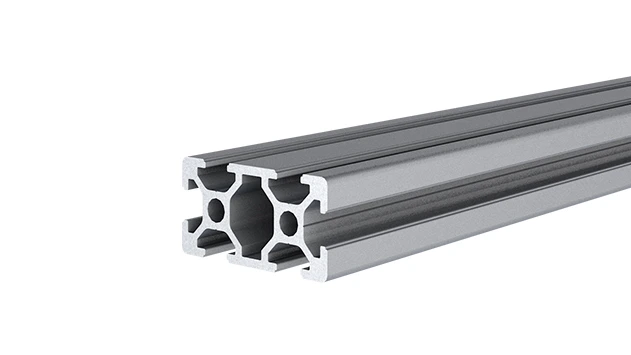
2040 is a 2.00 x 4.00CM fractional 20 series square extrusion T-slot profile with four open T-slots, two side with 2.00cm face, the other side with 4.00cm face. The profile has align-a-grooves to assist in aligning connecting profiles.
Importing aluminum profiles—especially specialized ones like the 2040 EU standard aluminum profile—can feel like navigating a maze. On one hand, these components are the backbone of countless manufacturing projects, from building lean workbenches to assembling industrial frames. On the other hand, the EU's strict compliance requirements mean even a small oversight can lead to costly delays, rejected shipments, or even legal penalties. Whether you're a seasoned importer or new to sourcing aluminum extrusion profiles, getting compliance right isn't just about checking boxes—it's about protecting your business, your customers, and your reputation. In this guide, we'll break down the three most critical compliance checks you need to perform before importing 2040 EU standard aluminum profile, with actionable insights to help you avoid common pitfalls.
Check 1: Material Composition and Mechanical Properties—The Foundation of Quality
At first glance, aluminum profiles might all look similar—shiny, metallic, and rigid. But beneath the surface, the difference between a compliant 2040 EU standard aluminum profile and a subpar one lies in its material composition and mechanical strength. The EU doesn't just set standards for how a profile looks ; it dictates exactly what's in it and how it performs under stress. Why does this matter? Because the 2040 profile is often used in load-bearing applications—think conveyor systems, machine frames, or structural supports. If the material is substandard, the entire assembly could fail, risking workplace accidents, product recalls, or project delays.
Understanding EU Standards for Aluminum Alloys
The 2040 EU standard aluminum profile falls under the umbrella of EN 755, a set of European standards that govern extruded aluminum and aluminum alloy profiles. Specifically, EN 755-2 outlines requirements for mechanical properties, while EN 755-9 covers chemical composition. For example, most 2040 profiles are made from 6000-series alloys (like 6063 or 6082), which are prized for their balance of strength, weldability, and corrosion resistance. These alloys contain precise amounts of aluminum, magnesium, silicon, and trace elements—deviations from these ratios can weaken the profile or make it prone to cracking.
Let's say your supplier claims to use 6063 alloy for their 2040 profiles. Under EN 755-9, 6063 must contain 0.2-0.6% silicon, 0.45-0.9% magnesium, and less than 0.1% copper. If a batch has too much copper, the profile might become brittle; too little magnesium, and it won't hold up under heavy loads. These aren't just technical details—they directly impact whether your product meets EU safety standards.
Verifying Mechanical Strength: Tensile Strength, Yield Strength, and Elongation
Even if the alloy composition is correct, the extrusion process can affect a profile's mechanical properties. Extrusion involves forcing heated aluminum through a die to create the desired shape (in this case, the 20x40mm cross-section of the 2040 profile). If the temperature is too low, the profile might crack; if it's too high, the grains in the metal can grow too large, reducing strength. EN 755-2 sets minimum requirements for tensile strength (how much force it can withstand before breaking), yield strength (the point at which it permanently deforms), and elongation (how much it stretches before breaking).
For 6063-T6 (the most common temper for structural profiles), EN 755-2 requires a tensile strength of at least 160 MPa, a yield strength of 110 MPa, and elongation of 8% or more. To put that in perspective: a 2040 profile with a yield strength below 110 MPa might bend under the weight of a loaded conveyor, while one with low elongation could snap during installation. So how do you verify these properties?
What to Ask Your Supplier
Don't just take your supplier's word for it—ask for documentation. A reputable aluminum extrusion profile supplier should provide a Mill Test Report (MTR) or Certificate of Analysis (COA) for each batch. These documents list the chemical composition and mechanical test results (tensile strength, yield strength, elongation) from the manufacturer's lab. For extra assurance, request third-party certification from an accredited lab (like SGS or Bureau Veritas). This is especially critical if you're importing large quantities—spending a few hundred dollars on testing now can save you thousands in rejected shipments later.
Here's a pro tip: Compare the MTR to the specific EN standard for your profile. If the report says "tensile strength: 150 MPa" but EN 755-2 requires 160 MPa, that's a red flag. Don't let suppliers brush this off with excuses like "it's close enough"—EU customs and regulatory bodies (like the European Chemicals Agency, ECHA) won't accept "close."
Check 2: Dimensional Accuracy and Tolerances—Fitting Perfectly with Aluminum Profile Accessories
Imagine ordering 1000 units of 2040 EU standard aluminum profile to build workbenches, only to find that half of them are 2mm wider than specified. Suddenly, your aluminum profile accessories—like end caps, T-slot nuts, or connectors—don't fit. You can't assemble the workbenches, your production line grinds to a halt, and you're stuck with a warehouse full of useless metal. This scenario is more common than you might think, and it all boils down to dimensional accuracy.
The "2040" in 2040 EU standard aluminum profile refers to its cross-sectional dimensions: 20mm (width) by 40mm (height). But EU standards (EN 12020-2) don't just specify these nominal dimensions—they also set strict tolerances, or allowable deviations, for length, straightness, and cross-sectional uniformity. For example, the width might be allowed to vary by ±0.3mm, while the height could have a tolerance of ±0.4mm. These small numbers matter because 2040 profiles are often used with precision-engineered aluminum profile accessories. A profile that's too wide won't accept a 2020 aluminum profile end cap; one that's too narrow might leave gaps, weakening the joint.
Key Dimensional Tolerances to Verify
To avoid compatibility issues, focus on these critical dimensions when inspecting 2040 EU standard aluminum profile:
- Cross-sectional width and height: As mentioned, 20mm x 40mm is the target, but check the tolerance class (e.g., class K for general use, class H for high precision). For class K, EN 12020-2 allows ±0.3mm for width and ±0.4mm for height.
- Wall thickness: Most 2040 profiles have a wall thickness of 1.5-2mm. Too thin, and the profile won't support weight; too thick, and it may not fit into grooves or channels designed for standard thicknesses.
- Straightness: A profile that bends more than 1mm per meter will cause alignment issues when assembling frames or conveyors. EN 12020-2 specifies straightness tolerances based on length—for a 3-meter profile, the maximum bow should be ≤3mm.
- T-slot dimensions: The T-shaped groove along the profile (used for attaching accessories) must have precise width and depth. If the slot is too narrow, T-slot bolts won't tighten; too wide, and the connection will be loose.
How to Measure Dimensional Accuracy
You don't need a lab to check dimensional compliance—basic tools will do. A digital caliper (accurate to 0.01mm) can measure width, height, and wall thickness. For straightness, lay the profile on a flat surface and use a ruler to check for gaps between the profile and the surface. For T-slot dimensions, use a slot gauge or a sample T-slot nut from your aluminum profile accessories—if the nut won't slide in smoothly, the slot is out of spec.
If you're importing large volumes, consider requesting a pre-shipment inspection (PSI) by a third-party inspector (like Intertek or BV). They'll randomly sample profiles and generate a report detailing dimensional compliance. This step might cost a few hundred dollars, but it's far cheaper than reworking or replacing an entire shipment.
| Dimension | Nominal Value | EU Tolerance (Class K) | Why It Matters |
|---|---|---|---|
| Width | 20mm | ±0.3mm | Ensures compatibility with end caps and connectors |
| Height | 40mm | ±0.4mm | Prevents gaps in stacked or interlocking profiles |
| Wall Thickness | 1.5mm | ±0.15mm | Maintains structural integrity under load |
| Straightness (per meter) | 0mm (perfectly straight) | ≤1mm | Ensures alignment in frames and conveyors |

Check 3: Surface Treatment and Environmental Compliance—Safety Beyond Strength
A 2040 EU standard aluminum profile might meet all material and dimensional requirements, but if its surface treatment contains lead or cadmium, it could still be rejected by EU authorities. The EU is notoriously strict about chemicals in consumer and industrial products, with regulations like REACH (Registration, Evaluation, Authorization, and Restriction of Chemicals) and RoHS (Restriction of Hazardous Substances) setting limits on harmful substances. Additionally, surface treatments like anodizing or powder coating must meet durability standards to ensure the profile resists corrosion and wear—critical for profiles used in harsh environments (e.g., factories with high humidity or chemical exposure).
REACH and RoHS: Avoiding Banned Substances
REACH restricts over 200 substances, including heavy metals (lead, mercury), phthalates, and certain flame retardants. For aluminum profiles, the risk often lies in surface coatings or plating. For example, some suppliers use chromate conversion coatings to prevent corrosion, but hexavalent chromium (Cr(VI)) is restricted under REACH due to its carcinogenic properties. Similarly, RoHS bans lead, cadmium, and mercury in electrical and electronic equipment—if your 2040 profile is part of a machine with electrical components, it must comply.
To ensure compliance, ask your supplier for a REACH declaration of conformity and a RoHS certificate. These documents should list all substances used in the profile, including coatings, and confirm they're below REACH/RoHS limits. If a supplier hesitates to provide these, or if the documents are vague ("contains no harmful substances"), proceed with caution—this is often a sign they're cutting corners.
Surface Treatment Durability: Anodizing and Powder Coating Standards
Beyond chemical safety, the surface treatment must also be durable. Anodized 2040 profiles, for instance, have a protective oxide layer that resists scratches and corrosion. EN 12373-6 specifies the thickness of this layer (measured in microns) and its adhesion to the aluminum. A thin or poorly adhered layer will wear off quickly, leaving the profile vulnerable to rust. Similarly, powder-coated profiles must pass the "cross-cut test" (EN ISO 2409), where a grid is cut into the coating, and tape is applied—if the coating peels off, it's non-compliant.
Consider this real-world example: A manufacturer imported 2040 profiles with a powder coating that failed the cross-cut test. Within months, the coating began flaking off in their factory, exposing the aluminum to oil and moisture. The profiles corroded, weakening the assembly line and forcing a costly replacement. This could have been avoided by requesting a coating adhesion test report before shipment.
Conclusion: Compliance as a Competitive Advantage
Importing 2040 EU standard aluminum profile doesn't have to be a stressful gamble. By focusing on these three checks—material composition and mechanical properties, dimensional accuracy with aluminum profile accessories, and surface treatment compliance—you can ensure your shipments meet EU standards, avoid costly mistakes, and build a reputation for reliability. Remember, compliance isn't just about avoiding penalties; it's about delivering quality to your customers and creating a lean system that minimizes waste (whether of time, money, or materials).
At the end of the day, the best defense against non-compliance is partnering with a trusted supplier who understands EU standards inside out. Look for suppliers who proactively provide certificates, welcome third-party inspections, and are transparent about their manufacturing processes. With due diligence and these checks in place, you'll turn the complex world of aluminum profile importing into a smooth, efficient process—one that supports your business's growth and success.