- Company Articles
- Industry articles
- Industry standards
- 3030a EU Standard Aluminum Profile: CE & ISO Compliance Requirements

3030a EU Standard Aluminum Profile: CE & ISO Compliance Requirements
Related Product
3030A EU Standard Aluminum Profile
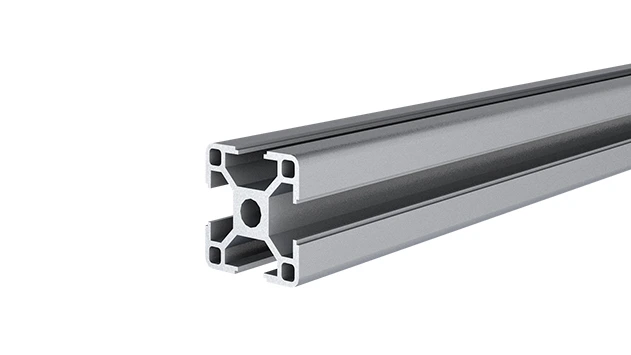
3030 is a 3.00 x 3.00CM fractional 30 series square extrusion T-slot profile with four open T-slots, each side with 3.00cm face. The profile has align-a-grooves to assist in aligning connecting profiles.
In the world of industrial manufacturing and facility design, the choice of materials can make or break operational efficiency, safety, and long-term reliability. Among the most versatile and widely used materials today is the 3030a EU Standard Aluminum Profile—a staple in constructing everything from workbenches and material racks to conveyor systems and lean manufacturing setups. But beyond its practicality, what truly sets a high-quality 3030a profile apart is its adherence to strict compliance standards: CE marking and ISO certifications. These aren't just stamps of approval; they're guarantees that the product meets rigorous safety, quality, and environmental benchmarks, ensuring it performs as intended in real-world applications. For manufacturers, facility managers, and even end-users, understanding these compliance requirements isn't optional—it's essential to avoiding costly mistakes, ensuring workplace safety, and maintaining access to global markets, particularly within the European union.
What is the 3030a EU Standard Aluminum Profile?
Before diving into compliance, let's clarify what the 3030a EU Standard Aluminum Profile is. As part of the broader family of aluminum extrusion profiles, the "3030a" designation refers to its dimensions: approximately 30mm in width and 30mm in height, with "a" indicating specific design variations in its T-slot configuration (the grooves that allow for easy attachment of accessories like brackets, connectors, and panels). This profile is prized for its balance of strength, lightweight construction, and modularity—traits that make it ideal for building custom structures in dynamic environments like factories, warehouses, and laboratories.
Unlike generic aluminum extrusions, the "EU Standard" label means this profile is engineered to meet harmonized European norms, ensuring consistency across manufacturers and compatibility with a wide range of aluminum profile accessories. Whether you're assembling a simple workbench or a complex automated material handling system, the 3030a profile serves as the backbone, with its reliability directly tied to the compliance standards it upholds.
CE Compliance: The Gateway to the European Market
CE marking is a mandatory requirement for products sold within the European Economic Area (EEA), including aluminum profiles used in construction, machinery, and industrial equipment. It signifies that a product complies with all relevant EU health, safety, and environmental protection legislation—most notably, for construction products like the 3030a profile, the Construction Products Regulation (CPR, EU 305/2011).
Key CE Requirements for 3030a Profiles
1. Material Composition and Safety: CE-compliant 3030a profiles must be made from aluminum alloys that meet EN 573-3 standards, which specify chemical composition limits for aluminum and its alloys. This ensures the material is free from hazardous substances (like excessive lead or mercury) and possesses the necessary mechanical properties (e.g., tensile strength, elongation) for its intended use. For example, common alloys like 6063-T6 are favored for their excellent extrudability and corrosion resistance, both critical for durability in industrial settings.
2. Performance Under Load: The CPR requires manufacturers to declare the profile's performance characteristics, including load-bearing capacity, flexural strength, and resistance to deformation. For 3030a profiles used in structures like workbenches or material racks, this means testing to EN 1999 (Eurocode 9), which outlines design rules for aluminum structures. A profile that bends or fails under expected loads isn't just ineffective—it's a safety hazard, which is why CE testing includes rigorous stress and fatigue assessments.
3. Fire Resistance: Depending on the application, 3030a profiles may need to meet fire performance criteria under EN 13501-1. While aluminum itself is non-combustible, coatings or finishes (if applied) must not release toxic fumes when exposed to high temperatures. This is particularly important in public spaces or manufacturing facilities where fire safety regulations are strict.
4. Declaration of Performance (DoP): To affix the CE mark, manufacturers must issue a DoP—a document that clearly states the product's compliance with specific CPR harmonized standards (e.g., EN 755-9 for extruded aluminum profiles). The DoP includes details like the manufacturer's name, product identification, and performance levels, giving buyers transparency and legal recourse if issues arise.

ISO Compliance: Quality and Environmental Stewardship
While CE marking focuses on market access in the EU, ISO certifications (International Organization for Standardization) are global benchmarks for quality management, environmental responsibility, and safety. For 3030a aluminum profiles, two key ISO standards are particularly relevant: ISO 9001 (Quality Management Systems) and ISO 14001 (Environmental Management Systems).
ISO 9001: Ensuring Consistent Quality
ISO 9001 isn't about testing individual products—it's about the processes that create them. A manufacturer with ISO 9001 certification has demonstrated a commitment to quality control at every stage: from sourcing raw aluminum ingots to extrusion, finishing, and shipping. For buyers of 3030a profiles, this means:
- Traceability: Every batch of 3030a profiles can be traced back to its raw materials, ensuring consistency and accountability if defects are found.
- Process Validation: Extrusion parameters (temperature, speed, die design) are standardized and monitored to prevent dimensional inaccuracies or material weaknesses.
- Customer Focus: The quality management system includes feedback mechanisms to address buyer concerns, whether about tolerances, finish, or compatibility with accessories.
ISO 14001: Minimizing Environmental Impact
In an era of increasing sustainability expectations, ISO 14001 certification signals that a manufacturer is committed to reducing its environmental footprint. For 3030a profile production, this might involve:
- Recycling scrap aluminum from the extrusion process (aluminum is 100% recyclable with minimal loss of quality).
- Reducing energy consumption in smelting and extrusion (e.g., using renewable energy sources).
- Managing waste from finishing processes (like anodizing or powder coating) to prevent pollution.
For buyers, ISO 14001 compliance isn't just about ethics—it can also help meet their own sustainability goals, especially if they operate in industries with strict environmental regulations (e.g., automotive or aerospace).
Dimensional and Mechanical Specifications: A Closer Look
CE and ISO compliance aren't just about paperwork—they're rooted in tangible, measurable specifications. For 3030a profiles, dimensional accuracy and mechanical performance are critical, as even small deviations can affect compatibility with accessories or structural integrity. Below is a comparison of key specifications required by CE (via EN 755-9) and ISO standards:
| Specification | CE (EN 755-9) Requirement | ISO 9001 Guideline | Real-World Impact |
|---|---|---|---|
| Width/Height Tolerance | ±0.3mm for 30mm dimensions | Process control to maintain within ±0.2mm | Ensures compatibility with standardized accessories (e.g., 90° aluminum profile connectors). |
| Tensile Strength | ≥160 MPa for 6063-T6 alloy | Batch testing to verify consistency | Prevents profile failure under static or dynamic loads (e.g., a workbench supporting heavy machinery). |
| Hardness (HV) | ≥60 HV (Vickers hardness) | Regular testing at production intervals | Resists dents and scratches in high-traffic areas like warehouses. |
| Surface Finish | No cracks, pitting, or excessive oxidation | Visual inspection and quality checks | Enhances corrosion resistance and aesthetic appeal. |
These specifications might seem technical, but they directly impact usability. For example, a profile with a width tolerance exceeding ±0.3mm might not fit with standard T-slot nuts, forcing costly modifications or replacement. Similarly, low tensile strength could cause a material rack to collapse under the weight of inventory—putting workers at risk and disrupting operations.
The Role of Aluminum Profile Accessories in Compliance
A 3030a profile is rarely used in isolation. It's part of a system, relying on aluminum profile accessories like joints, brackets, end caps, and connectors to form functional structures. Here's the catch: the compliance of the entire system depends on these accessories, too. CE and ISO standards don't just apply to the profile itself—they extend to the components that connect and support it.
For example, a 90° aluminum profile connector used to join two 3030a profiles must be made from a material with comparable strength to the profile (e.g., die-cast aluminum or steel) and designed to distribute loads evenly. A flimsy connector could fail, even if the profiles themselves are CE-compliant, leading to structural collapse. This is why reputable lean system suppliers ensure their accessories are tested alongside their profiles, issuing combined compliance documentation for the entire system.
Compatibility is another factor. CE standards require that accessories fit the profile's T-slot dimensions without excessive play or force. ISO 9001 takes this further by mandating that suppliers document accessory compatibility, so buyers can trust that a "roller track placon mount for aluminum profile" will work seamlessly with their 3030a profile, reducing assembly time and errors.
Why Compliance Matters in Real-World Applications
To understand the practical importance of CE and ISO compliance, consider a common application: the workbench. A 3030a profile-based workbench is a staple in manufacturing, used for assembling electronics, packaging products, or conducting quality inspections. If this workbench is non-compliant, here's what could go wrong:
- Safety Risks: A profile with subpar tensile strength might bend under the weight of tools or components, causing the workbench to collapse and injure workers.
- Regulatory Penalties: In the EU, using non-CE-marked products can result in fines or product seizures, disrupting production.
- Wasted Resources: A profile with poor dimensional tolerance might not fit accessories, requiring rework or replacement—costing time and money.
- Reputational Damage: If a customer's product fails due to a non-compliant component, it reflects poorly on their brand, even if the fault lies with the profile supplier.
In contrast, a compliant 3030a workbench inspires confidence. It meets safety standards, integrates smoothly with other system components (like conveyor belts or material racks), and holds up to daily use—all while helping the buyer meet their own regulatory obligations.
Choosing a Compliant Supplier: What to Look For
The responsibility for compliance doesn't end with the manufacturer—it starts with choosing the right lean system supplier. Here's what to prioritize when evaluating potential suppliers:
1. Documentation: A reputable supplier should readily provide CE Declaration of Performance (DoP) certificates, ISO 9001/14001 audit reports, and material test certificates (e.g., EN 573-3 for aluminum alloys). If a supplier hesitates to share these, it's a red flag.
2. Testing and Traceability: Ask about their testing processes—do they conduct in-house tests, or rely on third-party labs? Can they trace a profile batch back to its raw material source? Traceability is critical for resolving issues if a defect is discovered.
3. Experience with EU Standards: Not all suppliers are familiar with the nuances of EU regulations. Look for those with a track record of serving European markets, as they're more likely to understand evolving compliance requirements.
4. Commitment to Improvement: ISO 9001 requires continuous improvement, so ask how the supplier updates its processes to meet new standards. For example, have they adapted to the latest CPR amendments or new ISO 14001 environmental targets?
Conclusion: Compliance as a Foundation for Success
The 3030a EU Standard Aluminum Profile is more than just a building block—it's a critical component in creating safe, efficient, and sustainable industrial systems. CE and ISO compliance aren't optional add-ons; they're the foundation of trust between suppliers and buyers, ensuring that the profile performs as promised and meets the highest standards of quality and safety.
Whether you're designing a workbench, a material handling system, or a lean manufacturing cell, prioritizing compliance means investing in reliability, reducing risk, and future-proofing your operations. By choosing a supplier that values CE and ISO standards, you're not just buying a product—you're partnering with a team that understands the stakes and is committed to excellence.
In the end, compliance is about more than checking boxes. It's about building systems that work, protecting the people who use them, and contributing to a safer, more sustainable industrial landscape. And in that mission, the 3030a EU Standard Aluminum Profile—when compliant—proves itself as an indispensable ally.