- Company Articles
- Industry articles
- Industry standards
- 3030a EU Standard Aluminum Profile Compatibility with Lean Tube Accessories

3030a EU Standard Aluminum Profile Compatibility with Lean Tube Accessories
Related Product
3030A EU Standard Aluminum Profile
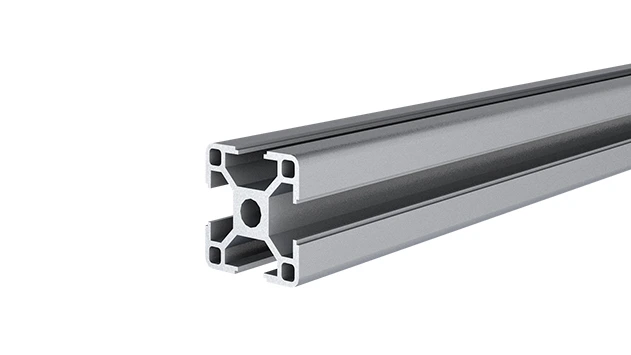
3030 is a 3.00 x 3.00CM fractional 30 series square extrusion T-slot profile with four open T-slots, each side with 3.00cm face. The profile has align-a-grooves to assist in aligning connecting profiles.
If you've ever walked through a busy manufacturing floor or a bustling warehouse, you've probably noticed the unsung heroes keeping everything running smoothly: the workbenches where assemblers piece together products, the material racks stacked with components, and the conveyor systems that move parts from station to station. What you might not see is the backbone behind these structures—the aluminum profiles and accessories that hold them all together. Today, we're diving deep into one of the most versatile players in this space: the 3030a EU Standard Aluminum Profile. More importantly, we'll explore how it seamlessly pairs with lean tube accessories to create efficient, adaptable workspaces that grow with your business.
Understanding the 3030a EU Standard Aluminum Profile: A Workhorse in Modern Facilities
Let's start with the basics. The 3030a EU Standard Aluminum Profile isn't just another piece of metal—it's a carefully engineered solution designed for flexibility and durability. At its core, it's an aluminum extrusion profile , meaning it's formed by pushing molten aluminum through a die to create its distinct shape. The "3030" in its name refers to its cross-section: 30mm by 30mm, roughly the size of a small notepad. This compact dimensions strike the perfect balance—sturdy enough to support heavy tools and materials, yet lightweight enough to reconfigure without heavy machinery.
What sets the 3030a apart? For starters, it adheres to EU standards, which means strict quality control and consistency across manufacturers. Whether you order from a local supplier or an international lean pipe supplier , you can trust that a 3030a profile will have the same T-slot pattern, wall thickness, and tolerance levels. Those T-slots—long, narrow grooves running along the profile's length—are the real magic. They allow accessories like brackets, connectors, and guide rails to slide in and lock into place, turning a simple aluminum bar into the building block of nearly any workspace structure.
Common uses for the 3030a are everywhere in lean manufacturing and warehousing. It's the frame for workbench surfaces where technicians assemble electronics, the skeleton of material racks holding inventory, and the rails that guide products along conveyor systems. Its popularity stems from a simple truth: in fast-paced environments, you can't afford to be stuck with rigid, one-size-fits-all structures. The 3030a bends (metaphorically, of course) to your needs, letting you add a shelf here, extend a workbench there, or rework an entire assembly line—all without replacing the entire frame.
Why Compatibility Matters: The Hidden Cost of Mismatched Parts
Imagine this: You run a mid-sized electronics plant, and you've decided to upgrade your assembly line to boost productivity. You order new 3030a profiles to build custom workbenches, excited to take advantage of their flexibility. But when the parts arrive, you notice something off: the connectors you bought don't quite fit into the T-slots. The guide rails wobble because their mounting brackets are too loose. By the end of the day, your team has spent hours trying to force parts together, and the assembly line is still down. Sound familiar? This is the nightmare of incompatible accessories—and it's more common than you might think.
Compatibility isn't just about "will it fit?" It's about reliability, efficiency, and cost-savings. When accessories work seamlessly with your 3030a profiles, installation is faster (no jury-rigging with duct tape or extra screws), maintenance is easier (replace a single part instead of the whole frame), and future upgrades are painless (add a new component without rebuilding from scratch). Mismatched parts, on the other hand, lead to wobbly structures that risk worker safety, frequent breakdowns that halt production, and the hidden cost of wasted labor—all things no business can afford.
In lean systems, where the goal is to eliminate waste, compatibility is non-negotiable. Every minute spent fixing a loose lean pipe joint or adjusting a misaligned rail is a minute not spent adding value to your product. That's why choosing accessories specifically designed for the 3030a isn't just a good idea—it's a cornerstone of lean manufacturing success.

Key Lean Tube Accessories and How They Play Nice with 3030a
Now that we understand why compatibility matters, let's get into the specifics: which lean tube accessories work best with 3030a, and how they enhance its functionality. We'll focus on three categories that are essential for most workspace setups: connectors, guide rails, and workbench components. Spoiler: It all comes back to those T-slots.
Connectors: The Glue That Holds It All Together
If the 3030a profile is the backbone, then connectors are the joints that let you build upward, outward, and at angles. The most common type here is the lean pipe joint , a small but mighty component designed to link profiles at 90°, 45°, or even 135° angles. What makes a lean pipe joint compatible with 3030a? Look for ones with T-slot bolts or sliding nuts that fit snugly into the profile's grooves. These bolts tighten down to create a secure connection—no welding required. For example, a 90° lean pipe joint might have two arms that each slide into the T-slots of perpendicular 3030a profiles, with a central bolt that cinches everything tight. The result? A corner that can support the weight of tools, materials, or even another tier of shelving.
Another connector to know is the parallel joint, which lets you attach two 3030a profiles side by side for extra strength. This is handy when building heavy-duty workbenches or racks that need to support more weight. The best parallel joints for 3030a will have adjustable clamps that fit the profile's 30mm width, ensuring a tight grip without damaging the aluminum. Pro tip: Always check the joint's load rating—most reputable suppliers list this, so you can avoid overloading and keep your structure stable.
Guide Rails: Keeping Materials Moving Smoothly
In any assembly line or warehouse, moving materials from point A to point B needs to be frictionless. That's where guide rails come in, and aluminum guide rail a is a standout choice for 3030a setups. Aluminum guide rail a is designed with a groove that aligns perfectly with the T-slots of 3030a profiles, making installation a breeze. Whether you're building a gravity-fed flow rack or a conveyor system, these rails keep products sliding smoothly, reducing jams and delays.
What makes aluminum guide rail a compatible with 3030a? It's all in the mounting. Most guide rails come with brackets that slide into the T-slots and lock in place with a simple turn of a wrench. Some even have pre-drilled holes that line up with the 3030a's T-slot spacing, so you don't have to guess where to attach them. For example, if you're building a flow rack for small parts, you'd mount aluminum guide rail a along the length of 3030a profiles, then add roller tracks on top. The rails keep the rollers aligned, ensuring parts glide down to the pick station without veering off course.
Workbench Components: Building a Surface That Works for You
A workbench is more than just a table—it's where your team spends most of their day, so it needs to be sturdy, customizable, and comfortable. The 3030a profile excels here, and when paired with the right accessories, it becomes the foundation of a workbench that fits your exact needs. Think of it as building with Legos, but for grown-ups (and with a lot more weight capacity).
Start with the frame: four 3030a profiles as legs, connected by horizontal 3030a rails at the top and bottom for stability. Then add a work surface—plywood, laminate, or even an anti-static mat for electronics work. To attach the surface, use angle brackets that slide into the T-slots of the top rails. These brackets can be adjusted forward or backward, so you can center the surface perfectly. Need a shelf underneath for tools? Add more 3030a rails and brackets, using parallel joints to keep everything level. The beauty is that if you need to raise the workbench later (say, to accommodate taller workers), you can simply swap out the leg profiles for longer ones—no need to buy a whole new bench.
Practical Applications: Building with 3030a and Compatible Accessories (Plus a Handy Compatibility Table)
Enough theory—let's put this into practice. Below are three real-world examples of how 3030a profiles and compatible accessories come together to solve common workspace challenges. We'll also include a table that breaks down key accessories, their compatibility features, and tips for using them with 3030a.
Example 1: A Custom Assembly Workbench
Scenario: A small electronics manufacturer needs a workbench that can hold a soldering iron, a magnifying lamp, and bins of small parts. They also want to add a shelf above for storage and a power strip along the back. Using 3030a profiles, lean pipe joints, and aluminum guide rail a, here's how they'd build it:
- Frame: Four 120cm 3030a profiles as legs, connected by 150cm 3030a rails at the top (for the work surface) and 30cm from the bottom (for stability).
- Corners: 90° lean pipe joints at each corner, tightened with T-slot bolts to secure the rails to the legs.
- Work Surface: A 150cm x 60cm plywood top, attached with angle brackets sliding into the top rails' T-slots.
- Upper Shelf: Two more 150cm 3030a rails mounted 60cm above the work surface, using parallel joints to attach to the leg profiles.
- Power Strip: Aluminum guide rail a mounted along the back rail, with clips to hold the power strip in place. The guide rail's groove keeps the strip from sliding, and its T-slot mounting lets it be adjusted if needed.
Result: A sturdy, customizable workbench that took the team less than two hours to assemble. If they need to add a tool hook later? Just slide a hook bracket into the T-slot—no drilling required.
Example 2: A Gravity Flow Rack for Inventory
Scenario: A warehouse needs to store boxes of finished products and want a system where the oldest boxes are picked first (FIFO—first in, first out). A gravity flow rack using 3030a and aluminum guide rail a is perfect for this.
- Frame: Vertical 3030a profiles spaced 120cm apart, with horizontal rails at the top, middle, and bottom.
- Rails: Aluminum guide rail a mounted at a slight downward angle (about 5°) between the vertical profiles. The guide rails are attached using T-slot brackets, which let the team adjust the angle for different box weights.
- Rollers: Small plastic rollers inserted into the guide rails' grooves, so boxes slide easily from the back (loading end) to the front (picking end).
Result: Workers can load boxes from the back, and gravity pulls them forward as the front boxes are picked—no more digging through stacks to find older inventory. The 3030a frame is strong enough to hold 10+ boxes per shelf, and if the warehouse expands, they can add more vertical profiles and guide rails to extend the rack.
| Accessory Type | Compatibility Feature with 3030a | Common Use Case | Installation Tip |
|---|---|---|---|
| Lean Pipe Joint (90°) | T-slot bolts fit 3030a's grooves; adjustable clamp for 30mm width | Connecting vertical and horizontal profiles in workbenches/racks | Tighten bolts gradually to avoid warping the profile |
| Aluminum Guide Rail a | Groove aligns with T-slots; mounting brackets slide into 3030a's grooves | Gravity flow racks, conveyor systems | Use a level to ensure rails are angled correctly for smooth material flow |
| Parallel Joint | Adjustable clamps fit two 3030a profiles side by side | Reinforcing workbench legs or heavy-duty racks | Check load rating—most support 50-100kg per joint |
| Workbench Surface Bracket | Sliding T-slot nuts fit 3030a; adjustable for surface thickness | Attaching plywood/laminate tops to 3030a frames | Space brackets 40-50cm apart for even weight distribution |
Troubleshooting Compatibility Issues: When Things Don't Fit (and How to Fix Them)
Even with all the right planning, compatibility hiccups can happen. Maybe a lean pipe joint feels loose, or an aluminum guide rail a won't sit straight. Don't panic—most issues have simple fixes. Here are the most common problems and how to solve them:
Problem: Loose Joints
Why it happens: The T-slot bolt isn't tightened enough, or the joint's clamp is the wrong size for 3030a. Solution: First, check the joint's specs—does it list "30mm profile compatibility"? If not, you might have bought a joint for a larger profile (like 4040). If it is compatible, try tightening the bolt with a torque wrench (most joints work best at 20-25 Nm). If it still wobbles, add a thin rubber washer between the joint and the profile to increase friction.
Problem: Guide Rails Misaligning
Why it happens: The mounting brackets are sliding in the T-slots, or the rail is bent. Solution: Use locking T-slot nuts—these have a nylon insert that prevents them from loosening over time. If the rail is bent, replace it (aluminum is durable, but dropping a heavy object on it can warp it). For extra stability, add a center support bracket halfway along the rail, especially if it's longer than 120cm.
Problem: Workbench Surface Sagging
Why it happens: Not enough brackets supporting the surface, or the brackets are spaced too far apart. Solution: Add more surface brackets—aim for one every 40cm along the rail. If the surface is very heavy (like a metal top), use parallel joints to add a second 3030a rail under the surface for extra support.
Why 3030a Remains a Top Choice: Future-Proofing Your Workspace
In a world where manufacturing and warehousing are constantly evolving—new products, new processes, new technologies—your workspace needs to keep up. That's why the 3030a EU Standard Aluminum Profile isn't just a trend; it's a long-term investment. Its compatibility with a wide range of accessories (and new ones being developed by lean pipe supplier s every year) means you can adapt without starting from scratch.
Sustainability is another factor. Aluminum is 100% recyclable, and 3030a profiles are often made from recycled aluminum, reducing your carbon footprint. When you do need to reconfigure, old profiles can be melted down and reused, unlike plastic or steel alternatives that often end up in landfills.
Finally, there's the cost factor. While 3030a and compatible accessories might cost a bit more upfront than cheap, non-standard parts, they save money in the long run. No more replacing entire structures when you need to expand—just add new profiles and accessories. No more downtime from broken, incompatible parts. And with so many suppliers offering 3030a and its accessories, you'll always have options to keep costs competitive.
Conclusion: Building Smarter, Not Harder, with 3030a
At the end of the day, the 3030a EU Standard Aluminum Profile is more than a piece of aluminum—it's a tool for building workspaces that work with your team, not against them. When paired with compatible accessories like lean pipe joints, aluminum guide rail a, and workbench components, it becomes a canvas for efficiency, flexibility, and innovation. Whether you're a small shop just starting out or a large manufacturer looking to optimize, 3030a offers the compatibility, durability, and adaptability you need to stay ahead.
So the next time you walk through your facility, take a closer look at those aluminum frames. Chances are, they're 3030a—and if they're not, maybe it's time to consider the upgrade. Your team, your productivity, and your bottom line will thank you.