- Company Articles
- Industry articles
- Industry standards
- 3030a EU Standard Aluminum Profile in Lean Management: Continuous Improvement

3030a EU Standard Aluminum Profile in Lean Management: Continuous Improvement
Related Product
3030A EU Standard Aluminum Profile
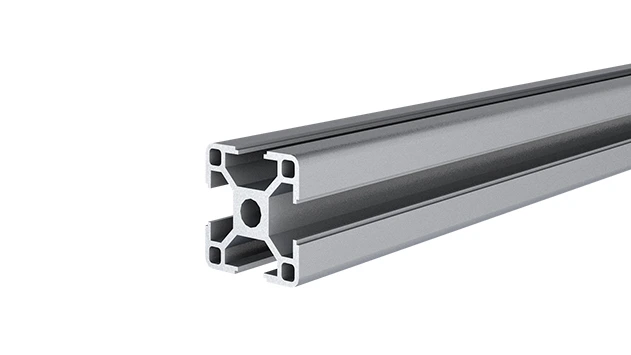
3030 is a 3.00 x 3.00CM fractional 30 series square extrusion T-slot profile with four open T-slots, each side with 3.00cm face. The profile has align-a-grooves to assist in aligning connecting profiles.
Walk into any modern manufacturing facility, and you'll likely notice a quiet hum of efficiency: workers moving with purpose, materials gliding smoothly along tracks, and workstations tailored to minimize unnecessary motion. Behind this harmony often lies a commitment to lean management—a philosophy built on eliminating waste, streamlining processes, and fostering continuous improvement. Yet, even the most well-intentioned lean strategies can stumble without the right tools. Enter the 3030a EU Standard Aluminum Profile —a humble yet transformative component that's redefining how teams build, adapt, and optimize their workspaces. In this article, we'll explore how this aluminum extrusion profile, paired with thoughtful design and aluminum profile accessories, becomes the backbone of resilient, lean systems that grow with your business.
Understanding Lean Management: Beyond Buzzwords
Lean management isn't just about cutting costs or speeding up production—it's a mindset centered on respect for people and relentless pursuit of perfection. Originating from Toyota's Production System, its core principles include identifying and eliminating "muda" (waste), creating value for customers, and empowering teams to drive improvement. Waste, in this context, takes many forms: excess inventory gathering dust in a corner, workers walking back and forth to retrieve tools, or bottlenecks where materials pile up because a workstation can't keep pace.
One of the most tangible areas where waste creeps in is material handling. When workbenches are fixed in place, flow racks are rigid, and tools are scattered, even the most skilled employees can't perform at their best. This is where modular, adaptable infrastructure becomes critical. A lean system isn't static; it needs to evolve as product lines change, demand fluctuates, or new efficiency insights emerge. And that's where the 3030a aluminum profile shines.
3030a EU Standard Aluminum Profile: An Overview
At first glance, the 3030a might look like just another metal bar—but its design tells a different story. Part of the EU standard aluminum extrusion profile family, it measures 30mm x 30mm, with a sleek, square cross-section and T-slots running along all four sides. These T-slots are the profile's secret weapon: they allow for quick, tool-free attachment of accessories like brackets, shelves, and connectors, turning a simple tube into a building block for endless configurations.
Why 3030a? While larger profiles (like 4040 or 4080) handle heavier loads, the 3030a strikes a sweet spot for most lean applications. It's lightweight enough to be reconfigured by a single person yet sturdy enough to support workbenches, flow racks, and even light-duty conveyors. Its EU standard dimensions ensure compatibility with a wide range of off-the-shelf accessories, meaning you won't get locked into proprietary systems.
Manufactured through aluminum extrusion—a process that shapes molten aluminum into consistent, precise profiles—the 3030a offers uniformity and strength that's hard to match with traditional materials like wood or steel. Its anodized finish resists corrosion and wear, ensuring it holds up in busy factory environments where spills, dust, and constant use are the norm.

Key Features of 3030a: Built for Lean Flexibility
To understand why the 3030a is a favorite among lean practitioners, let's break down its standout features:
1. Modularity: Build, Adapt, Repeat
Imagine a workbench that can be extended by 60cm in 15 minutes, or a flow rack that's reconfigured to hold new product sizes overnight. With the 3030a's T-slots, this isn't just possible—it's routine. Unlike welded steel structures or glued wooden shelves, which require cutting, drilling, or even replacement when needs change, the 3030a lets you add, remove, or reposition components with basic hand tools. Need to mount a monitor arm on a workbench? Slide a bracket into the T-slot and tighten a screw. Want to add a second shelf to a flow rack? Attach a connector and aluminum profile accessories, and you're done.
2. Strength Without the Weight
Aluminum is inherently lighter than steel, making the 3030a easy to transport and reconfigure. Yet, thanks to its extrusion design, it boasts impressive load-bearing capacity. A single 3030a profile can support up to 75kg per linear meter (depending on accessories and mounting), making it ideal for workbenches, material racks, and even lightweight conveyors. This balance of strength and portability reduces two types of waste: the physical strain on workers moving heavy equipment and the time wasted waiting for specialized tools or teams to rework fixed structures.
3. Compatibility: A Universe of Accessories
The 3030a doesn't work alone—it's part of an ecosystem. Aluminum profile accessories like corner brackets, hinges, caster wheels, and roller tracks transform it into whatever your lean system needs. For example, adding swivel roller balls to a 3030a frame creates a smooth surface for sliding materials, while attaching casters turns a static workbench into a mobile station that can be moved to where it's needed most. This compatibility means you're not just buying a profile—you're investing in a toolkit for endless problem-solving.
4. Cost-Effectiveness Over Time
While the upfront cost of aluminum profiles may be higher than wood or basic steel, their longevity and reusability make them a smarter long-term investment. A wooden workbench might last 2-3 years before warping or splitting; a 3030a bench, with replaceable parts, can serve your team for a decade or more. When your production line shifts, you won't need to scrap the entire structure—just disassemble and rebuild. This "reuse, don't replace" approach aligns perfectly with lean's focus on eliminating wasteful spending.
Applications in Lean Systems: From Workbenches to Flow Racks
The 3030a's versatility makes it a staple in countless lean applications. Let's dive into two of the most impactful: workbenches and flow racks.
Workbenches: Where Efficiency Meets Ergonomics
A workbench is more than a table—it's a command center where operators spend hours assembling, inspecting, or packaging products. Poorly designed benches force workers into awkward postures, leading to fatigue, errors, and even injury. The 3030a changes this by enabling custom, ergonomic workstations tailored to each task.
For example, a electronics manufacturer might build a 3030a workbench with adjustable height (using telescoping aluminum legs and T-slot locks), allowing operators of different heights to set the surface at elbow level. Tool holders, integrated via aluminum profile accessories, keep frequently used items within arm's reach, eliminating wasted motion. A perforated back panel, mounted using T-slot brackets, holds power tools and cables, reducing clutter. Even the work surface itself—whether a (ESD) mat for sensitive components or a durable aluminum honeycomb panel for heavy-duty tasks—can be swapped out as needs evolve.
What's more, these workbenches are easy to scale. As a team grows, adding a second 3030a section to extend the bench takes minutes, not days. No need for custom fabrication—just order additional profiles and accessories, and your team can assemble the extension themselves.
Flow Racks: Keeping Materials Moving
In lean systems, "first in, first out" (FIFO) inventory management is critical to reducing waste from expired or obsolete stock. Flow racks—also known as gravity-fed racks—make FIFO effortless by using inclined roller tracks to move materials forward as items are removed. The 3030a is the perfect frame for these racks, offering the rigidity needed to support stacked bins while remaining lightweight enough to angle correctly.
Consider a automotive parts supplier using 3030a flow racks to store small components like screws and washers. Each rack tier is built with 3030a side frames, with roller tracks (another key aluminum profile accessory) mounted via T-slots. The angle of the tracks is adjustable, ensuring materials glide smoothly without jamming. When the supplier introduces a new part with a larger bin, they simply adjust the roller spacing or add a new tier—no need to replace the entire rack. This flexibility ensures the flow rack grows with the product line, not against it.
Real-World Impact: A furniture manufacturer in Germany reported a 22% reduction in picking errors after switching to 3030a flow racks. By customizing the rack layout to match their most frequent orders and adding color-coded bins (mounted via T-slot brackets), workers could quickly locate parts, cutting down on "search waste" and improving accuracy.
Aluminum Profile Accessories: The Glue That Holds Lean Systems Together
A 3030a profile alone is just a piece of metal. It's the aluminum profile accessories that unlock its full potential. Let's explore some must-have accessories and how they enhance lean systems:
- Connectors and Brackets: These small but mighty parts let you join 3030a profiles at angles (90°, 45°, 135°) or in parallel. From simple corner brackets for right-angle joints to heavy-duty three-way connectors for sturdy frames, they ensure your structures stay rigid under load.
- Roller Tracks and Swivel Balls: Essential for flow racks and conveyor systems, these accessories turn static shelves into dynamic material pathways. Swivel roller balls (like 1-inch stainless steel or ESD-safe plastic options) allow for multidirectional movement, perfect for sliding bins or pallets.
- Casters and Leveling Feet: For mobile workstations or flow racks, locking casters (mounted via T-slot plates) let you move structures with ease, then lock them in place. Leveling feet, on the other hand, stabilize benches on uneven floors, ensuring precision tasks aren't thrown off by wobbling surfaces.
- Panels and Shelves: From aluminum honeycomb panels for lightweight work surfaces to wire mesh shelves for visibility, these accessories add functionality to 3030a frames. Many are designed to drop into T-slots, making installation tool-free.
The beauty of these accessories is their interoperability. A connector used to build a workbench today can be repurposed tomorrow to build a cart. This reusability aligns with lean's "reduce, reuse, recycle" ethos, minimizing waste from discarded components.
Case Study: How a Small Manufacturer Leveraged 3030a for Continuous Improvement
To see the 3030a in action, let's look at a case study from a mid-sized medical device assembly plant in Poland. The plant, which produces surgical instruments, was struggling with two key lean challenges: rigid workstations that couldn't adapt to new product lines, and inefficient material flow between assembly stations.
The Problem
Their existing workbenches were custom-built wooden structures with fixed shelves and tool hooks. When the plant introduced a new, larger instrument line, the benches were too short, forcing operators to place parts on the floor—a safety hazard and a source of wasted motion. Material flow was equally problematic: parts were stored in static racks 15 meters from the assembly line, requiring operators to make multiple trips daily.
The Solution: 3030a Aluminum Profile
The plant's lean team decided to rebuild their workstations and flow racks using 3030a EU Standard Aluminum Profiles. Here's how they approached it:
- Modular Workstations: They built adjustable-height workbenches using 3030a frames, with ESD workbench tops (critical for protecting sensitive electronics in the instruments). Tool holders, monitor arms, and cable management clips were added via T-slots, keeping the surface clutter-free.
- Mobile Flow Racks: Using 3030a side frames and roller tracks, they constructed mobile flow racks that could be positioned directly next to assembly stations. Each rack was divided into color-coded bins (mounted with T-slot brackets) for different part types, enabling FIFO and reducing retrieval time.
- Quick Reconfiguration: When a new instrument model required a wider work surface, the team simply added two 3030a extensions to each bench, secured with brackets. The entire process took 2 hours per workstation, with no downtime for production.
The Results
Within three months, the changes yielded measurable improvements:
- Operator walking distance reduced by 40%, cutting fatigue and freeing up 7 hours per week per operator for value-added tasks.
- Assembly errors dropped by 15%, attributed to better organization and reduced clutter.
- New product setup time decreased from 2 days to 4 hours, as workstations could be reconfigured instead of rebuilt.
As the plant manager noted: "The 3030a didn't just solve our immediate problems—it gave us the confidence to experiment. When our team suggests a better way to arrange the line, we can test it in a day, not a month. That's the power of continuous improvement."
Why 3030a Drives Continuous Improvement
Continuous improvement (kaizen) isn't about grand overhauls—it's about small, daily tweaks that add up over time. The 3030a supports this by lowering the barrier to experimentation. When reconfiguring a workstation takes 30 minutes instead of 3 weeks, teams are more likely to try new ideas. Did moving the tool holder to the left reduce errors? If not, move it back—no harm done. This culture of "test, learn, adjust" is how lean systems evolve from good to great.
Additionally, the 3030a's transparency helps identify waste. Unlike opaque wooden shelves or closed steel cabinets, its open T-slot design and modular components make it easy to spot unused space, misaligned flow, or underutilized accessories. A quick walk through the facility reveals which flow racks are half-empty (signaling excess inventory) or which workbenches have unused T-slots (opportunities to add tools).
Comparing 3030a to Other Materials: A Lean Perspective
To truly appreciate the 3030a's value, let's compare it to common alternatives in lean environments:
| Material | Flexibility | Durability | Cost (Long-Term) | Lean Alignment |
|---|---|---|---|---|
| Wood | Low (fixed design, hard to modify) | Medium (prone to warping, scratches) | High (needs frequent replacement) | Poor (encourages waste from rebuilds) |
| Welded Steel | Very Low (permanent, requires cutting/welding to modify) | High (durable but heavy) | Very High (custom fabrication, high labor costs) | Poor (resists adaptation, creates waste from obsolescence) |
| 3030a Aluminum Profile | Very High (tool-free reconfiguration, modular) | High (anodized finish resists wear, corrosion) | Low (reusable, long lifespan, minimal labor for changes) | Excellent (enables continuous improvement, reduces waste) |
The table tells a clear story: while wood and steel may seem cheaper upfront, their lack of flexibility leads to hidden costs—whether from downtime during rebuilds, wasted materials, or missed opportunities to optimize. The 3030a, by contrast, delivers long-term value by growing with your lean journey.
Looking Ahead: The Future of Lean Infrastructure
As manufacturing grows more dynamic—with shorter product lifecycles, mass customization, and the rise of smart factories—the need for adaptable infrastructure will only increase. The 3030a is well-positioned to meet this demand, especially as aluminum profile accessories become more sophisticated. Imagine IoT sensors mounted via T-slots to monitor flow rack inventory in real time, or 3D-printed brackets that snap into T-slots for custom tool holders. The profile's open design makes it a platform for innovation, not just a static component.
Moreover, as sustainability becomes a core lean principle, the 3030a's recyclability and longevity align with circular economy goals. Unlike wood (which may end up in landfills) or steel (which requires energy-intensive recycling), aluminum can be melted down and reused repeatedly without losing quality—a win for both your bottom line and the planet.
Conclusion: The 3030a—Your Lean Journey's Silent Partner
Lean management is about more than processes; it's about empowering people to create better, more efficient ways of working. The 3030a EU Standard Aluminum Profile doesn't replace human ingenuity—but it amplifies it. By providing a flexible, durable, and cost-effective foundation, it turns abstract lean principles into tangible, everyday improvements. Whether you're building a single workbench or overhauling an entire production line, this aluminum extrusion profile, paired with the right aluminum profile accessories, becomes the quiet enabler of continuous improvement.
So, the next time you walk through your facility, take a closer look at your infrastructure. Are your workbenches and racks holding you back, or propelling you forward? With the 3030a, the answer can be the latter—one T-slot, one bracket, one improvement at a time.